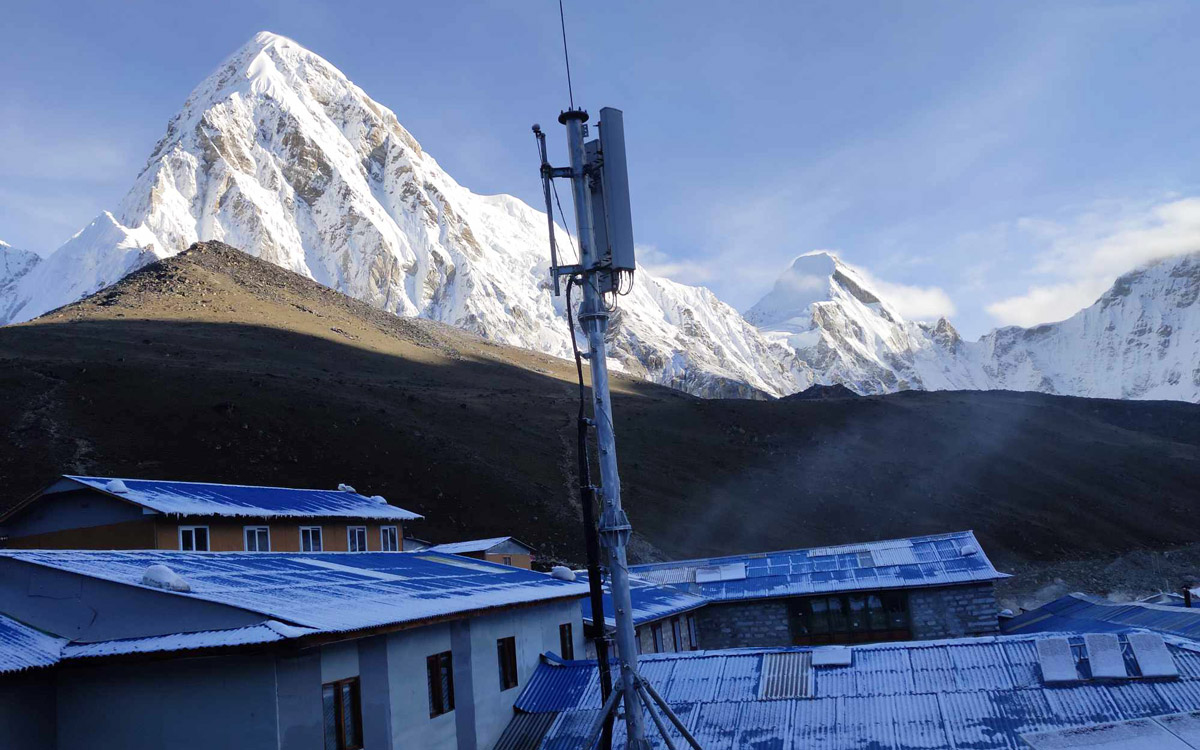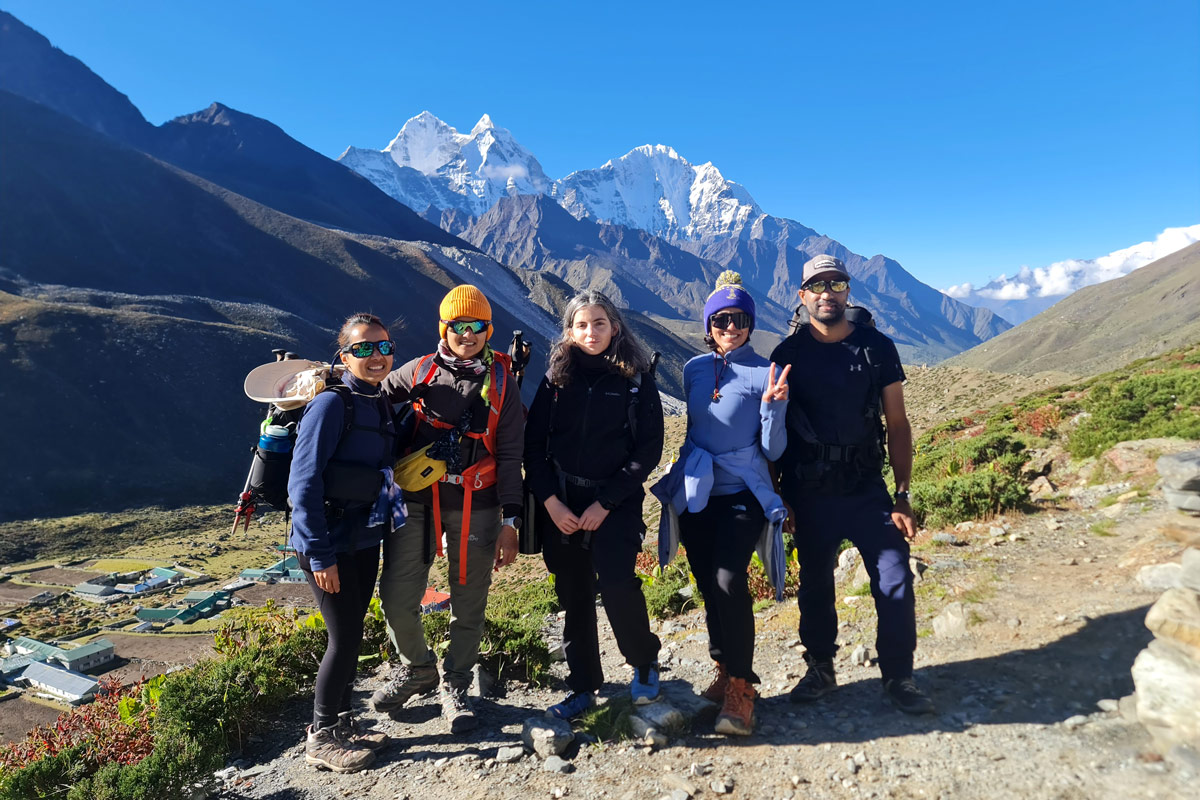



There are few journeys in the world that leave such a lasting impression as the Everest Base Camp Trek.
Everest Base Camp is one of the most iconic destinations in the world sought out by every trekker in the world. For many travelers, reaching Everest Base Camp (5,364 m) is the ultimate goal.
The EBC trek key highlights are associated with Mount Everest (8,848.86 m/29,031 ft), yet the base of this mountain itself is only one chapter of a much bigger story and of a major attractions when trekking in Nepal.
From the thrilling mountain flight to Lukla, the vibrant streets of Namche Bazaar, ancient Tengboche Monastery, unique Sherpa villages, the dramatic Khumbu Glacier, and best viewpoints of Everest region reveals something new to trekkers.
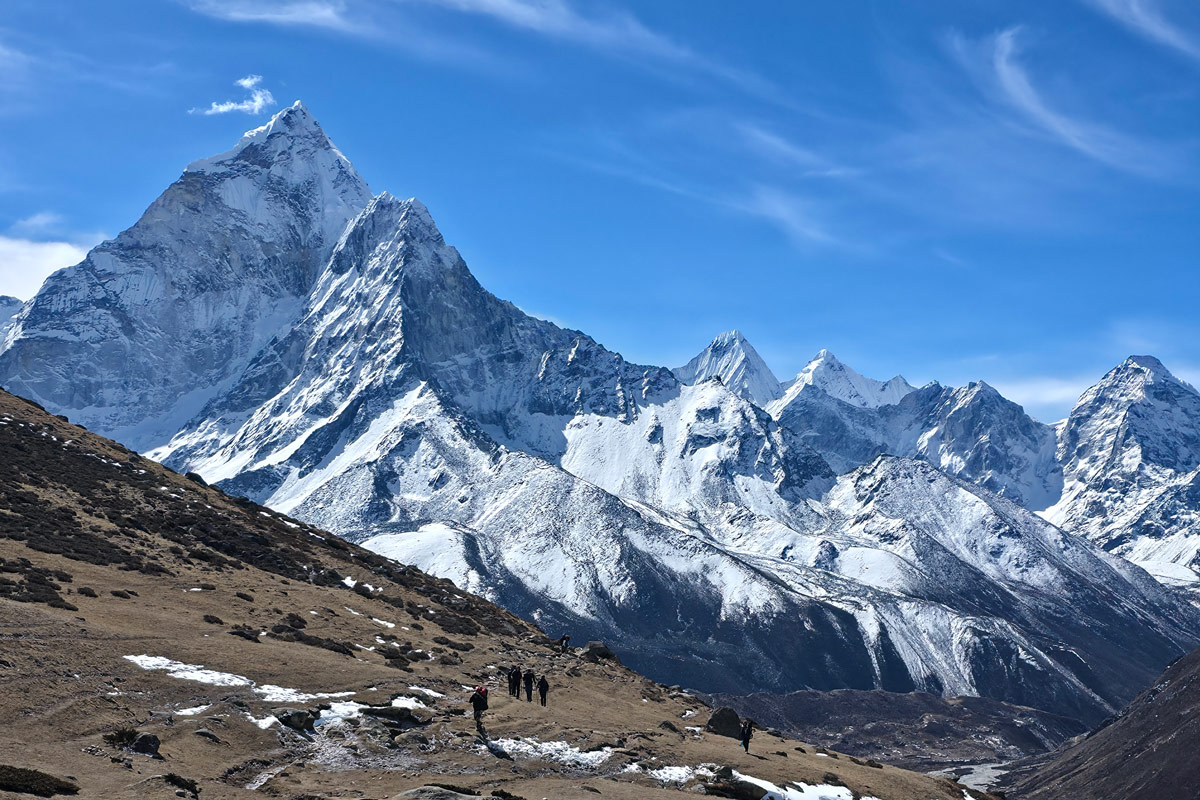
As you gradually ascend through lush rhododendron forests, glacial rivers, and alpine valleys, the landscape transforms dramatically while towering Himalayan giants such as Lhotse, Nuptse, Amadablam, Thamserku, and Cho Oyu dominate the skyline.
In this guide, we’ll take you through the major attractions of the Everest Base Camp Trek, highlighting iconic landmarks, cultural experiences, and stunning viewpoints that make this one of the world’s greatest trekking adventures.
Everest Base Camp Trek Highlights
Some of the key highlights of the Everest Base Camp trek are:
- Experience one of the world’s most scenic mountain flights to Lukla.
- Walk through Sagarmatha National Park, a UNESCO World Heritage Site.
- Discover Namche Bazaar, the cultural and commercial heart of Khumbu.
- Hike to one of the world’s highest-placed hotels, Hotel Everest View.
- Visit Tengboche Monastery, the largest Buddhist monastery in the Everest region.
- Experience authentic Sherpa culture, traditions, festivals, and warm mountain hospitality.
- Trek alongside the magnificent Khumbu Glacier and witness the dramatic Khumbu Icefall.
- Stand at Everest Base Camp, surrounded by towering Himalayan peaks.
- Hike to Nangkartshang Peak and Kala Patthar for the finest panoramic views of Mount Everest, Lhotse, Nuptse, and the surrounding mountains.
Major Attractions on Everest Base Camp Trek
In these sections, we’ll explore each of these attractions in detail, explaining why they deserve a bucket list spot who embarks on the Everest adventure.
Lukla – The Gateway to Everest
Nestled on a hillside in Nepal‘s Solukhumbu District, Lukla is a small mountain town and the main gateway to the Everest region, welcoming thousands of trekkers, climbers, and adventure seekers each year.
Every unforgettable journey has a beginning, and for most trekkers, the adventure to Everest Base Camp starts with a thrilling flight to Lukla (2,840 m) at Tenzing-Hillary Airport.
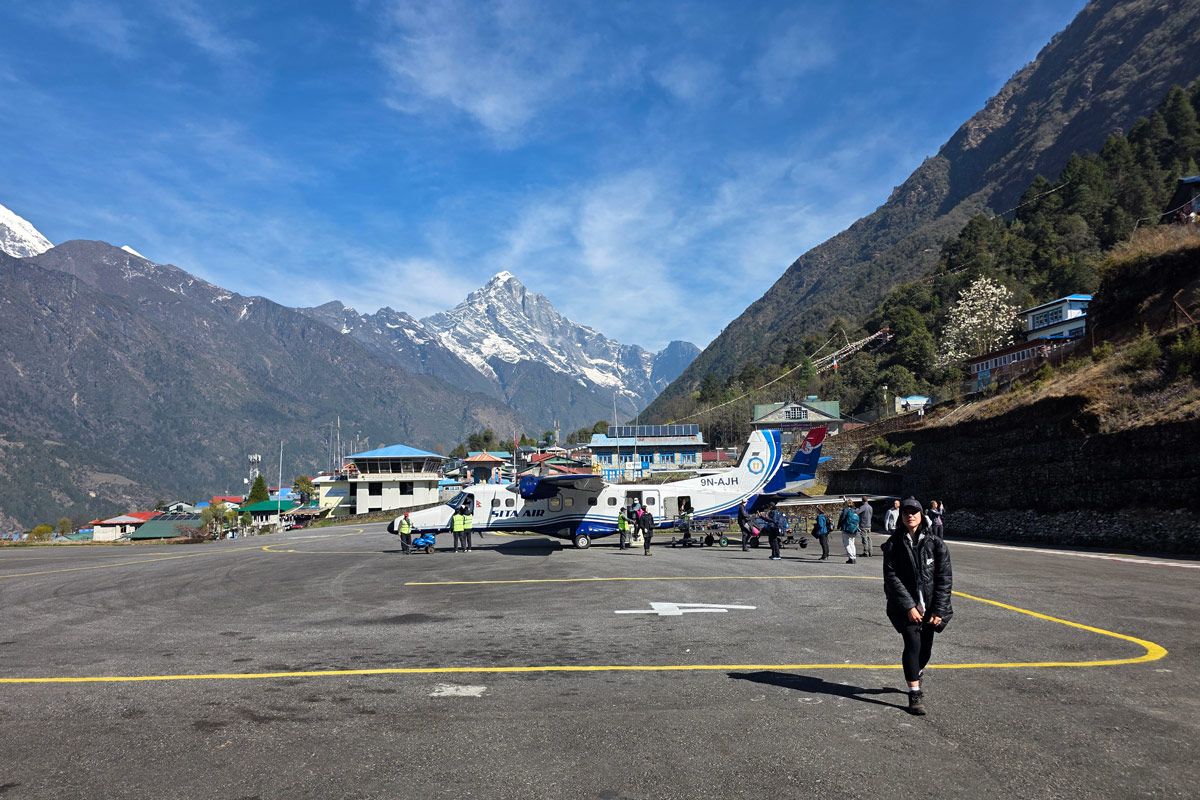
As the aircraft touches down, towering Himalayan peaks such as Kongde Ri surround the valley, colorful prayer flags flutter in the crisp mountain breeze, and trekkers gather to begin their journey toward Everest.
Despite its small size, Lukla has a lively atmosphere that reflects the warmth and resilience of the Sherpa community.
Lukla serves a much greater purpose for the entire Khumbu region serving as the primary transportation hub, bringing essential goods such as food, medicine, and construction materials to communities sustain in the harsh mountain region.
Sagarmatha National Park – Nepal’s Highest UNESCO World Heritage Site
Established in 1976 and also UNESCO World Heritage Site, Sagarmatha National Park protects over 1,148 sq. kilometers of rugged Himalayan wilderness.
It is a living ecosystem where towering mountains, ancient glaciers, alpine forests, rare wildlife, and centuries-old Sherpa culture exist in remarkable harmony.
The protected landscapes of Sagarmatha National Park create the unforgettable journey rewarding you with breathtaking scenery, ecological diversity, spiritual significance, and remarkable natural beauty during the Everest Base Camp Trek.

You’ll walk beneath forests of pine, fir, birch, and rhododendron, crystal-clear rivers, cascading waterfalls to alpine meadows, glacial rocky moraines, and unveiling vast open terrain.
The Sagarmatha National Park provides a protected habitat for several rare Himalayan mammals and bird species.
They are Himalayan tahr, musk deer, goral, himalayan monal (Nepal’s national bird), yellow-billed choughs, bearded vultures and many more. Also, the elusive snow leopard and red panda inhabit the park,
Sagarmatha National Park also preserves the cultural heritage of the Sherpa people. Throughout the trek, you’ll notice beautifully carved mani stones, ancient chortens, colorful prayer flags, and spinning prayer wheels lining the trails.
Hillary Suspension Bridge – Crossing One of the Most Iconic Bridges
Suspended high above the roaring Dudh Koshi River, this legendary bridge Hillary Suspension Bridge along Everest Base Camp trail represents the beginning of the real Himalayan journey.
This bridge is named in honor of Sir Edmund Hillary, who devoted much of his life to supporting Sherpa communities.
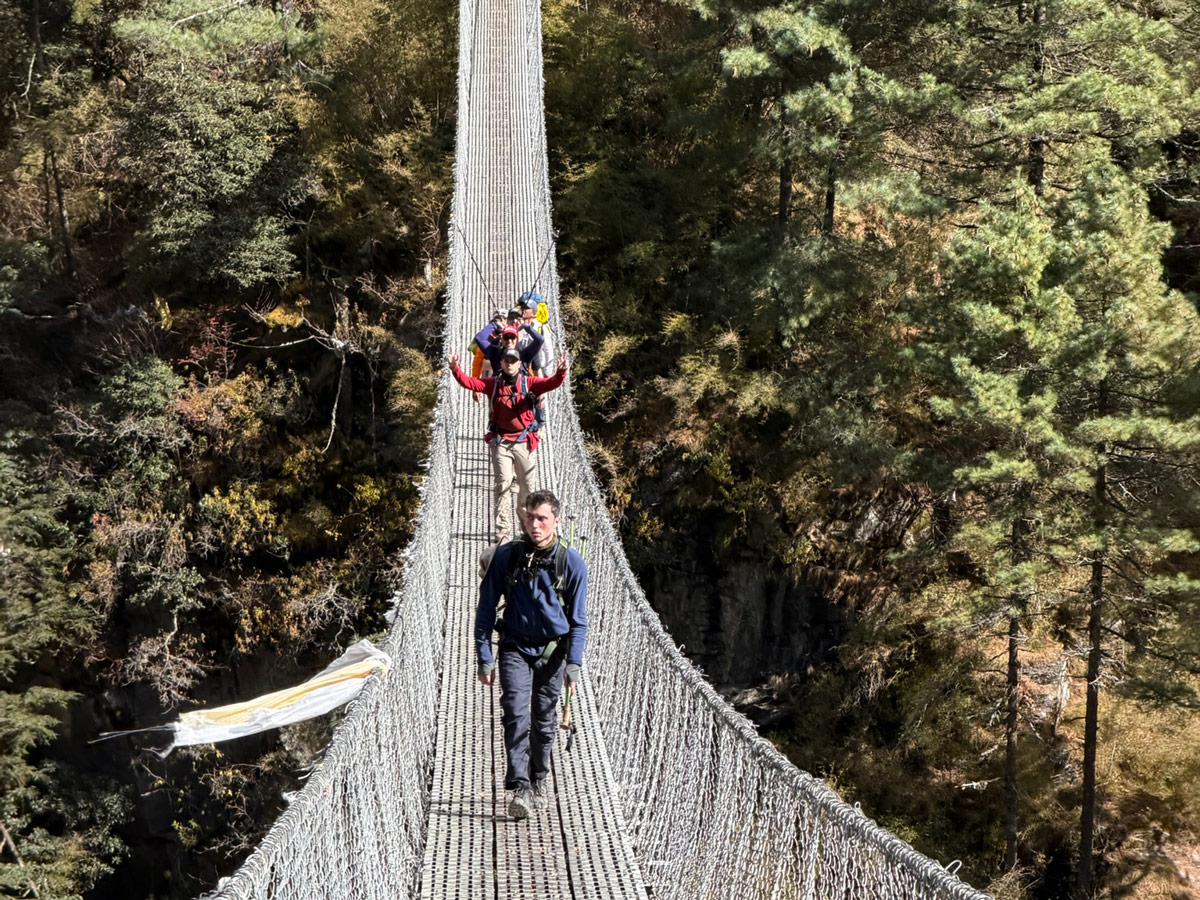
As you make your way from Phakding toward Namche Bazaar, the trail follows serene Dudh Koshi River, crossing several suspension bridges draped in colorful Buddhist prayer flags.
For local villagers, it is an essential transportation route linking remote settlements throughout the Khumbu Valley.
Every day, Sherpa families, schoolchildren, trekkers, guides, and long caravans of yaks and dzopkeys use the bridge to transport food and daily supplies into the high Himalayas.
Namche Bazaar – The Vibrant Sherpa Capital of the Khumbu
Nestled into a natural amphitheater at an altitude of 3,440 meters, Namche Bazaar is often described as the trekker’s hub, essential acclimatization stops, commercial center of the Khumbu, and beating heart of the Everest region.
Most Everest Base Camp itineraries include two nights as there are many things to do in Namche Bazaar, allowing trekkers to acclimatize and adapt gradually to the increasing altitude.
One of Namche Bazaar’s greatest rewards is its breathtaking scenery revealing spectacular panoramas of Kongde Ri, Thamserku, and Kusum Kanguru.
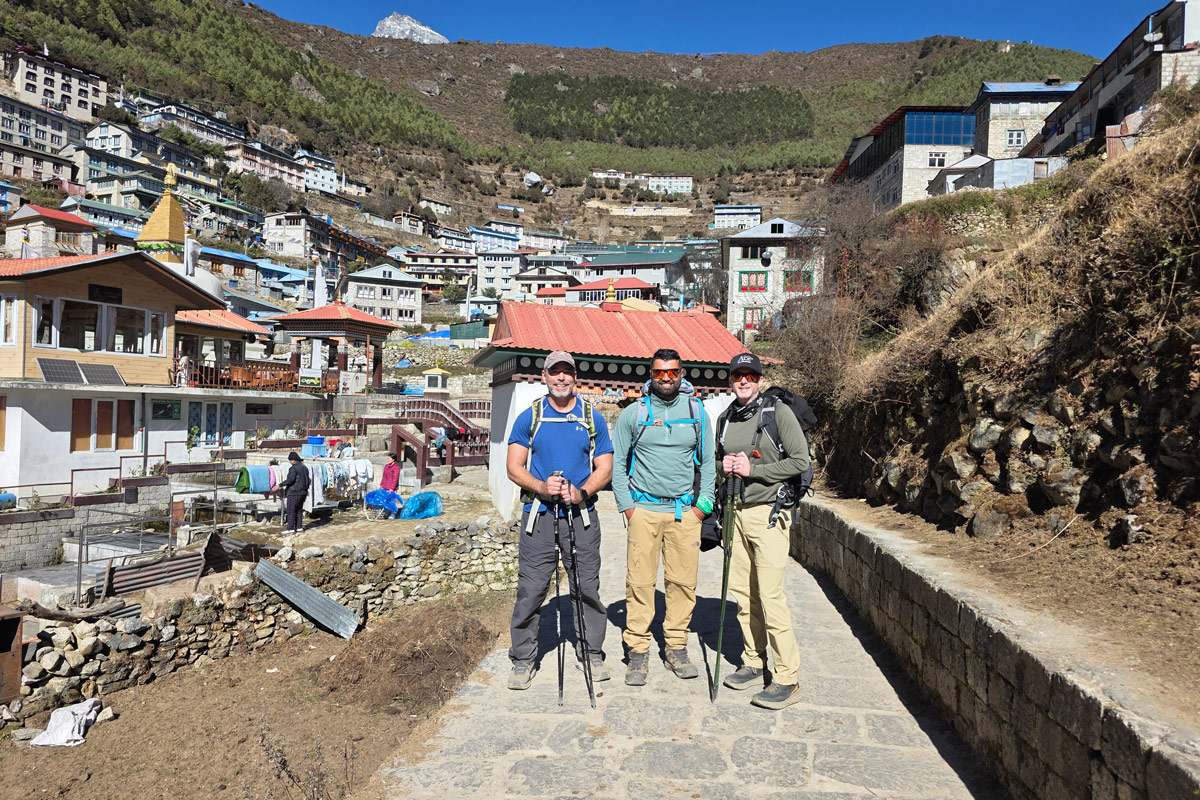
Stone-paved streets wind through cafes, bakeries, outdoor gear stores, handicraft shops, pharmacies, banks, locally owned restaurants, and traditional lodges, creating a vibrant atmosphere rarely found at this altitude.
Namche Bazaar offers one of the best opportunities to experience authentic Sherpa culture introducing to their remarkable resilience, deep Buddhist traditions, and unique way of life.
Walking through Namche, you’ll notice intricately carved mani stones, spinning prayer wheels, colorful chortens, and prayer flags fluttering above rooftops, expressing everyday spiritual life that continue to shape the community.
Hotel Everest View – A Panoramic Window to the Himalayas
Perched high above Namche Bazaar at an altitude of 3,880 m, Hotel Everest View is one of the most rewarding side trips during the Everest Base Camp Trek.
More than just one of the world’s highest luxury hotel, it is a famous viewpoint where trekkers can enjoy some of the finest panoramic views of the Everest Himalayan range.
The hike to the hotel is usually part of the acclimatization day in Namche Bazaar preventing altitude sickness, making it both a scenic and practical stop before ascending to higher elevations following principle of “climb high, sleep low.”
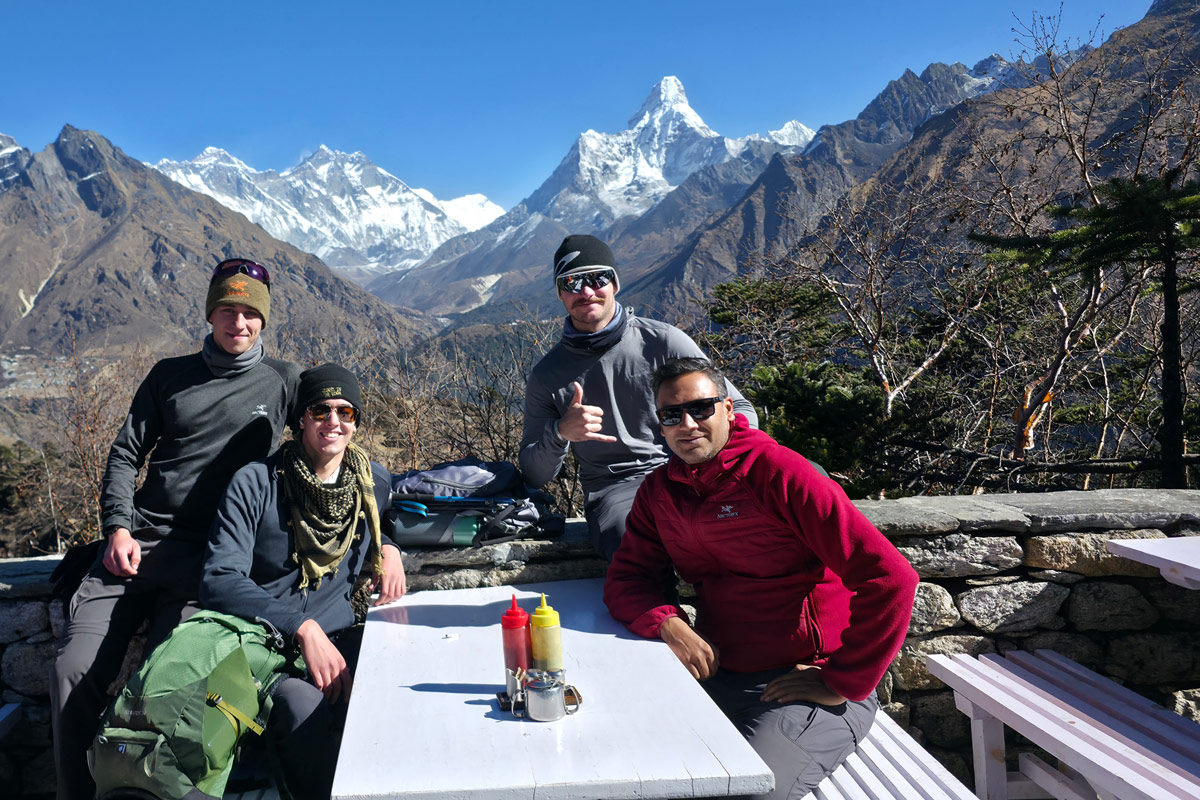
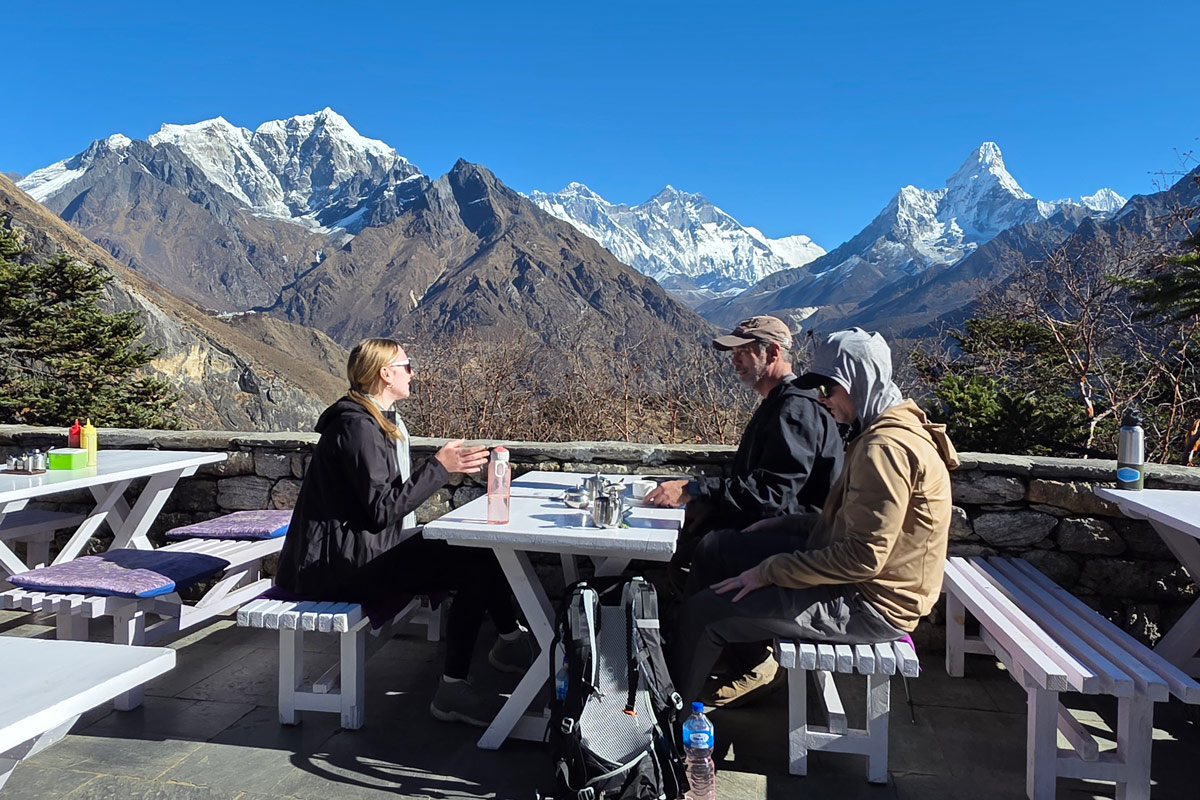
On a clear day, visitors are rewarded with uninterrupted views of Mount Everest, Lhotse, Nuptse, Ama Dablam, Thamserku, Kongde Ri, and several other Himalayan peaks.
Although many trekkers stop here for a short break, others choose to enjoy breakfast or lunch while admiring one of the most iconic mountain panoramas in Nepal.
The viewpoint has also become a popular destination for Everest helicopter tours, along with Luxury Everest View Heli Trek and can be considered as beginner friendly treks in Nepal.
Tengboche Monastery: The Spiritual Heart of the Everest Region
Situated at an altitude of 3,860 m, one of the most sacred places in the Khumbu region known as Tengboche Monastery, is the largest and most important Buddhist monastery in the Everest region.
Surrounded by towering Himalayan peaks and peaceful forests, Tengboche offers trekkers a rare opportunity to experience both the spiritual and natural beauty of the Himalayas.
On clear days, the skyline is dominated by Mount Everest, Lhotse, Nuptse, Thamserku, and Kangtega, creating a spectacular backdrop that accompanies trekkers almost every step of the way.
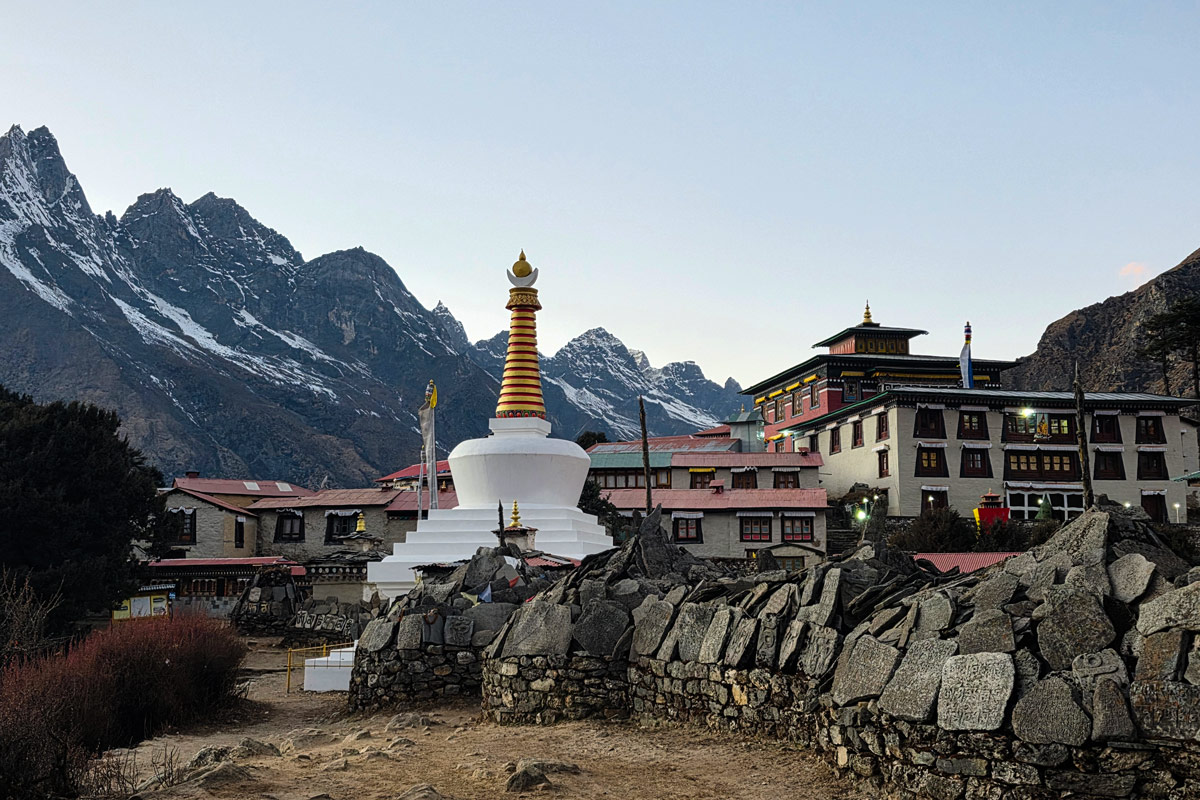
The monastery follows the traditions of Tibetan Buddhism and serves as an important place of worship, meditation, and cultural preservation.
Visitors are welcome to enter the monastery during designated hours.
Inside, colorful murals, sacred statues, intricate wood carvings, and beautifully decorated prayer halls reflect the rich artistic and religious heritage of the Himalayas.
If you’re fortunate enough to visit during autumn, you may have the opportunity to witness the Mani Rimdu Festival, one of the Everest region’s most celebrated cultural events.
Dingboche – The Gateway to the High Himalaya Terrain
Nestled in the heart of the Imja Valley at an altitude of 4,410 m, Dingboche is one of the most important stops on the Everest Base Camp Trek.
Unlike the bustling streets of Namche Bazaar, Dingboche offers a quieter and more peaceful atmosphere and also the perfect acclimatization stop on the Everest trek.
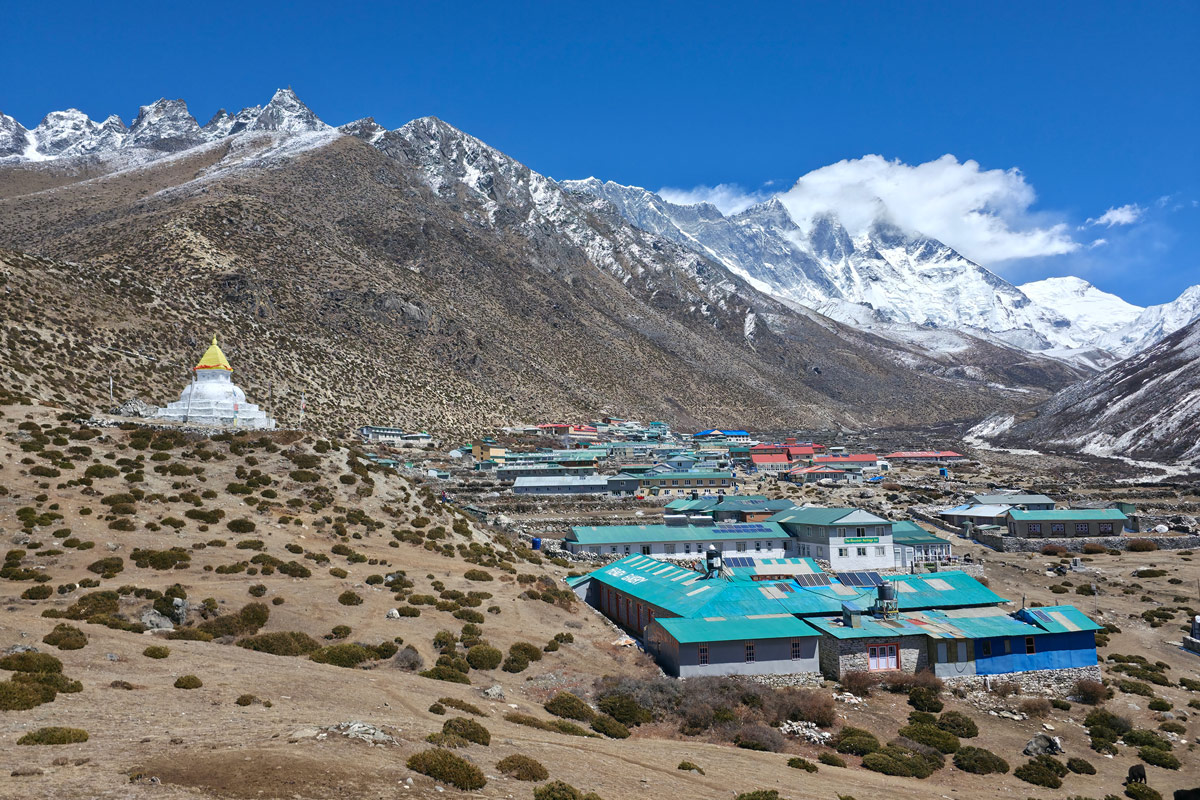
Acclimatization is the primary purpose of staying in Dingboche by spending an extra night here allows your body to gradually adjust to the thinner air of high altitude region.
One of the most rewarding acclimatization hikes leads to Nangkartshang Peak (5,083 m), a spectacular viewpoint overlooking the entire Imja Valley including Ama Dablam, Makalu, Everest, Lhotse, Nuptse, Cho Oyu and numerous peaks.
For trekkers taking on Island Peak Climbing, you can reach Dingboche via the regular Everest Base Camp trekking route.
Everest Base Camp – Standing at the Foot of the World’s Highest Mountain
After days of trekking through Sherpa villages, ancient monasteries, alpine valleys, and glacial landscapes, the moment every trekker has been waiting for finally arrives that is reaching Everest Base Camp (5,364 m).
Standing at the foot of the world’s highest mountain is more than simply reaching a destination. The final approach begins from Gorak Shep, following a rugged trail that winds alongside the mighty Khumbu Glacier.
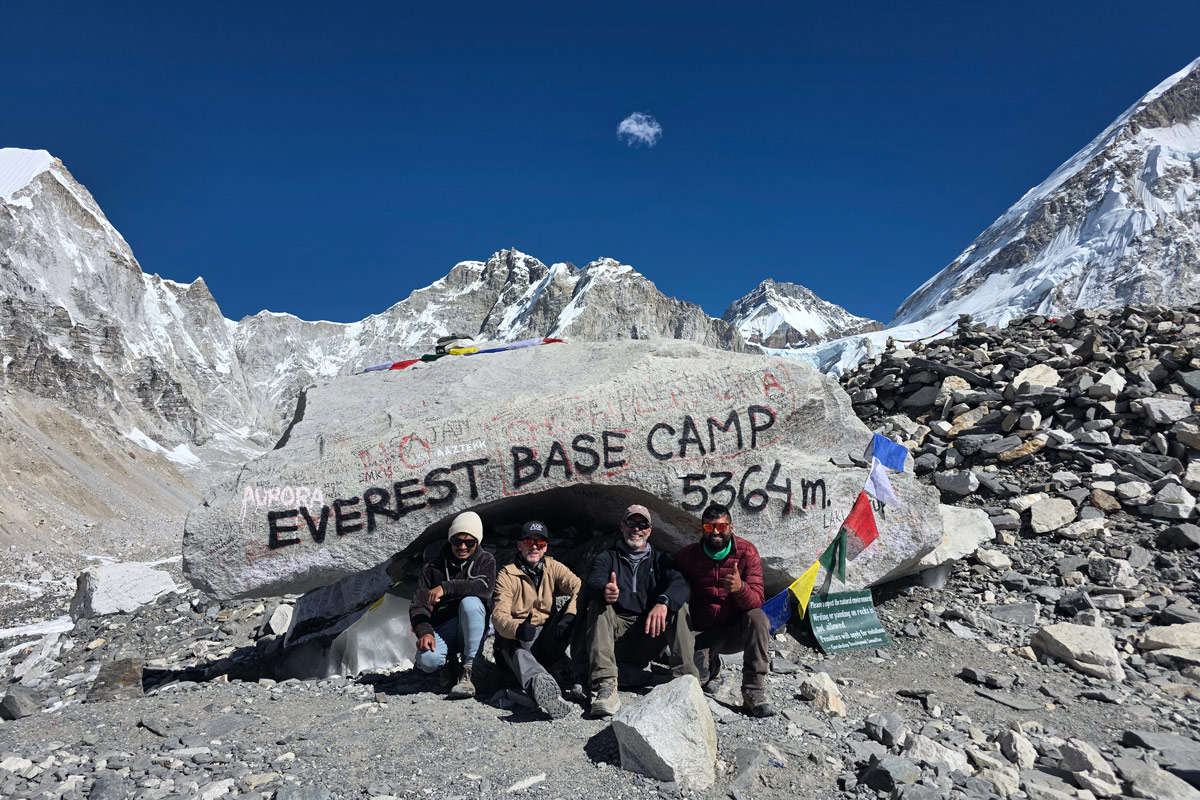
As trekkers carefully cross rocky moraines and glacial terrain gazing at breathtaking Nuptse, Pumori, Lola, and Everest, every step brings them closer to one of the most iconic locations in mountaineering history.
The surrounding landscape becomes increasingly dramatic, with towering cliffs of ice, scattered boulders, and breathtaking views of the Khumbu Icefall creating a surreal atmosphere.
Beyond its adventure appeal, Everest Base Camp carries profound historical significance. It has served as the starting point for legendary expeditions that have shaped the history of Himalayan exploration.
Khumbu Glacier and Khumbu Icefall – Witness Frozen Wonders of Everest
Khumbu Glacier and the legendary Khumbu Icefall are two of the most awe-inspiring natural wonders in the Everest region.
Formed over thousands of years by snow and ice flowing down from the upper slopes of Mount Everest, the Khumbu Glacier is the highest glacier in the world and one of the largest in Nepal.
Stretching for nearly 17 kilometers, it slowly moves through the Khumbu Valley, continuously reshaping the surrounding landscape.
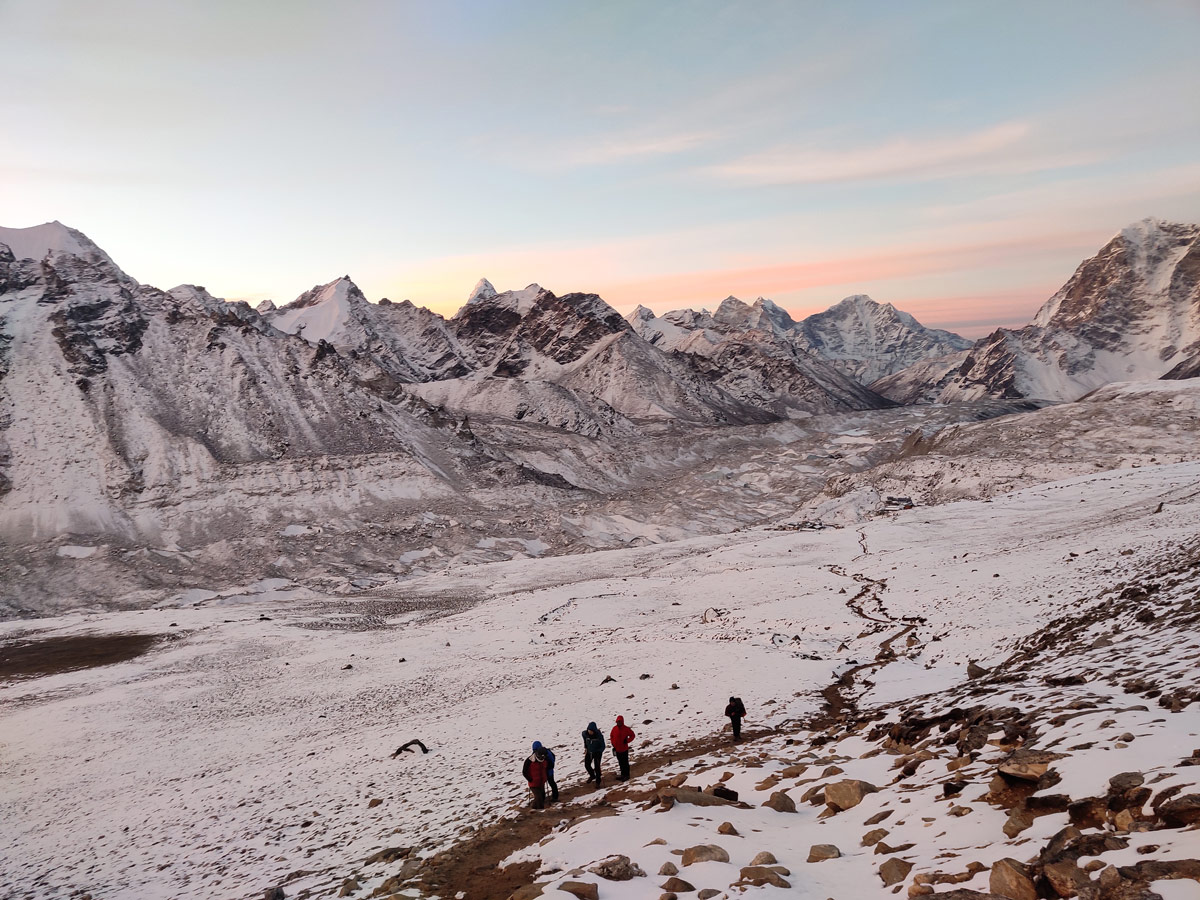
One of the glacier’s most famous features is the Khumbu Icefall, located just above Everest Base Camp and also considered one of the most technically demanding and dangerous sections of the expedition.
This chaotic maze of towering ice blocks, massive seracs, and deep crevasses marks the beginning of the traditional climbing route to the summit of Mount Everest.
Beyond its geological significance, the Khumbu Glacier holds deep cultural and spiritual meaning for the local Sherpa community as they are considered sacred, deserving respect and harmony.
Kala Patthar – The Best Viewpoint of Mount Everest
Nestled at 5,555 m, Kala Patthar is a rugged viewpoint that offers the closest and clearest panoramic view of Mount Everest without requiring technical climbing.
Reaching the summit of Kala Patthar feels incredibly rewarding as it offers spectacular views of Mount Everest, Lhotse, Nuptse, Pumori, Lingtren, and Changtse.
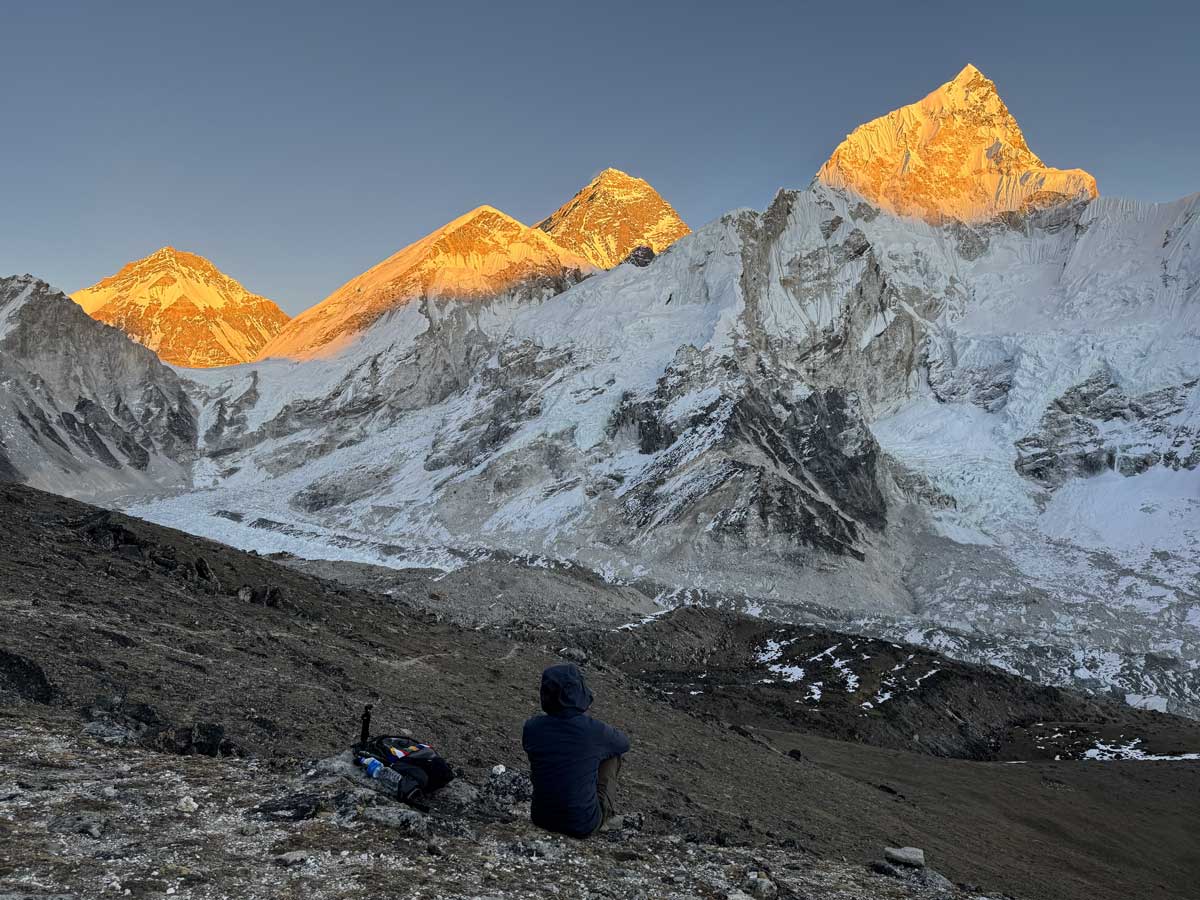
The panoramic 360-degree view stretches across an endless sea of snow-covered summits, glaciers, and rugged ridgelines, making it one of the best sunrise viewpoints in Nepal.
Beyond the mountain scenery, Kala Patthar provides an extraordinary perspective of the Khumbu Glacier and the dramatic Khumbu Icefall below.
Sherpa Culture and Hospitality: The Heart and Soul of the Everest Region
The Sherpa community, renowned worldwide for its mountaineering expertise, warm hospitality, and resilient spirit, has called the Khumbu region home for centuries.
Their rich culture, deep spiritual beliefs, and close relationship with the mountains transform the EBC Trek from a physical adventure into a meaningful cultural journey.
The trek passes through traditional Sherpa villages like Lukla, Namche Bazaar, Pangboche, and Dingboche, each offering its own glimpse showcasing colorful window frames, fluttering prayer flags, and carefully built mani walls along the trail.
Food also plays an important role in experiencing Sherpa culture.
Trekkers have the opportunity to enjoy traditional Himalayan dishes such as dal bhat, Sherpa stew, thukpa, momos, Tibetan bread, potatoes, and locally made yak cheese.
Here, most Sherpas practice Tibetan Buddhism, and signs of their belief and faith can be seen throughout the trek.
Ancient monasteries, colorful prayer wheels, intricately carved mani stones, and whitewashed stupas accompany trekkers along the trail, which makes it one of the key attractions of the Everest Base Camp Trek.
Scenic Mountain Views – A Panorama of the World’s Highest Peaks
One of the greatest rewards of the Everest Base Camp Trek is the ever-changing panorama of the Himalayas.
From the moment you arrive in Lukla until you stand beneath the towering walls of Everest in EBC, every day reveals a new collection of snow-capped peaks, deep valleys, and dramatic ridgelines.
Unlike many trekking destinations where mountain views are limited to a single viewpoint, the Everest region offers spectacular scenery throughout the entire journey.
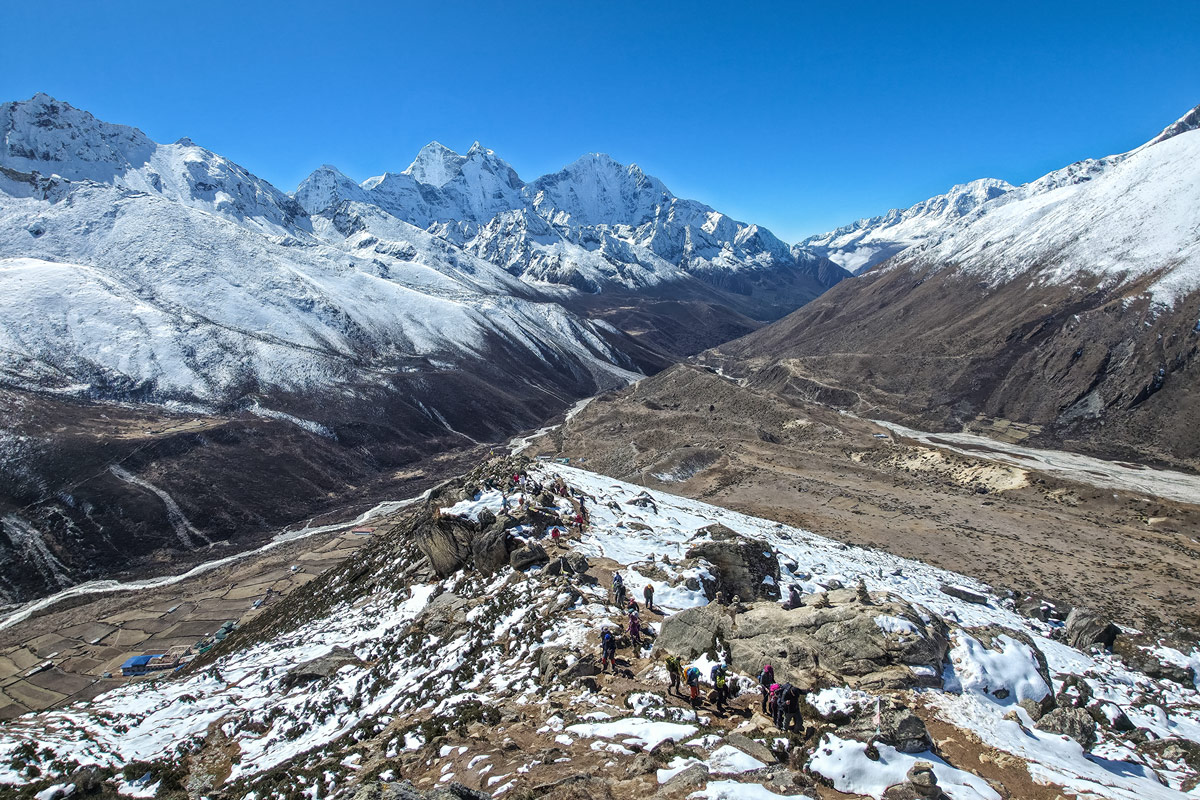
The overall EBC trail reward trekkers with unforgettable mountain panorama and uninterrupted views of Everest, Lhotse, Nuptse, Ama Dablam, Thamserku, Kangtega. Pumori, Changtse, Lingtren, and the Khumbu Glacier along the way.
Optional Nearby Highlights
While the classic Everest Base Camp Trek is an unforgettable adventure on its own, the Everest region also offers several remarkable destinations.
Khumjung Village
Hidden beneath the sacred peak of Khumbila, Khumjung Village (3,780 m) is one of the oldest and most authentic Sherpa settlements in the Khumbu region where traditional stone houses, cultivated potato fields, and colorful prayer flags create a timeless Himalayan setting.
Khumjung is also home to the renowned Hillary School, established by Sir Edmund Hillary in 1961 after his historic Everest ascent.
One of the village’s most famous landmarks is the Khumjung Monastery, which houses what locals believe to be the preserved scalp of the mythical Yeti.
Gokyo Lakes
For trekkers seeking a quieter alternative to the main Everest Base Camp route, the Gokyo Lakes offer one of the most spectacular landscapes in Nepal.
The Gokyo lake trek dwelling village is located at elevations between 4,700 and 5,000 meters and this sacred lake system consists of a series of shimmering turquoise glacial lakes surrounded by towering Himalayan peaks.
The highlight of the region is the climb to Gokyo Ri (5,360 m), one of the finest viewpoints in the Everest region.
From its summit, trekkers enjoy panoramic views of Mount Everest, Lhotse, Makalu, Cho Oyu, and the vast Ngozumpa Glacier, the longest glacier in Nepal stretching across the valley below.
Cho La Pass
Adventure seekers looking to combine Everest Base Camp with Gokyo Lakes often choose to cross Cho La Pass (5,420 m), one of the famous Three High Passes of the Everest region.
Connecting the Everest Base Camp trail with the beautiful Gokyo Valley, Cho La Pass offers one of the most exciting and rewarding trekking experiences in Nepal.
Crossing the pass is physically demanding and requires an early start.
Trekkers navigate rocky trails, glacial sections, and occasional snowfields before reaching the summit, where colorful prayer flags flutter against a backdrop of towering Himalayan peaks.
Conclusion
The Everest Base Camp Trek is far more than a trek to the foot of the world’s highest mountain.
It is a journey through breathtaking Himalayan landscapes, vibrant Sherpa villages, ancient Buddhist monasteries, and one of the most extraordinary mountain ecosystems in the world.
Every section of the EBC trail offers something unique, turning each day into a memorable chapter of an unforgettable adventure.
If the Everest Base Camp Trek is on your travel bucket list, take the time to prepare in advance, pack your list well, choose the right season, trek responsibly following eco-friendly practices, and embrace every moment along the trail.