

Everest Base Camp Trek with Mani Rimdu Festival 2026 - 16 Days
Price on Request
Trek to famous Everest Base Camp while witnessing the sacred Mani Rimdu Festival at Tengboche Monastery. This exclusive 16-day, once-a-year spiritual journey blends high-altitude adventure, Sherpa culture, masked dances, and a sunrise from Kala Patthar.

EBC Trek with Mani Rimdu Highlights
- Enjoy a thrilling flight from Kathmandu to Lukla, a short Himalayan journey.
- Trek the classic Everest Base Camp trail through unique Sherpa villages, serene stops, and traditional teahouses.
- Hike inside Sagarmatha National Park (UNESCO), crossing high suspension bridges.
- Settle and acclimatize well into vibrant Namche Bazaar, the Sherpa capital.
- Witness the Mani Rimdu Festival at Tengboche Monastery turning the mountains region into a living spiritual celebration.
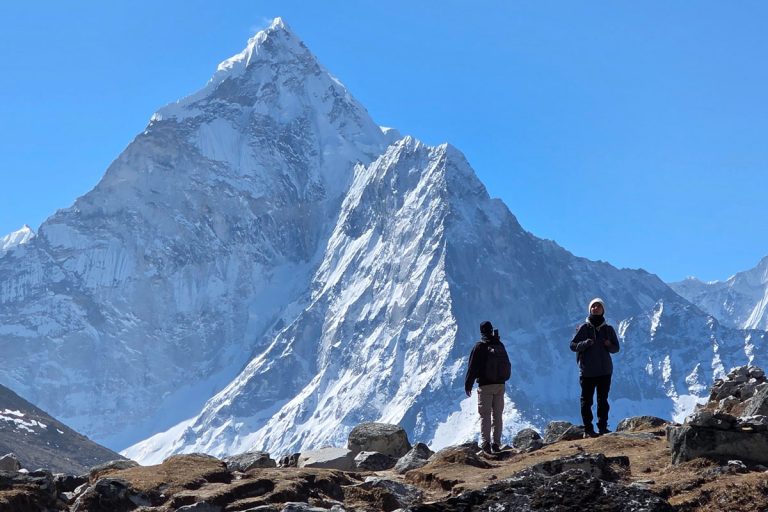
- Acclimatize the right way in Dingboche, with short hikes to famous viewpoints to Nangkartsang Peak.
- Reach Everest Base Camp (5,364 m/17,598 ft) and stand face-to-face with the Khumbu Glacier.
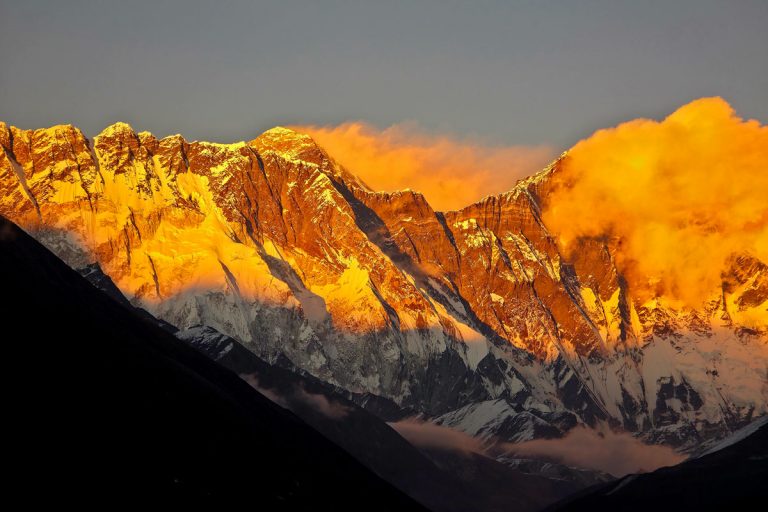
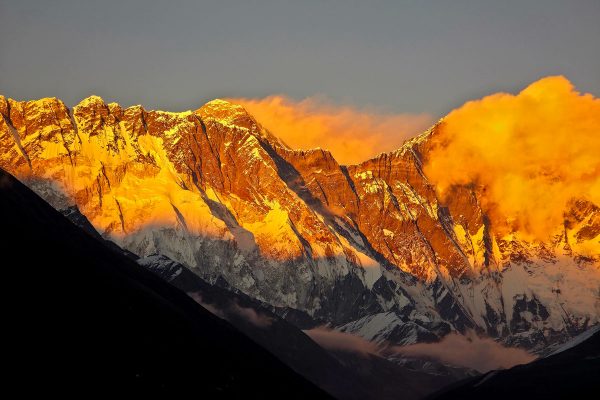
- Ascend to Kala Patthar (5,555 m/18,225 ft) before sunrise, and experience Mount Everest light up in gold.
- Experience a once-a-year cultural journey, blending Everest’s iconic milestones with spiritual energy of the Khumbu region during Mani Rimdu festival season.
EBC Trek with Mani Rimdu Festival Overview
The Everest Base Camp Trek with Mani Rimdu Festival 2026 is a classic and spiritual immersive Himalayan adventure for trekkers.
Exclusively curated in such a way it follows the legendary Everest trail at a steady, purposeful pace then trekkers experience a once-a-year spiritual celebration in the heart of the Khumbu region.
This Everest Cultural Trek takes you deep into the Everest region while experiencing the footsteps of mountaineers and Sherpa climbers.
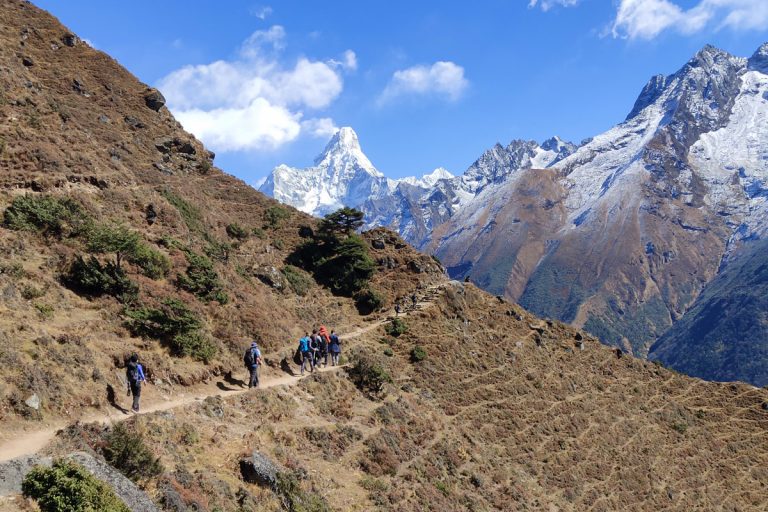
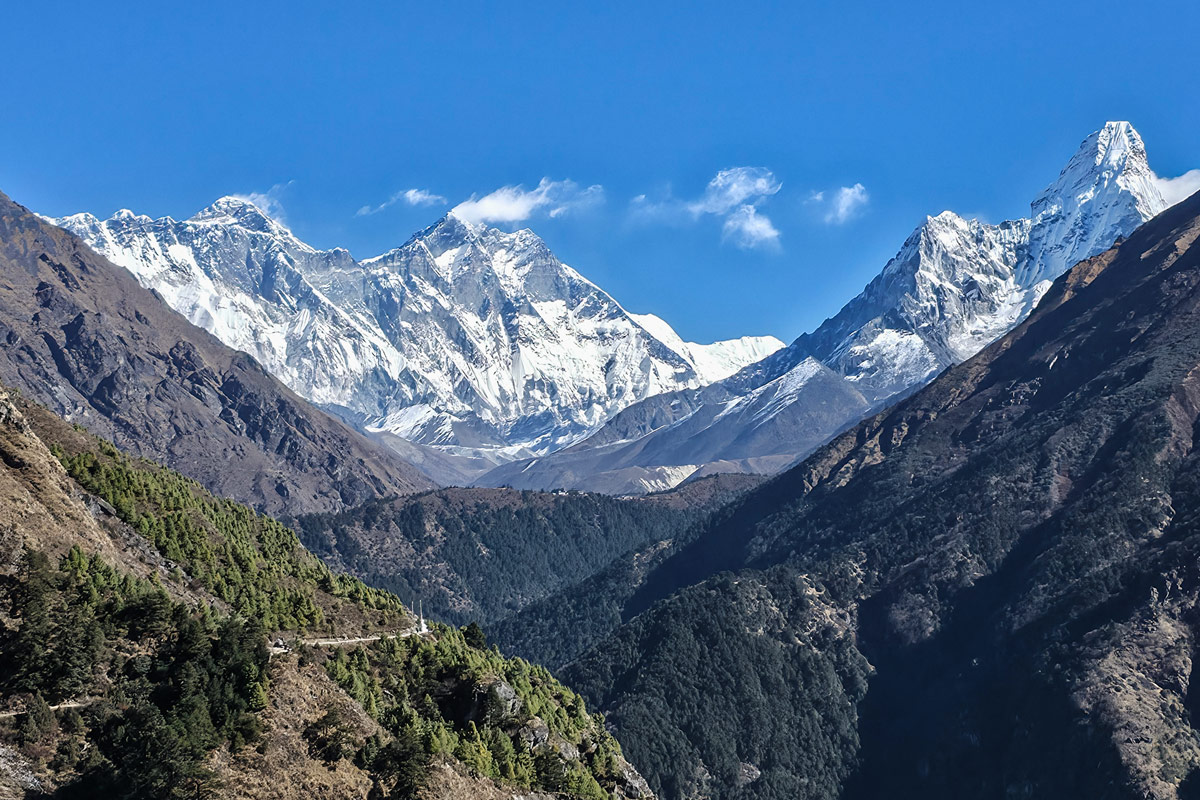
Along the Tengboche Mani Rimdu Festival journey, you’ll stay in comfortable teahouses, savor warm meals, meet Sherpa communities, and soak in unforgettable vistas of Mount Everest (8,848 m/29,029 ft), Lhotse, Nuptse, Ama Dablam, Thamserku, Kongde Ri, and more.
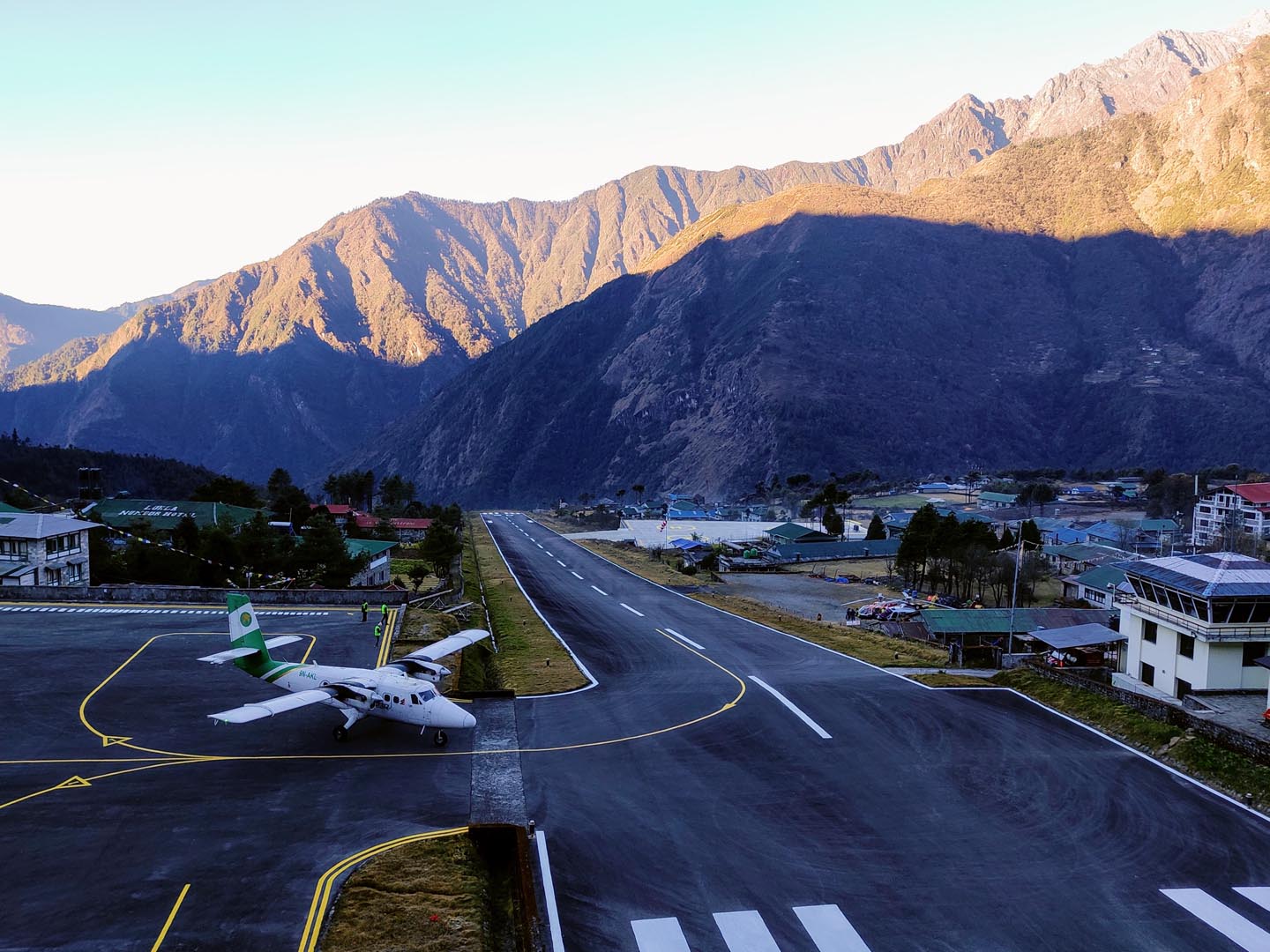
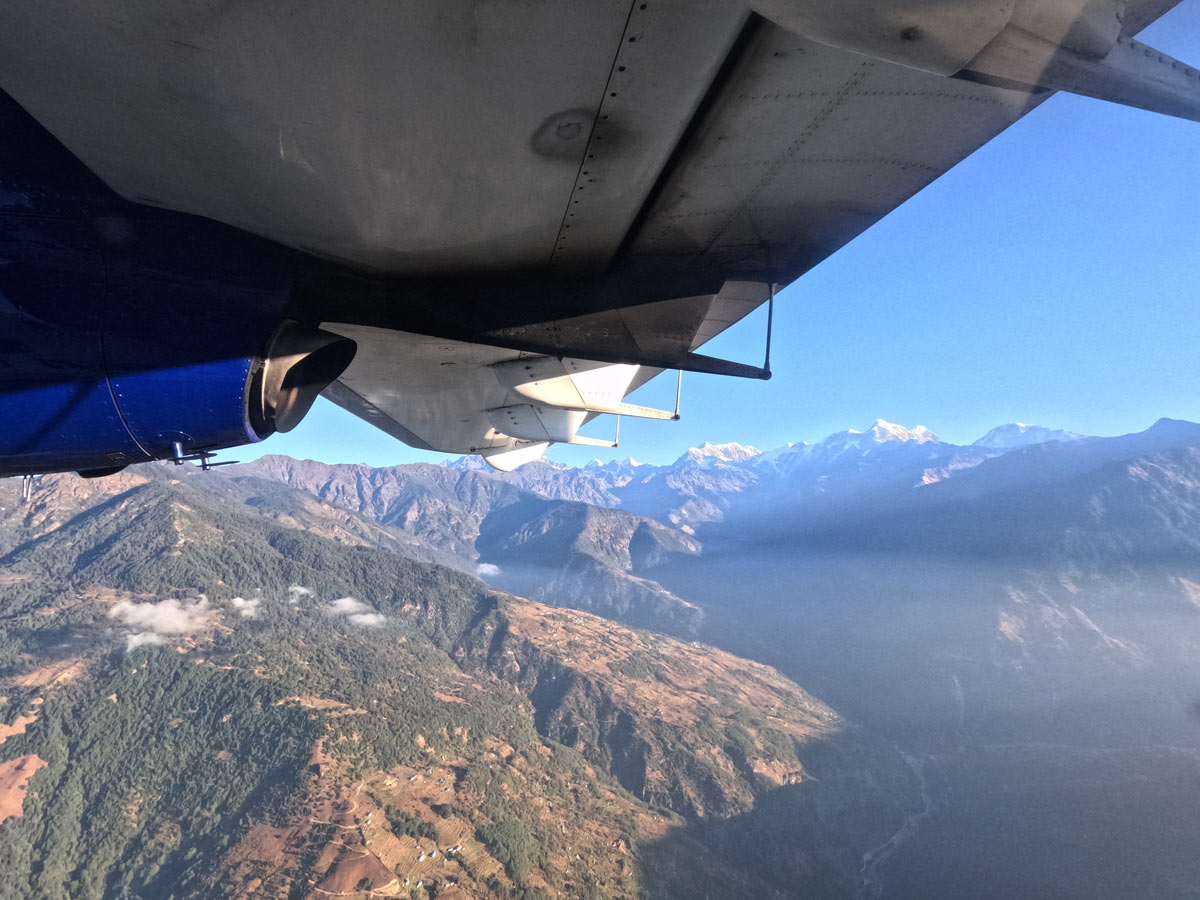
The journey begins in Kathmandu, where you’ll prepare everything before thrilling flight to world’s thrilling airport, Lukla also known as the gateway to Everest.
From there, you follow the serene trail through Dudh Koshi River to Phakding and ascend toward Namche Bazaar, the vibrant Sherpa hub of the region.
While your body needs rest for adaptation in high altitude region, acclimatization days in Namche and Dingboche are carefully planned into the EBC with Mani Rimdu Festival itinerary.
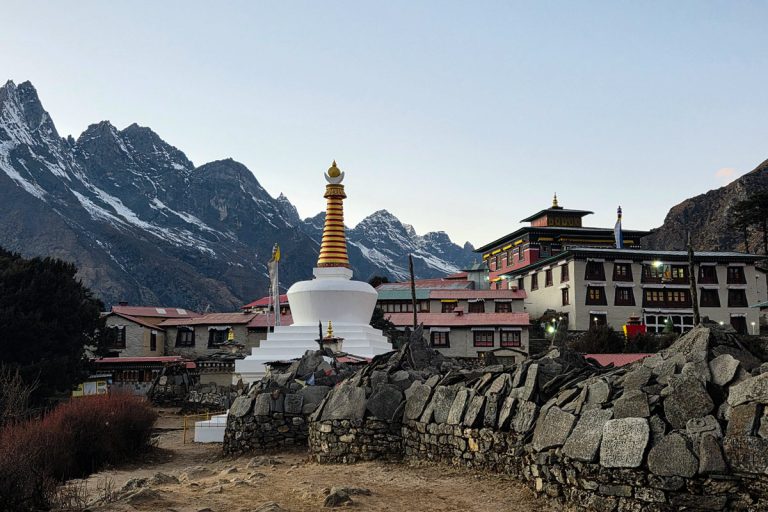
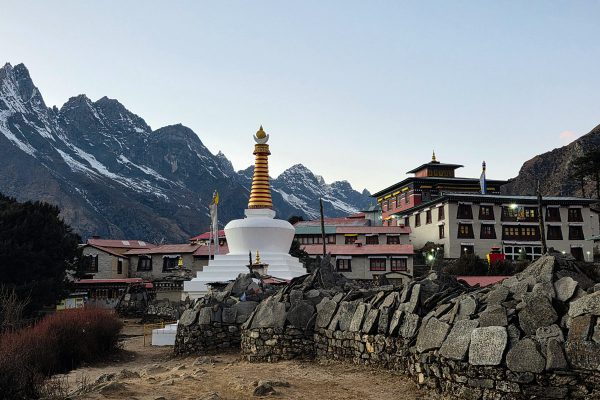
A key highlight comes when you reach Tengboche Monastery, the spiritual heart of the Khumbu region which is even more powerful and sacred during the Mani Rimdu Festival.
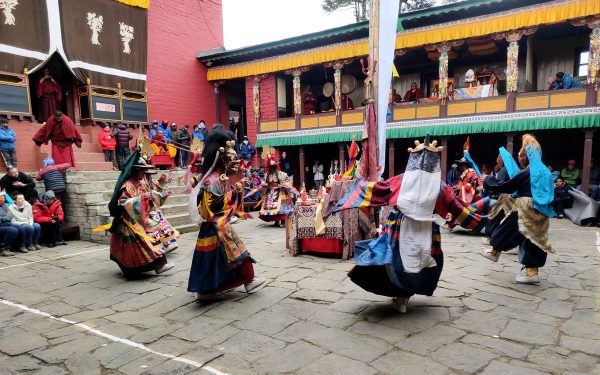
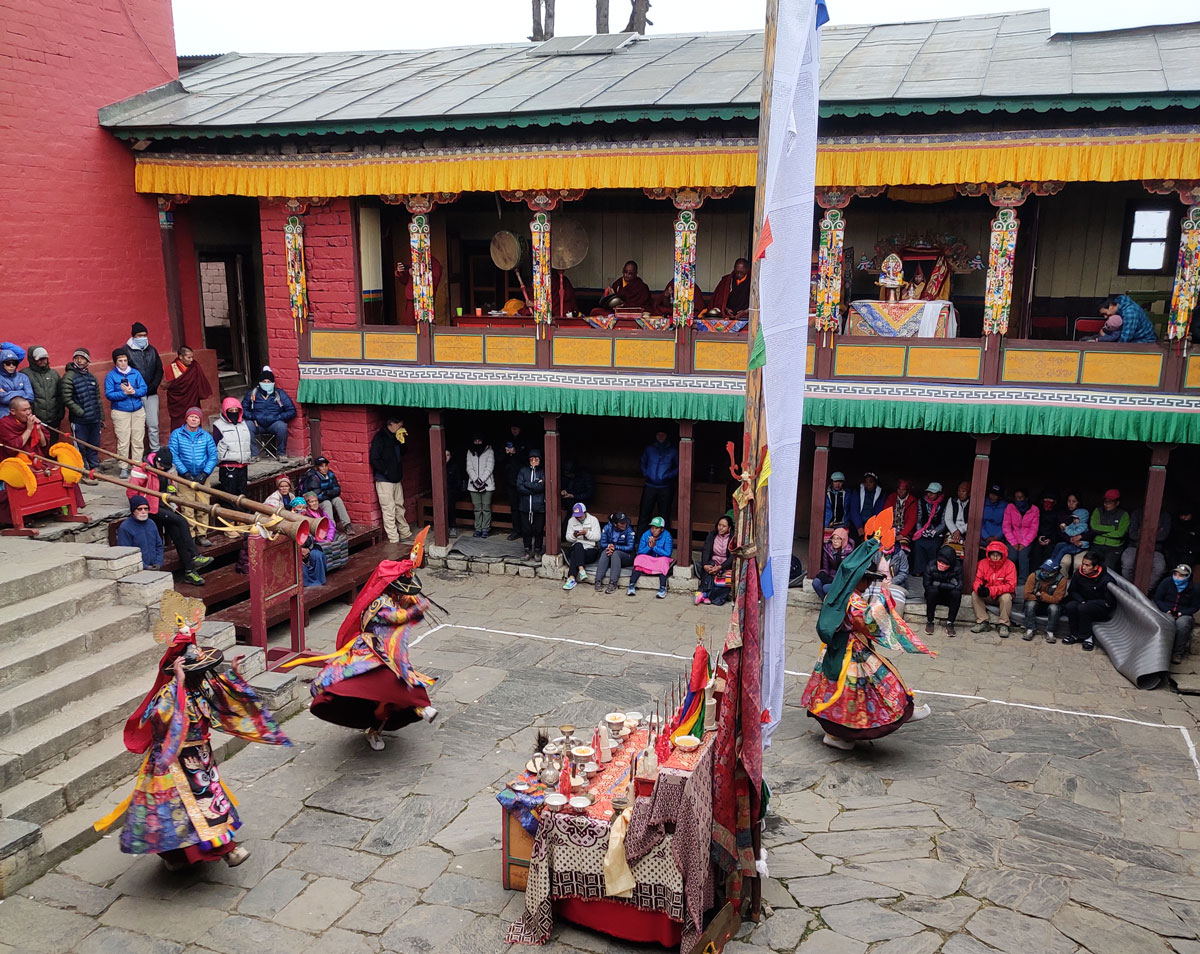
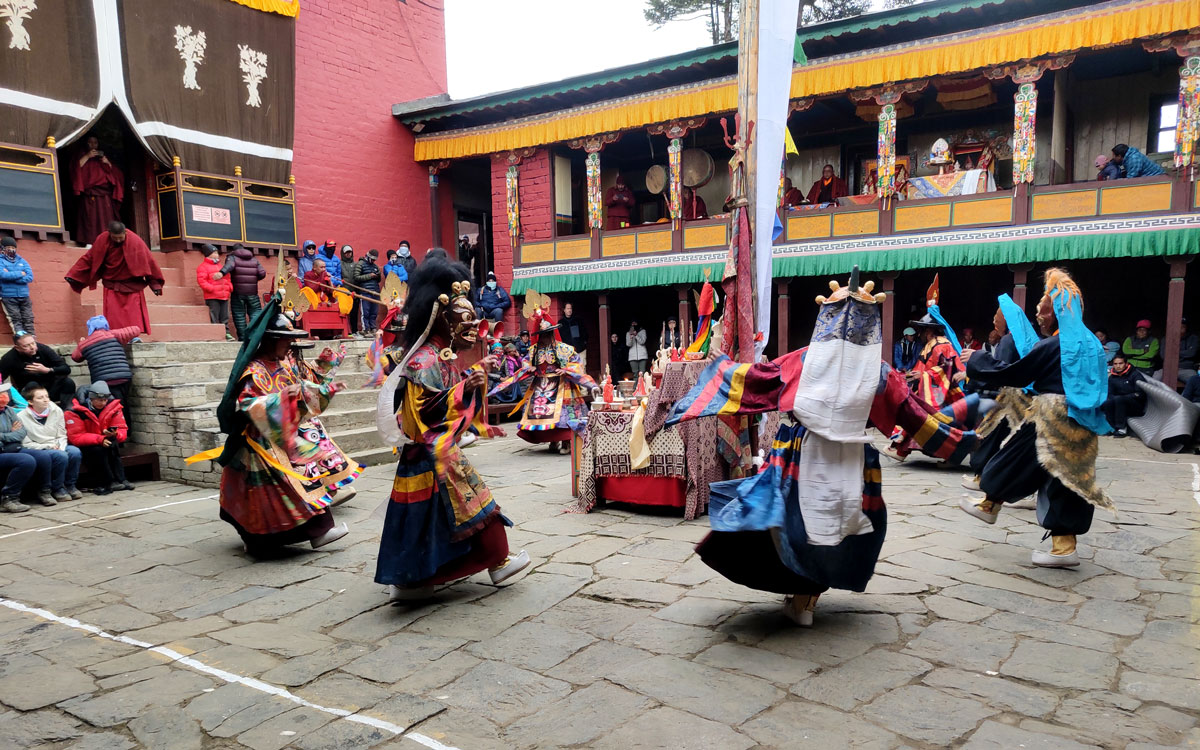
During the stay, you will witness the monastery come alive with chanting, blessings, and the famous masked dances (Cham) performed by monks in the courtyard, surrounded by prayer flags and breathtaking Himalayan giants.
It’s one of those rare trekking moments that helps you feel connected to the spirituality and more like being welcomed into something deeply local and meaningful.
From Tengboche, the trail continues through traditional Sherpa villages like Pangboche, Somare, Dingboche, Lobuche, and Gorak Shep, each step taking you higher into the rough terrain world.
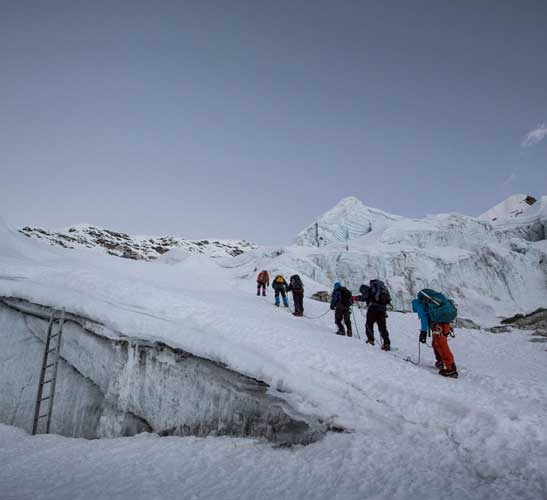
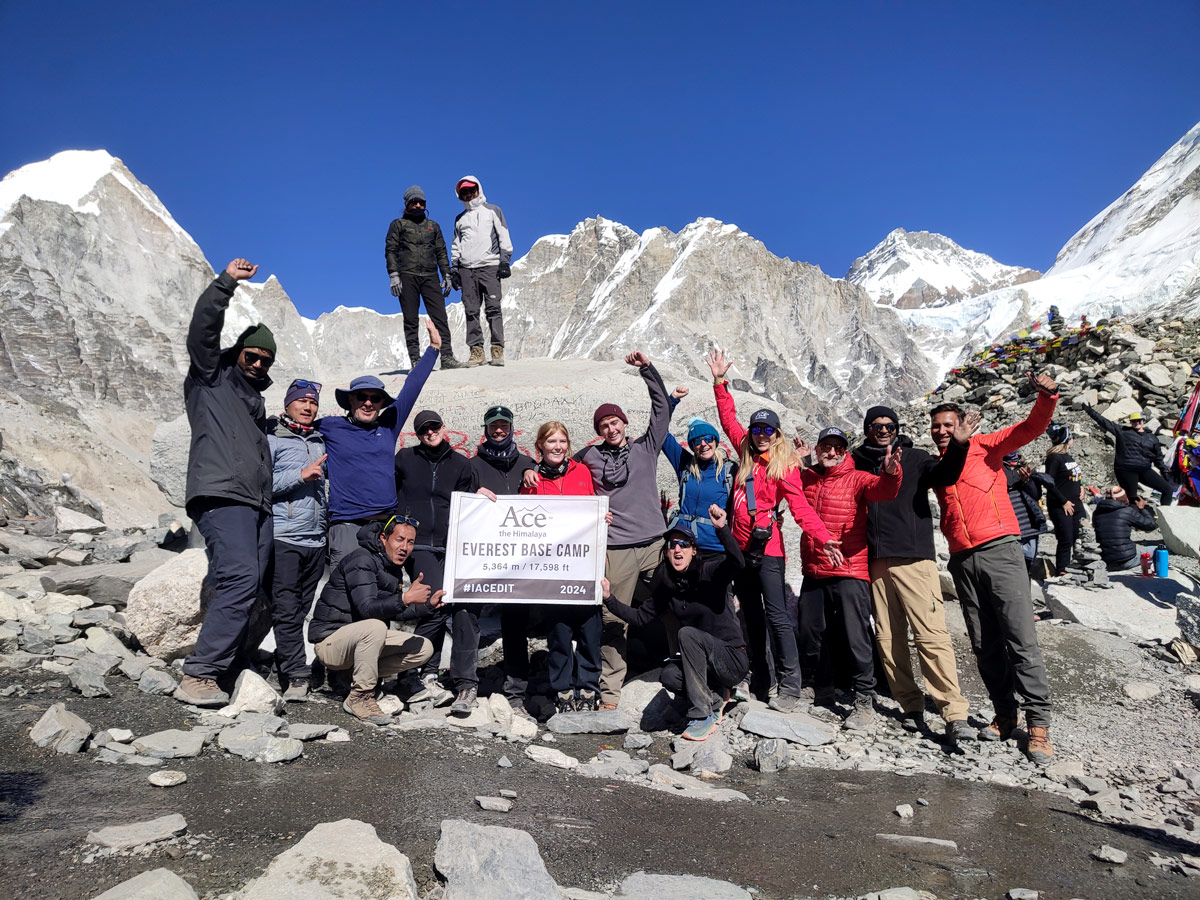
The key highlight of the trek appears when you stand at Everest Base Camp (5,364 m/17,598 ft), face-to-face with the raw experience of the Khumbu Glacier and Khumbu Icefall.
After settling for EBC day, next into early morning you hike up to Kala Patthar (5,555 m/18,225 ft), the most iconic viewpoint in the Everest region where sunrise glimmers Everest and the surrounding Himalaya panorama in gold.
Then you retrace your steps back through Pheriche, Tengboche, Namche, and Lukla, giving your body time to descend safely while encountering again the familiar warmth of Sherpa villages.
Back in Kathmandu, your journey ends with a celebration, sharing stories from the trail, reflecting on what you achieved especially Mani Rimdu festival experience.
This trek is exclusively curated for trekkers who want the authentic Everest Base Camp trek experience along with rare cultural privilege of Mani Rimdu at Tengboche.
Mani Rimdu Festival Dates 2026
The Mani Rimdu Festival 2026 will be celebrated at Tengboche Monastery over three days:
- October 26, 2026 – Wong (Empowerment Ceremony): The festival begins with sacred Buddhist rituals, blessings, and prayers performed by the monks to purify and prepare participants for the celebrations ahead.
- October 27, 2026 – Cham Masked Dances: This is the main festival day, featuring the famous masked dances performed by monks in elaborate costumes. These sacred dances symbolize the triumph of wisdom over ignorance and good over evil, making it the most spectacular day for visitors.
- October 28, 2026 – Jinsak Fire Ritual: The festival concludes with a traditional fire ceremony that symbolizes purification, the removal of obstacles, and prayers for peace, prosperity, and the well-being of all living beings.
Our Everest Base Camp Trek with Mani Rimdu Festival 2026 itinerary is carefully scheduled so you’ll be at Tengboche Monastery during the festival, giving you the rare opportunity to witness this once-a-year spiritual celebration while trekking through the heart of the Everest region.
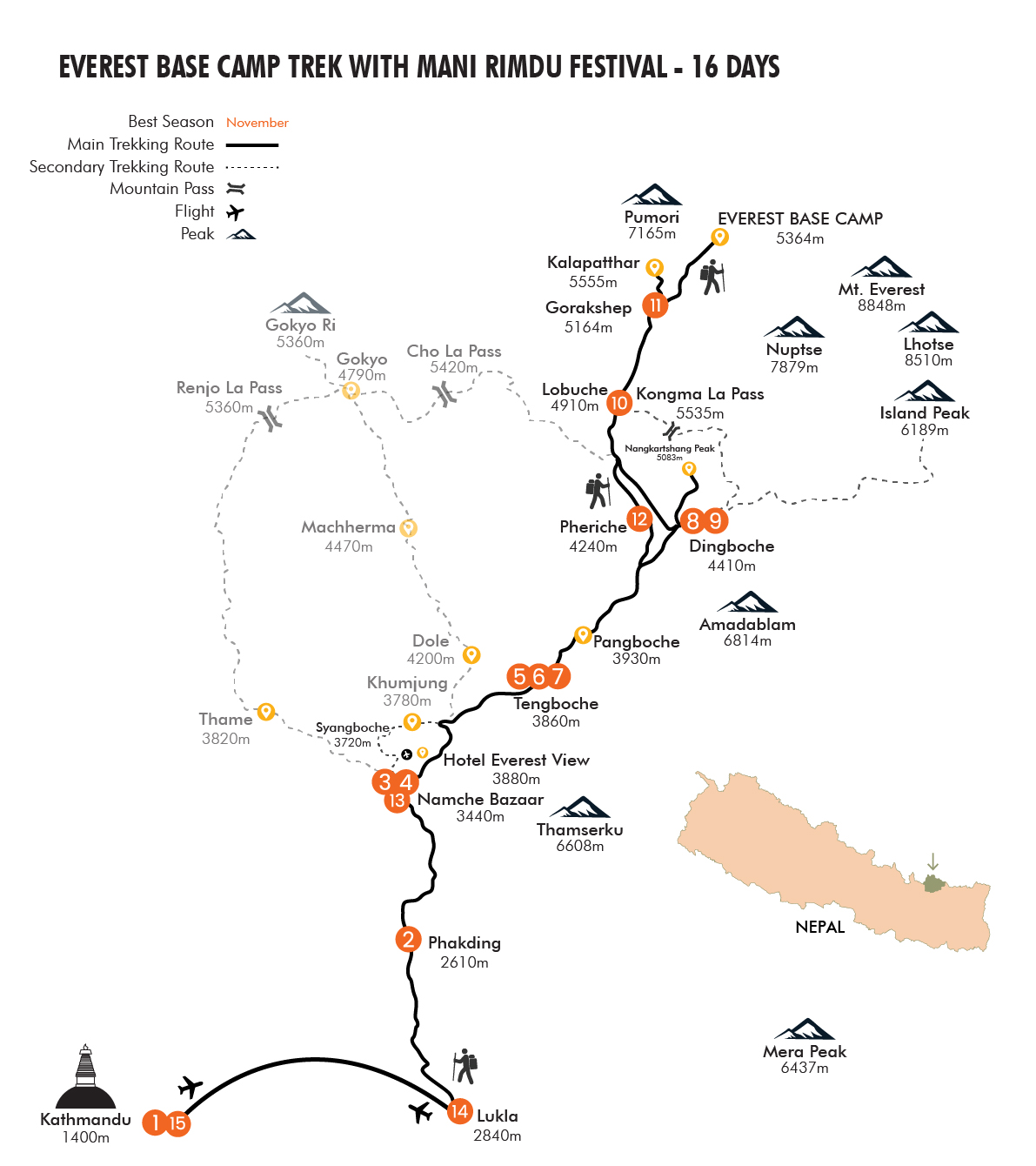
Short Itinerary
Arrival at Tribhuvan International Airport in Kathmandu (1,400 m/4,593 ft) and transfer to hotel. Overnight at 3-star Hotel.
Flight to Lukla (2,840 m/9,318 ft) from Kathmandu – 35 minutes or drive to Manthali – 5 to 6 hours and a 20-minute flight to Lukla, and then trek to Phakding (2,610 m/8,562 ft) – 3 to 4 hours. Overnight at a guesthouse.
Trek to Namche Bazaar (3,440 m/11,286 ft) from Phakding – 5 to 6 hours. Overnight at a guesthouse.
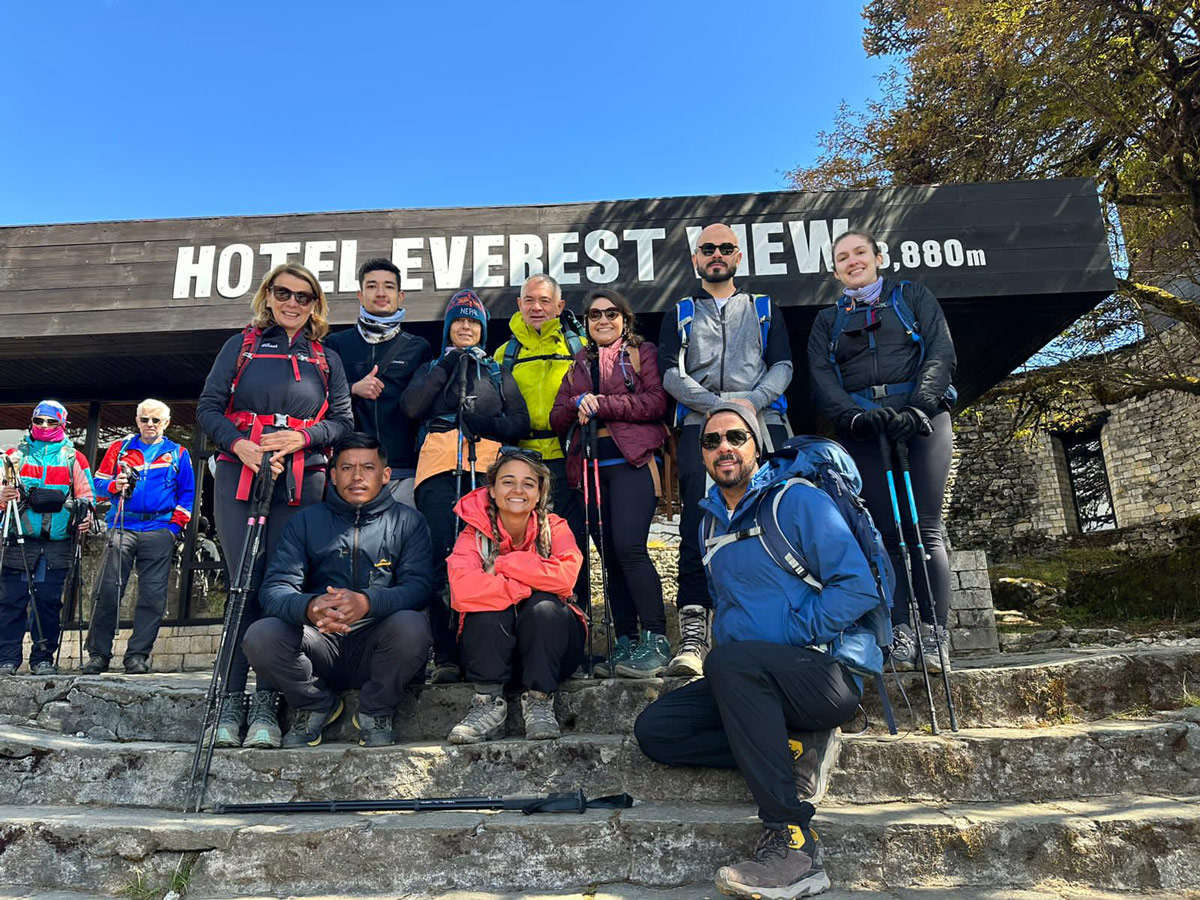
Acclimatization day at Namche Bazaar. Hike to Hotel Everest View (3,880 m/12,730 ft) and back – 4 to 5 hours. Overnight at a guesthouse.
Trek to Tengboche (3,860 m/12,664 ft) from Namche Bazaar – 5 to 6 hours. November – Attend first day of Mani Rimdu Festival. Overnight at a guesthouse.
Attend second day and celebrate Mani Rimdu Festival in Tengboche. Overnight at a guesthouse.
Attend third day of Mani Rimdu Festival in Tengboche. Overnight at a guesthouse.
Trek to Dingboche (4,410 m/14,469 ft) from Tengboche – 5 to 6 hours. Overnight at a guesthouse.
Acclimatization Day at Dingboche. Hike to Nangkartshang Peak (5,083 m/16,676 ft) – 4 to 5 hours. Overnight at a guesthouse.
Trek to Lobuche (4,910 m/16,109 ft) from Dingboche – 5 to 6 hours. Overnight at a guesthouse.
Trek to Everest Base Camp (5,364 m/17,598 ft) & then back to Gorak Shep (5,164 m/16,942 ft) – 8 to 9 hours. Overnight at a guesthouse.
Early morning hike up to Kala Patthar (5,555 m/18,225 ft) and then, descend to Pheriche (4,240 m/13,911 ft) – 7 to 8 hours. Overnight at aguesthouse.
Trek to Namche Bazaar (3,440 m/11,286 ft) from Pheriche – 7 to 8 hours. Overnight at a guesthouse.
Trek to Lukla (2,840 m/9,318 ft) from Namche Bazaar – 7 to 8 hours. Overnight at a guesthouse.
Fly back to Kathmandu – 35 minutes or Manthali/Ramechhap – 20 minutes from Lukla and same day drive to Kathmandu by shared tourist vehicle – 5 to 6 hours. Overnight at a 3-star hotel.
Transfer to the International Airport for your final departure.
 Note
Note
Our standard itinerary might differ slightly due to unpredictable happenings and events out of our control. Factors such as flight cancellation/delay, unfavorable weather, natural calamities, newly implemented government rules, political affairs, trekkers’ health condition, etc., are possible. Evaluating the situation’s possible solutions allow the trekking to resume as much as possible based on the best alternatives. In these times, we look for your cooperation and flexibility.
Adding two spare days after your trek is strongly advised. Flights to and from Lukla are often delayed or canceled due to weather conditions, and these buffer days help avoid complications with your international travel plans. You also have options to customize this trip where you can add on a sightseeing tour in Kathmandu, other adventure sports or day trips around the country before or after the trek.
 Lukla flight information
We would like to inform you regarding the Lukla flight details which may affect your itinerary. During peak seasons, (including March, April, May, September, October and November) the flight to Lukla will be operated from Ramechhap/Manthali due to air traffic expansion in Kathmandu, which is about a 5 to 6-hour drive from Kathmandu. Whereas, during nonpeak seasons, (including January, February, June, July, August and December) the flight is operated from Kathmandu.
Please be aware that the decision regarding the operation of flights solely depends on the airline and is influenced by the volume of travelers during the specific month.
Unpleasant weather conditions, congested traffic in the Airport, unmanaged runway, topographical difficulties, etc., are the significant reasons for Lukla flight delay/cancellation. Therefore, if you intend on trekking in the land of Everest region, arranging additional one or two days in your trip is highly preferable. This will help in case of flight delay/cancellation and thus board on the pre-planned international flight.
EBC Trek with Mani Rimdu Festival Departures 2026 & 2027
Looking for personalized experience? We organize privately guided journey which is mainly designed to fit your taste and interest. Please fill out the form below to get started.
Price Includes
Accommodation
- Twin-sharing/double accommodation in a 3-star hotel for 2 nights in Kathmandu including breakfast (Private room accommodation can be organized at an extra cost).
- Twin-sharing guesthouse accommodation during the trek for 13 nights in the Everest Region with attached bathrooms in Lukla, Phakding & Namche.
Meals & Drinking Water
- All your standard meals during the trek (13 Breakfasts, 13 Lunches and 13 Dinners) including a tea or coffee with each meal.
- Fresh seasonal fruits each day after dinner during the trek.
- A farewell dinner on the last night in Nepal.
- Purified drinking water during the trek using Water Filter or water purification tablets.
Transportation & Domestic Flight
- All (international and domestic) airport transfers on a tourist vehicle.
- Kathmandu – Manthali – Kathmandu transportation by shared tourist vehicle.
- Round-trip airfare between Kathmandu/Manthali and Lukla.
Guide and Staff
- Experienced, wilderness first-aid trained, government licensed, English speaking, and locally recruited Ace the Himalaya’s trekking guide (2 guides for group size more than 7 people).
- Porters during the trek for carrying luggage (1 porter for every 2 clients).
- Wages, accommodation, meals, gear, insurance, and medications for all staff.
Permits
- Sagarmatha (Everest) National Park Permit.
- Pasang Lhamu Rural Municipality fee.
- TIMS (Trekkers’ Information Management System) card.
- Tengboche Monastery entrance fee.
Benefits and Takeaways
- 1 Ace the Himalaya’s duffel/kit bag, trekking map, sun hat, Buff (neck gaiter).
- A comprehensive first aid kit, including an Oximeter to check pulse and oxygen levels daily in the mountains.
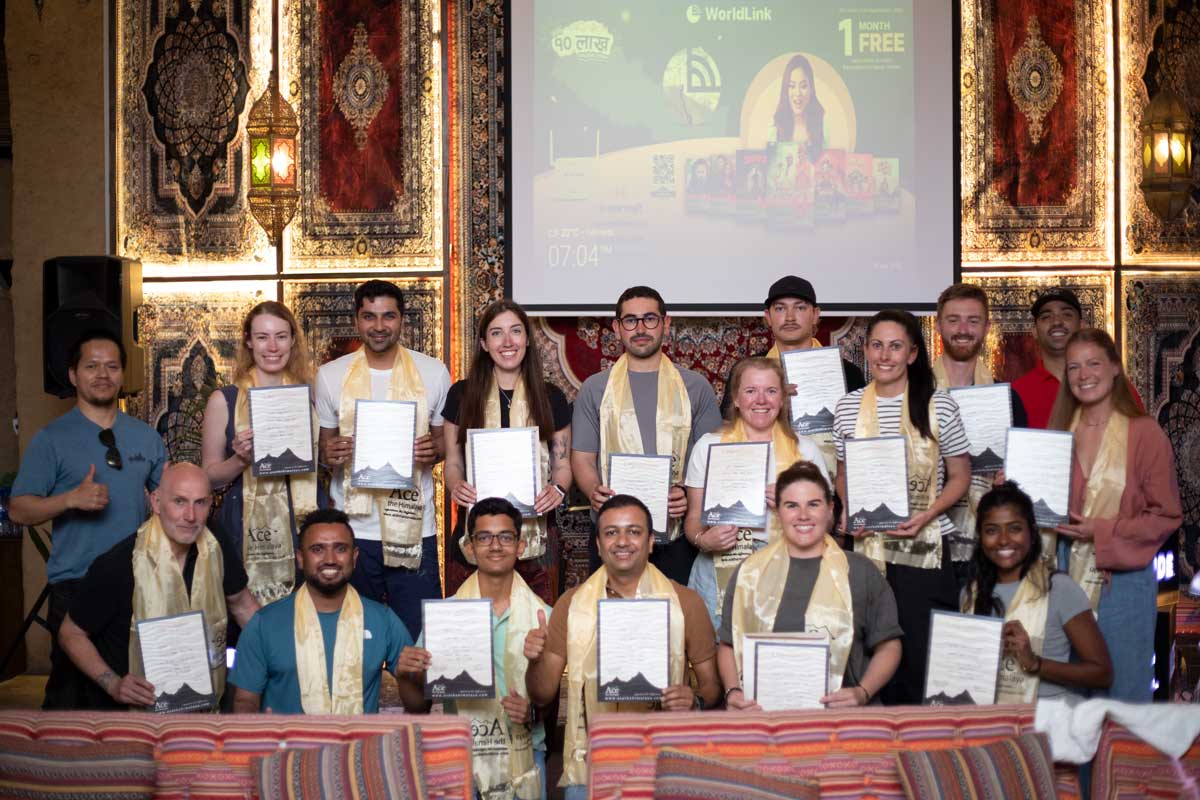
- Trip completion certificate.
Administrative & Taxes
- All administrative expenses and government taxes.
Price Excludes
- Meals (lunch and dinner) in Kathmandu
- International flight fare and airport departure tax
- Nepal Entry Visa can be obtained on arrival (15 days – USD 30, 30 days – USD 50, and 90 days – USD 125)
- Travel insurance along with high-altitude emergency evacuation coverage
- Alcoholic beverages, cold drinks and juices
- Tips to trekking staff and driver
- Personal Trekking gear and equipment
- Single room supplement – available on request for travelers who prefer a private room instead of twin-sharing, at an additional cost.
- Any expenses other than the Price Include section
Everest Base Camp Trek Itinerary
Expand AllDay 01: Arrival at Tribhuvan International Airport in Kathmandu and transfer to hotel
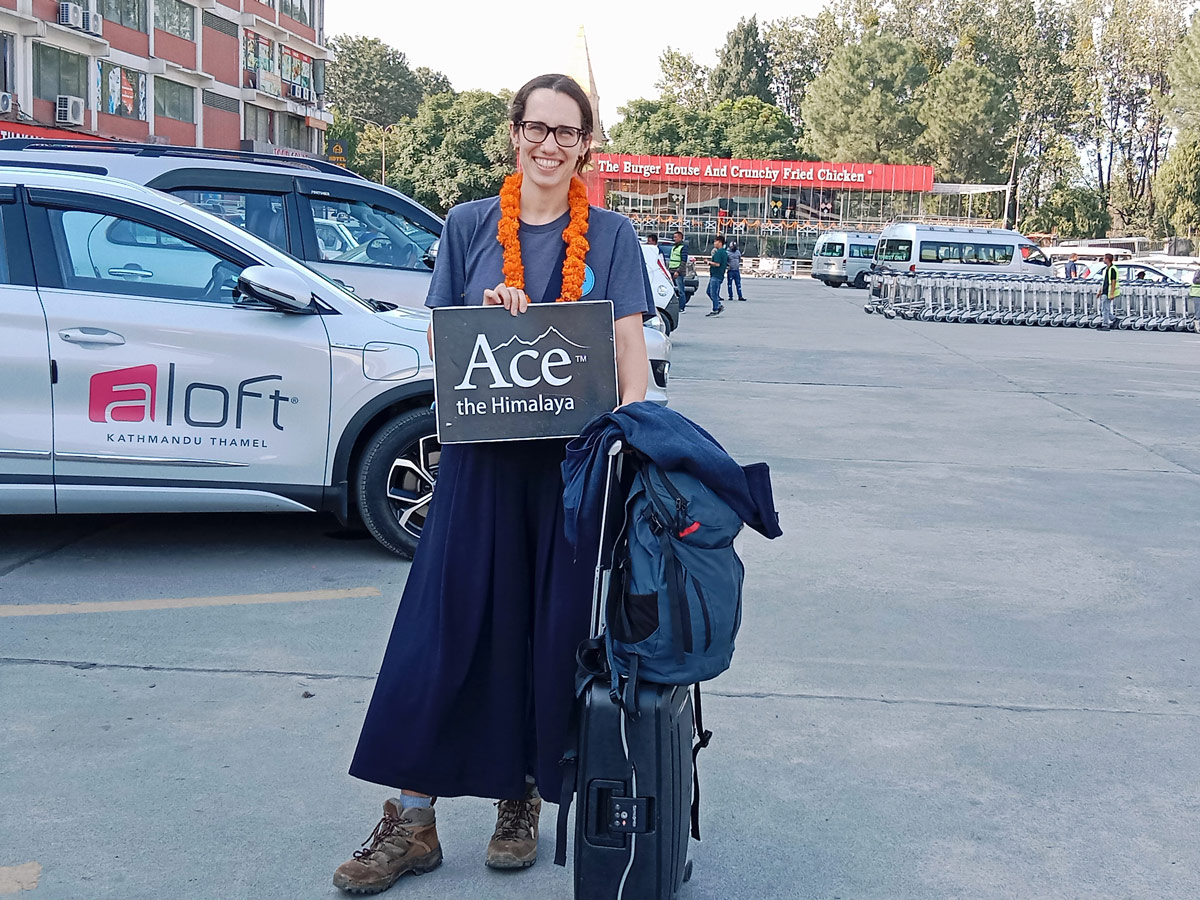
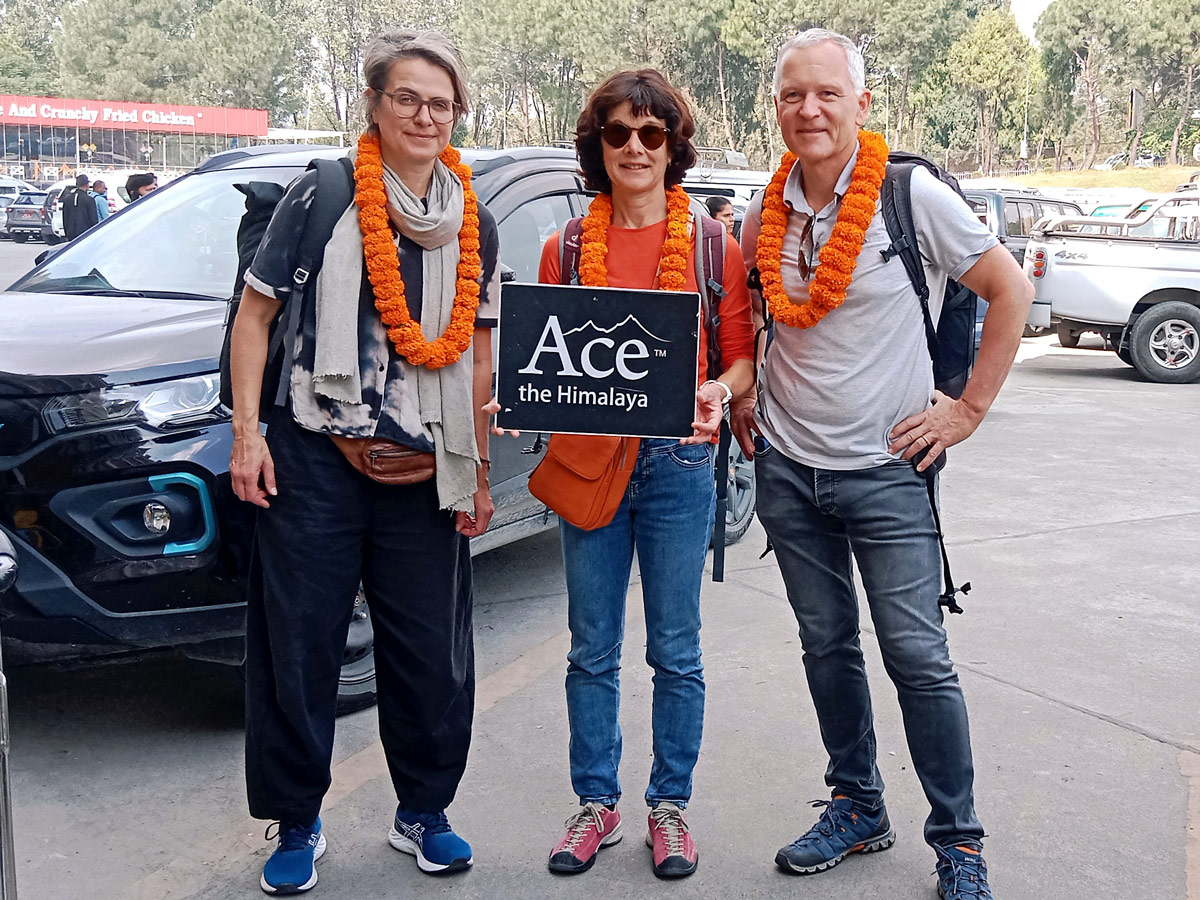
Upon your arrival at Tribhuvan International Airport in Kathmandu, one of our representatives will warmly welcome you. You’ll be escorted to your hotel in our private tourist vehicle.
Later, you’ll attend a pre-trip briefing with your trekking guide and a member of our team.
This is your chance to go through the Everest Base Camp trek with Mani Rimdu itinerary, discuss altitude, gear, weather conditions, and ask any questions before heading into the Himalayas.
Note: Pre-trip meeting will be done at the office if you arrive before 4 pm and in your hotel itself if you arrive later in the evening. Be sure to bring two copies of passport-sized photos and a readable copy of your travel insurance policy to the meeting.
These documents help to acquire trekking permits and related documentation during the trek. Pay the remaining balance of your invoice and sign in the legally binding trip form and non-liability disclaimer before you start trekking journey.
Day 02: Fly to Lukla from Kathmandu or drive to Manthali/Ramechhap & flight to Lukla and then trek to Phakding
Manthali to Lukla Flight (March, April, May, September, October and November)
During peak seasons, such as March, April, May, September, October and November the flight to Lukla will be operated from Ramechhap/Manthali due to air traffic expansion. The Manthali/Ramechhap airport is about a 5 to 6 hours drive away from Kathmandu.
On this day, we wake up between 1:00 AM and 3:00 AM, take an escorted shuttle to Manthali Airport in a shared tourist vehicle, and board a 20-minute flight to Lukla.
Kathmandu to Lukla Flight (January, February, June, July, August and December)
The flight to Lukla is typically operated from Kathmandu during nonpeak seasons, which include January, February, June, July, August and December. Please be aware that the decision regarding the operation of flights solely depends on the airline and is influenced by the volume of travelers during a specific month. On this day, we wake up between 5:00 AM and 6:00 AM. Our staff will escort you to the domestic airport terminal in Kathmandu, where you will board a 35-minute flight to Lukla.
 Helicopter Option
You have the option to book a direct helicopter flight from Kathmandu to Lukla for an extra charge of USD 450 per person. This price is quoted on a 5-people sharing basis. This is the best alternative to avoid the long drive to Manthali airport during peak season (March, April, May, October, and November).
The night before Lukla has its own kind of preparation. You’ll probably end up packing, repacking, and cutting things out in your duffel bag limited to only 10–12 kg.
Remember to input warm layers, a down jacket, toiletries, and a few personal essentials other thing else can stay behind.
Next morning comes early, the flight is to Lukla is thrilling and short.
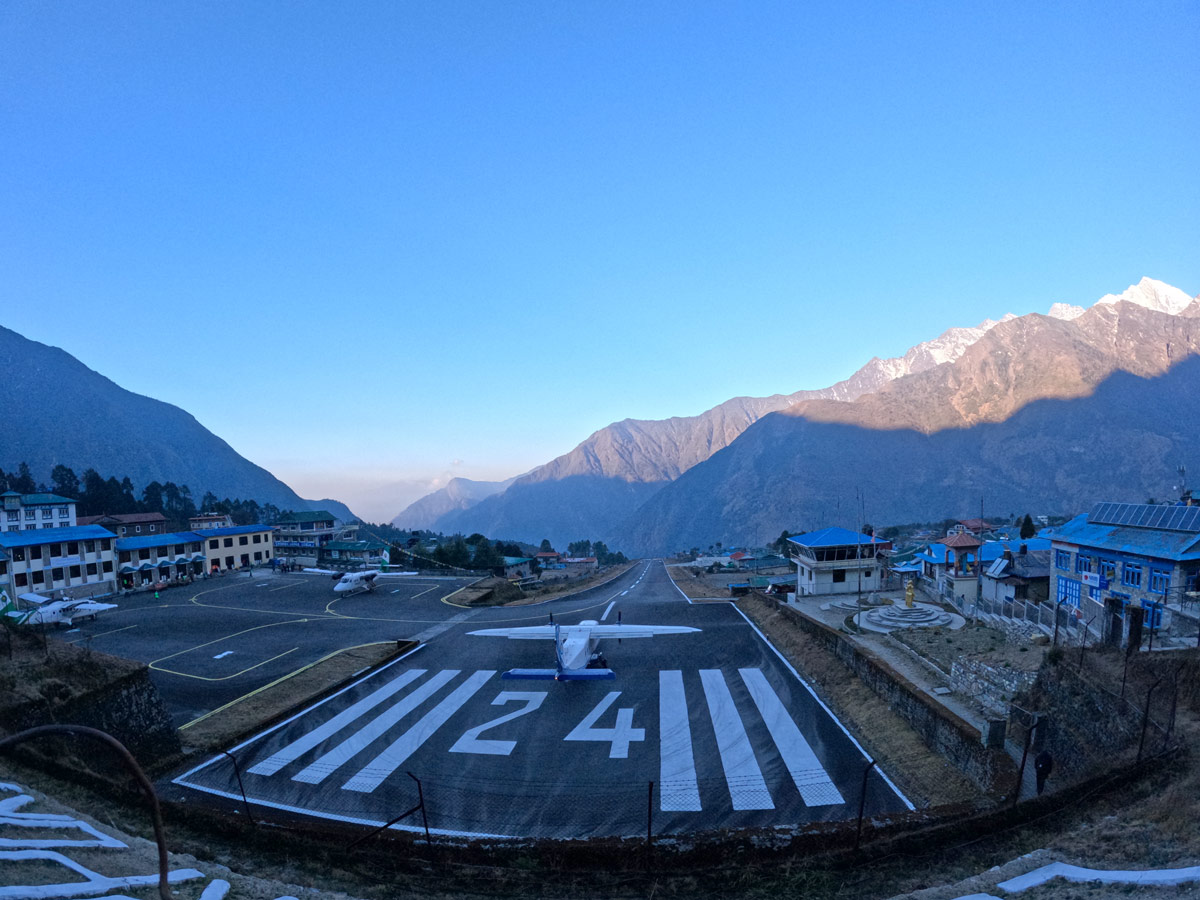
One moment you’re in Kathmandu, and in very next moment you are landing at Lukla (2,840 m/9,318 ft) experiencing adrenaline rush in little runway, stepping into a doorway of the Everest region.
At Tenzing–Hillary Airport, you meet your guide and porter, sort your gear, and grab a quick tea or coffee. After that, it’s time to step onto the trail that makes the whole journey feel real.
The walk begins gently, easing you into the rhythm of the Khumbu.
We descend through serene Cheplung (2660 m/8,727 ft), and almost immediately the mountains like Kusum Khangkaru (6,367 m/20,889 ft) and Nupla (6,861 m/22,510 ft) start appearing above the valley.
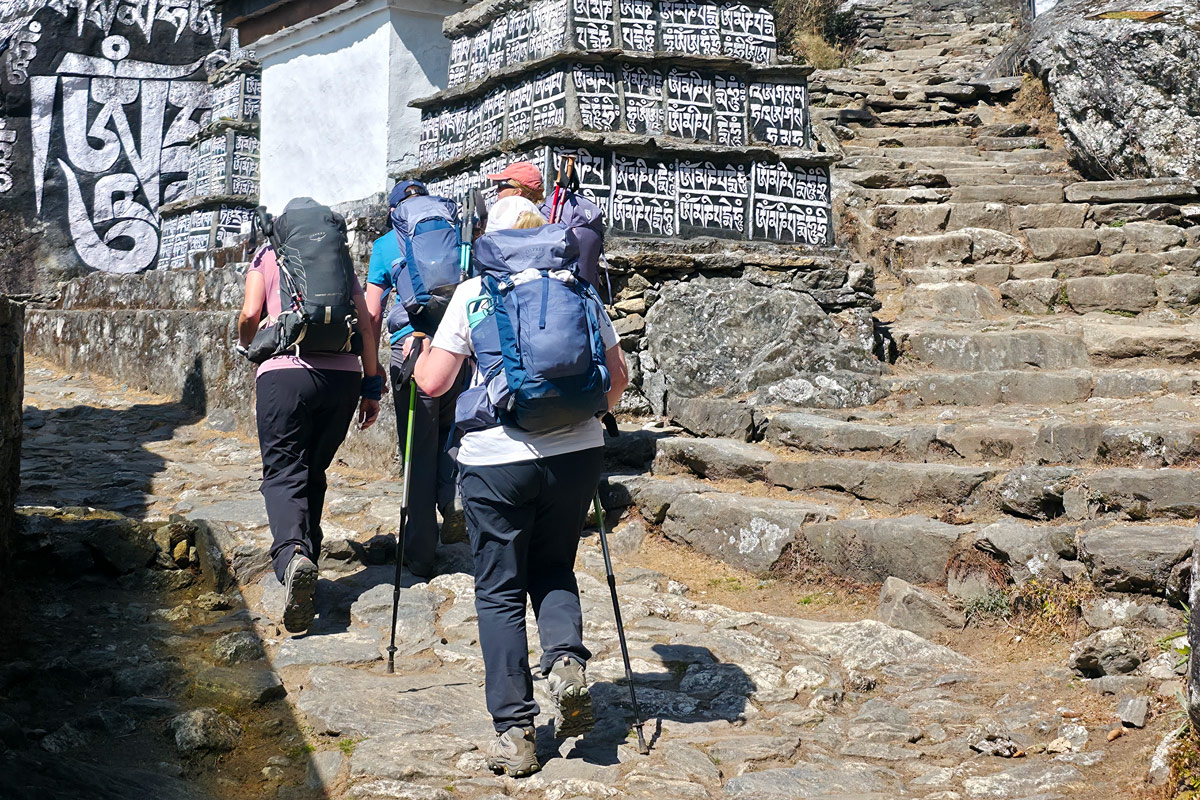
The path follows along the glacial Dudh Koshi River. You will witness spinning prayer wheels, mani stones carved with mantras, Sherpa houses nestled into the hillsides, and fluttering prayer flags.
We pass Thado Koshi, rejoin the main route toward Namche which is just above Chaurikharka (2,713 m/8,901 ft), and continue through Ghat, where chortens and bright flags add a quiet spiritual atmosphere.
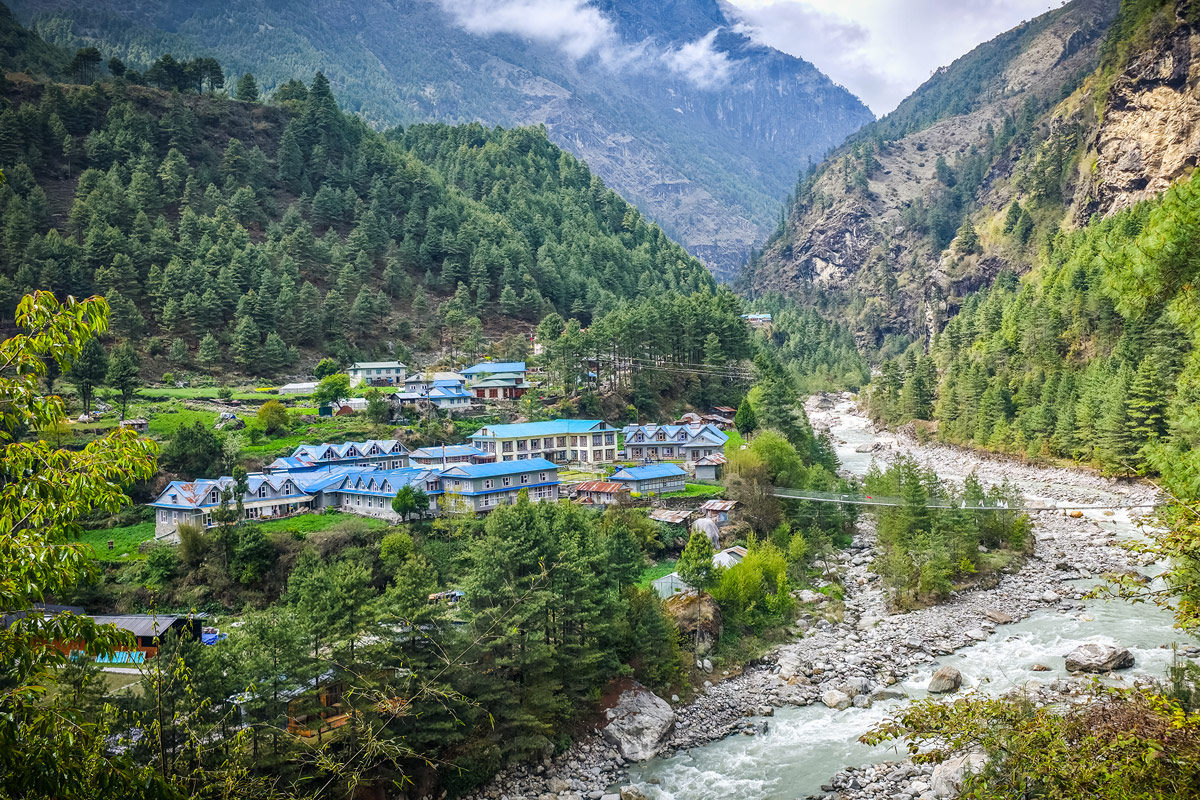
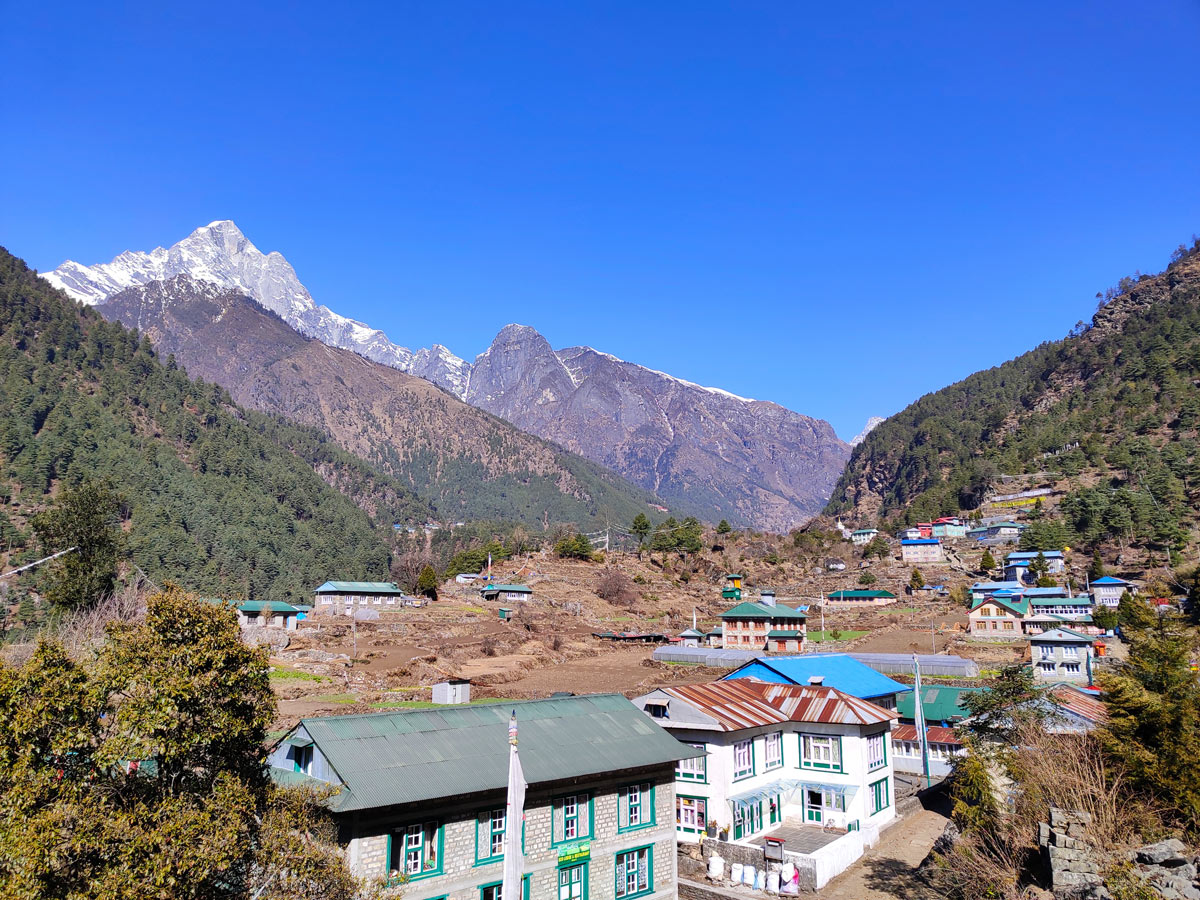
After a brisk hiking, we arrive in Phakding (2,610 m/8,563 ft), a peaceful riverside village surrounded by forested hills.
It’s the perfect place to settle into mountain life with a warm meal, a cozy teahouse, and the steady sound of the Dudh Koshi in the background as you fall asleep to your first night in the Everest region.
Day 03: Trek to Namche Bazaar from Phakding
After a hearty breakfast in Phakding, we step back onto the trail with the Dudh Koshi River beside you, sparkling and loud in the morning light.
The walk feels lively and scenic, with the path weaving in and out of pine forest and opening into small Sherpa settlements that make the valley feel lived-in and welcoming.
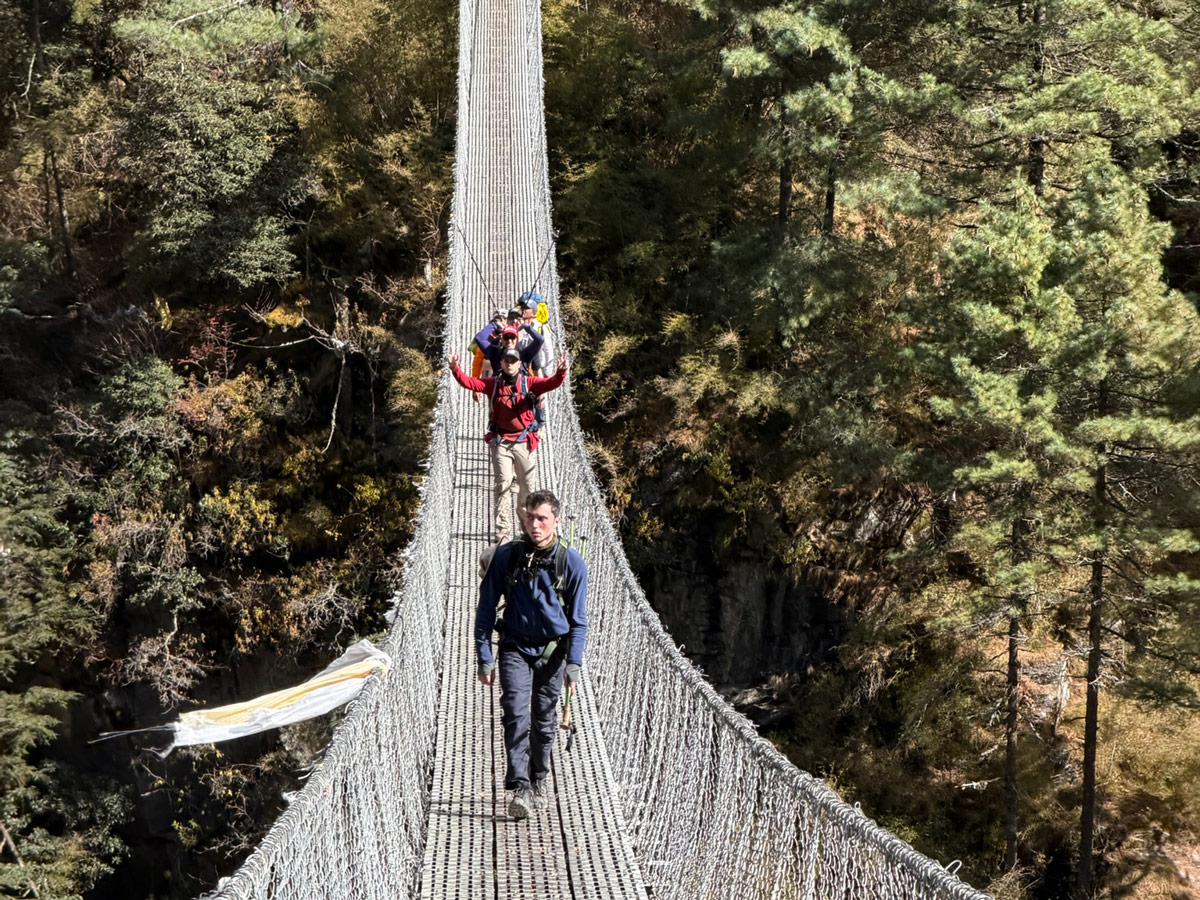
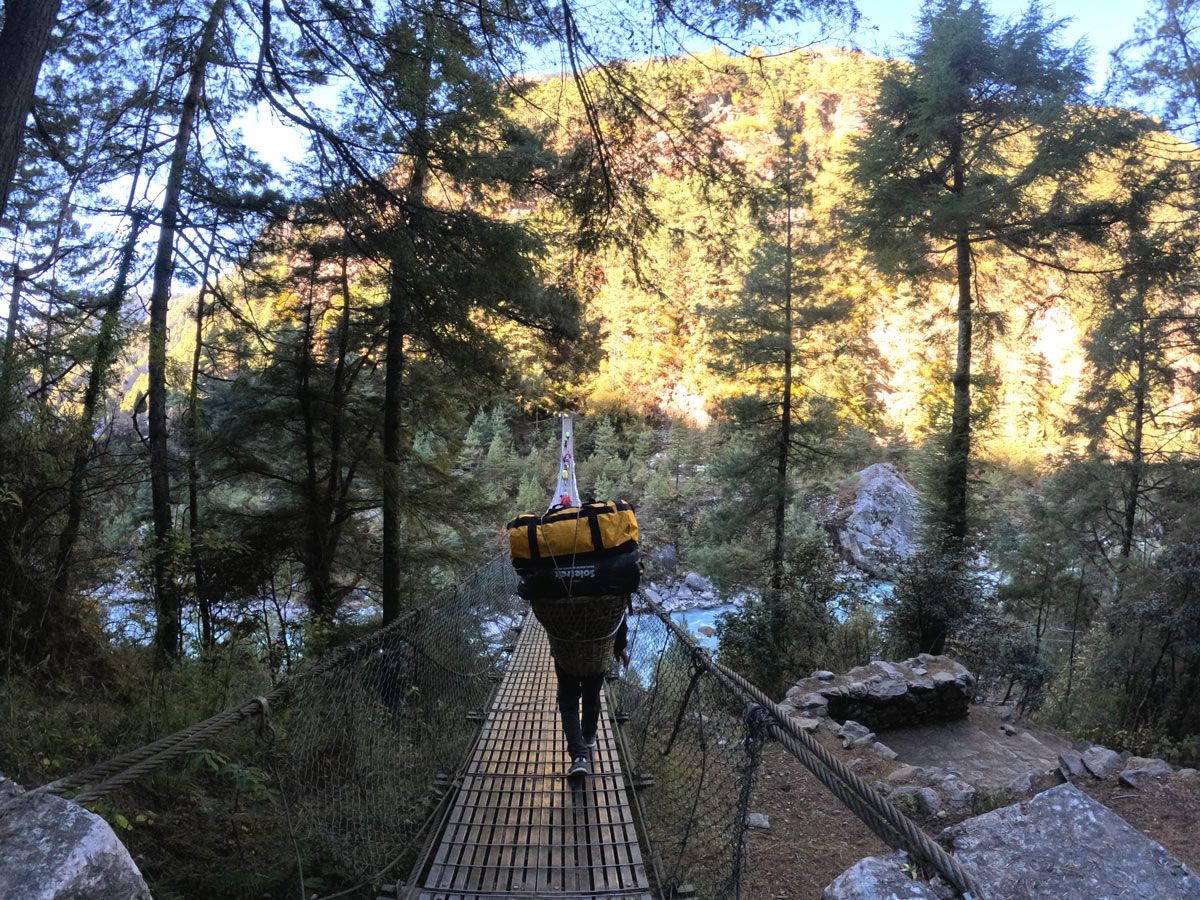
We’ll cross a few suspension bridges early on then pass through villages like Toktok, Benkar, Chomoa, and Monjo. We will also pass stone houses, prayer wheels, mani walls, and little chortens line the route.
It’s the kind of hiking where we’re constantly stopping for small moments watching Jhopke and yaks move along the trail, trying to read carved mantras, or just soaking in peaceful valley.
At Monjo (2,840 m/9,318 ft), we enter Sagarmatha National Park, and our permits are checked at the checkpoint.
From here, the trail stretch down to Jorsalle (2,740 m/8,989 ft), a quiet riverside spot that’s perfect for a lunch break and a quick rest before the tougher section begins.
After Jorsalle, the bridges get higher and the excitement picks up.
We will cross more suspension bridges, including the famous Hillary Bridge, and then the climb truly starts with steady, continuous, and very “Everest trek” in the best way.
The trail pulls us uphill through pine forest toward Top Danda and we get that first unforgettable reward at Mount Everest (8,848 m/29,029 ft), standing tall with Lhotse (8,516 m/27,940 ft), Nuptse (7,861 m/25,791 ft), Thamserku (6,608 m/21,679 ft) and Taboche (6,495 m/21,309 ft) nearby.
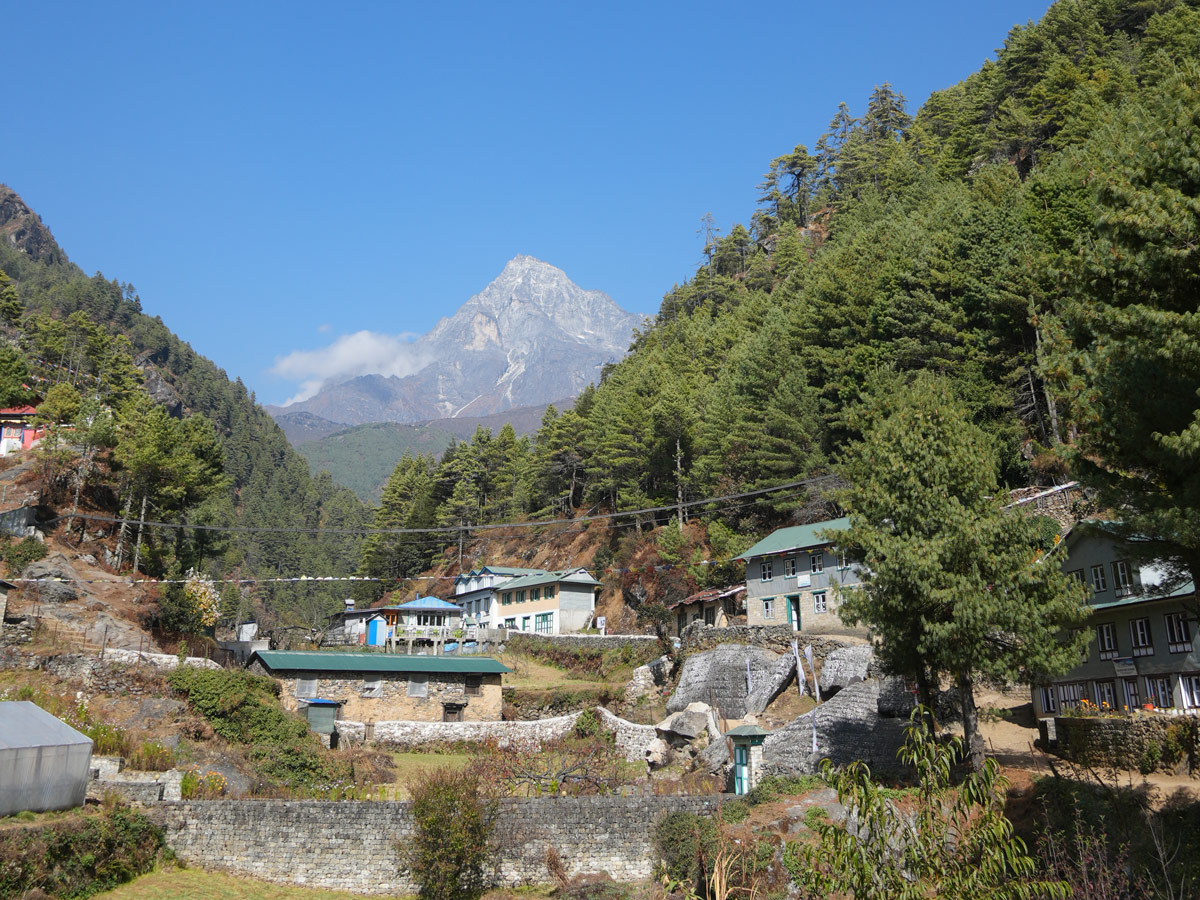
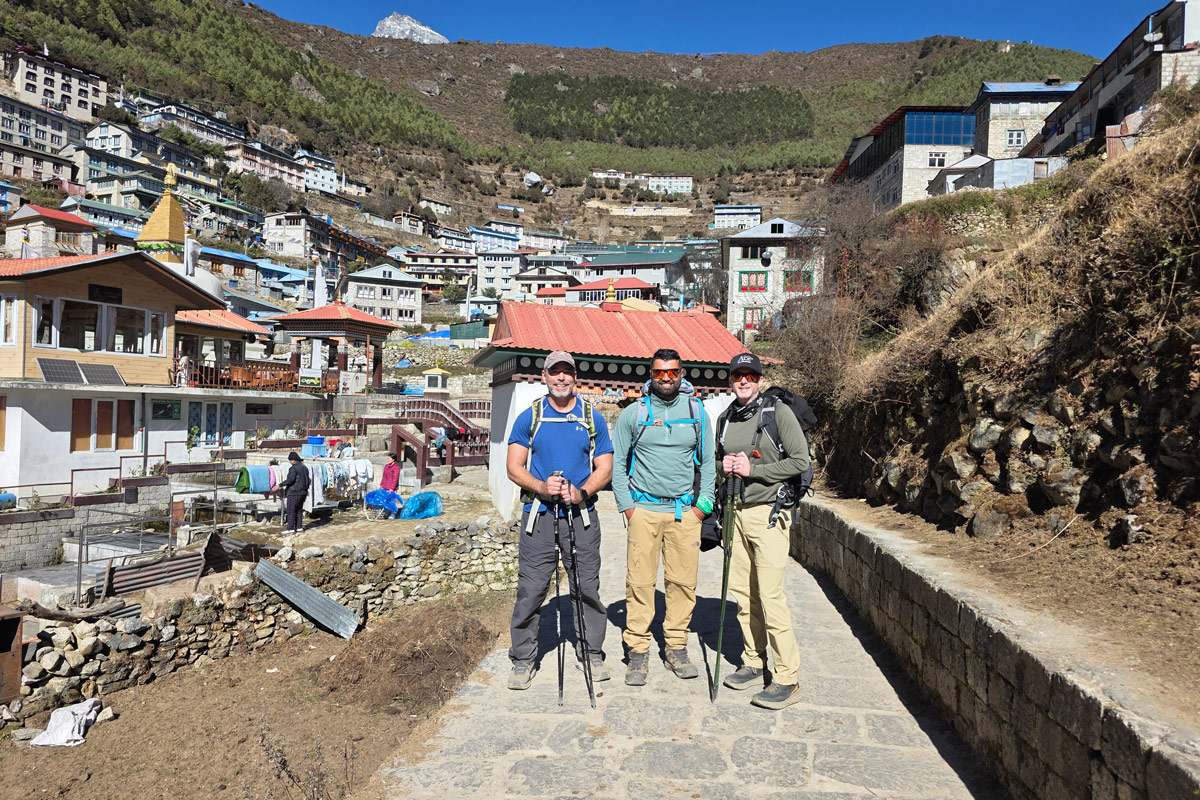
Then the final stretch into Namche Bazaar (3,440 m/11,286 ft) is adorned with prayer flags and mani stones, and the whole journey starts to feel more spiritual as we climb higher.
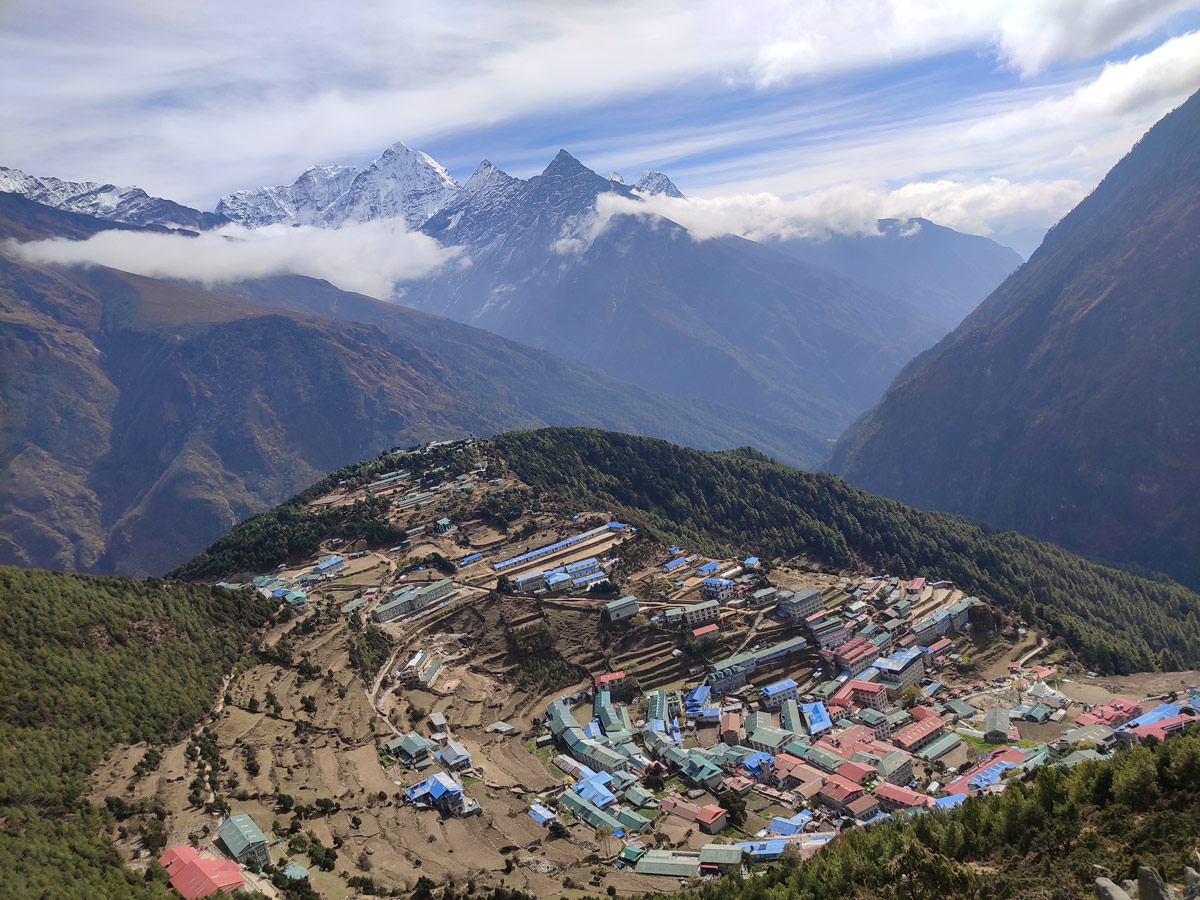
After a brisk hour hike, Namche appears as an amphitheatre-shaped town carved into the mountainside, buzzing with trekkers, locals, and mountain life.
Tonight, in Namche is our first real base for acclimatization before the trail leads you deeper into the Khumbu Region.
Day 04: Acclimatization Day at Namche. Hike to Hotel Everest View and back
Today isn’t about covering distance, it’s about giving your body the time it needs to adjust. This acclimatization day is one of the most important parts of your Everest with Mani Rimdu journey.
Staying an extra night in Namche allows your body to adapt to the altitude properly, making the days ahead smoother and safer.
After morning breakfast, we start uphill following a trail that climbs above the curve of Namche Bazaar.
The air feels thinner and the pace is relaxed so we pass the small, sloping runway of Syangboche Airstrip which is one of the highest airstrips in the world, and afterward continue toward Hotel Everest View (3,880 m/12,730 ft).
As we gain height, Namche begins to look smaller below you tucked neatly into the mountainside.
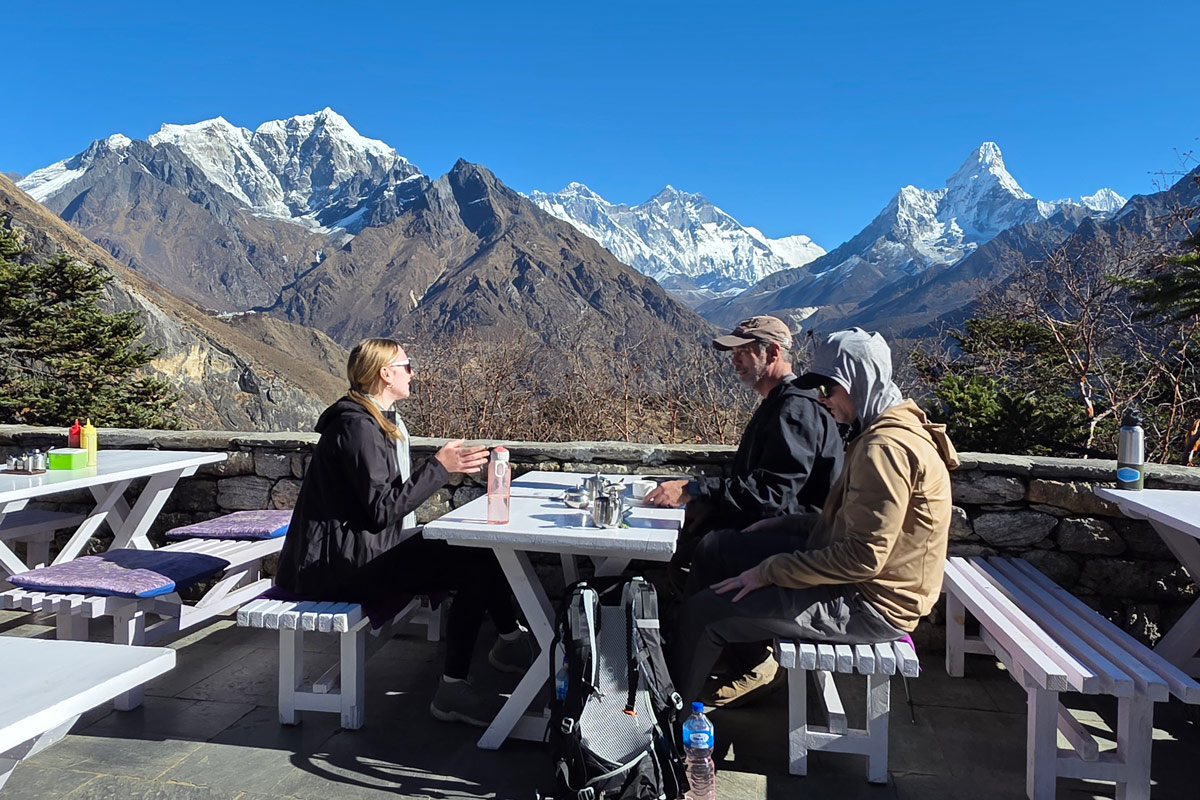
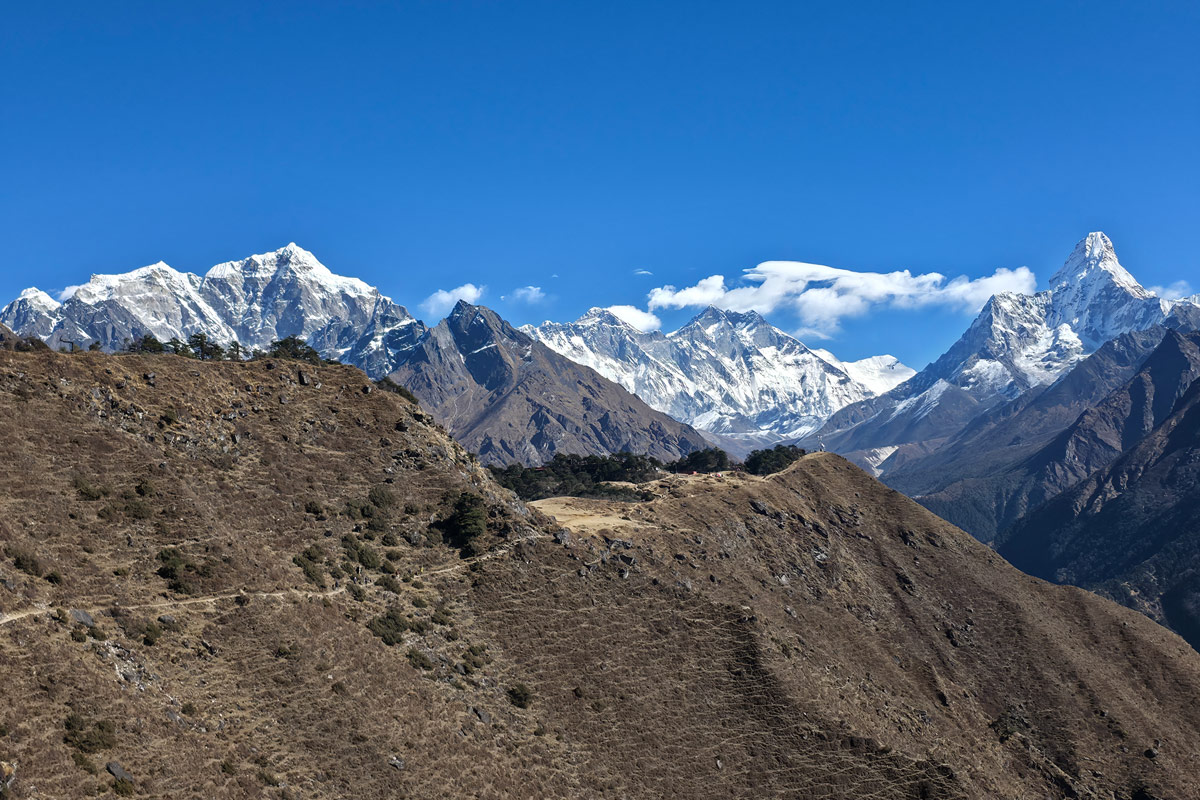
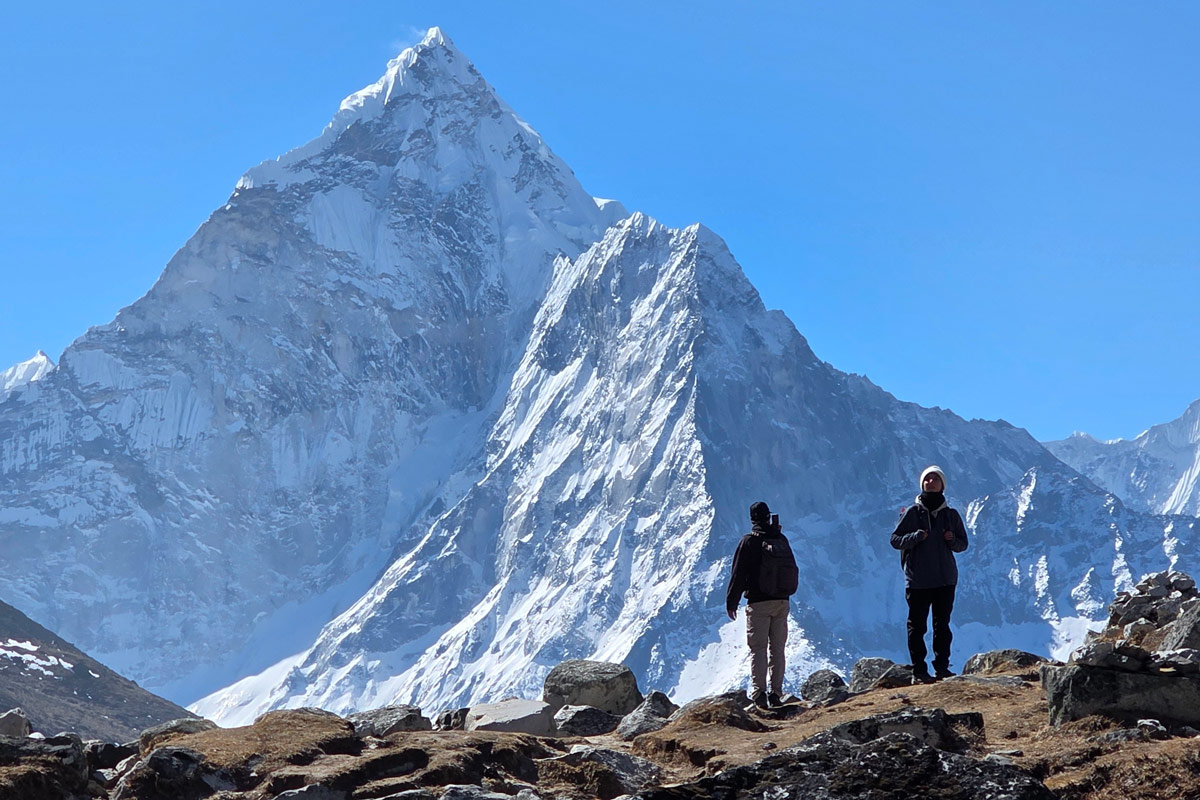
From the terrace of the hotel, we will experience the Himalayas rising in full presence with Mount Everest (8,848 m/29,029 ft) standing quietly beyond Lhotse (8,516 m/27,940 ft), Nuptse (7,861 m/25,791 ft), Ama Dablam (6,812 m/22,349 ft), Thamserku (6,623 m/21,729 ft), and Kongde Ri (6,187 m/20,299 ft).
On a clear day, the skyline feels almost unreal where people naturally fall silent and in awe for a moment.
After soaking in some time at the viewpoint, we descend gradually back to Namche, feeling lighter and more confident at the altitude.
The afternoon is yours to relax. You can wander through Namche’s narrow stone lanes, browse small handicraft shops, or pick up any last-minute trekking gear.
A visit to the Everest Museum and Sherpa Cultural Center offers deeper insight into mountaineering history and the life of the Sherpa community.
If available, you can take a hot shower or even a short massage which can feel surprisingly luxurious in the middle of a mountain journey.
Today blends gentle hiking, rest, and culture in the best possible way while focusing on acclimatizing your body and settling into the rhythm of the Khumbu and preparing yourself for the high altitude adventure ahead.
Day 05 : Trek to Tengboche from Namche Bazaar. November - Attend first day of Mani Rimdu Festival
After breakfast in Namche, we leave the town behind and step onto a trail that immediately feels open and expansive.
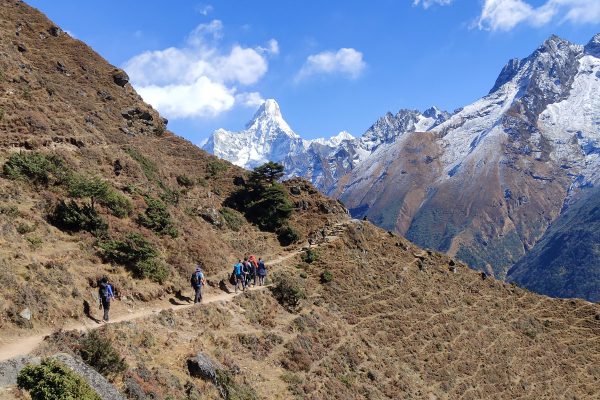
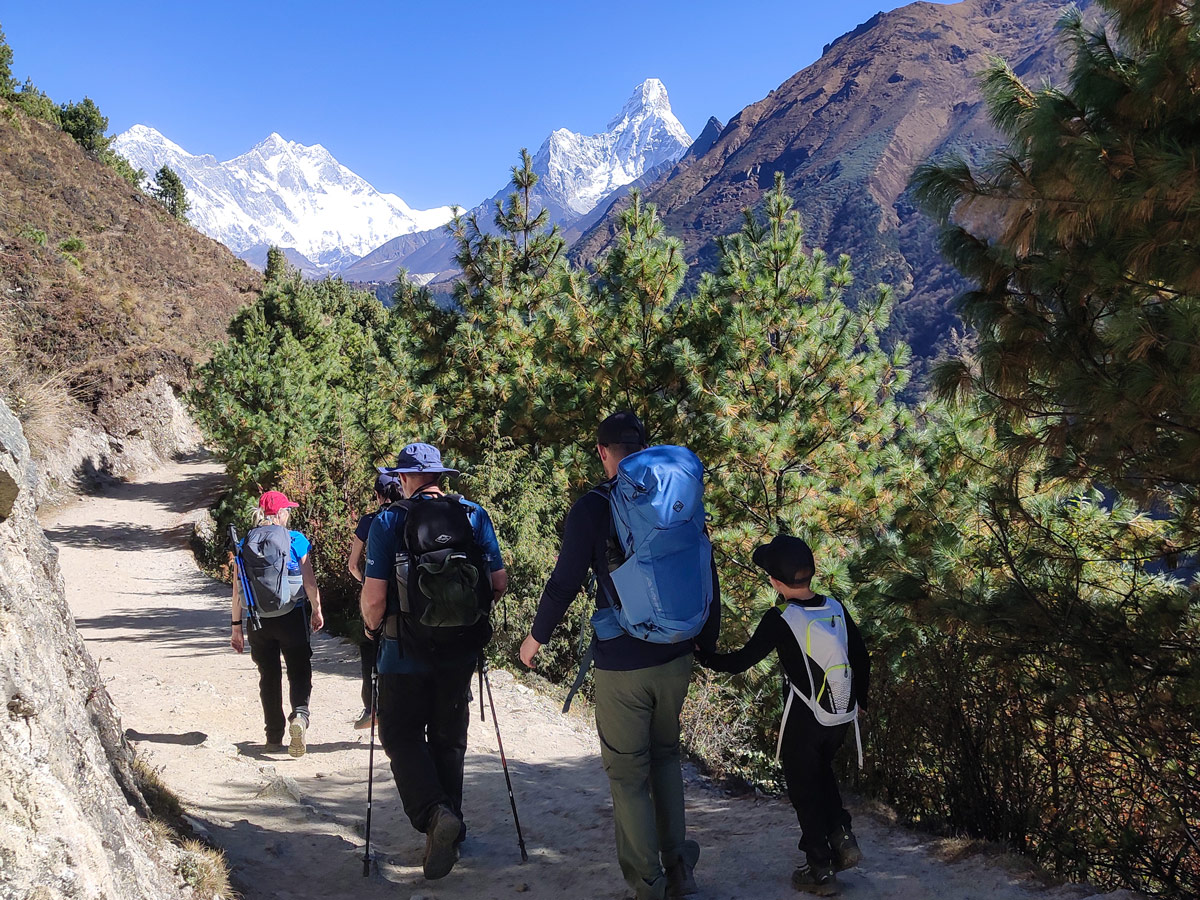
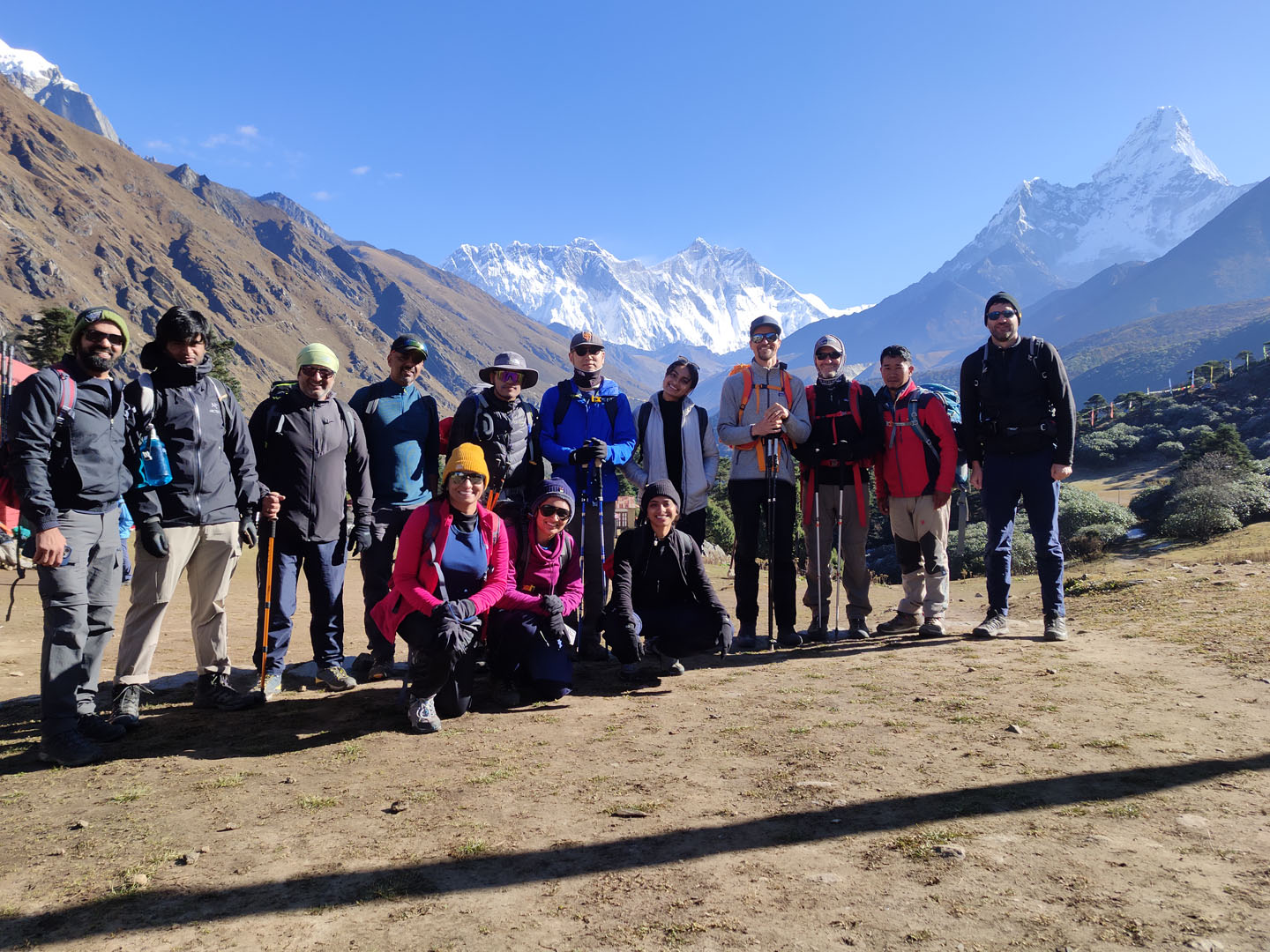
The path gently contours the mountainside with the views begin to unfold with Everest, Lhotse, and Ama Dablam that seem to move with us, appearing and disappearing between ridgelines as we walk.
The morning feels lighter here. The trail rolls through small Sherpa settlements like Kenjoma, Sanasa, and Leushyasa, where daily life quietly continues.
We will witness terraced fields carved into the hills, yaks grazing in open pastures, mani walls etched with prayers, and chortens standing watch beside the path.
Gradually, the trail follows down through lush forest toward Phunke Tenga (3,250 m/10,663 ft), a peaceful riverside stop where we pause for lunch.
From here, we cross a suspension bridge over the Imja Khola, and the ascent toward Tengboche begins.
The trail is mostly uphill and winds through rhododendron and pine forest.
In month of spring, the hillsides burst into pink and red blossoms while in other seasons, the forest feels crisp and alpine, filled with cool mountain air.
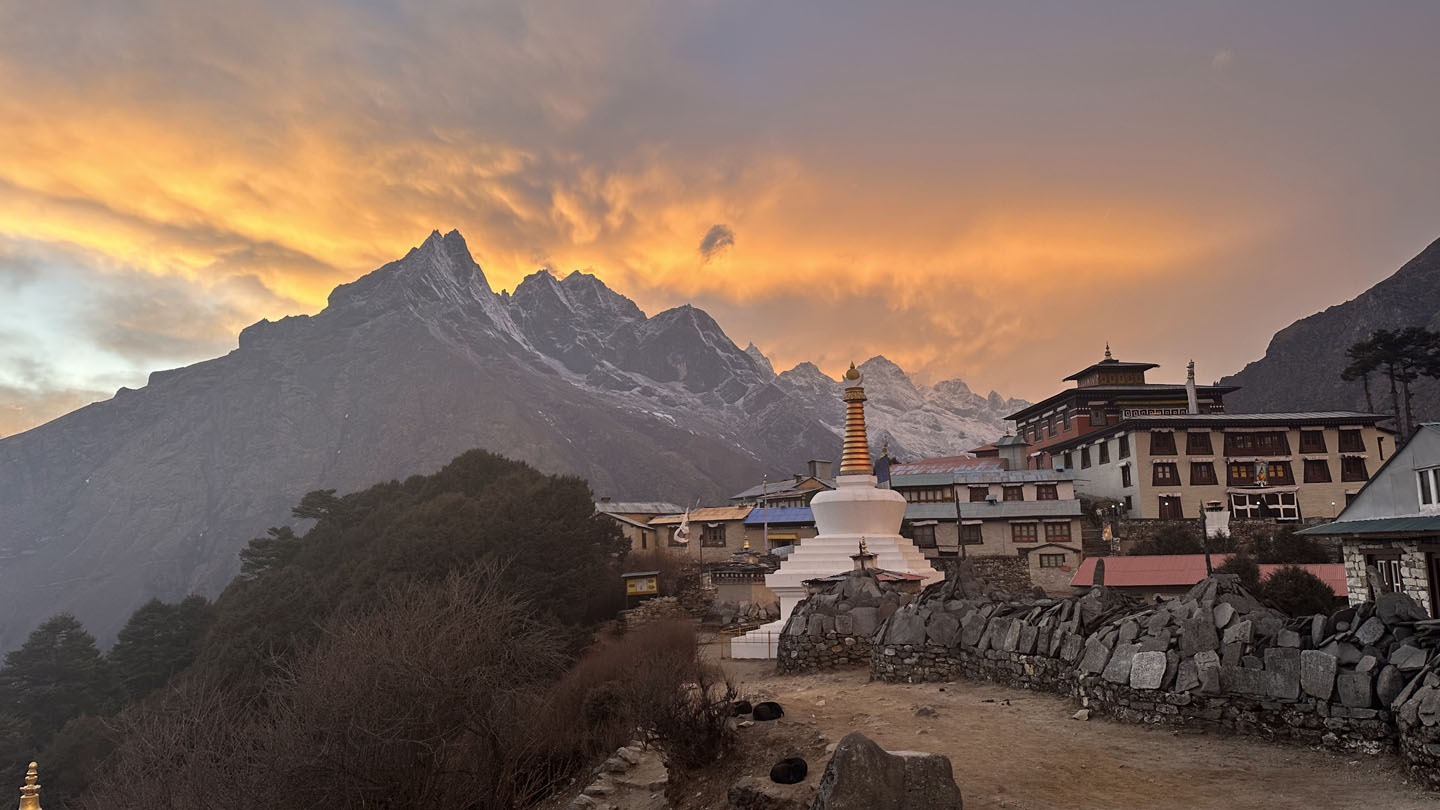
By mid- afternoon, we reach Tengboche perched on 3,860 m (12,664 ft) along with Tengboche Monastery.
This resting stop is surrounded by an stunning Himalayan amphitheatre such as Mount Everest, Lhotse, Nuptse, Ama Dablam, and other surrounding peaks rising in every direction.
On a clear day, the panorama feels almost overwhelming in its scale.
This is also the first day of the Tengboche Mani Rimdu Festival 2026, one of the most sacred and vibrant celebrations in the entire Everest region.
Experience the opening day of the famous Mani Rimdu Festival at Tengboche Monastery.
The monastery courtyard slowly begins to fill with Sherpa families from nearby villages. You find elders dressed in traditional attire, children running between prayer flags, monks preparing ritual objects.
The first public day of Mani Rimdu is known as Wong (Empowerment Ceremony) where inside the monastery, monks chant ancient mantras while sacred rituals unfold.
Here, the air is heavy with deep chants, the scent of incense, the soft glow of butter lamps, the sound of long horns and cymbals echoing through the region.
It’s a quiet, grounding moment that adds depth to the EBC trek with Mani Rimdu journey.
During the ceremony, the Head Lama blesses all the gathering. You may receive Rilwu (blessed pills) and sacred water offerings believed to bring protection, long life, and spiritual well-being.
It’s okay if you don’t fully understand every ritual, you can feel the devotion in the Khumbu valley.
Here is our blog where you can explore more about Tengboche’s spiritual and cultural importance in our detailed blog about the historic Tengboche Monastery.
Day 06: Attend second day and celebrate Mani Rimdu Festival in Tengboche.
Today, you will feel the energy different, if yesterday seems quiet and ceremonial, today will more alive with movement and color.
The monastery courtyard fills earlier, and there’s a sense of anticipation in the air. This is the day of the Cham, the sacred masked dances, the most iconic and visually striking part of the Mani Rimdu Festival.
Many Monks emerge dressed in elaborate robes and vibrant masks representing deities, protectors, wrathful beings, and dakinis. The masks are bold, almost dramatic, wide eyes, fierce expressions, golden crowns.
You will feel every movement as slow, intentional, and deeply symbolic to the ancient practices with dances depicting the triumph of Guru Rinpoche symbolizing Dharma.
What looks theatrical at first slowly reveals its deeper meaning, the overcoming of ignorance, greed, anger, and fear. The courtyard echoes with drums, cymbals, and long Tibetan horns. You will feel the rhythm is hypnotic.
Trekkers should observe respectfully, aware they are witnessing something sacred not a performance, but a living spiritual tradition.
Some sequences are powerful and intense, attracting you with immense experience. Others include lighter, almost playful interludes that bring smiles to the crowd. Yet every dance carries purpose. Every mask carries meaning.
Day 07: Attend third day of Mani Rimdu Festival in Tengboche.
By the third day, the festival feels more intimate. We will witness the morning preparations that are made for Jinsak, the Fire Puja, the closing ritual of Mani Rimdu.
If the masked dances symbolized transformation before, today the Mani RImdu represents purification and renewal.
In the monastery courtyard, a sacred fire is being prepared with Monks chant steadily as offerings of grains, butter, and incense which are made into the flames.
As time passes, the fire crackles softly, sending smoke into the cold Himalayan air. Jinsak is about prioritising cleansing often releasing negative karma, obstacles, and misfortune from our karma.
We will witness the fire becomes both offering and purifier that symbolizes transformation, the burning away of ignorance into wisdom. Isn’t this such a unique experience?
As the ceremony continues, the intricate sand mandala, carefully created over days, is dismantled while the colored sand which was once arranged into sacred geometry is gently gathered and later offered to the river.
You will understand that the overall Mani Rimdu performance and festival are a powerful reminder of impermanence, giving us a message of “Nothing is permanent. Everything is in motion.”
With time passes by, Sherpa families gather for final blessings, Lamas chant prayers for peace and prosperity in the coming year and the atmosphere feels calm, reflective, and complete.
As the festival concludes, the fluttering prayer flags above Tengboche Monastery, and the mountains remain as silent witnesses with your deep spiritual experience.
Along the journey, you realize that Mani Rimdu Festival is not only about celebration but also more of renewal, gratitude, and balance.
After the end of third day, you feel more grounded, a little more connected to Tengboche and with that you will rest and be prepared for the tomorrow where your journey of Everest Base Camp trek with Mani Rimdu continues.
Day 08: Trek to Dingboche from Tengboche
After breakfast in Tengboche, we step out leave the monastery ridge behind. The trail draws us deeper into the Khumbu, angling toward Dingboche, one of the trek’s most important acclimatization stops.
At first, it’s gentle. We drop down through rhododendron and birch toward Debuche, with the forest holding the sound and keeping everything calm.
We then cross the small bridge and feel that subtle shift in the day, descent behind us, climbing ahead.
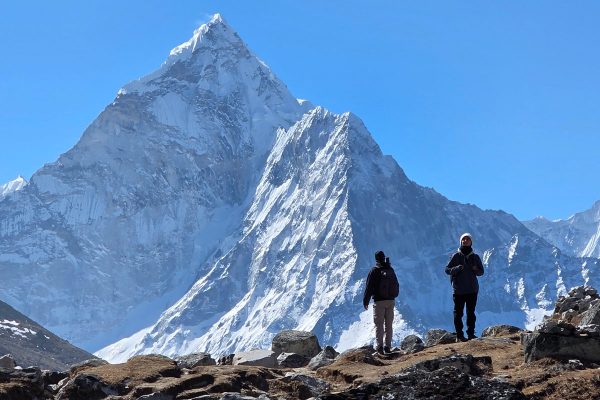
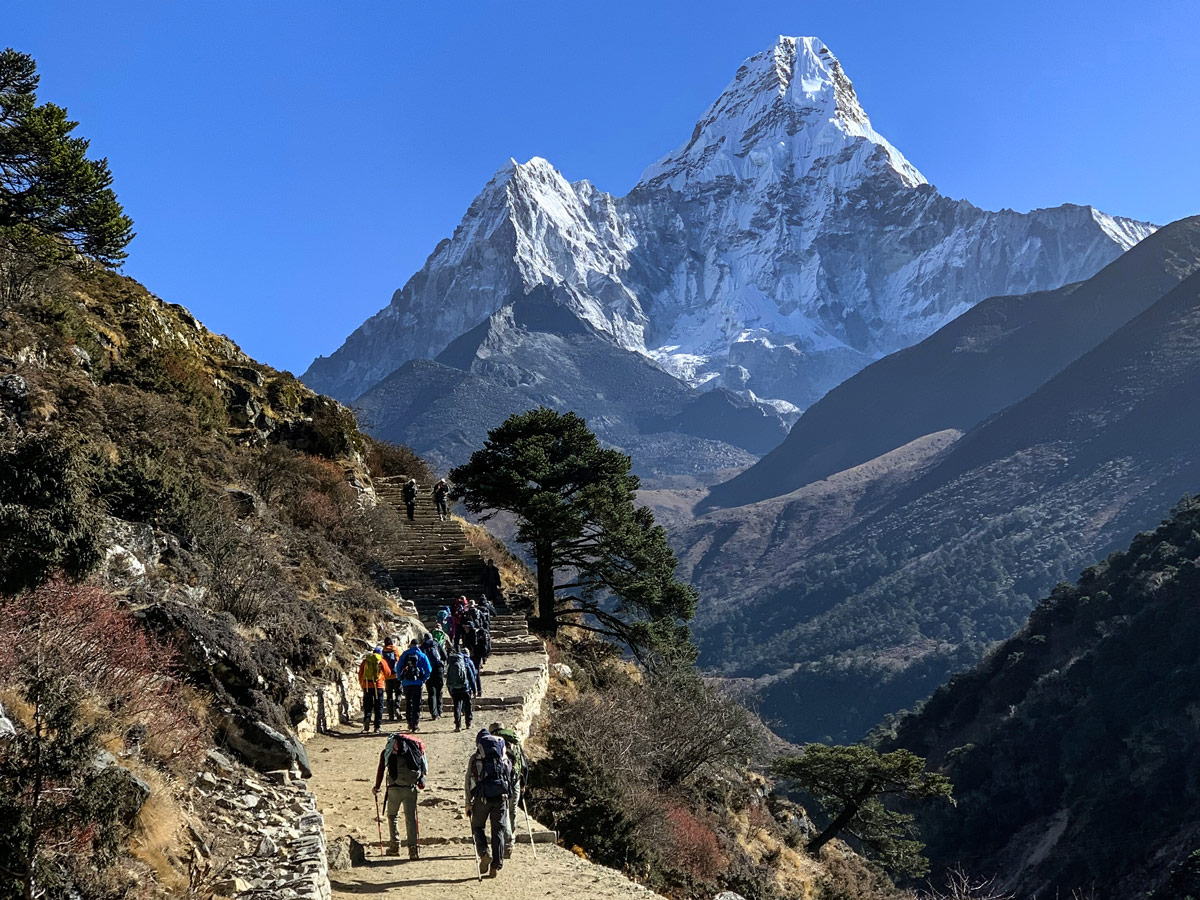
And then Ama Dablam appears, (6,812 m/22,349 ft) in the skyline where its ridges hold the light differently as we move along we witness it keeps changing.
The hike leads to Pangboche (3,985 m/13,074 ft), one of the oldest Sherpa villages in the Khumbu where stone houses, prayer flags, old walls and mani stones, make the atmosphere shift into slower and deeper experience.
We will lunch in Somare to refuel and let your breath, afterward, we move on past Orsho and Kalapani where the valley begins to feel more exposed.
Here, stone-walled fields appear, built to guard crops and few yaks grazing along the way.
As you gain elevation, the trail turns more rugged and dry. The final approach into Dingboche is steady and manageable where the village sits in a wide, sunlit valley, and the light feels clearer.
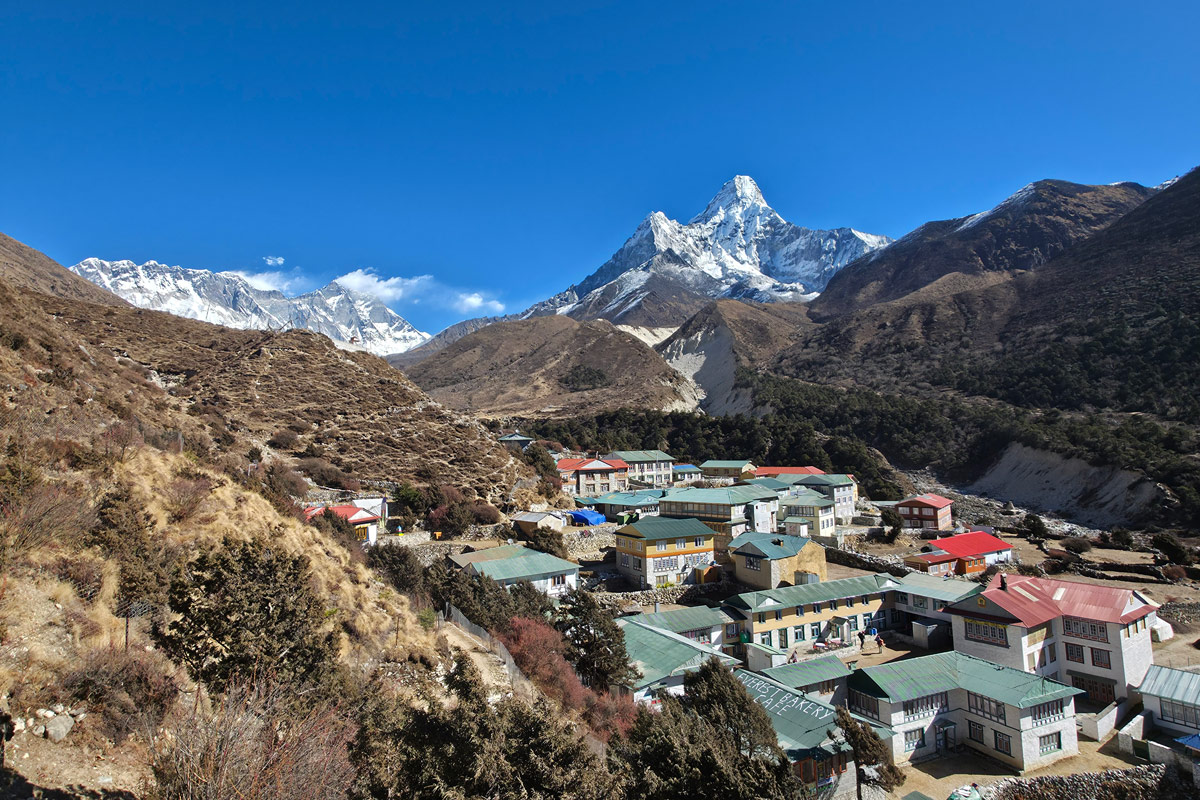
Around the south face of Lhotse, the distinct pyramid of Island Peak (Imja Tse), and the sweeping openness of the Imja Valley can be witnessed here.
Dingboche will be our another acclimatization stop for the next two nights, giving your body the time it needs to adjust before you push higher toward Lobuche, Gorak Shep, and ultimately Everest Base Camp.
Here, you drink more water, refuel your energy, share stories, and rest well so you feel better for ultimately preparing for your thrilling EBC journey ahead.
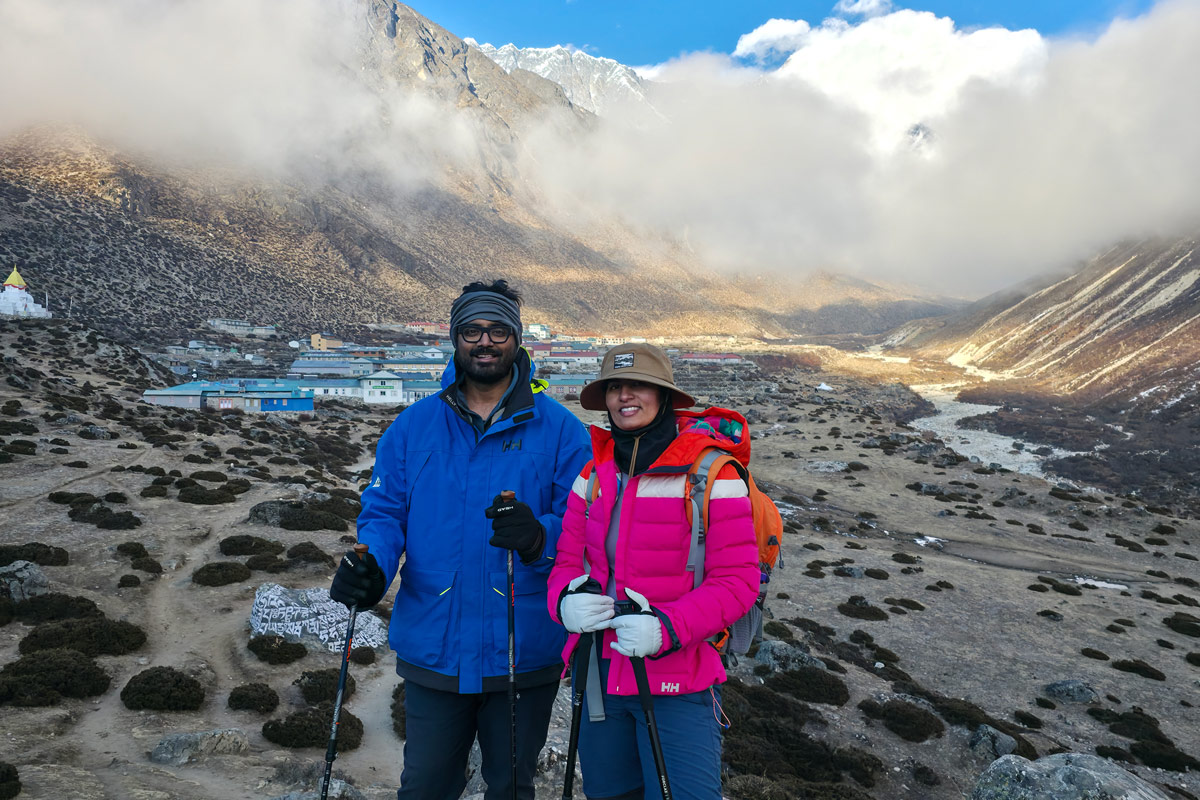
Day 09: Acclimatization Day. Hike to Nangkartsang Peak and back
Today is one of those days that quietly shapes the whole Everest Base Camp Trek.
In Dingboche, nestled at 4,410 m (14,468 ft), the air is thinner here. Today, our goal is simple, we hike a little, rest a lot, and let our body settle into the altitude before we push higher.
After breakfast, you step out into the open valley and begin your acclimatization hike toward Nangkartsang Peak (5,083 m/16,677 ft).
The trail starts just above the village and climbs steadily over rocky slopes and broad ridges. It’s not a race.
You take it slow, stopping often, letting your breathing find its rhythm. Here, the landscape feels more raw blend with wind-carved hillsides, scattered boulders, and long views that stretch for miles.
As we take every step higher, the breathtaking scenery opens wider. On a clear day, the place offers with stunning views of Mount Everest, Lhotse, Makalu, Cho Oyu, Ama Dablam, Island Peak, all laid out across the horizon.
After 2-3 hours of hike, we reach the viewpoint where it feels like stepping onto a balcony above the Khumbu region.
On the way back down, you notice small things such as the way sunlight moves across the ridgelines, the occasional yak bell echoing in the valley.
We return to Dingboche in time for lunch. The afternoon is intentionally slow. You might rest in the teahouse, journal, read, or simply sit with a warm cup of ginger tea or lemon honey, watching the light shift across the valley.
Dingboche has a few small cafes and bakeries too, and they often become the meeting spot for trekkers swapping stories and comparing routes
This day is all about balance including a gentle hike to help your body adapt and rest in high mountain region.
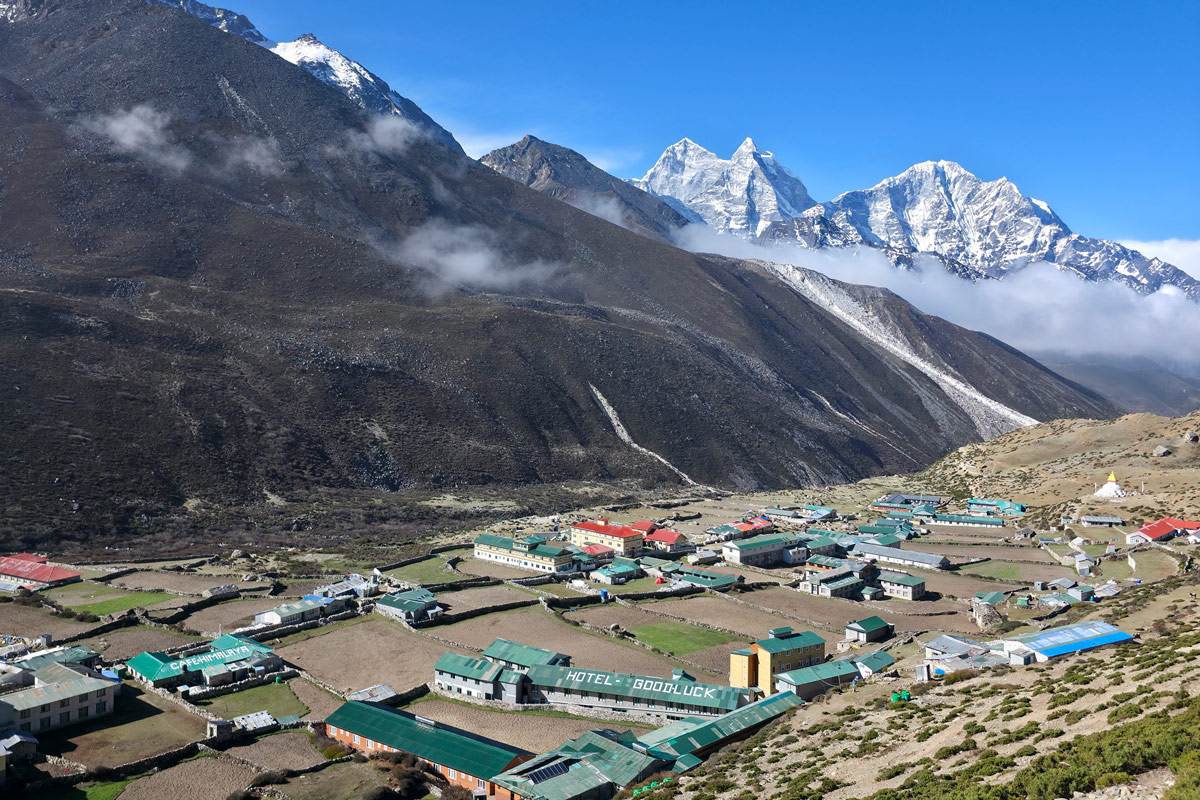
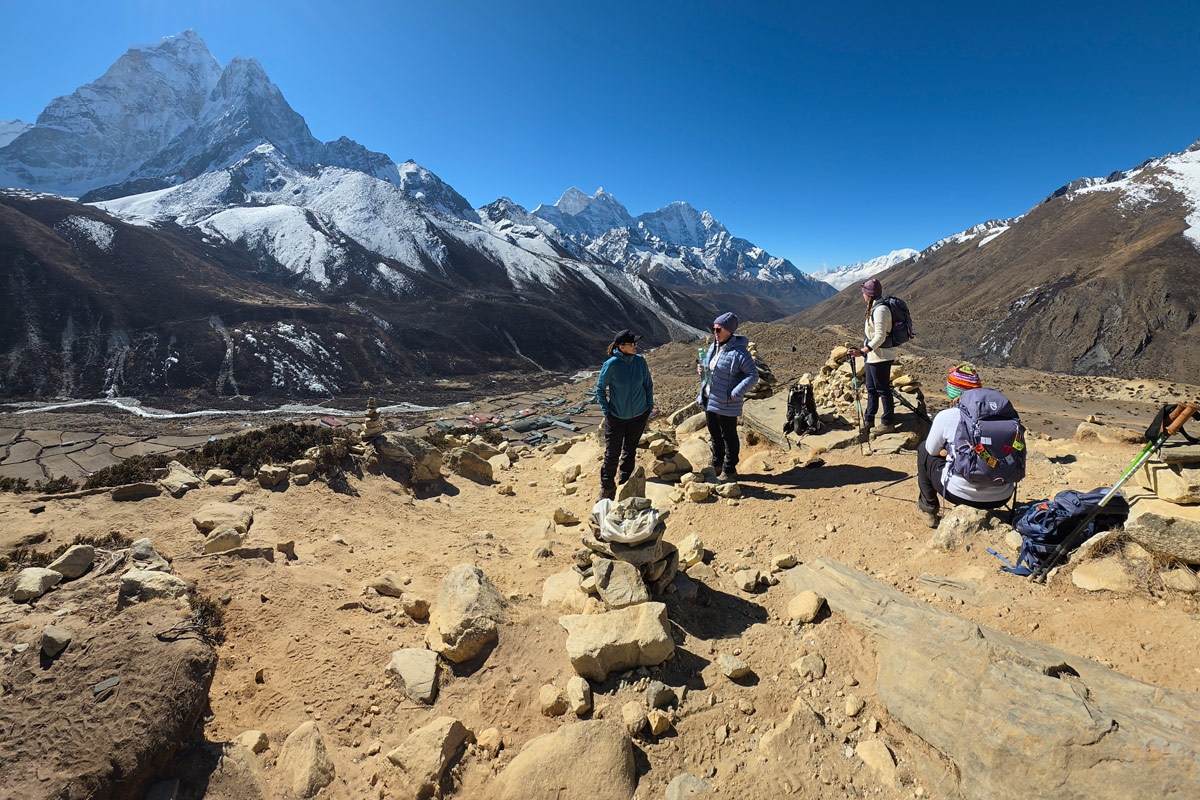
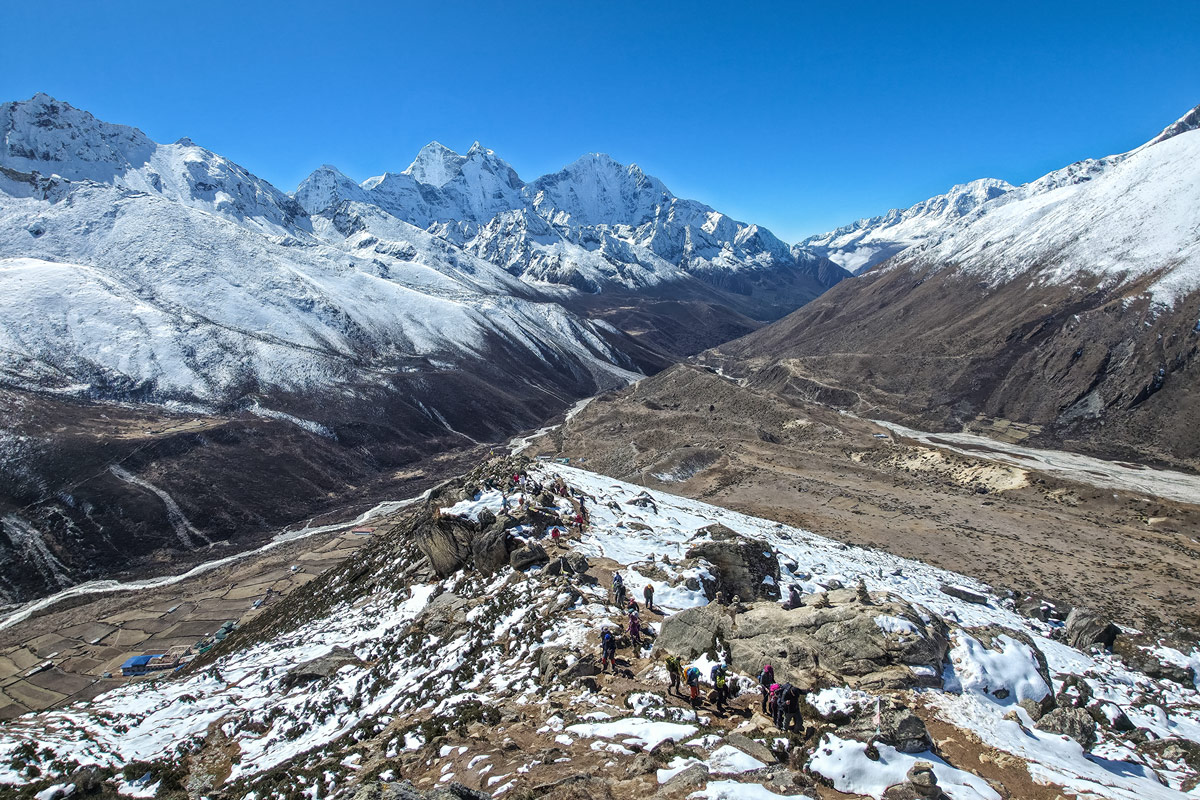
Day 10: Trek to Lobuche from Dingboche
After morning breakfast, once we leave the village, the trail starts climbing through open alpine terrain. There’s less greenery, more rock, dry, and glacial feel.
As you gain elevation, the landscape becomes sharper and more dramatic. We witness peaks like Cholatse (6,440 m/21,130 ft) and Taboche (6,501 m/21,309 ft) rise above the valley.
By midday, we reach Thukla (4,620 m/15,157 ft) where we will stop for lunch here. After Thukla, the trail steepens and the climb up to Thukla Pass begins.
Prayer flags flutter over stone cairns and memorials built for climbers who never came back from Everest and the surrounding peaks.
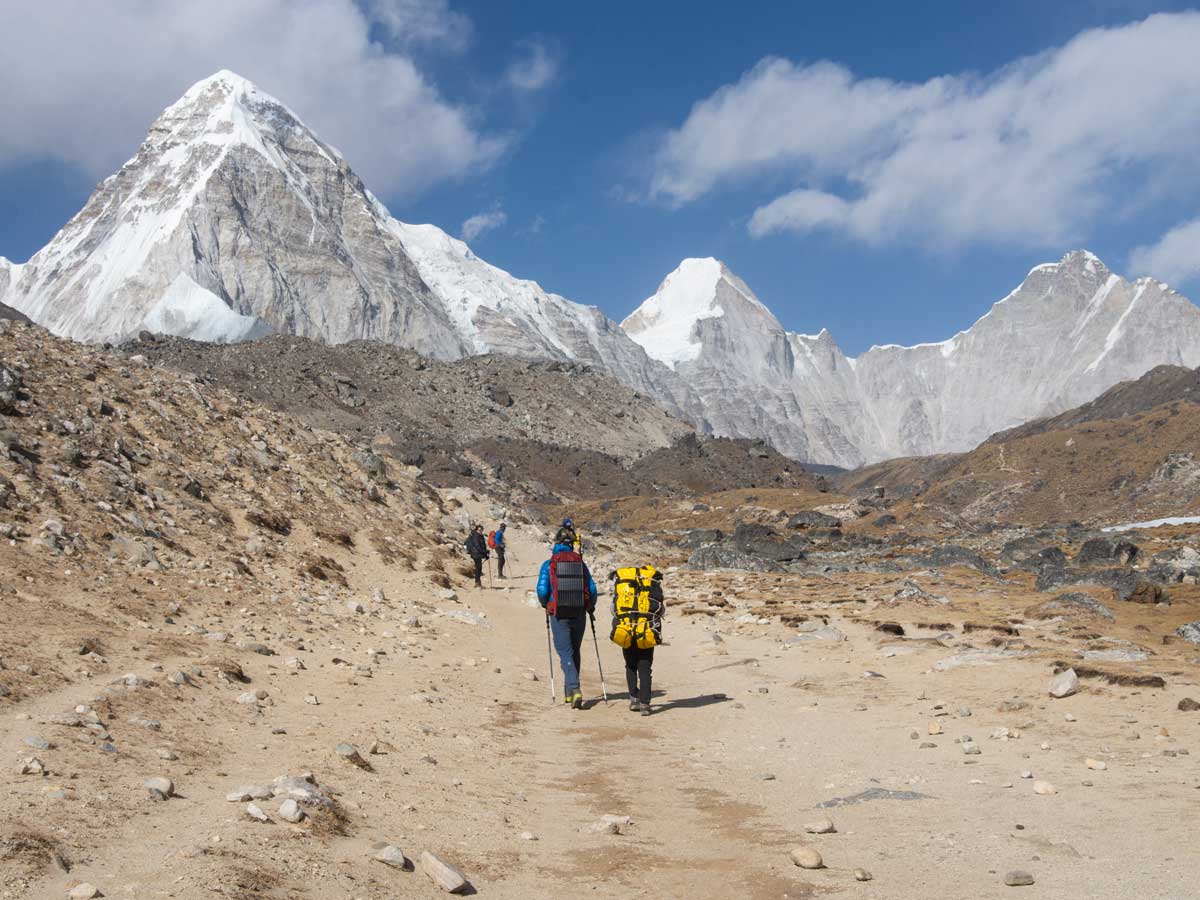
After that moment, we continue along a glacial valley toward Lobuche with the scenery growing bigger and more intense. We will witness along the journey, Pumori (7,161 m/23,494 ft) rising ahead while Nuptse dominates the skyline.
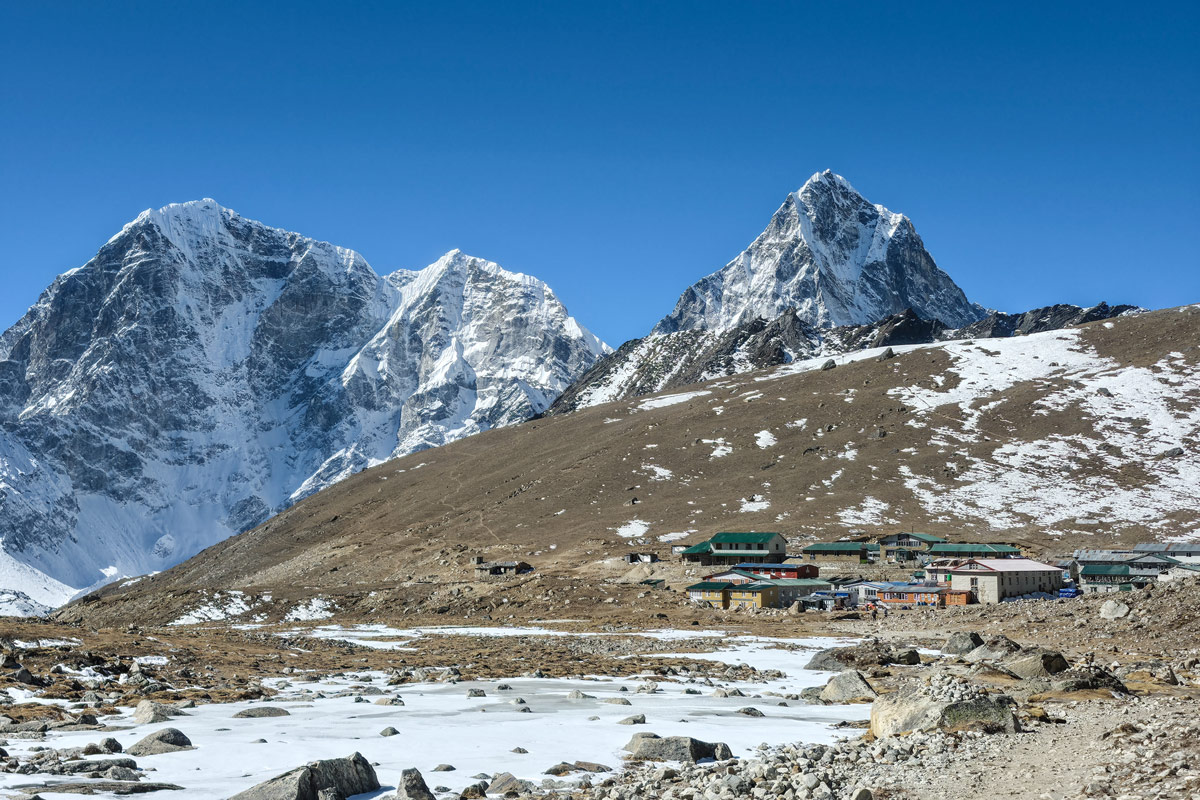
By late afternoon, we arrive in Lobuche, a traditional Sherpa teahouses, surrounded by rock, ice, and towering peaks. As the sun begins to drop, the mountains especially Nuptse often glow in soft gold and pink.
We will rest here for tomorrow journey ahead.
Day 11: Trek to Everest Base Camp and then back to Gorak Shep
Today is the day, you wake up in Lobuche to crisp Himalayan air and a soft golden light creeping over the valley.
After early breakfast, for the next 2 to 3 hours we start hiking for the next stop, you will notice the scenery grows bigger and closer with every step.
Pumori rises ahead like a wall of ice and rock, while Nuptse, Changri La, and Lingtren tighten around the valley as if you’re being pulled deeper into Everest’s high world.
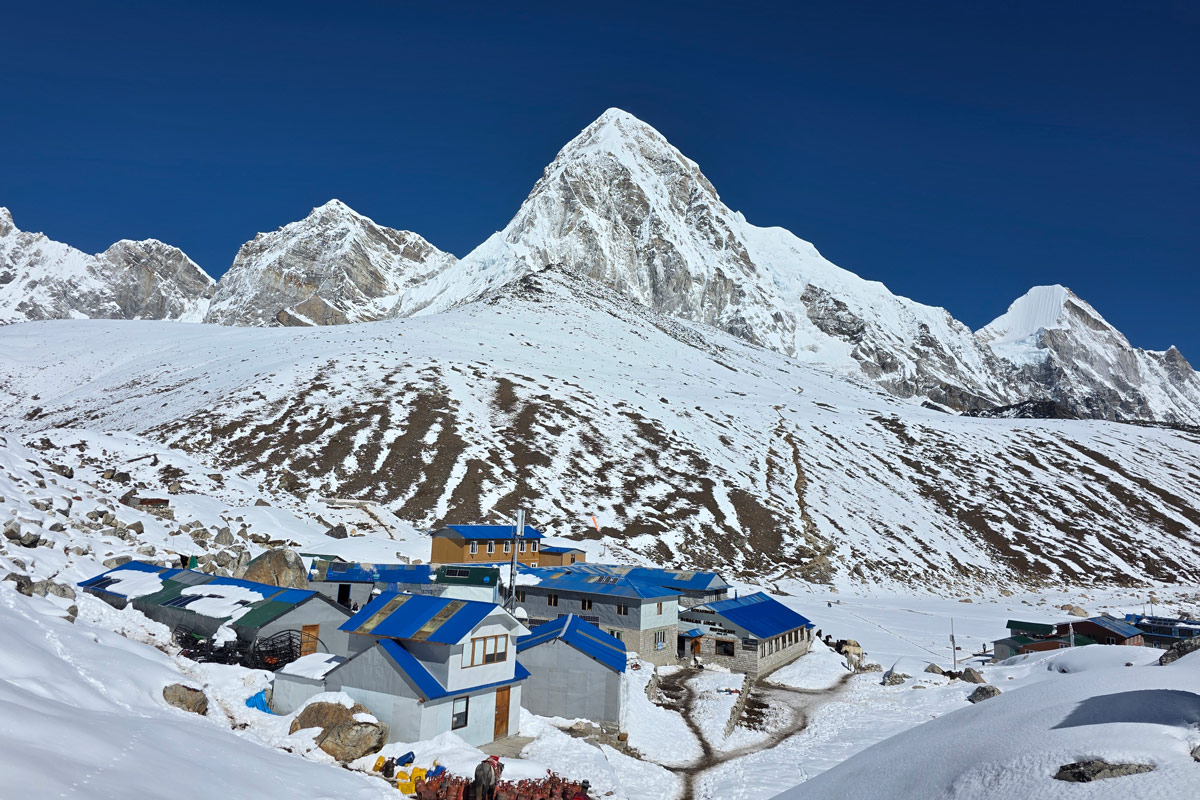
However, the terrain is rough, the air is thin, and the pace is naturally slow. We will arrive at Gorak Shep (5,190 m/17,024 ft), the last settlement before Everest Base Camp.
Here, we stop for quick lunch, rest briefly, and then do a quick repack. After break, we will take only the essentials, warm layers, gloves, hat, sunglasses, sunscreen, water, snacks, and a camera.
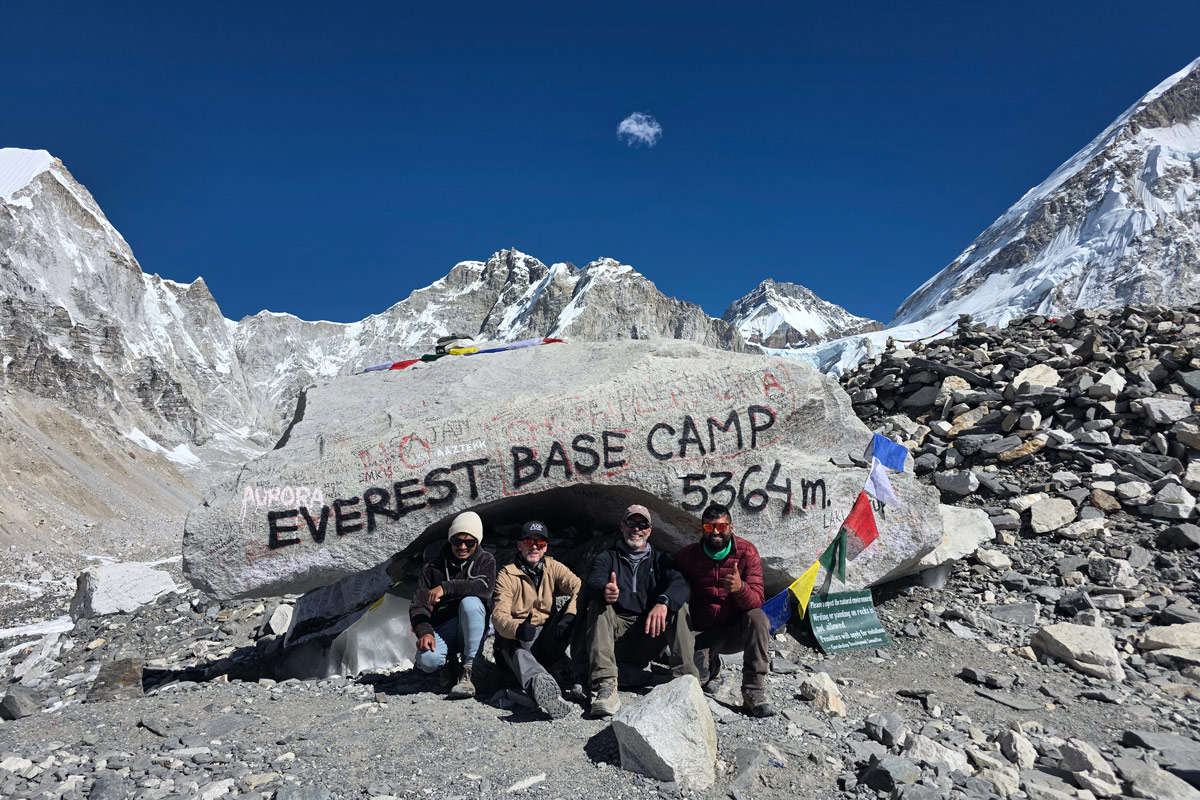
After we head out toward Everest Base Camp (5,364 m/17,598 ft), the trail crosses the rugged, uneven surface of the Khumbu Glacier.
As we get closer, the Khumbu Icefall begins to rise in front of us which is massive, chaotic, and unforgettable.
This is the place where, trekkers gather from all over the world, each arriving with their own story, their own effort, and to experience standing on the base of the Mt. Everest itself. Here we take photos by the famous Base Camp rock.
After soaking around for a while, we then follow the same trail back to Gorak Shep. The walk feels lighter and our body may be tired, but the mind is lifted by what we’ve just witnessed.
Day 12: Morning Hike to Kala Patthar, immerse in breathtaking sunrise and then, Descend to Pheriche
Today we begin early in the dawn, in the quiet darkness of Gorak Shep, We carry headlamps flicker on and boots crunch against frozen ground.
After well preparation, you set off toward Kala Patthar (5,555 m/18,225 ft), the highest point of your Everest Base Camp trek with Mani Rimdu Festival.
The climb to Kala Patthar is steady and demanding, at this altitude, even slow steps feel heavy.
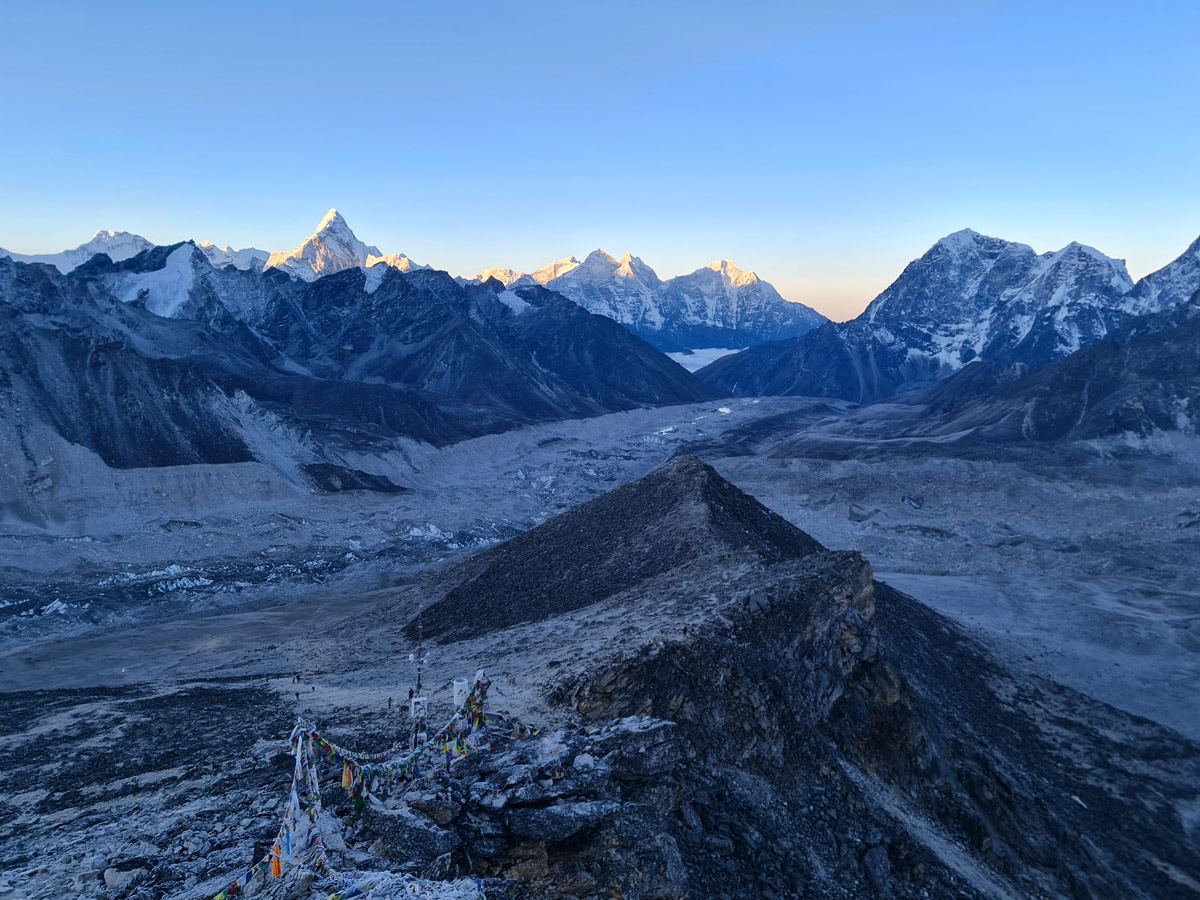
After 2 hours of steady ascent, and when the morning turns into pale pink and gold, and the silhouettes of the peaks grow sharper in the moment.
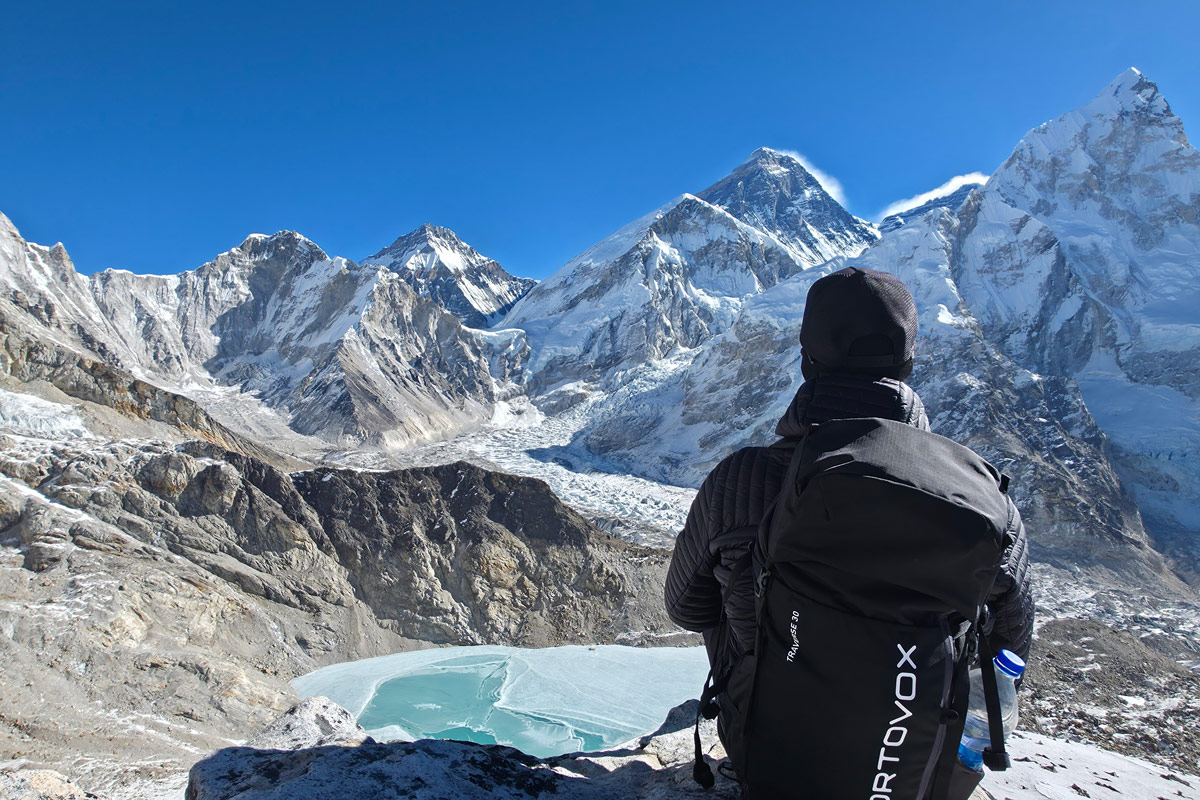
Reaching the rocky summit of Kala Patthar, the reward unfolds with Mount Everest, Lhotse, Nuptse, Pumori standing at the horizon offering breathtaking mountain vistas.
As the first rays of sunlight strike the upper slopes, the mountain glows in shades of gold and amber. The experience is one of the key highlights of the EBC trek where you will feel the beauty of Everest region in full prime,
After taking some photos and quiet reflection, you carefully descend back to Gorak Shep, where a hot drink and breakfast feel especially satisfying.
From here, the journey turns downward, you will retrace your steps toward Lobuche, passing once more through Thukla Pass.
After roughly two hours of brisk walking, you arrive in Pheriche (4,240 m/13,911 ft) a wide, open settlement often called the “windy valley” of the Khumbu region because of for the breezes that sweep across its plains.
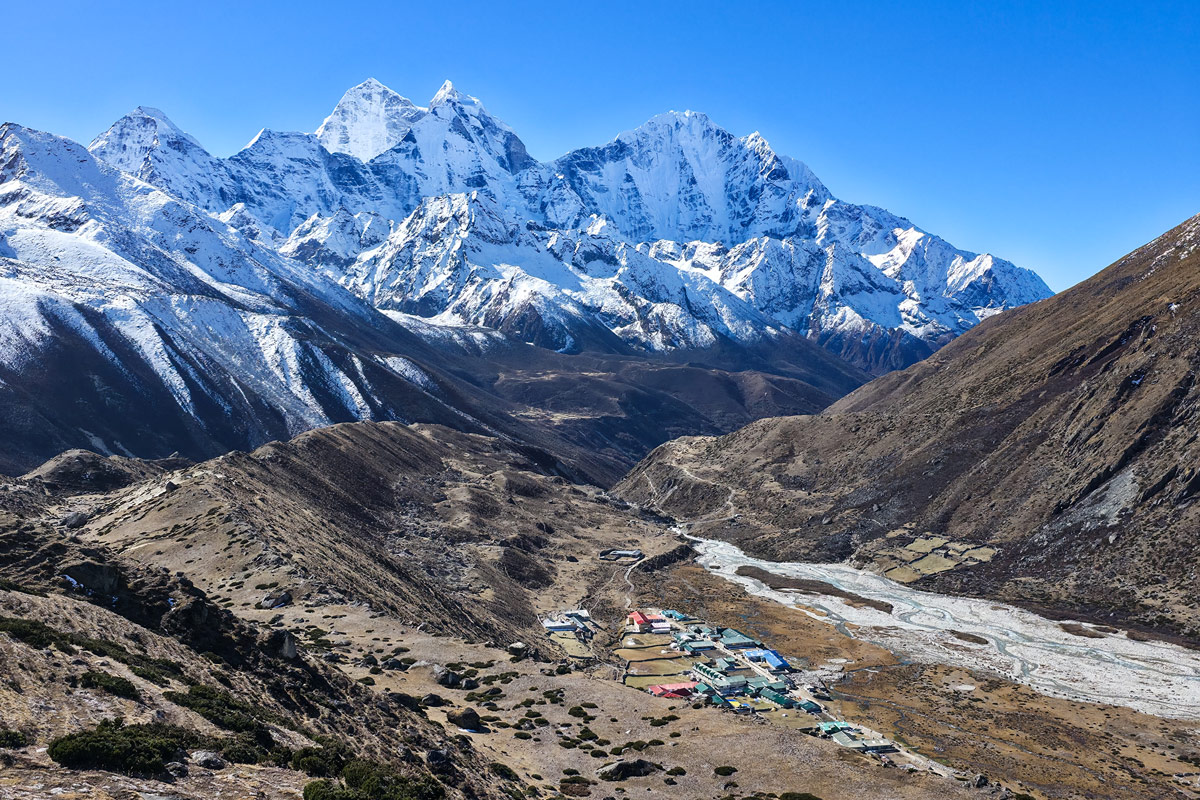
Day 13: Trek to Namche Bazaar from Pheriche
After breakfast in Pheriche, you begin the journey back toward greener valleys and thicker air.
The trail leads through the wide, windswept Imja Valley, gradually dropping in elevation.
You will retrace familiar ground, crossing suspension bridges and passing through Somare and Pangboche, where stone houses, terraced fields, and grazing yaks bring back that comforting rhythm of Sherpa village life.
As you continue, the landscape slowly transforms. The stark alpine terrain gives way to patches of forest and cultivated land. The air feels slightly warmer, easier to breathe. And then, in the distance, the silhouette of Tengboche Monastery (3,860 m/12,664 ft) appears once again where you have celebrated Mani Rimdu Festival 2026.
It’s a natural place to pause. We can stop for tea, lunch, or simply stand for a moment and reflect on the experience we shared before trekking to Everest Base Camp.
From Tengboche, the trail descends through forest to Phunke Tenga and path leading to Namche.
As you pass the Tenzing Norgay Memorial, you will witness sight of Namche’s amphitheatre of colorful houses carved into the hillside. Arriving back in Namche Bazaar (3,440 m/11,286 ft) really brings a sense of comfort.
Namche feels lively and welcoming here you can enjoy cafes, bakeries, bars, spa, and a good place to rest and relax after a long EBC trek.
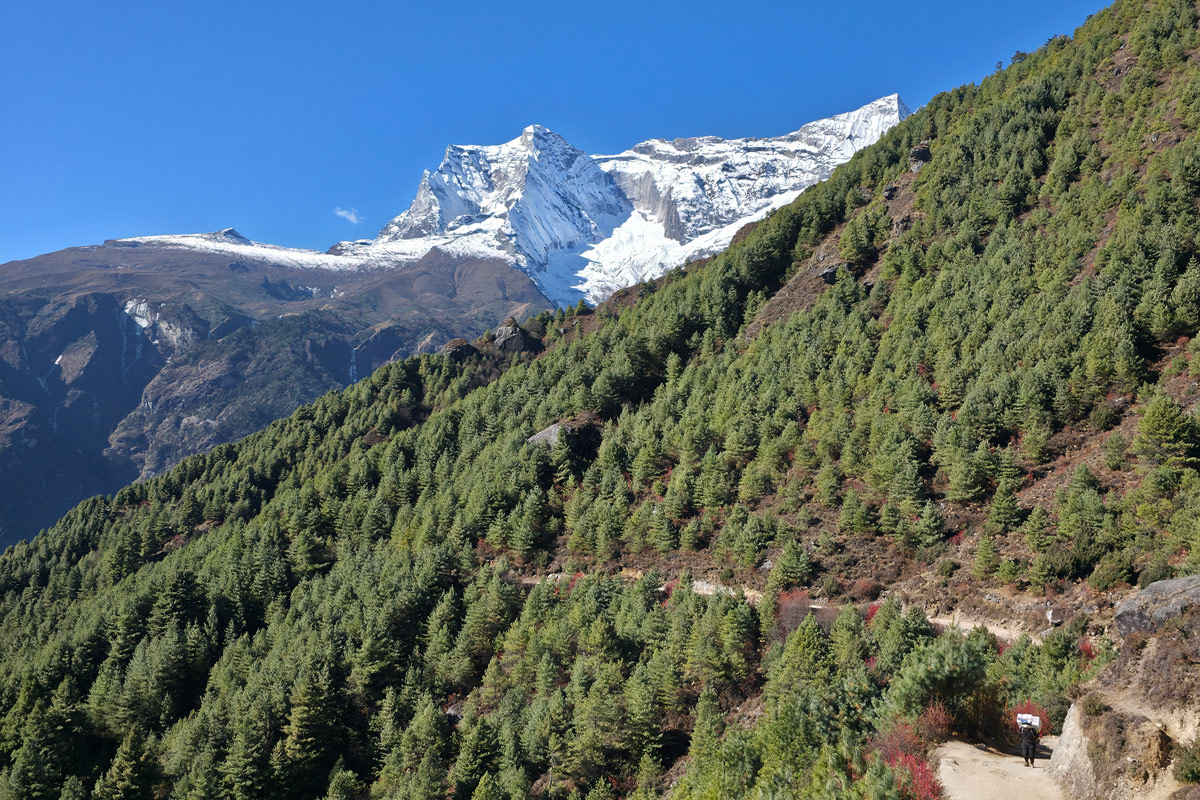
Day 14: Trek to Lukla from Namche Bazaar
After breakfast in Namche Bazaar, you begin the final walking day of your Everest Base Camp Trek.
The trail drops steeply at first, following familiar stone steps down toward the Dudh Koshi River. You retrace the same path that once led you upward.
You descend through Jorsalle and Monjo, officially exiting Sagarmatha National Park, then continue through Phakding, Thado Koshi, and Cheplung, a serene stops that have marked your journey to Everest Base Camp and back.
With every step lower, the air grows thicker and warmer with the forests feel greener while the sound of the river feels louder and more alive.
By mid-afternoon, you arrive back in Lukla, the small mountain town where everything began. After rest and relax, tonight is all about celebrating in your own way as Lukla offer local teahouse, pub, spa, souvenir shop or cafe.
Day 15: Flight back to Kathmandu or Manthali/Ramechhap from Lukla and same-day drive to Kathmandu
Lukla to Manthali Flight (March, April, May, September, October, and November)
The flight from Lukla to Manthali is a 20-minute flight. After that, it is about a 5 to 6 hour drive to Kathmandu. Please note that the driving hours may vary according to the highway traffic condition. You’ll be transferred to the hotel in Kathmandu on a shared tourist vehicle.
Lukla to Kathmandu Flight (January, February, June, July, August and December)
The flight from Lukla takes about 35 minutes. After arriving at the airport, you will be transferred to the hotel in Kathmandu via a shared tourist vehicle. Please be aware that the decision regarding the operation of flights solely depends on the airline and is influenced by the volume of travelers during a specific month.
Helicopter Option
You have the option to book a direct helicopter flight from Lukla to Kathmandu for an extra charge of USD 450 per person. This price is quoted on a 5-people sharing basis. This is the best alternative to avoid the long drive to from Manthali airport to Kathmandu during peak season (March, April, May, October and November).
After a final warm breakfast in Lukla, we will say goodbye to the Khumbu region. The EBC trek journey and sacred Tengboche Mani Rimdu festival have been your home for days and now the journey will turn back toward the Kathmandu city.
If the weather is clear and supportive, you board a short, scenic flight out of Lukla.
We will either land in Kathmandu if there are no Air Traffic Congestion otherwise to Manthali Airport followed by a drive to Kathmandu.
In the evening, you’ll meet your guide and a member of our team for a farewell dinner at a handpicked restaurant.
It’s a relaxed, celebratory evening where you can share stories from the trail, reflect on your Everest Base Camp journey with Mani Rimdu experience, and raise a final toast to the unforgettable experiences you’ve had in Nepal
Day 16: Transfer to the International Airport for your final departure
As your incredible adventure comes to an end, you’ll enjoy a relaxed breakfast at your hotel before preparing for departure.
We’ll assist with your luggage and ensure you arrive at the airport with plenty of time for check-in and security.
One of our airport representatives will accompany you to the International Airport for your flight back home. We bid you farewell and hope to see you again for another unforgettable journey in the Himalayas.
Packing List for Everest Base Camp Trek
Here is a list of what you might want to pack for Everest Base Camp and Tengboche Mani Rimdu Festival Trek. Please take this as a starting point. You’ll need layers of warmer clothing during the winter.
We provide a 75-liter duffel bag for you to use for the trek. It will be given to you during your pre-trip meeting in Kathmandu. The duffle bag is yours to keep.

General
- Four-season (zero degree) sleeping bag (We have rental sleeping bags available for an additional USD 35)
- Sleeping bag liner
- Puffy down jacket (We have rental jackets available for an additional USD 35)
- Daypack (35-45 liters recommended) with rain cover

Upper Body
- Sun hat or cap (We’ll provide you with a free Ace the Himalaya baseball cap.)
- Knitted hat/Beanie
- Headlamp
- Sunglasses

Torso
- Technical fabric base layer (light for warmer months, heavy for colder months)
- Technical fabric short (2) and long sleeve (2) shirts
- Waterproof, windproof shell
- Fleece jacket or pullover

Lower Body
- Technical fabric base layer (light for warmer months, heavy for colder months)
- Hiking pants (2)
- Comfortable pants for inside the teahouses
- Waterproof, windproof shell
- Hiking shorts

Hands
- Wool or technical fabric liner gloves
- Hard-shell outer gloves (insulated for colder months)

Feet
- Wool or technical fabric warm socks
- Hiking socks
- Liner socks (optional such as silk)
- Trekking/hiking boots (waterproof recommended)
- Ice Cleats /Micro Spikes (For trekking from November to March, it’s recommended to include Ice Cleats/ Micro Spikes to prevent slipping on icy or wet surfaces.)
- Casual shoes
- Gaiters (lightweight for dust or heavy for snow in colder months)

Undergarments
Note: The quantity of each article of clothing can be adjusted to suit the preferences of each participant.
- Technical fabric/quick drying is best for underwear (opportunities to launder during the trip)
- Sports bras (women)
- Pajamas or sleeping clothes

First Aid Kits and Medications
Note: Guides carry medications and first aid kits during the trip. However, personal kits and medications are highly recommended.)
- Sunscreen
- Lip balm
- ointment

Other Essentials
- Passport
- Extra copies of passport-sized photos
- Reusable water bottle
- Toiletry kits
- Water purification tablets or UV water purifier (if you plan to treat water)
- Hydration bladder
- Towel
- Pillowcase
- Toilet paper (2 rolls)
- High protein snacks (such as protein bars or nuts)
- Waterproof/dry bags for carrying important documents and money
- Airline tickets (Please leave a copy at our office in Kathmandu. This can be useful if there is a change in the date of the flight.)

Optional
Once in Nepal, if you have the time, you can purchase supplies and gear for hiking. Thamel, Kathmandu’s tourist hub, is home to many shops where you can get a variety of reasonably priced trekking equipment.
- Power bank or extra batteries
- Cameras and mobile phone
- Cards/book
- Binoculars
- Trekking poles
- Whistle
- Thermos for hot water
Important Information
- We give you a free duffel bag and baseball cap during your pre-trip meeting in Kathmandu. The duffel bag will be used to pack your trekking supplies.
- For every two participants, we assign one porter. The duffel bag, which should weigh around 10 kg/22 lbs, will be carried by the porter throughout the walk.
- To carry your daily necessities like cash, crucial papers, a water bottle or bladder, a camera, toiletries, sunscreen, a notebook, clothing, etc., you must have your own daypack (with a waterproof cover).
- You can store your luggage (non-trekking items) at the hotel in Kathmandu.
- Total luggage allotment allowance for the Kathmandu-Lukla flight is 15 Kg/33 lbs including both duffel (10 Kg/22 lbs.) and backpack (5 Kg/11 lbs.)
- Down jacket with a hood is a must for altitudes above 4,000 m to keep warm. We provide both a down jacket and a sleeping bag, which must be returned after the trek. In case of loss or damage to these items, the reimbursement cost is USD 200 per item.
Trip Video
FAQs for Everest Base Camp Trek with Mani Rimdu Festival 2026
General
Why trek with Ace the Himalaya?
Ace the Himalaya is proudly recognized as one of the best trekking companies in Nepal. We have a reputation for successfully leading treks with knowledgeable leaders and staff taking care of all your travel needs.
We are a certified sustainable travel company that also endorses the idea of giving back to the community by participating in various philanthropic activities. Here are 17 reasons why you should choose Ace the Himalaya for your next adventure!
What additional documents do I need?
- Two passport-sized photos (2×2 inch) to give to our office staff
- A copy of your international flight ticket to give to our office staff
- A copy of travel insurance to give to our office staff
What should I know about booking my flights to/from Nepal? Do I need to plan extra days in case of delays?
The best course of action is to add a day or two before and after your intended trek days in case of flight delays or cancellations. It also gives you time to buy clothing equipment and gear required before your trip.
Please be aware that Ace the Himalaya is not responsible for any inconveniences or missed international flights resulting from unforeseen events like airport changes, flight delays or cancellations, etc.
Is hiring a guide necessary even if I have trekking experience?
You can hike to Everest Base Camp without a guide. A guide is there to assist you in going forward and making alternative plans and arrangements when unanticipated occurrences happen or when things get difficult.
Our hiking leaders are qualified experts. When talking about their trip, our guests frequently remark on how much fun they had and how crucial their guide was to make it successful.
Can the guide speak English?
Yes, our guides can speak English. Most of them start their careers as porters and work for 3 to 4 years before becoming trekking guides. Their English skills are based on real-world experience rather than formal education. While they are able to communicate effectively, please note that English is not their first language, so their fluency may not be on par with native speakers. They will also assist with communication, especially since many locals, like shopkeepers and teahouse hosts, may not speak English.
Everest Base Camp Weather and Temperature
What is the best time to trek Everest Base Camp?
The best time to trek to Everest base camp are autumn (Mid-September to November) and spring (March to early June). This trek is possible year-round, and we can organize it when it suits your schedule.
However, we generally suggest doing this trek in the favorable seasons and keep away from rainstorm season (July and August). In cold months of January and February, the temperature can be a little harsh in the mountains.
However, some prefer to travel during these months as it is less crowded given that you are well prepared with appropriate winter wear and other gears.
What kind of weather and temperature can I expect while trekking?
Due to its tendency to be localized, the weather in the Everest region is challenging to forecast. You could see rain, fog, cold, or hot and sunny weather while trekking. It is best to be equipped to handle various weather situations. In the Everest region, nighttime temperatures are significantly lower than midday temperatures. In less than a day, the temperature can change from a high of 25°C (77°F) to a low of – 20°C (-4°F). The weather and temperature ranges are typically predictable based on the month and season, even though it might be challenging to predict what each day in the mountains will bring.
Spring – March/April/May/June
Despite being the busiest season, spring is perhaps the best time to visit the Everest region. Activities assisting the expedition teams take place in Everest Base Camp. The many varieties of blossoming trees should be visible, and the sky should be clear with stunning vistas. During springtime, the average temperature is 20°C (68°F), with a high of 25°C (77°F) during clear days and a low of – 15°C (5°F) overnight above 4000 meters.
Monsoon season – July/August through Mid-September
Since it rains heavily at elevations below 3500 meters, this season isn’t exactly ideal for travel in the Everest region. While it can occasionally be dry in areas above 4000 meters, it frequently rains so therefore not many people travel during this season. Trekking during the monsoon season has some advantages, such as a greater possibility of seeing waterfalls and the best opportunity to escape crowds. During the monsoon, the average temperature is 22°C (71.6°F), with a high of 30°C (86°F) during clear days and a low of- 5°C (23°F) overnight above 4000 meters.
Autumn – End of September/October/November
In the Everest region, autumn is equally as busy as spring. It is one of the best times to go, too. While the plants and trees are not in bloom, the sky is often clear, offering breathtaking vistas from almost every viewpoint. The average temperature in autumn is 17°C (62.6°F), with a high of 20°C (68°F) during clear days and a low of – 15°C (5°F) overnight above 4000 meters.
Winter – December/January/February
Due to fewer tourists, some people like winter travel. Even while the views are still beautiful, it can be cloudy, thus adding extra days is highly advised during this time. The average temperature is 10°C (50°F), with a high of 17°C (62.6°F) during clear days and a low of – 20°C (- 4°F) overnight above 4000 meters. The teahouses provide extra blankets for warmth at night.
What is the temperature rating of the sleeping bag that you lend to trekkers?
The temperature rating of the sleeping bags that we rent to trekkers is about -15 °C (5 °F). Also, our guides can obtain extra blankets if needed at the teahouses.
Can we hike to Kala Patthar first and then to Mount Everest Base Camp?
Yes, it’s possible to hike to Kala Patthar before reaching Everest Base Camp to witness stunning sunsets. However, due to unpredictable mountain evening weather, the safer approach is to trek to Everest Base Camp first and then ascend to Kala Patthar early the following morning.
Arrival and Visas
Is it possible to obtain a visa for Nepal upon arrival at the airport?
Yes, you can obtain a Nepal visa upon your arrival at the airport. There are kiosks in the arrival hall that you use to complete the necessary forms. The cost is USD 30 for a 15-day tourist visa, including numerous entries, or USD 50 and USD 125 for a 30-day or 90-day tourist visa including numerous entries respectively. You should carry cash (USD) with you to pay your visa fees quickly and easily, as digital payments are frequently unavailable.
To save time, we recommend filling out the online visa application form in advance. Applying online 2 weeks before your arrival will expedite the process at the airport. For detailed guidelines, please refer to our blog titled Guidelines for Online Tourist Visa Form in Nepal.
Who will come to pick me up at the airport upon my arrival?
Our staff will be waiting for you outside the airport terminal with our signboard (Ace the Himalaya). You will be accompanied to a hotel in a private tourist vehicle.
How long should I expect the visa process and baggage claim to take upon arrival at the airport?
The process of obtaining a visa and collecting your baggage at Tribhuvan International Airport generally takes about 1 to 1.5 hours. This duration can vary depending on factors such as the time of day, the number of arriving flights, and the passenger volume.
Can I buy a SIM card at the airport in Kathmandu?
Yes, SIM cards are available for purchase at the airport from local telecom providers such as Ncell and Nepal Telecom (NTC). We recommend choosing Ncell for its extensive coverage. The SIM card counters are open 24 hours, you can buy a SIM card in the arrivals area after collecting your baggage. Please ensure you bring a passport-sized photo and a copy of your passport for the purchase.
Where can I exchange money upon arrival in Nepal?
You can exchange currency at one of the money exchange counters in the arrivals area of Tribhuvan International Airport, which operate 24 hours a day. Alternatively, you can also exchange money at authorized exchange centers near your hotel, which are typically open during the day.
Everest Base Camp Trek Cost
How much additional money do I need per day during EBC Trek?
Typically, USD 15 to 20 per person per day will be sufficient. This is to purchase water, tea/espresso, snacks, and hot showers in the mountains and for lunch or dinner in Kathmandu. Additionally, if you want to buy souvenirs or native Nepali goods, you can bring extra cash with you.
Can I use a credit card in Nepal?
Yes, you can use credit cards in Nepal, especially in major cities like Kathmandu and Pokhara. Visa, Mastercard, and American Express are widely accepted at most hotels, restaurants, and shops. However, please note that the use of a credit card may come with a fee to cover transaction charges.
Is it possible to use credit cards in the places I visit during the trek?
Nepalese Rupees cash is preferred to a credit card while trekking in the mountain region. Exchanging your cash into Nepali Rupees in Kathmandu before the beginning of the trek is ideal. This can be accomplished at the airport, at banks, or at your hotel. Please note the hotels will exchange up to about USD 100 for each transaction only. There are ATMs up to Namche Bazaar but can be unreliable. The currency exchange rate is better in Kathmandu.
Is it possible to reserve a trip now and pay a deposit later, or do I have to pay a deposit at booking/reservation?
When you book, you must pay a 20% deposit to secure your itinerary. The remaining balance can be paid upon your arrival at Kathmandu or before arrival. US Dollars cash and credit cards (Visa, Mastercard, and American Express) are accepted once in Nepal. Please note a 4% transaction fee will be added for all credit card transactions.
How do I pay the remainder of my balance upon arrival in Kathmandu? US Dollars cash or credit card?
You can make payments via US Dollars cash or credit card (Visa, Master, and American Express). A 4% transaction fee is added if paying with a credit card. Thus, we encourage you to pay with USD cash if you are planning to pay upon your arrival in Kathmandu.
We prefer you pay with larger bills (USD 50 or 100). Please note that the cash should not be older than 2009 and in good condition, as banks do not accept worn, torn, or crumpled bills.
How are the ATM and money exchange facilities in Kathmandu?
There are ATM and money exchange facilities almost every few meters in Thamel, where you will be staying in Kathmandu. So, you can easily use your cards to cash out limited sum of money to which a minimum charge is deducted by the ATM facility itself. You can easily exchange your foreign currencies in currency exchange centers for an exact rate.
Who Can Trek?
Do I need prior trekking experience?
Previous trekking experience is not required if you are physically healthy and have enough enthusiasm for the trek.
Are there any age restrictions for joining Everest Base Camp Trek Packages?
Our treks have no age restrictions if members are healthy and willing. We warmly welcome trekkers of all ages to embark on this incredible adventure.
We have had families with kids as young as 5 years do the treks along this region, and our oldest adventurers have been in their late 70s.
For more information, check out our blog titled Everest Base Camp Trek with Kids.
Is trekking to mountain regions safe for solo female travelers?
It is safe for a female to trek alone in Nepal. Nepal is usually regarded as a safe nation for female visitors traveling alone. It is entirely safe for a solo woman to trek with Ace the Himalaya on any of our treks.
Physical Fitness
How difficult is the Everest base camp trek ?
The Everest Base Camp Trekking in Nepal is somewhat challenging due to the altitude and long duration of the trek. It is a strenuous journey that comprises walking 5 to 8 hours a day. If you’re curious about the specific challenges and preparation needed, check out our blog on Everest Base Camp Trek Difficulty for more insights.
How quickly do you walk on the trail?
The average walking speed for a reasonably fit person is 4 kilometers per hour. At higher elevations, it is highly recommended that you walk slowly to help with acclimatization.
What kind of physical training is necessary for EBC trek preparation?
For Everest base camp trekking, you must prepare your body to walk over uneven, hilly landscapes while carrying a backpack. Walking at an incline, jogging, cycling, and going for long-distance hikes are all good ways to exercise.
You should work out for at least one hour four to five times a week for at least two months before trekking. For more comprehensive tips and detailed insights on how to prepare for this once-in-a-lifetime journey, check out our blog: How to prepare for Everest Base Camp trek.
What are the physical standards that I need for the trek?
The Everest Base Camp trek with the Mani Rimdu Festival requires a good level of physical fitness but no technical climbing skills. You should be able to walk 5 to 7 hours a day on varied terrain, including uphill and downhill sections, at high altitude.
Basic endurance, stamina, and mental resilience are important, especially as you approach Everest Base Camp. Regular cardio training such as hiking, running, or cycling before the trek will help you prepare.
Trek Preparation and Packing
What is the weight limit for the Lukla flight?
The weight limit for the Lukla flight is 15 kg (33 pounds), including your duffel bag and daypack. If your daypack weighs more than the allowed weight, you can pay an extra USD 2 to USD 5 per kilogram. Despite the extra pay, the baggage allowance is occasionally withheld. Therefore, we recommend you pack within the 15 kg weight limit.
What are the procedures after I make my deposit?
After making the deposit, one of our staff will email you for further information. We will require a copy of your passport photo page and your arrival/departure flight details. We will also provide you with additional trip information.
What sort of insurance do I need? How can I obtain a policy?
Travel insurance is mandatory for our hiking itineraries. We require your policy have medical evacuation coverage for the maximum elevation of your itinerary. Insurance may also cover additional costs in the event of a flight delay or cancellation caused by bad weather, medical costs, theft, loss, and damage to your items while traveling.
Travel insurance can be obtained online by one of several travel insurance companies. Please note that insurance obtained from an airline at the time of booking your flight may not cover medical evacuation coverage.
What are the necessary items that I should pack for this trek?
You can find the necessary items to pack for the trek on the Equipment Section of this trek. Gear and equipment can be bought or rented upon your arrival in Kathmandu. If you plan on buying or renting gear in Kathmandu, please allow extra time.
Do you provide sleeping bags or down jackets for rent?
Yes, we do provide sleeping bags or down jackets for rental costs of USD 35 each. Do let us know before initiating the trek and we shall provide items. You can view the photos of the gear at this link: Photos of the Gear.
What are the weights of the sleeping bag and down jacket?
The sleeping bag weighs approximately 1.5 kg (3.3 lbs), while the down jacket weighs about 1.1 kg (2.4 lbs).
What type of bag will the porters carry?
We provide you with a free duffel bag of 70 to 80-liter capacity that our porters will carry. The maximum weight that porters can safely carry is 30kg, and each porter is assigned to two people.
However, each porter carries a maximum of 25 kg/55 lbs in total during the trek period. Your duffel bag, which should weigh no more than 12.5 kg/27.56 lbs per client, will be carried by the porter throughout the trek.
What type of daypack should I bring?
We suggest a 30 to 40-liter capacity daypack. Wider straps and hip belts are recommended to assist you in carrying weight evenly and reduce pain.
What about my passport, medications, and belongings?
Bring copies of your passport, insurance papers, and other essential items in your carry-on during your flight. If you need to take medications daily, keep them in your daypack with your other essential possessions. You can store other non-trekking essentials in the office of Ace the Himalaya or at the hotel in Kathmandu.
EBC Trek Accommodation
What kind of lodging is available on this trip?
In Kathmandu, we use three-star hotels including breakfast. We use Hotel Thamel House, Hotel Jampa, or comparable-class lodging in Kathmandu. Teahouses with clean rooms are used during the trek. For further information see Teahouses in the Everest region trek
Is it possible to have private rooms while trekking in the Everest region or while in Kathmandu?
A private room in the teahouses and in Kathmandu can be guaranteed for an additional cost.
Do the rooms at the teahouse have private attached toilets, or do we have to use a common toilet?
Yes, private attached toilets are available in teahouses at Lukla, Phakding, and Namche Bazaar. In the remaining places along the trail, teahouses provide shared (common) toilet facilities.
What happens if I end up staying an extra night/s in Kathmandu due to an unforeseen delay or cancelation?
The Everest Base Camp trek package includes 2 nights’ accommodation in Kathmandu.
In case of unforeseen circumstances such as flight cancellation, your health, or for any reason you decide to discontinue the trip and arrive early in Kathmandu then you will need extra accommodations in Kathmandu.
The cost of the teahouses in the mountains is not equivalent to the cost of a hotel in Kathmandu. In such cases, we will arrange your accommodations, but you will need to pay a supplemental charge.
Is it necessary to bring toilet paper for the trek?
You can buy toilet paper in the guesthouses during the trek, but it can be expensive, so we suggest you bring some with you. You also need to bring personal items such as towels, soap, hand sanitizers, and so on.
Are there restrooms along the trail?
There are toilet facilities in the teahouses/lodges during the trek. Trekkers can also find private areas along the trail for emergencies.
What sort of food can I expect in trekking?
Multiple food choices are available in the guesthouses. Options include daal bhat (rice and lentil), bread, eggs, potatoes, noodles, soup, pasta, and pastries. We suggest eating vegetarian during the trip.
You will find a great deal of garlic on the menu since it helps with acclimatization. Each meal includes one hot drink. Hot drinks include coffee, hot chocolate, tea, and hot lemon drinks. You can purchase an additional hot drink or sometimes soda at your own expense. You can also purchase candy or cookies (crisps) at your own expense.
Is the food in the mountains prepared to international standards in terms of safety?
Indeed, the guesthouses follow international guidelines while setting up the food and serve you clean, protected, and warm meals.
I'm a vegetarian. Is that a problem?
Most of the teahouses in the mountains offer vegetarian meals. So, being a vegetarian is not a problem. Vegetarian meals are preferable to avoid food poisoning and indigestion.
Is the water okay to drink? Do I need to bring purifying tablets or filters?
Natural spring water or tap water can be found along the trek and in guesthouses but must be treated. We use Katadyn filters or water purification tablets to purify the natural water sources to make them safe to drink.
This way, it is sustainable and pocket friendly as you need not buy bottled mineral water. You must carry a water bottle that can hold both hot and cold water and a hydration pack.
If the temperature drops too low for the Katadyn filter to function properly or if any technical issues occur, it is recommended to buy boiled water from the teahouse to ensure safe drinking water on EBC as an alternative.
Can we get hot or boiled drinking water? Does it cost extra?
Yes, teahouses do provide hot boiled water for an extra charge of USD 2 to 5 per liter. The cost varies and increases at higher altitudes.
Can I shower/bathe during EBC trek?
Yes, hot showers are available from Lukla up to Namche Bazaar for an additional cost. Some villages at higher elevation too might have shower availability. However, you can purchase a pail of warm water at higher elevations to bathe with.
It is not recommended to take showers above the village of Dingboche to avoid sickness. Depending on the location, it will cost an additional USD 5 to USD 8 for each shower during the trip.
Are there any laundry services available on EBC trek?
Some teahouses provide laundry services in the Everest region for an extra charge. However, it’s not guaranteed that your clothes will dry on the same day.
There is a possibility that you can wash your clothes yourself during acclimatization days in Namche and Dingboche. However, we recommend you pack enough clothes for your trek and do not rely on laundry services.
Can I charge my electronic equipment during the trek?
Yes, you can charge your equipment during the trek for an additional cost. The cost will vary but is around USD 1-5 per charge. Two pins (type C) and three pins (type D) adaptors are highly recommended. Bring these adaptors or purchase them while you are in Kathmandu.
Health and Safety
Do your guides have the trekking guide certificates from the Hotel Management and Tourism Center? Have they received first aid training for high altitudes?
We provide licensed trekking guides with fluent English. Our guides are certified by the Hotel Management and Tourism Center after receiving 45 days of training. Similarly, the guides receive high-altitude training from Kathmandu Environmental Education Project (KEEP).
What are safety measures in place? What safety equipment do your guides carry on the trek to deal with sickness/accidents?
Our guides are well trained and certified in first aid. Throughout the journey, our guides will evaluate your condition and your oxygen level using an oximeter. Our head office receives continuous updates on your condition and location through the guides. In places without a phone signal, your situation will be updated through a satellite phone during emergencies.
How do you allocate guides and porters in a group?
We allocate one guide for groups of up to 7 participants. For groups of over 7 participants, we allot an associate guide. As per the size of the group, we may add more guides or divide them into sub-groups.
We provide one porter for every two clients. Two clients’ duffel bags will be carried by one porter. The weight limit is 25 kg (55 lbs) or 12.5 kg (27.56 lbs) for each client. For an additional cost, we can arrange for one porter to carry one participant’s duffel.
Is Ace the Himalaya's staff insured?
Our company insures all our trekking staff members, including guides, cooks, Sherpa, and porters. Please browse through our legal docment page to view insurance details.
What vaccinations will I need?
While no vaccinations are strictly mandatory for travel to Nepal, it is highly advisable to take precautionary measures to protect your health. To ensure a safe and enjoyable trip, we recommend the following vaccinations: Routine Vaccines, Malaria, Japanese Encephalitis, Hepatitis A, Hepatitis B, Typhoid, Rabies, Cholera, etc.
It is also helpful if you inform us of any medical condition that is relevant so we may convey this information in the event of an emergency. Ace the Himalaya keeps your medical condition confidential unless treatment is necessary.
What if I am very sick in the mountain?
Our guides are 24 hours available for the services during the trek. They are trained to use first aid kit and have knowledge to use Oxy meter. They are very much aware that higher the altitude the oxygen level gets lesser so to get updated on the oxygen level of our client and to know whether they are fit enough or needs extra precautions to continue.
Guides carry local sim cards both Nepal Telecom and Ncell in order to update whereabouts and situation of our every client. During the time of emergency our guides are alert and keeps updated to head office in Kathmandu that is available 24 /7 to arranging from horse to mules or helicopters in the must needed cases especially when client is seriously sick in the mountain and needed to be hospitalized.
Do you guys have a PAC (Portable Altitude Chamber)?
Yes, we have access to a portable altitude chamber in case of an emergency. It is not essential to carry during the trek. Though, we can use arrange it upon request for an extra cost of USD 200.
Do you provide oxygen supply if needed?
Yes. Guesthouses at higher elevations such as Lobuche and Gorak Shep offer oxygen at an extra cost if needed. The cost of oxygen can be high so we recommend having travel insurance so they can reimburse you.
We can also provide pre-booked oxygen for an extra cost of USD 200 for 1 tank that can be carried along with you during the trek starting from Namche to higher elevations.
How are acclimatization and altitude related?
Altitude sickness is a possibility during the EBC trek. Air at higher elevations has less oxygen available. To avoid altitude sickness, acclimatization days and slow climbs are recommended at higher elevations.
Along the trek, you’ll be assisted by our professional guides in recognizing and preventing altitude sickness.
What kind of trekking boot would be best for the trek?
An important piece of equipment is your trekking boots. Invest in a durable and comfortable pair, preferably with water-proof lining. Boots that provide ankle support on rough ground and have stiff soles are recommended.
What is necessary for sun protection during the trek?
Even when the sun isn’t shining, sun protection is essential. UV rays are reflected by the snow and the harshness of the sun will damage your skin before you notice it at high elevations. Therefore, proper clothing and sunblock are necessary. Hat, sunscreen, sunglasses, clothes, etc. are vital for sun protection.
Practical Matters
Is the departure guaranteed to run?
Please note that a minimum of two participants is required to operate a departure, as the quoted price is based on two customers sharing.
If you are the only person booked for a particular departure, you may either postpone your trip to a future date at no additional charge or pay a single-supplement fee of USD 200 to proceed with a solo departure.
What is your cancellation policy?
Notice should be provided 20 days before the trip start date in case of cancellation. The trip can be canceled for justifiable reasons. Once the trip is canceled, a fee of 20% of the trip cost is retained for administrative costs.
However, the trip amount is entirely non-refundable if the cancellation is not made before the 20 days as per our terms and conditions. For submitting a claim to your insurance company after the cancellation, we can assist with documentation such as a receipt of monies paid. Refund will not be provided for unused accommodation in case of trip cancellation caused by personal reasons/sickness/weather.
More information about our cancellation policy can be found here in Terms and Conditions page.
Do I need to tip my guide and porter? How much would that be?
Tipping is both expected and appreciated, and it reflects your satisfaction and enjoyment of the trek. We recommend tipping based on the number of participants in your trekking group and the duration of the trek. As a general guideline, consider allocating at least 10% of your total trek cost for tipping. Detailed tipping recommendations for your guides and porters will be provided during our pre-trip briefing in Kathmandu.
Is there any communication while we are trekking?
Yes. The guides carry local cell phones, so you can use their cell phones if necessary and reimburse them. Assuming you have brought your cell phone, you can obtain a local SIM card and use it. Our guides or representatives can help you get a local SIM card after your arrival. There is the availability of Wi-Fi at most teahouses for an additional cost. We utilize satellite telephones for emergencies.
What is the Internet availability in the Everest region?
For internet usage, the Everest region has a network “Everest Link” which can be bought for around NPR 600-800(USD 5-7) for 6GB that can be used at one destination, or you can pay NPR 2500(USD 21) for 10GB data that can be used in the regions that have access to Everest link.
The purchase is valid for one device only. Some teahouses will have internet access and offer Wi-Fi hotspots for a charge. These are usually unreliable and not all teahouses will have connections, so it is recommended you purchase Everest Link or a 3G/4G SIM card to use for the duration of your trek.
Does it cost an extra amount if I am a solo traveler?
If you are a solo traveler and book one of our published dates, there is no additional fee. If you sign up for a private trip, you will be charged an additional fee.
Is there a provision for a refund policy if I don't accomplish the trek?
Trekkers occasionally fail to complete the journey for medical or personal reasons. In this situation, be aware that we do not issue any refunds for products purchased or unused trek days. We must pay our administration staffs, guides, and porters, purchase trekking permits, and all other booked accommodations in advance, so our expenses remain the same.
Who else will be joining my trekking group?
If there are any, you will be allocated to a trekking group. The details of the personal data of your group members cannot be disclosed. However, feel free to contact us if you have queries about other trekkers in the group and we shall give you a general idea of the ages, nationality, and sex of your group members. Chances are you will be trekking with others unless you have booked a private trip.
What is your group size?
Our group size typically ranges from a minimum of 2 participants to a maximum of 14 participants. However, our average group size tends to be around 8 participants.
In addition to group treks, we also offer options for solo travelers and private group treks. If you’re interested in solo or private group treks, please don’t hesitate to contact us for more information.
Can I add extra days to my trekking trip?
You can extend your trekking trip for an additional cost. Potential arrangements will be made if we get a request from your guide. This is applicable for private or solo trips as the itinerary can be easily adjusted. The addition of extra days is bound by time when you are in a group. Therefore, discuss with your group and guide, what changes can possibly be made.
I want to extend my holiday, any recommendations?
Yes, you can extend your holiday. Ace the Himalaya offers many options and alternatives for your holiday extension. For more information, you can visit our Day trips pages.
Transportation and Flights
Do I need to book my international flights for the travel to Nepal?
Yes, you must book your international flights. We are a local agency and do not make international flight arrangements. You can easily browse through flight tickets in airlines sites to book ones most feasible for you.
What form of transportation do you utilize?
We utilize private tourist vehicles for touring, city visits, and airport pickups. Based on the group size, we use cars, minibuses, or vans. We use 4WD when necessary.
Can we fly by plane to Lukla directly from the Kathmandu airport?
The flight to Lukla depends on the trekking season. During peak trekking seasons (March, April, May, October and November), the traffic in Kathmandu airport is congested so, the flight to Lukla may be from Manthali airport in the Ramechhap district. However, during the off-season, you can take a flight to Lukla directly from Kathmandu airport.
How can I reach Manthali Airport, Ramechhap? Do the airlines provide shuttle services to get to Manthali from Kathmandu?
You can reach Manthali airport by traveling in a shared tourist vehicle. The journey is about 5 to 6 hours (depending upon traffic) by road.
Usually, the airline companies provide shuttle services at 3 am to get to Manthali airport, Ramechhap from Kathmandu (depending upon flight time). If airlines’ shuttle services are not available, Ace the Himalaya will arrange for a vehicle to Manthali airport.
To catch your morning flight to Lukla, you will travel to Manthali early in the morning, between 1:00 AM and 3:00 AM, from Kathmandu. The exact pickup time from your hotel will be provided during the pre-trek meeting (one day before your travel date).
The return journey from Manthali to Kathmandu will remain like your outward journey.
What sort of bus services can I expect to reach Manthali Airport from Kathmandu?
Generally, vehicles such as Toyota HiAce, Mahindra Scorpio, etc. are used for shuttle services between Kathmandu and Manthali. Even though the roads leading to Manthali are bumpy, sloping, and winding, the transportation options offered will be comfortable during the trip.
Is there a possibility of flying to Kathmandu from Lukla by plane directly after the trek?
The flight to Kathmandu from Lukla depends on the trekking season. Direct flight may not be possible during peak trekking season (March, April, May, October, and November) due to heavy air traffic in Kathmandu. Therefore, the flight arrives at the Manthali airport, Ramechhap.
What are the main reasons for Lukla flight delay or cancellation?
Bad weather conditions are the major reason for Lukla flight delay and cancellation. Other reasons can include congested air traffic at the Kathmandu Airport, staffing shortages, and other difficulties cause flight delays/cancellations.
Is there any alternative option if my flight to and from Lukla is canceled or delayed?
In the event that scheduled flight(s) to/from Lukla airport are canceled or delayed due to adverse weather conditions, making it necessary to ensure your trek departure or return, a chartered helicopter may be required, shared among up to five(5) passengers. While airplanes require a minimum of 5 km of visibility to operate, helicopters can fly in conditions with as little as 1.5 km of visibility, allowing them to operate in some weather conditions where airplanes cannot. Any expenses incurred for helicopter services will be the responsibility of the client(s) and are not covered by Ace the Himalaya. It is advisable to have a minimum of USD 450 per person (ONE WAY) readily available in case this situation arises. If you have comprehensive travel insurance, you may be able to claim these expenses later. We will provide you with the necessary documentation, including receipts and a letter from our company and the airlines, to facilitate your insurance claim process.
Is it possible to book a helicopter flight instead of regular flight between Lukla and Kathmandu?
Yes, you have the option to book a seat on a helicopter between Kathmandu and Lukla for an extra charge of USD 450 per person for a one-way flight. This price is in addition to the domestic plane flight which is included as part of your trip and the price is quoted on a 5-people sharing basis.
How much should I pay for a private Helicopter charter?
A private helicopter can be reserved for an additional cost of USD 3,500 for one way in addition to the flight cost between Kathmandu and Lukla. Similarly, a helicopter charter from Manthali to Lukla costs an extra USD 3,000 for a one-way flight.
The seat limit is five. Meaning you will be sharing the cost with your fellow passengers. Sometimes, if you are lucky, the cost can get cheaper if there are passengers from Ace the Himalaya sharing the cost for both ways. We can give more information at the time of booking.
What is the weight limit in a helicopter?
Assuming the five-passenger weight limit of 80kg and a baggage limit of 15kg each, with a captain on board, the helicopter carries 475 to 575 kg on a single helicopter flight.
Traveler Reviews
These full and frank reviews are from travelers who have traveled with Ace the Himalaya previously. The reviews and experiences shown here are from reputable travel websites like TripAdvisor & Google.





 Google Reviews


What makes this trip different ?

Our CSI with Sambhav Nepal
- Ace the Himalaya believes in giving back to the communities that surround and support tourism in Nepal. Ace provides logistical support and, if needed, cash donations to the projects of Sambhav Nepal (a local NGO).
- Sambhav Nepal and Ace work together to plan volunteer programs that will bring in foreign volunteers and make use of their enthusiasm, time, and talents in a variety of projects.

Sustainability and Responsible Tourism
- Of the few Travelife Certified companies in Nepal, Ace the Himalaya is one. We respect the procedures for sustainable tourism. Our excursions are socially and environmentally conscious, leaving the lowest possible impact in the Himalayas.
- About 80% of Ace the Himalaya’s staff members are natives of the regions where our trips are organized. It is one of our sustainable and responsible efforts to help local communities, support small businesses, and promote regional culture and way of life.
Similar Treks like Everest Base Camp