


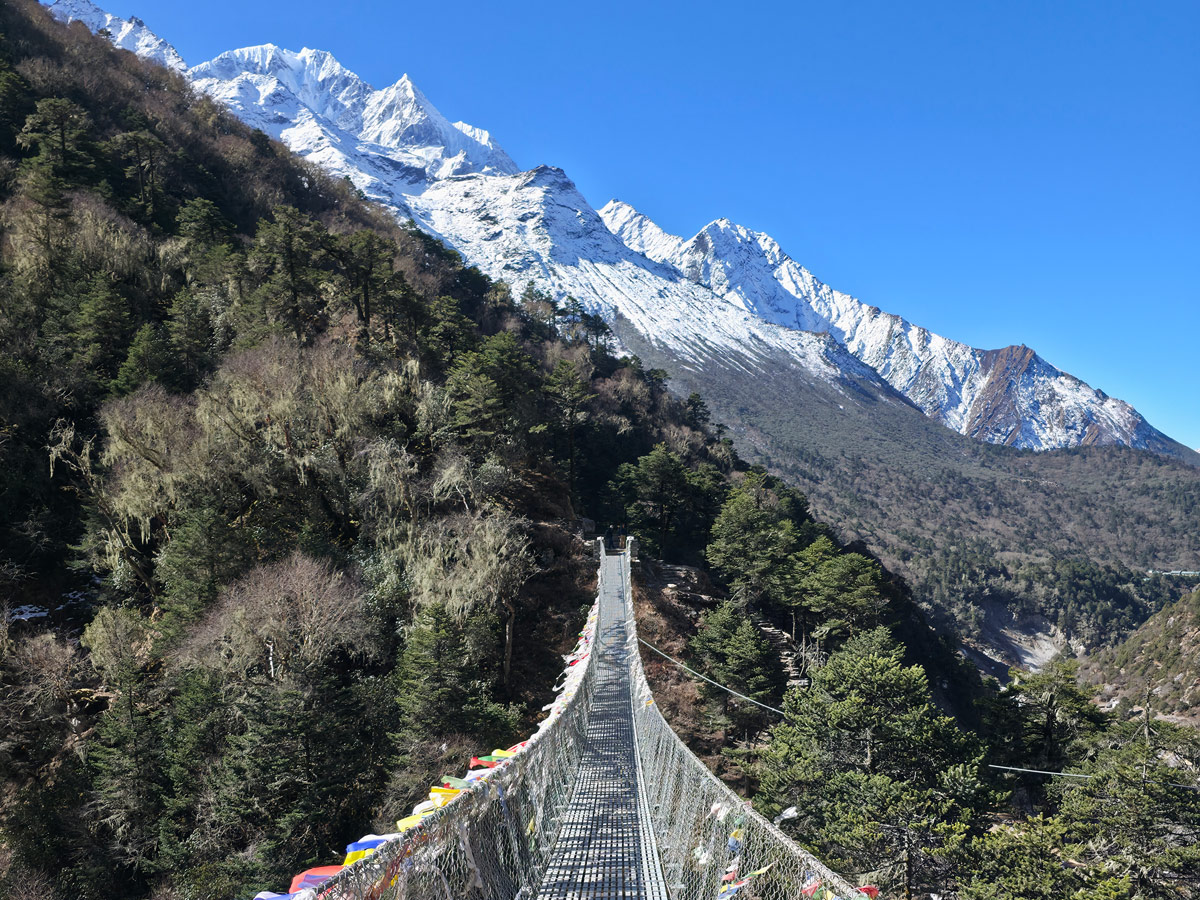
When people think about the Everest Base Camp trek, they usually imagine Mount Everest, Namche Bazaar, and Kala Patthar. But there is another important part of the trek that every trekker remembers: the suspension bridges along the Everest Base Camp trail.
These bridges hang high above deep river valleys, covered with colorful prayer flags, and often swing gently as you walk across them. Most of the bridges feel calm and easy, while others feel exciting and a little scary.
But all of them are important because they connect villages, trails, and people across the Khumbu region.
In this article, we are going to walk you through every major suspension bridges along the EBC trail, including bridge on Cheplung, Phakding, Bengkar, Monjo, Jorsalle, Hillary Bridge, Phunki Tenga, Pangboche and Pheriche. We will cover what each bridge looks like, the cultural stories around it, practical tips for crossing, and the landscape that surrounds it.
Cheplung Bridge – Your First Swing on EBC trail
Elevation: ~2,436 m (7,992 ft)
Location: Between Lukla and Phakding, Khumbu region.
The Cheplung suspension bridge is usually the first bridge trekkers cross after starting the trek from Lukla. This bridge is not very high, so it is a good introduction to suspension bridges on the Everest Base Camp trail.
It is located beside Dudh Koshi River. The water below is icy cold and crystal clear. On either side of the bridge, you will almost always see colorful prayer flags. These flags are not just decoration. In Tibetan Buddhist culture, every time the wind moves those flags, it is believed to carry prayers and blessings across the mountains.
Phakding Suspension Bridge
Elevation: ~2,610 m (8,563 ft)
Location: In village of Phakding
Here is something that surprises first-time trekkers: Phakding sits lower than Lukla, which means you actually descend from the airport town before the trail starts going up for real. And the reason for that descent? You need to drop down to cross the Dudh Koshi gorge.
The Phakding Suspension Bridge is a traditional bridge constructed with thick steel cables suspended between tall metal towers. It is designed to carry both trekkers and animals, such as yaks, which are often used to transport goods in this remote region. It is a vital part of the trekking infrastructure in the Sagarmatha National Park, providing easy access to the many villages along the trail.
The bridge itself is not particularly long but spans a deep gorge over the Dudh Koshi River, which adds to the thrilling experience of crossing it. The height of the bridge and the powerful current of the river below make the crossing both exciting and scenic.
Bengkar Suspension Bridge
Elevation: 2,652 m (8,700 ft)
Location: Between Phakding and Monjo
After Phakding, the trail continues toward Bengkar, where you will cross another beautiful Everest Base Camp suspension bridge over Dudh Koshi River. This area is quieter and less crowded.
Bengkar is a quite village located between the bustle of Phakding and the national park checkpoint at Monjo. The valley becomes narrower, and the river flows faster here. The bridge here feels higher than earlier bridges, and the views become more dramatic.
This section of the trail feels more remote, and you start to feel like you are really in the Himalayas.
Monjo Suspension Bridge
Elevation: ~2,835 m (9,301 ft)
Location: Gateway to Sagarmatha National Park
The bridge at Monjo is not just a river crossing. It is a threshold. Just beyond the village sits the entrance checkpoint to Sagarmatha National Park, a UNESCO World Heritage Site covering 1,148 square kilometers of the Khumbu region.
This Monjo bridge also spans the Dudh Koshi River, which plays a crucial role in the journey to Everest Base Camp. Monjo Bridge connects Monjo and Jorsalle village.
Once you cross Monjo suspension bridge and pass through the park gate, the environment around you starts to change. Below Monjo, the EBC trail passes through farmland and open valley floor. Above it, you enter dense rhododendron forests.
Jorsalle Suspension Bridge
Elevation: ~2,835 m (9,301 ft)
Location: Gateway to Sagarmatha National Park
After Monjo, the trail descends again to Jorsalle, another small village on the valley floor. And here, the river situation gets more dramatic. You are now approaching the confluence zone where the Bhote Koshi (coming down from the Tibet border in the northwest) meets the Dudh Koshi.
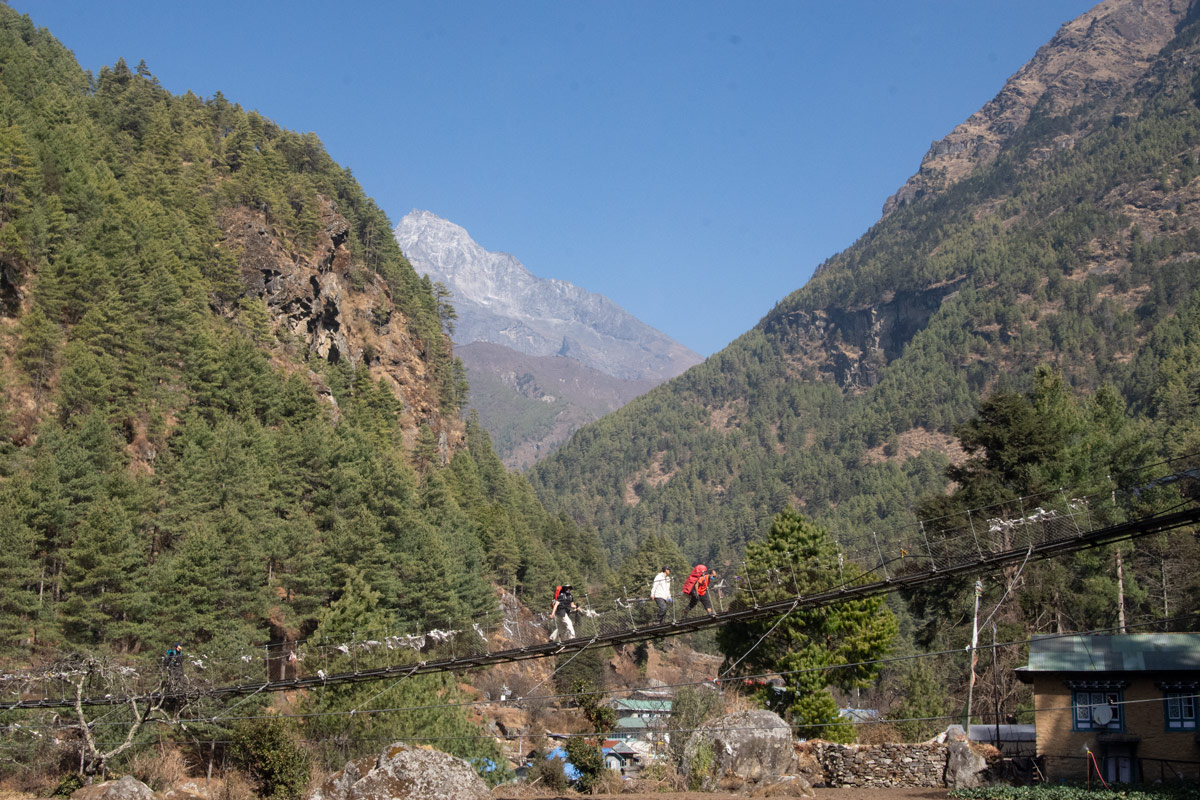
The Jorsalle bridges span some of the longest open sections on the lower trail. Looking down from the middle of these bridges, you see the full power of the Himalayan meltwater system at work. These rivers are fed by glaciers high above – the Khumbu Glacier, the Ngozumpa Glacier, and dozens of smaller ice fields.
The Jorsalle crossing is also psychologically significant. The moment you leave Jorsalle, the trail starts climbing toward Namche Bazaar.
The Famous Hillary Suspension Bridge
Elevation: ~2,860 m (9,383 ft)
Location: Larja Dovan, Between Phakding and Namche Bazaar
The Hillary Bridge, officially known as Larja Dovan is the most famous suspension bridge on the Everest Base Camp trek. This bridge hangs very high above the Dudh Koshi River and is covered with colorful prayer flags.
The Hillary Suspension Bridge spans about 60 m (196.85 ft) in length and 135 m (443 ft) in height. The bridge gets its informal name from Sir Edmund Hillary, the New Zealand mountaineer who, along with Tenzing Norgay Sherpa, became the first person to reach the summit of Mount Everest on May 29, 1953.
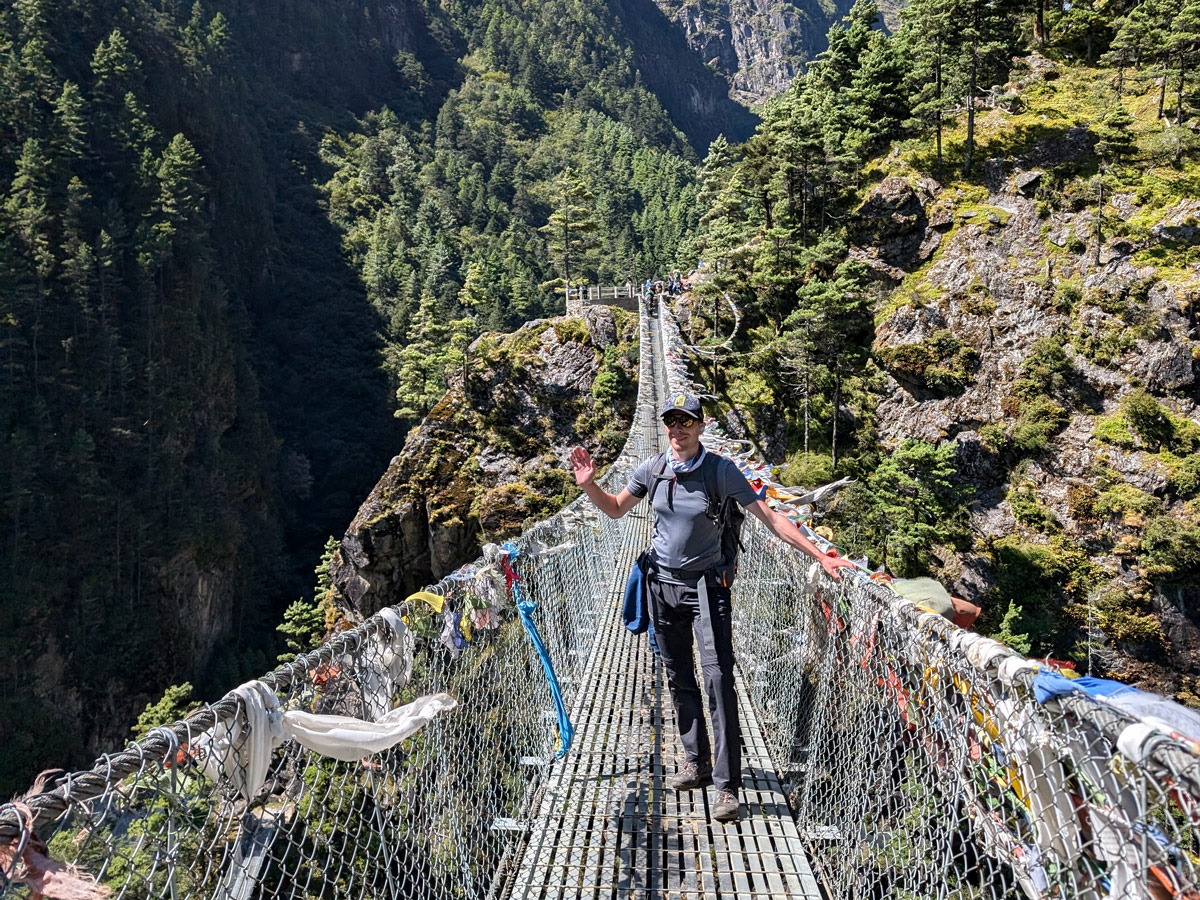
Crossing the Hillary Bridge is a full-body experience. Below, the river is loud enough that you have to raise your voice to talk.
The Hillary Bridge photographs best in the early morning golden hour when the light comes from the east and catches the prayer flags from behind. After you cross the Hillary Bridge, the ascent to Namche Bazaar begins in earnest.
Phunki Tenga Suspension Bridge
Elevation: ~3,250 m (10,663 ft)
Location: Below Tengboche, after Namche Bazaar
Above Namche Bazaar, the capital of the Khumbu and the most important trading hub in the Everest region, the trail shifts its character completely. You leave the lower gorge behind and enter a higher, wilder, more dramatic landscape. And then, unexpectedly, the trail drops back down to the river.
The descent to Phunki Tenga is steep and can be hard on the knees, but it delivers you to one of the most peaceful spots on the entire route.
The Phunki Tenga bridge connects Namche Bazaar and Tengboche and feels almost secret. It does not carry the foot traffic of the Hillary Bridge. It is calmer, less photographed, and surrounded by juniper and pine forest that fills the air with a clean, forest-like scent.
After crossing Phunki Tenga Suspension bridge, begin a long uphill climb to Tengboche Monastery. The trail switches back through rhododendron forest, and when you finally emerge at Tengboche (3,867 m).
Pangboche Suspension Bridge
Elevation: ~ 3,985 m (13,074 ft)
Location: Near Pangboche Monastery
By the time you reach Pangboche, the landscape around you has completely transformed. The forests of the lower Khumbu are gone. The terrain is rocky, open, and treeless.
The Pangboche suspension bridge crosses the Khumbu River between Tengboche and Pangboche village. This bridge sits at a higher altitude, and the landscape looks different here.
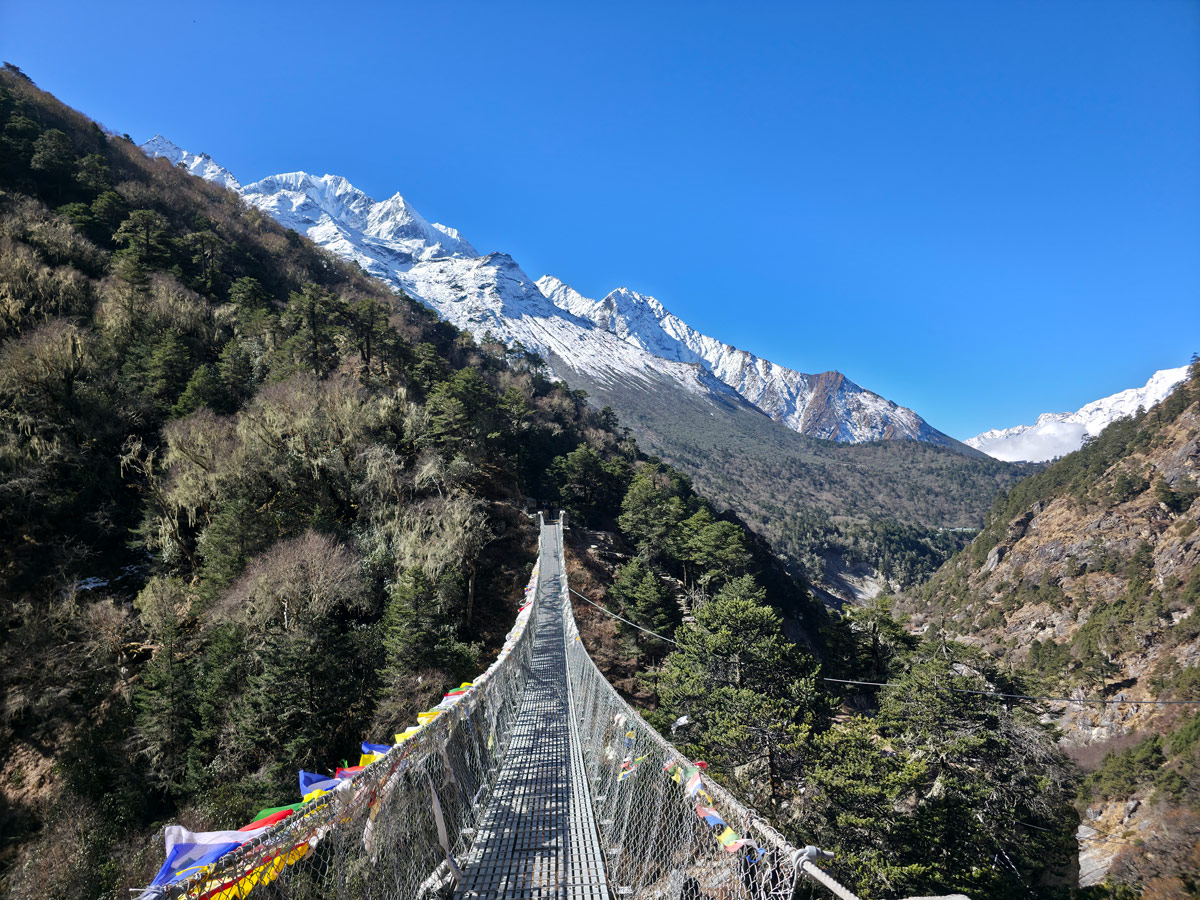
The Pangboche bridge is smaller and less dramatic than the Hillary Bridge but crossing it at nearly 4,000 meters is a different physical experience entirely. Your breathing is noticeably heavier.
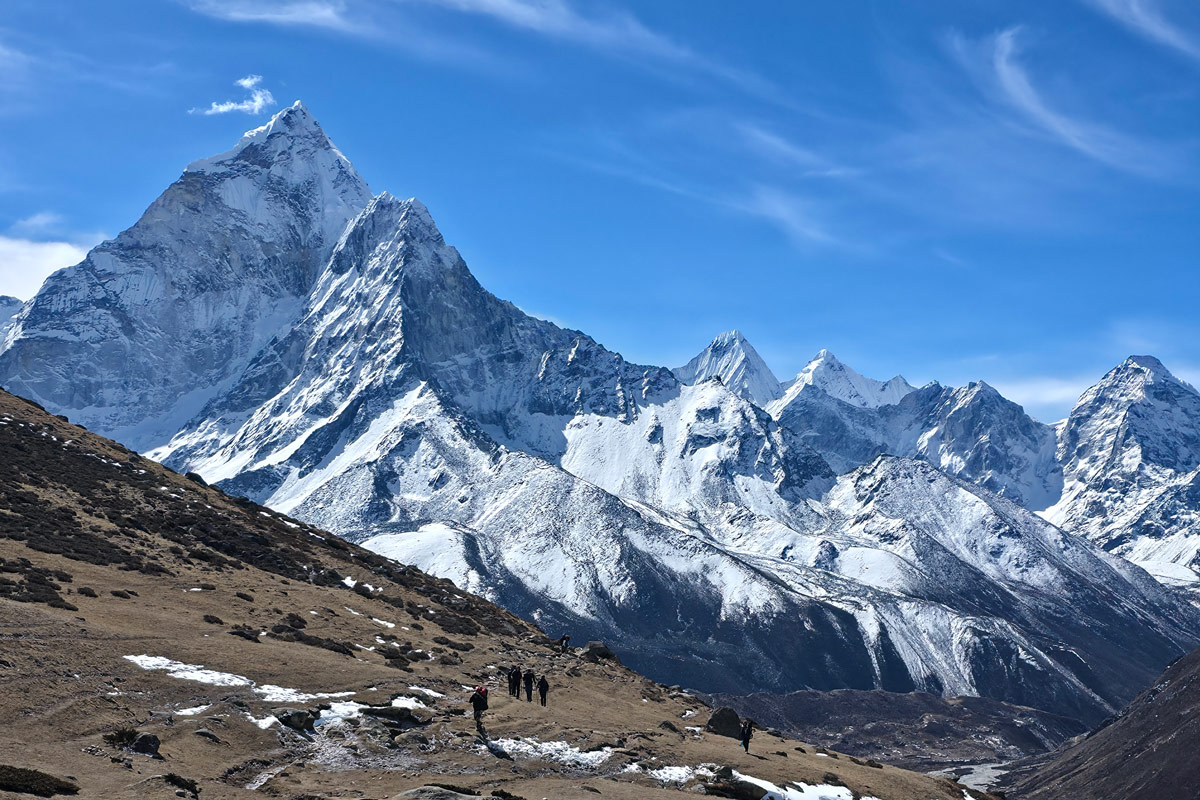
The bridge is a reminder that altitude is not just a number. It is a physical reality that changes how your body works. You also start seeing mountains including Ama Dablam.
This bridge feels more open and less crowded compared to bridges in the lower part of the trek.
Pheriche Suspension Bridge
Elevation: ~ 4,240 m (13,910 ft)
Location: Between Pheriche and Orsho, above the Khumbu Khola
While heading towards Everest Base Camp if we choose the Pangboche route, this suspension bridge becomes an important crossing after descending from Pangboche toward the Pheriche Valley.
However, most trekkers on the standard EBC route do not usually cross this bridge on the ascent, as they typically continue from Tengboche through Deboche and Pangboche before following the main trail toward Dingboche.
The Pheriche suspension bridge is more commonly used during the return journey, especially when trekkers descend from Dingboche or Pheriche and take the lower valley route toward Orsho and Somare. Crossing here offers a quieter alternative path and reconnects trekkers with the trail system leading back toward Pangboche and Tengboche.
At this altitude, the landscape is wide, dry, and distinctly alpine. Green forests have long disappeared, replaced by glacial valleys, stone walls, yak pastures, and windswept terrain. The bridge itself may not be as famous as the lower Khumbu crossings, but it serves as a practical and memorable link between key settlements in the upper valley.
Surrounded by towering peaks and open Himalayan space, this bridge feels less crowded and more functional, often experienced as part of the quieter side of the Everest journey.
Why Suspension Bridges Are Important on the Everest Base Camp Trek
The Everest region has deep valleys and fast-flowing rivers like the Dudh Koshi River and Khumbu River. Because of these rivers, trekkers cannot walk in a straight line to Everest Base Camp. The trail must cross rivers many times, and that is why suspension bridges are everywhere along the Everest Base Camp trail.
These bridges are not just for trekkers. Local people use them every day. You will see:
- Porters carrying heavy loads
- Yaks carrying supplies
- Mules transporting food and gas
- Local villagers travelling between villages
- Trekkers heading to Everest Base Camp
Many modern bridges in the Khumbu region were built with help from the Sir Edmund Hillary Foundation, which improved travel and safety in the region.
Without these bridges, the Everest Base Camp trek would be much longer and much more difficult.
Tips for Crossing Suspension Bridges Along the EBC Trail
Crossing suspension bridges along the Everest Base Camp trail is safe, but trekkers should follow some basic rules.
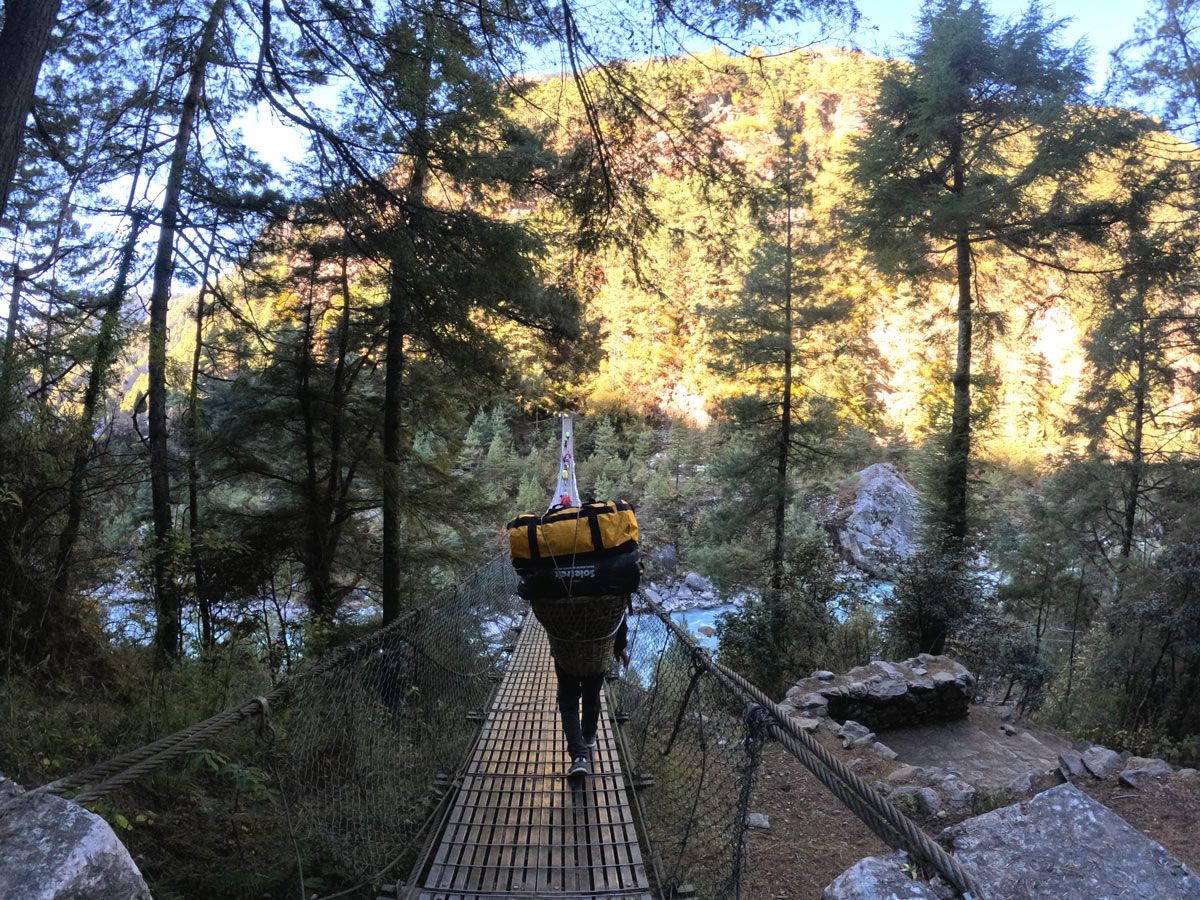
- Always yield to yaks: Always give way to yaks and mules. Step to the mountain (uphill) side of the bridge and wait calmly until they pass.
- Do not rush: Bridges are narrow and the surface can be uneven. Take your time while crossing EBC Suspension Bridges.
- Look down once: The gorge views from the middle of these bridges are spectacular. Just make sure your footing is solid first.
- Hold the railing if it is windy: Always hold the railing in windy conditions. This will provide support and help maintain your balance while crossing.
- Do not crowd in the middle of the bridge: Keep clear of the center of the bridge. Allow space for others to pass and maintain a smooth flow of foot traffic.
- Respect the prayer flags: Do not remove or damage them. They are sacred objects maintained by local communities.
- Carry your permits: Sagarmatha National Park permit and TIMS cards are checked at multiple points. Keep them accessible.
Final Thoughts
The Everest Base Camp trek is an adventurous journey that will change how you think about distance, effort, and human connection. The suspension bridges along the Everest Base Camp trail are more than just river crossings.
They are an important part of the journey, the culture, and the landscape of the Khumbu region.
They make you pause. They make you look down, and up, and around. They remind you, physically and viscerally, that you are somewhere genuinely wild and extraordinary.
Each bridge marks progress along the trek:
- Cheplung – Start of the journey
- Phakding – Easy walking days
- Bengkar – Entering deeper valleys
- Monjo – Sagarmatha National Park
- Jorsalle – Before Namche climb
- Hillary Bridge – Famous crossing
- Phunki Tenga – Climb to Tengboche
- Pangboche – Higher Khumbu region
- Pheriche – Return Route Connection
By the time trekkers reach the foot of the highest mountain in the world (Everest Base Camp), they have crossed many suspension bridges, each one becoming a small memory of the journey.
So the next time you set foot on a swaying Khumbu bridge, with yak bells behind you, prayer flags above you, and a glacial river roaring below – take a breath. Not just because the thin air demands it. Take it because you have earned it, and because this is one of the great experiences the world has to offer.