
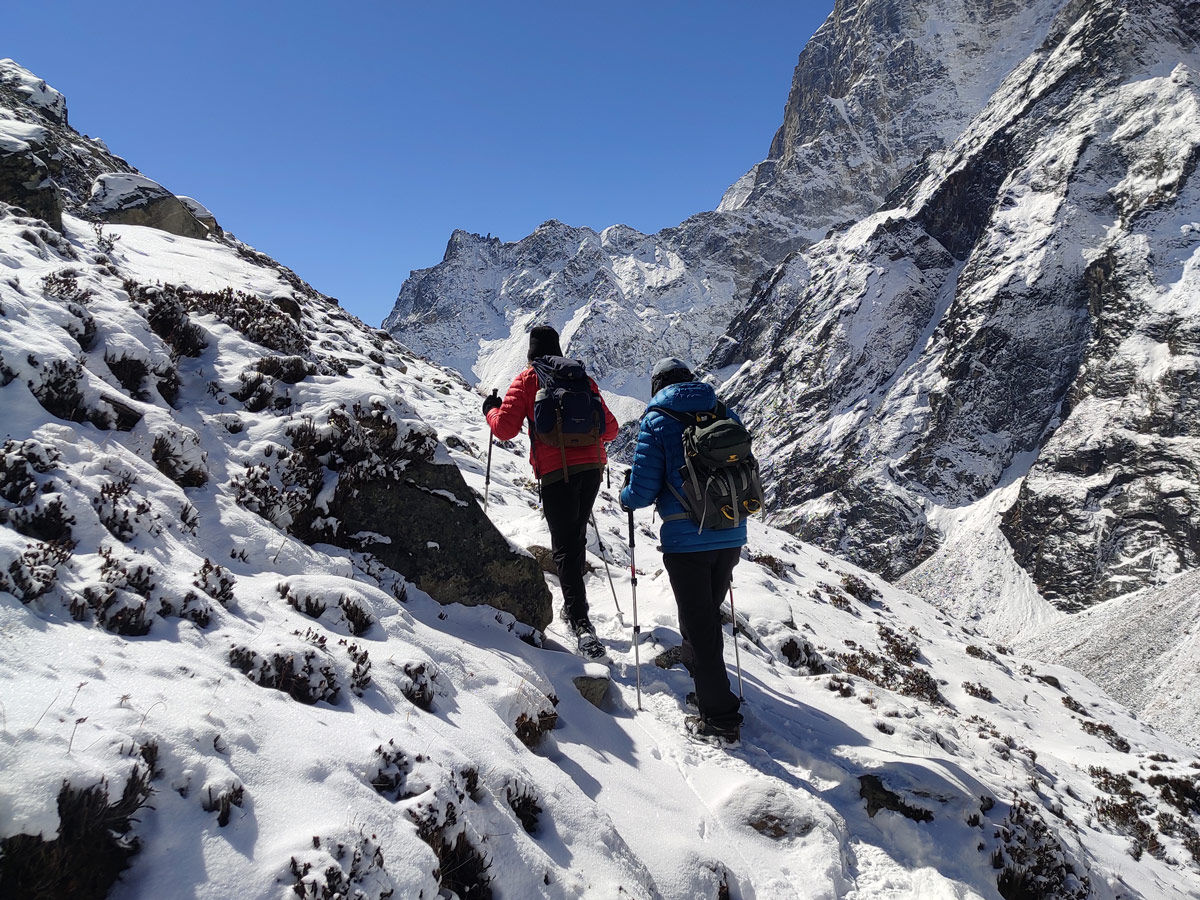
Nepal is a dream destination for trekkers, mountaineers, and adventure seekers from around the world. Home to eight of the world’s fourteen highest peaks, it offers countless opportunities to explore the Himalayas. While many come to experience its iconic trekking trails, others seek an even greater challenge, crossing the legendary mountain passes of Nepal.
These high-altitude passes are much more than routes connecting one valley to another. They are gateways to breathtaking Himalayan panoramas, ancient trade trails, remote villages, and unforgettable trekking experiences.
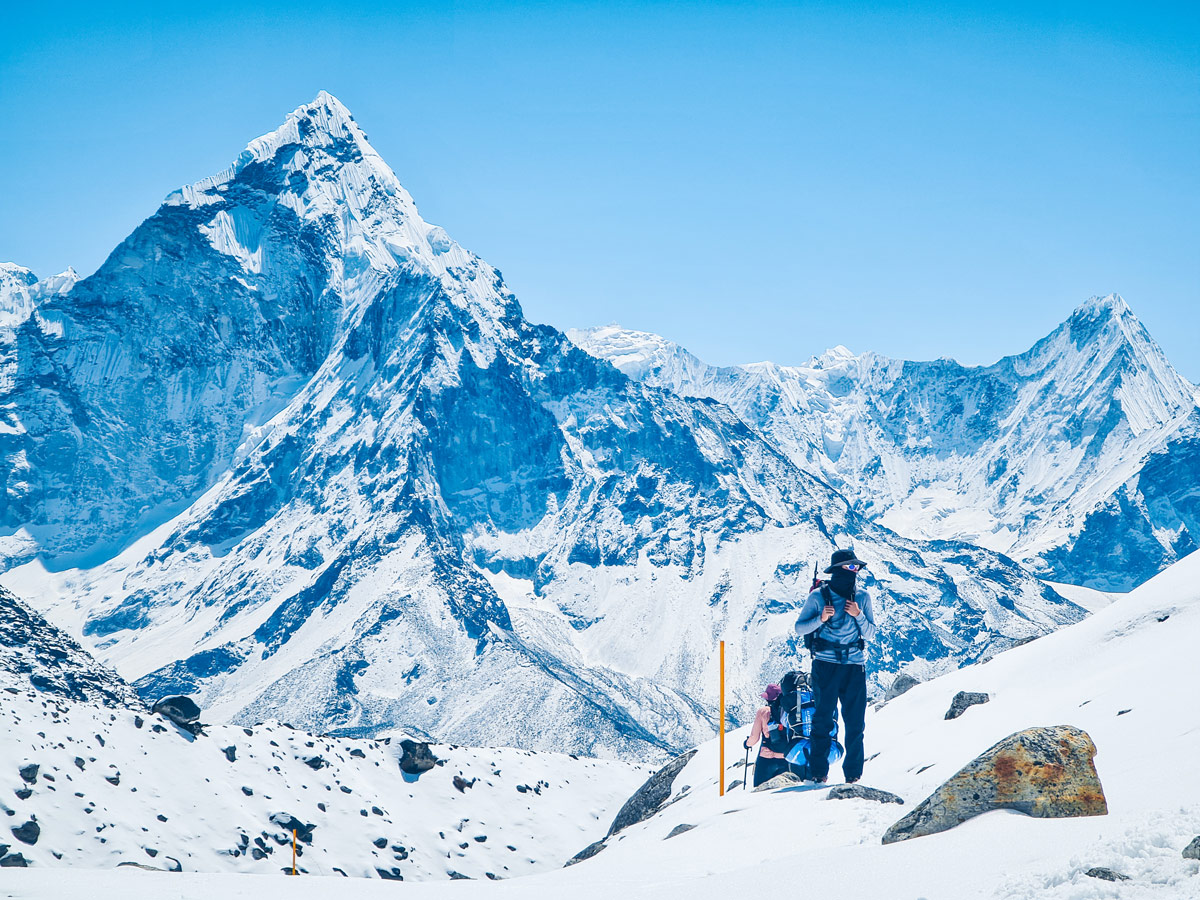
Reaching the top of a mountain pass often becomes the most rewarding moment of a trek, where every uphill step is repaid with sweeping views of snow-covered peaks stretching far beyond the horizon.
Whether you’re trekking in the Everest, Annapurna, Langtang, or Manaslu region, Nepal offers mountain passes for every level of adventure. Some are relatively accessible with proper acclimatization, while others require technical climbing skills and glacier travel.
In this guide, we’ll explore 10 of the most famous mountain passes of Nepal, highlighting what makes each one unique, their difficulty level, and the trekking routes they belong to.
Why Mountain Passes are Special in Nepal
Nepal’s geography is what makes its passes so unique. The country is essentially one long staircase from the lowland Terai up to the highest points on Earth, and the passes are where different trekking circuits stitch together.
Spectacular Himalayan Views
Most mountain passes of Nepal sit above 5,000 meters, providing uninterrupted views of some of the world’s tallest mountains. Depending on the region, you may see Mount Everest, Lhotse, Makalu, Annapurna, Manaslu, Dhaulagiri, or Langtang Lirung dominating the skyline.
A True Sense of Achievement
There’s something incredibly satisfying about standing on top of a mountain passes in Nepal after hours of climbing. Prayer flags flutter in the wind, colorful cairns mark the summit, and the surrounding peaks make every challenging step worthwhile.
Diverse Landscapes
One of the most fascinating aspects of crossing a pass is watching the scenery transform. Dense forests gradually give way to alpine meadows, rocky moraines, glaciers, and barren high-altitude deserts. Every few hours, the landscape changes dramatically.
Rich Cultural Experiences
Many mountain passes of Nepal connect villages with unique cultures and traditions. Along the way, you’ll pass Buddhist monasteries, prayer wheels, mani walls, and welcoming tea houses where local hospitality becomes an unforgettable part of the journey.
Adventure Beyond Ordinary Trekking
Crossing a high pass adds an exciting element to any trek. Instead of retracing your steps, you continue into a completely different valley, discovering new scenery and communities every day.
List of 10 Famous Mountain Passes of Nepal
Kongma La Pass
Region: Everest
Sitting at 5,535 meters (18,159 ft), Kongma La is the highest and toughest of the three passes on the Everest Three Passes trek. It connects the Khumbu Valley near Chhukhung to the Everest Base Camp trail close to Lobuche.
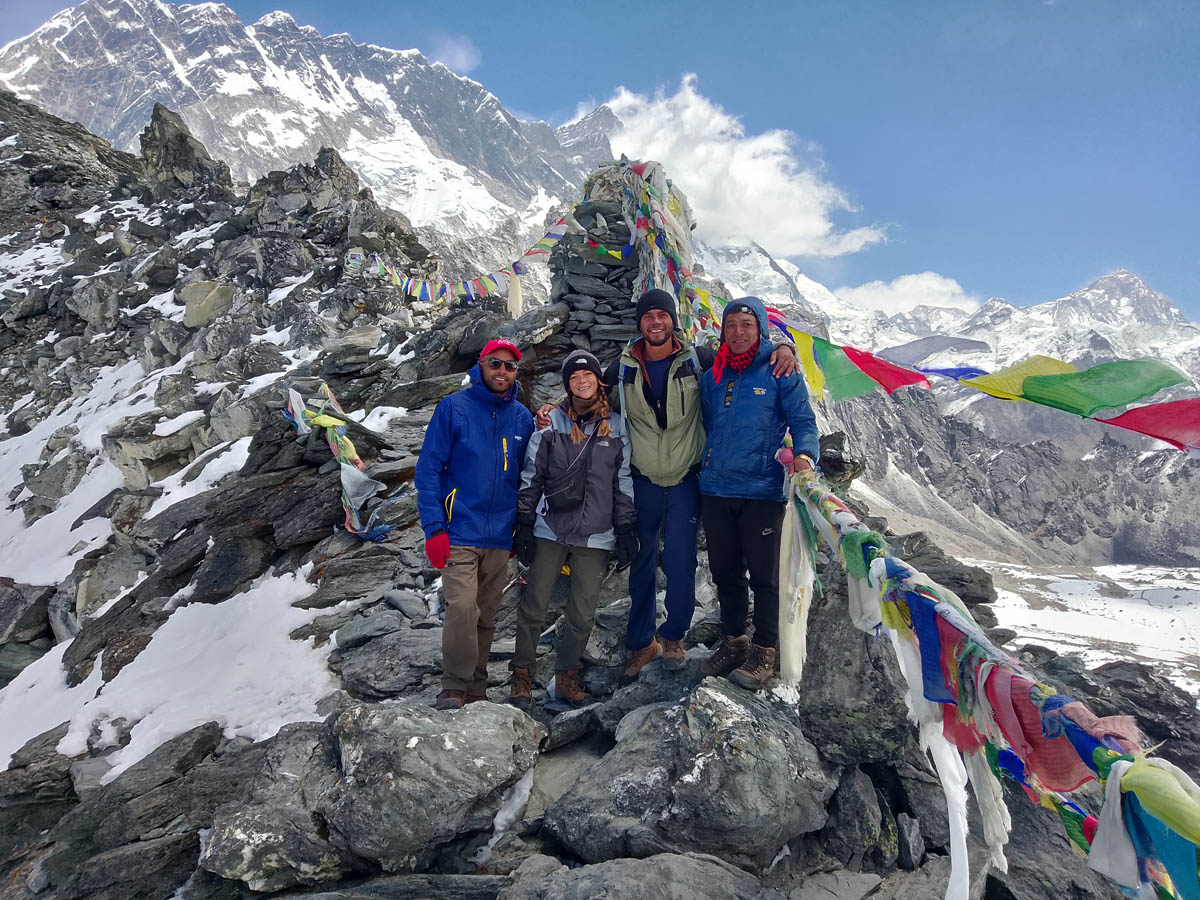
Unlike the busy trail to Everest Base Camp, Kongma La feels wild and remote. The climb is steep, the terrain is rocky, and facilities are limited, making it an adventure for trekkers looking to experience a quieter side of the Khumbu region.
What you get in return is a jaw-dropping vantage point over the Khumbu Glacier and a close-up of Lhotse along with other peaks.
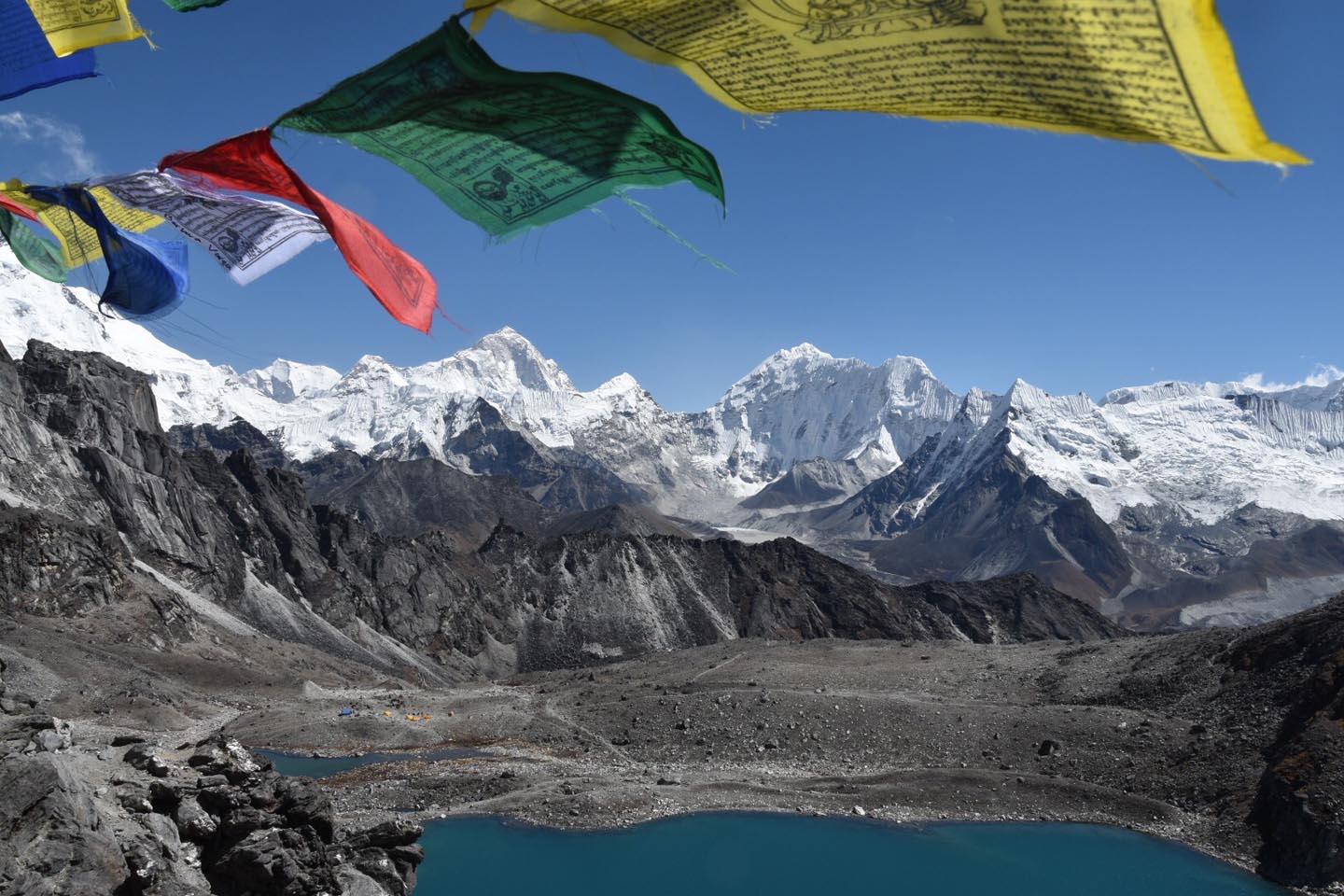
Trekkers typically cross Kongma La while completing the Everest Three Passes Trek, connecting the villages of Chhukhung and Lobuche.
Highlights of Kongma La Pass
- Highest pass in the Everest Three Passes Trek
- Incredible views of Lhotse, Makalu, Nuptse, and Ama Dablam
- Remote trails with fewer trekkers
- Challenging but highly rewarding crossing
- Stunning glacial scenery throughout the route
Best Season: Spring (March–May) and Autumn (September–November)
Cho La Pass
Region: Everest
At 5,420 meters (17,782 ft), Cho La Pass links Everest Base Camp trail with the Gokyo Valley, and it’s the pass most people picture when they think of the Everest Three Passes trek.
Unlike Kongma La, Cho La features sections of glacier crossing, which typically requires crampons depending on snow conditions. This adds another layer of excitement to the trek.
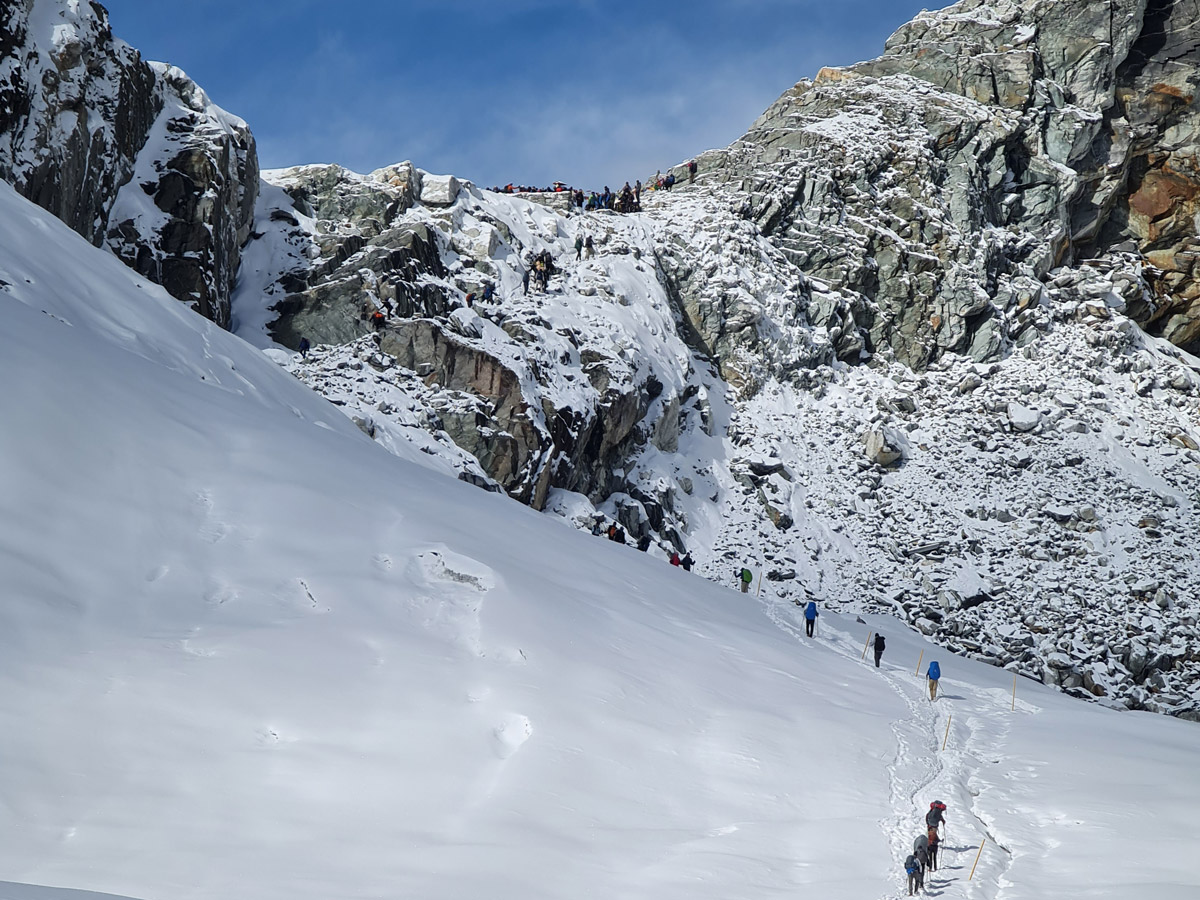
Despite its challenges, Cho La remains one of the most popular mountain passes of Nepal because it allows trekkers to combine two of the Everest region’s most iconic destinations into one unforgettable journey.
Standing on the pass, you’ll be rewarded with spectacular views of Cholatse, Lobuche East, Ama Dablam, and surrounding glaciers.
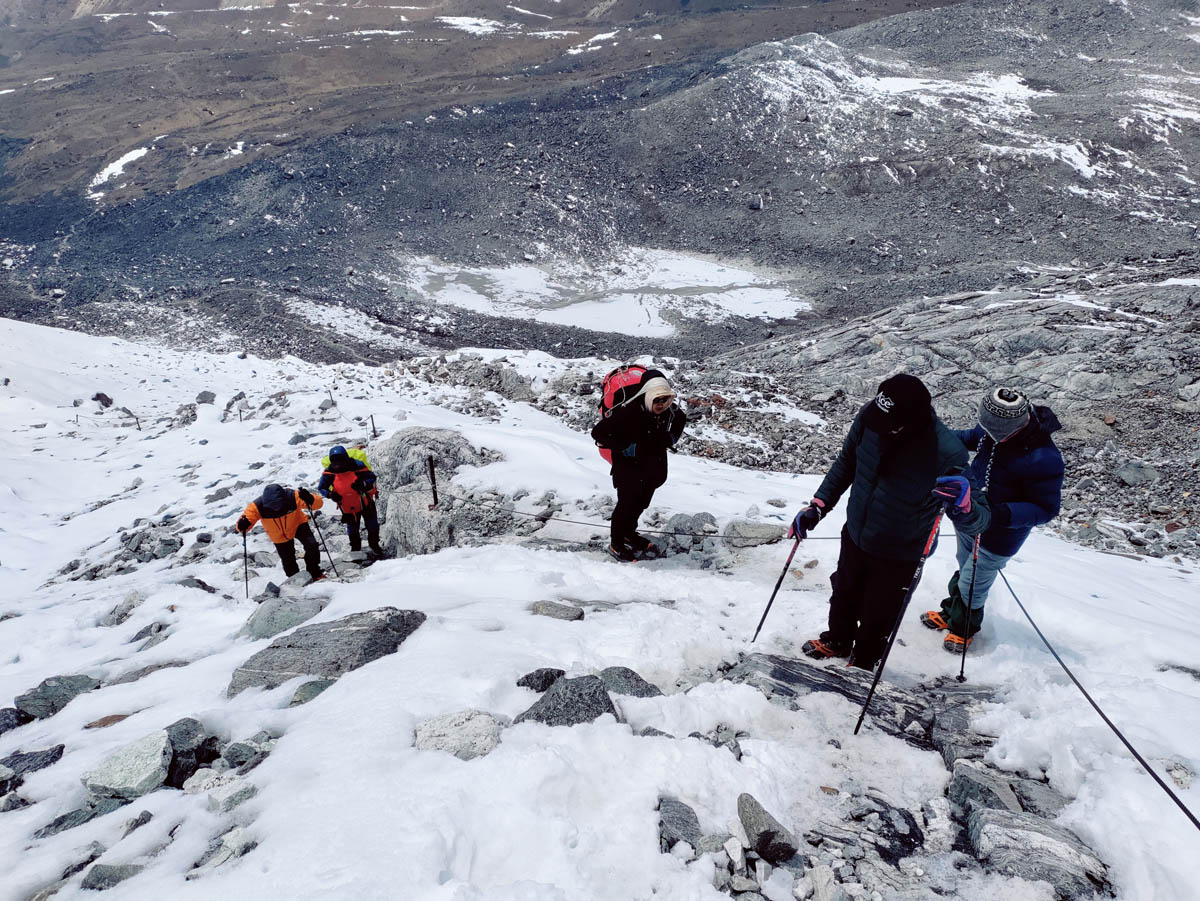
Trekkers typically cross Cho La while completing the Everest Three Passes Trek, connecting the villages of Dzongla and Thagnak.
Highlights of Cho La Pass
- Connects Everest Base Camp and Gokyo Valley
- Glacier crossing experience
- Spectacular Himalayan scenery
- Popular section of the Everest Three Passes Trek
- Ideal for adventurous trekkers seeking variety
Best Season: Spring and Autumn
Renjo La Pass
Region: Everest
While Kongma La is the toughest and Cho La is the most adventurous, Renjo La Pass (5,130 m/17585 ft) is often considered the most scenic and easiest of the Everest Three Passes. The trail is well-defined and has the best view of the entire Everest range you’ll find anywhere, including Everest, Lhotse, Makalu, and Cho Oyu all in one frame.
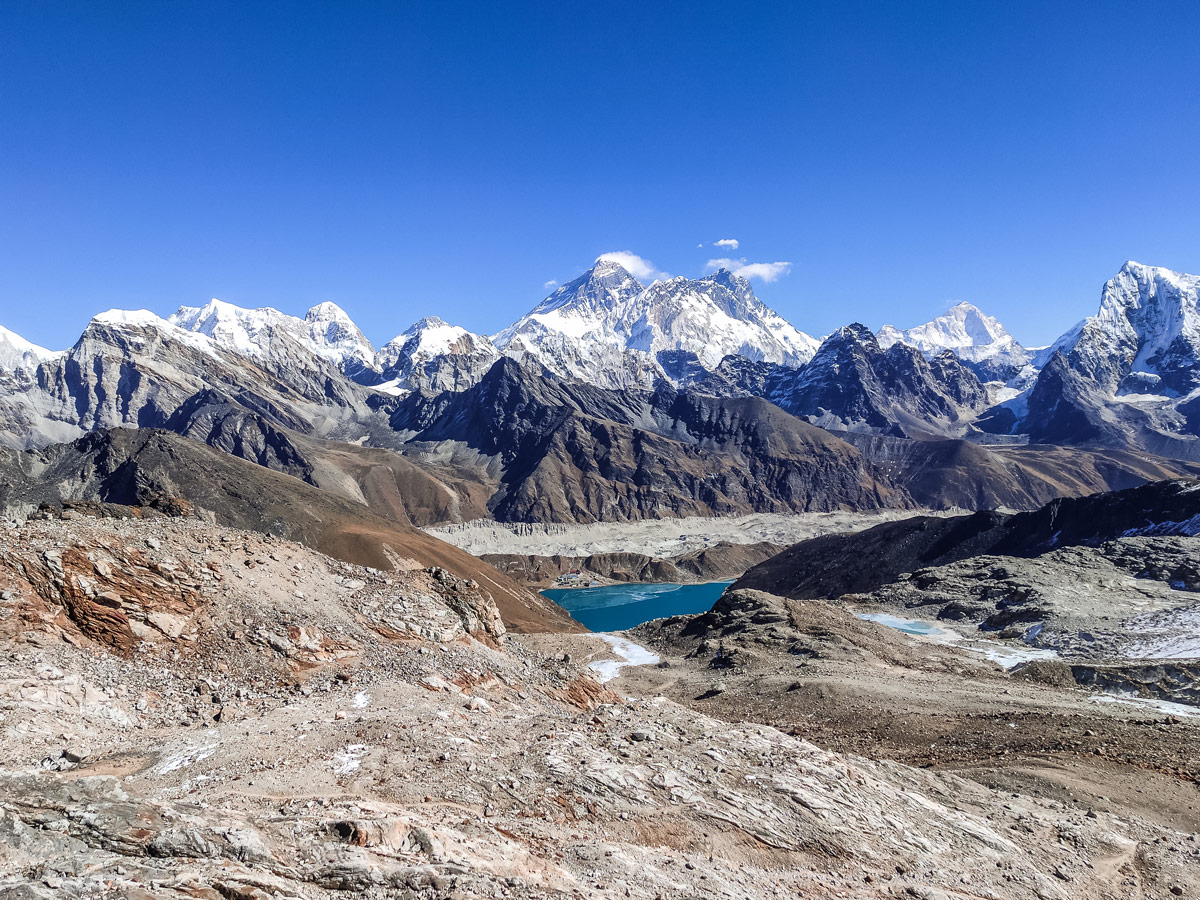
Compared to the other Everest passes, Renjo La generally involves less technical terrain, making it an excellent choice for trekkers seeking spectacular scenery without glacier crossings.
The route is also quieter than the main Everest Base Camp trail, allowing visitors to enjoy a greater sense of solitude while surrounded by some of the world’s highest mountains.
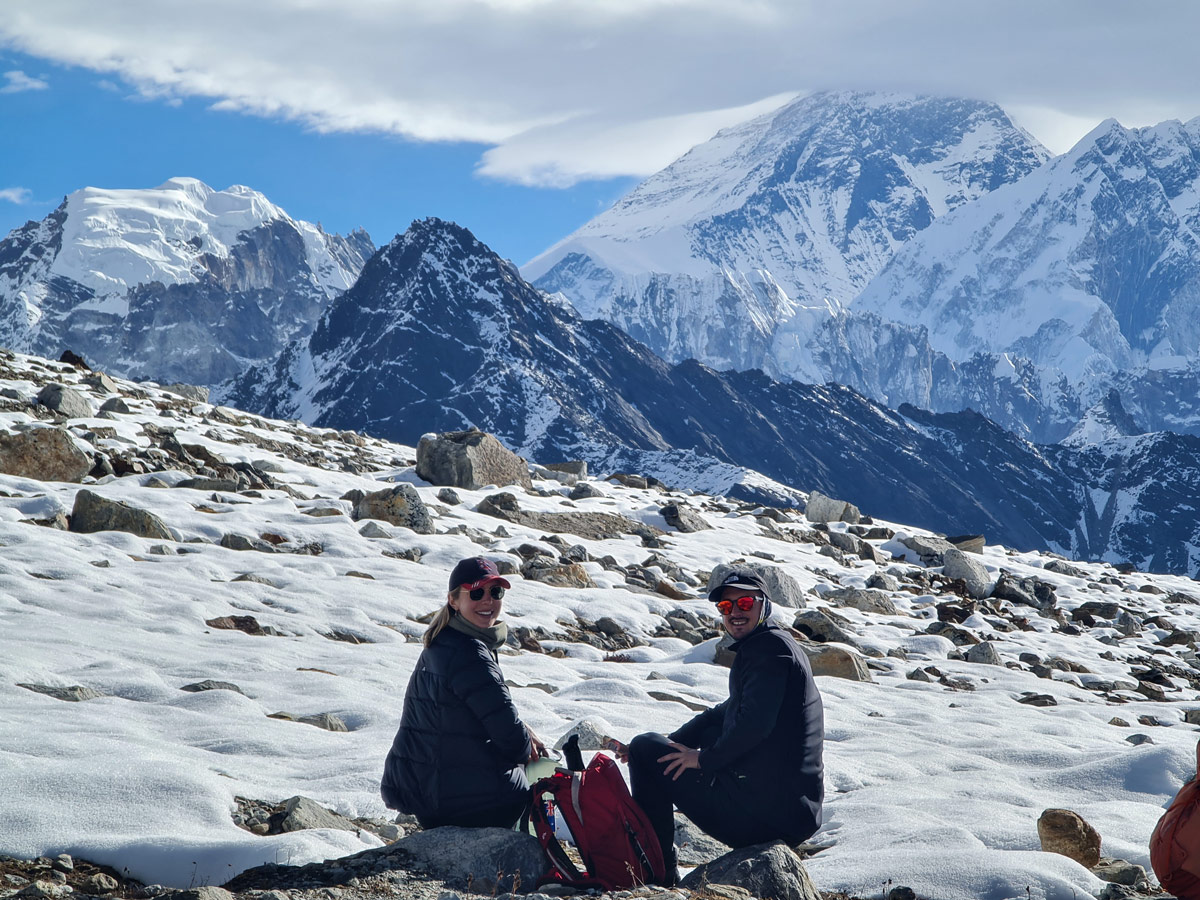
Renjo La Pass connects the Gokyo Valley to the Bhote Koshi Valley near Lungden, making it a favorite finishing leg for trekkers who’ve already ticked off Gokyo Ri.
Highlights of Renjo La Pass
- Provides the best viewpoint in the Everest region
- Magnificent panorama of Everest and Gokyo Lakes
- Less crowded than other Everest trekking routes
- Excellent photography opportunities
- Part of the renowned Everest Three Passes Trek
Best Season: Spring and Autumn
Thorong La Pass
Region: Annapurna
No list of Himalayan crossings is complete without Thorong La, the crown jewel of the Annapurna Circuit. At 5,416 m (17,769 ft), it’s one of the most-crossed high passes and the highest point of the iconic Annapurna Circuit Trek.

The scale here is different from the Everest passes. Thorong La isn’t technical, but the sheer length of the crossing day, often eight to ten hours, combined with the altitude, makes it a genuine test of endurance.
Reaching the summit feels like standing on the roof of the Annapurna region. Colorful prayer flags flutter in the wind, and panoramic views of Annapurna, Dhaulagiri, Gangapurna, and surrounding Himalayan peaks make every challenging step worthwhile.
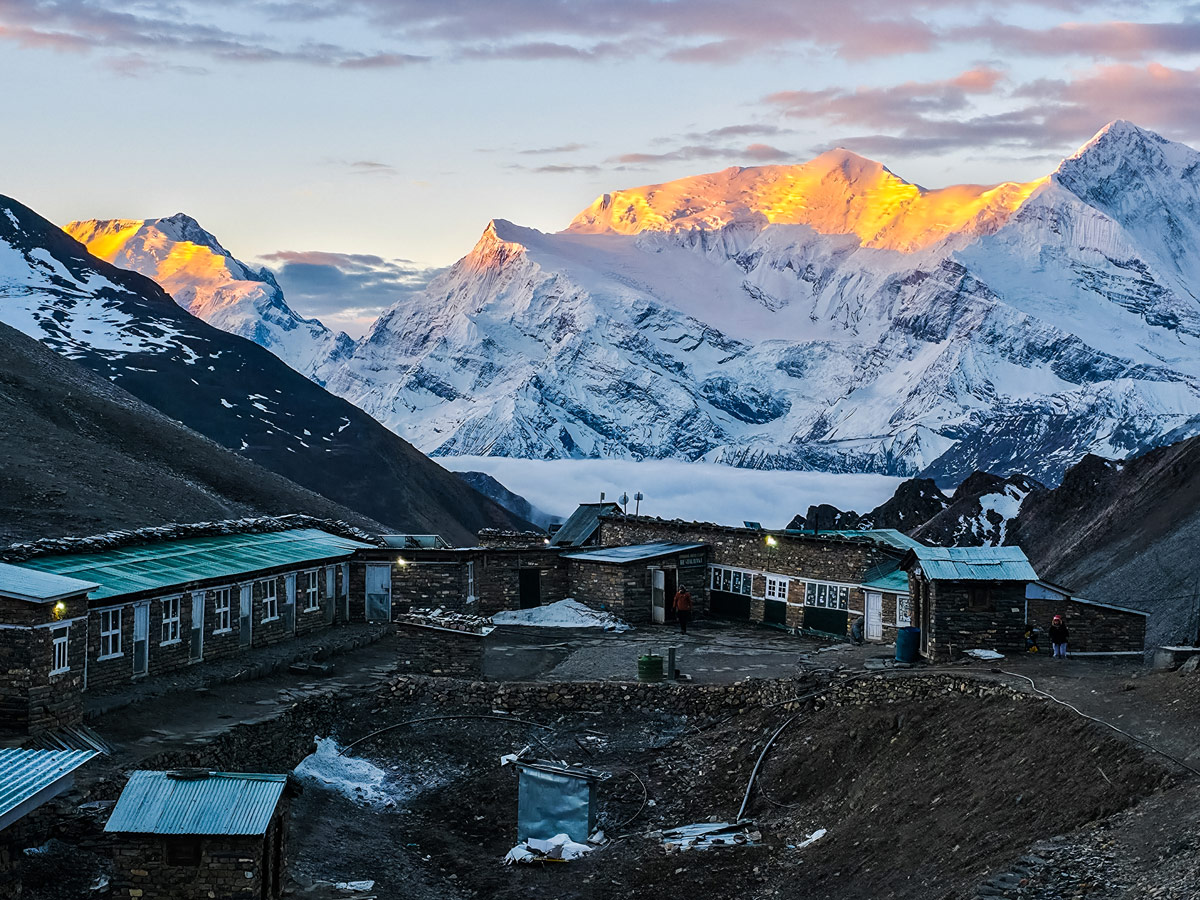
Thorong La connects the arid Manang district to the pilgrimage town of Muktinath in Mustang. Muktinath is a sacred pilgrimage site and an important destination for both Hindus and Buddhists.
Highlights of Thorong La Pass
- Highest point of the Annapurna Circuit Trek
- One of Nepal’s most famous trekking passes
- Stunning sunrise views over the Annapurna and Dhaulagiri ranges
- Scenic transition from lush valleys to the dry landscapes of Mustang
- Opportunity to visit the sacred temple of Muktinath
Best Season: Spring and Autumn
Larkya La Pass
Region: Manaslu
Nestled within the remote Manaslu Circuit Trek, Larkya La Pass is one of Nepal’s most dramatic and rewarding mountain crossings. Although it stands slightly lower than several other Himalayan passes at 5,160 m (16,929 ft), its length, remoteness, and breathtaking scenery make it one of the country’s finest trekking experiences.
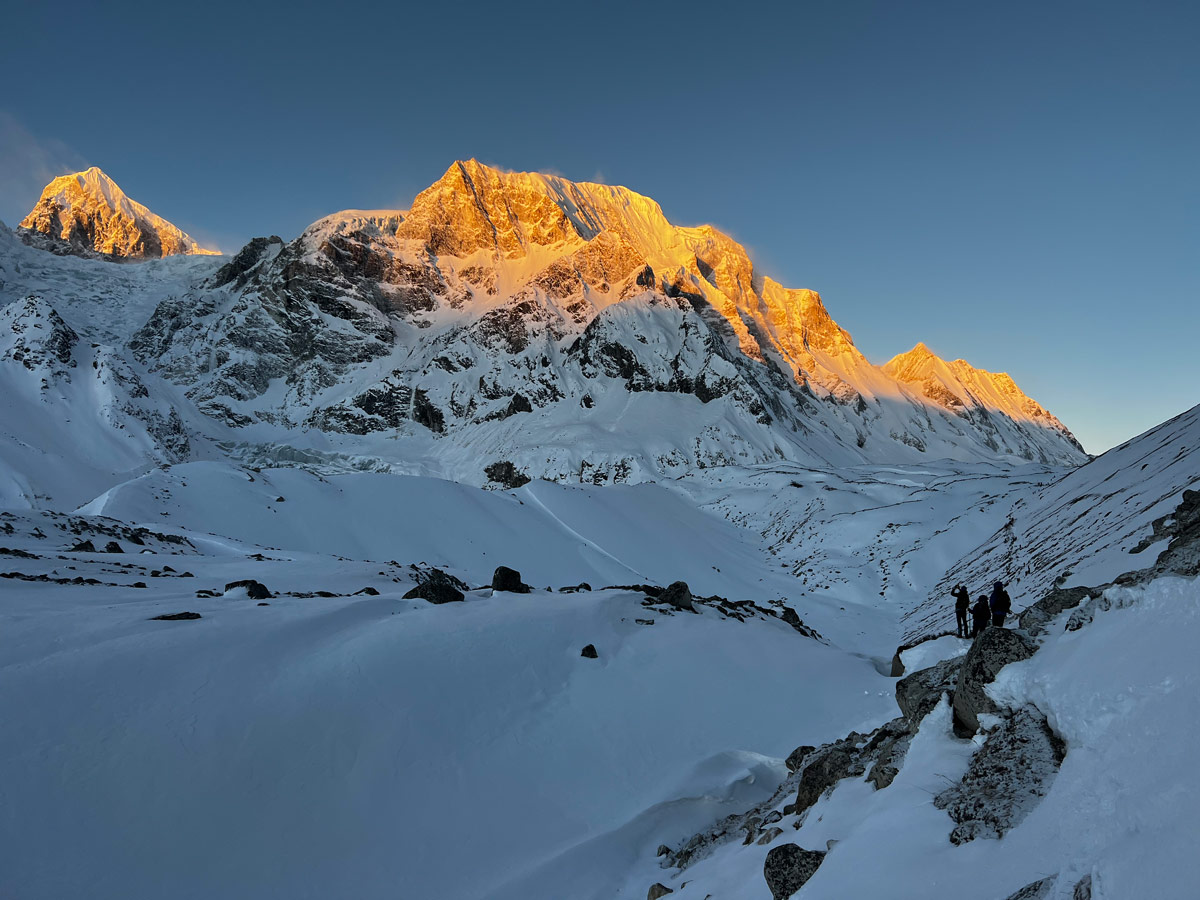
The Larkya La Pass is the highlight of the Manaslu Circuit Trek. From the summit, trekkers are rewarded with magnificent panoramas of Manaslu (8,163 m), Himlung Himal, Cheo Himal, Kang Guru, and Annapurna II.
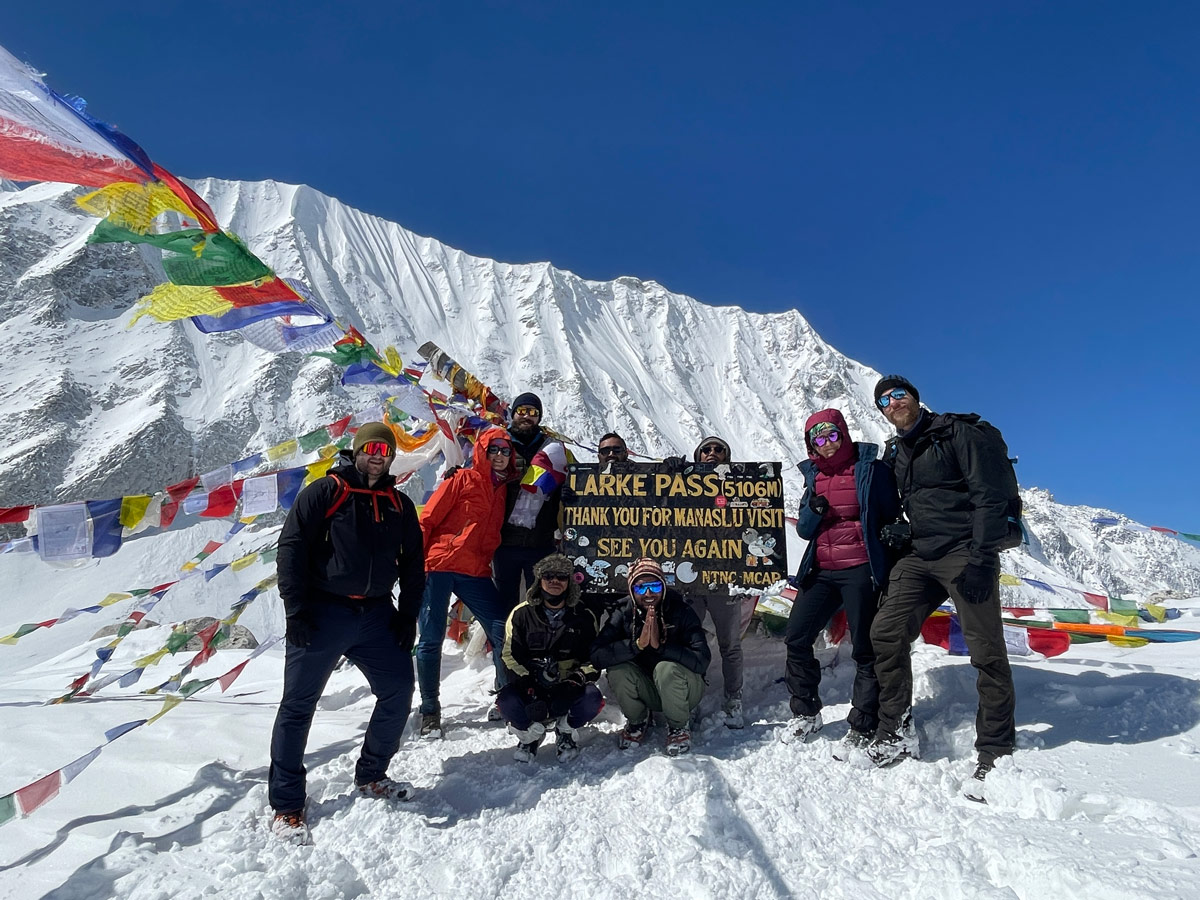
Larkya La Pass links the Budhi Gandaki valley to the Marsyangdi valley. This mountain pass perfectly balances adventure, scenery, and cultural immersion, making it one of the most memorable high-altitude mountain passes of Nepal.
Highlights of Larkya La Pass
- The highlight of the Manaslu Circuit Trek
- Remote and less crowded trekking experience
- Exceptional views of Manaslu and surrounding Himalayan peaks
- Beautiful glacier landscapes and alpine valleys
- Rich Tibetan Buddhist culture along the trail
Best Season: Spring and Autumn
Mesokanto La Pass
Region: Annapurna
Less famous but no less scenic, Mesokanto La sits around 5,099 m (16,729 ft) and connects the Annapurna Sanctuary region to the Jomsom via Tilicho Lake. This crossing is quieter than Thorong La, appealing to trekkers who want Annapurna’s dramatic scenery without the crowds.
The route is demanding, with steep ascents, rocky trails, loose scree, and sections that may require route-finding skills. Because of its isolation, many trekkers choose to cross Mesokanto La with experienced guides and camping support.
What truly sets this pass apart is its proximity to Tilicho Lake, one of the world’s highest lakes. Watching the turquoise waters of Tilicho surrounded by towering snow-capped peaks is an unforgettable experience that few places on Earth can match.
Highlights of Mesokanto La Pass
- Connects Tilicho Lake with Mustang
- One of Nepal’s least-crowded high passes
- Incredible views of Tilicho Lake and surrounding peaks
- Ideal for experienced trekkers seeking remote adventures
- Challenging terrain with rewarding scenery
Best Season: Spring and Autumn
Amphu Lapcha Pass
Region: Everest
Standing at 5,845 meters (19,177 ft), Amphu Lapcha Pass is one of the highest and most technically demanding mountain passes of Nepal.
Unlike traditional trekking passes, Amphu Lapcha combines trekking with basic mountaineering. Trekkers often use ropes, harnesses, crampons, and ice axes to safely navigate its steep snow and ice-covered slopes.
The pass connects the beautiful Hinku Valley with the Everest region. Because of its technical nature, Amphu Lapcha is often included in challenging expedition-style itineraries that combine trekking and peak climbing.
The surrounding scenery is simply breathtaking. Massive glaciers, towering ice walls, and panoramic views of Ama Dablam, Baruntse, Island Peak, Lhotse, and Makalu create an unforgettable Himalayan landscape.
Crossing Amphu Lapcha demands excellent physical fitness, previous high-altitude experience, and the guidance of skilled climbing professionals.
Highlights of Amphu Lapcha Pass
- One of Nepal’s highest trekking passes
- Technical crossing requiring mountaineering equipment
- Connects the Hinku Valley with the Everest region
- Outstanding glacier and icefall scenery
- Popular among experienced climbers and expedition trekkers
Best Season: Spring and Autumn
Kang La Pass
Region: Annapurna
Tucked into the Nar-Phu Valley near Manang, Kang La Pass sits at roughly 5,320 meters (17,454 ft). It connects the remote Nar Valley with the village of Ngawal in the Annapurna region.
The journey to Kang La feels like stepping back in time. Before reaching the pass, trekkers explore the isolated villages of Nar and Phu, where centuries-old Tibetan traditions, stone houses, ancient monasteries, and yak caravans continue to shape everyday life.
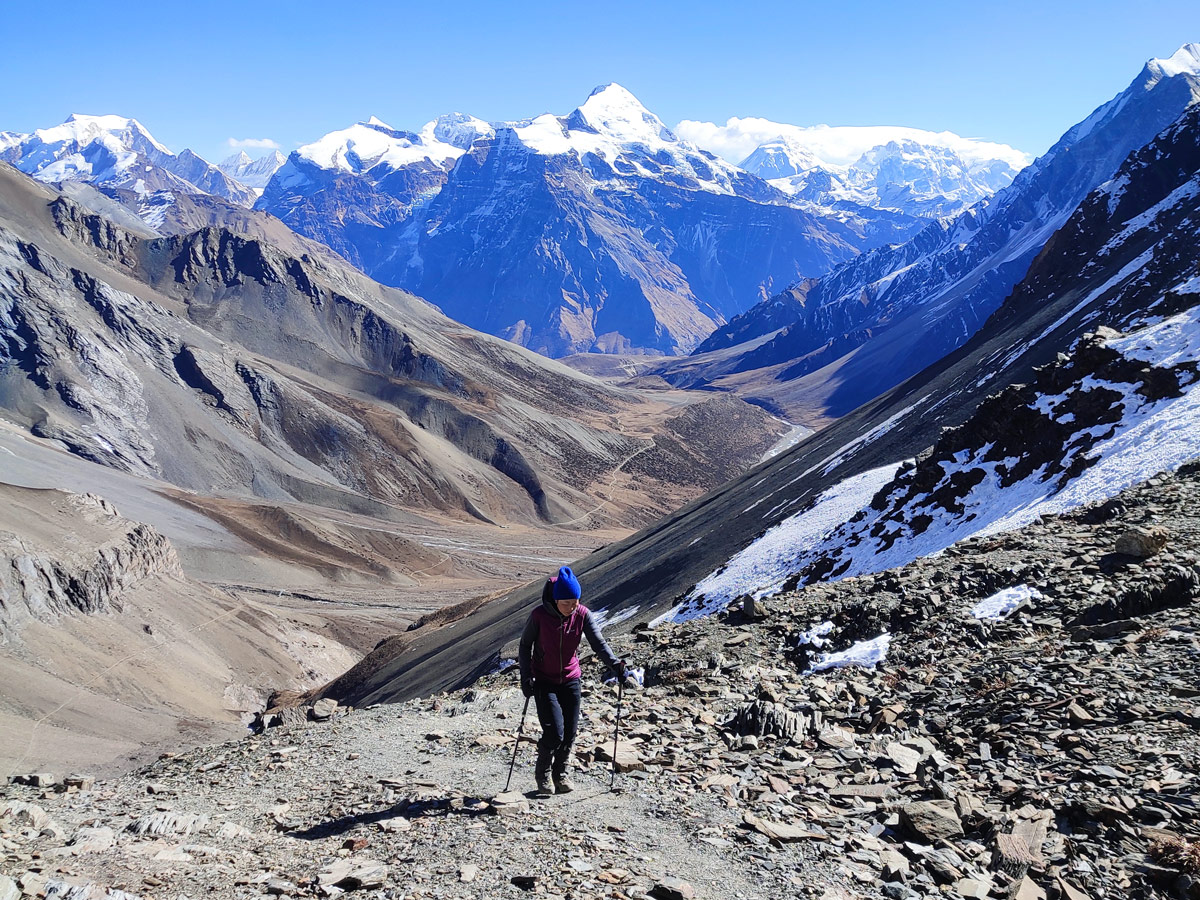
Compared to Everest or Annapurna’s more popular routes, Kang La sees relatively few visitors, making it an excellent choice for those seeking solitude and authentic Himalayan culture.
The ascent to the summit is challenging but straightforward. Once at the top, trekkers are treated to magnificent views of Annapurna II, Gangapurna, Tilicho Peak, Chulu East, and the rugged valleys below.
Highlights of Kang La Pass
- Connects the remote Nar Phu Valley with Manang
- Rich Tibetan culture and ancient monasteries
- Stunning views of Annapurna II and surrounding peaks
- Peaceful trails with very few trekkers
- Excellent choice for those seeking an off-the-beaten-path adventure
Best Season: Spring and Autumn
Ganja La Pass
Region: Langtang
At 5,130 m (16,831ft), Ganja La connects the Helambu and Langtang regions north of Kathmandu. It’s a lesser-known pass that appeals to trekkers looking for a challenging route close to the capital without the Everest or Annapurna crowds.
Unlike the classic Langtang Valley Trek, crossing Ganja La requires a greater sense of adventure. The trail involves a glacier crossing and can be genuinely tough in poor weather.
One of the biggest rewards of crossing Ganja La is the incredible diversity of landscapes. The trek begins in lush forests filled with rhododendrons and bamboo before gradually transitioning into alpine meadows and dramatic high-altitude terrain.
Along the way, trekkers can experience the warm hospitality of Tamang communities, visit ancient Buddhist monasteries, and enjoy breathtaking views of the Langtang Himal range.
From the summit, the panorama stretches across Langtang Lirung, Dorje Lakpa, Gangchempo, and numerous snow-covered peaks that dominate the northern skyline.
Highlights of Ganja La Pass
- Connects Langtang Valley with the Helambu region
- Remote trails with very few trekkers
- Beautiful combination of forests, glaciers, and alpine landscapes
- Outstanding views of Langtang Lirung and surrounding peaks
- Rich Tamang culture and Buddhist heritage
Best Season: Spring (March–May) and Autumn (September–November)
Tashi Lapcha Pass
Region: Everest
If you’re searching for one of Nepal’s ultimate trekking challenges, Tashi Lapcha Pass deserves a place at your list. Standing at 5,755 meters (18,881 ft), it connects the remote Rolwaling Valley with the Khumbu (Everest) region and combines trekking with alpine climbing.
Unlike many of Nepal’s famous trekking passes, Tashi Lapcha is not a typical hiking route. The crossing involves glaciers, crevasses, steep snow slopes, and technical sections where fixed ropes are often required.
Because of these demanding conditions, the pass is recommended only for experienced trekkers with mountaineering skills or those traveling with qualified climbing guides.
It links the Rolwaling Valley to the Khumbu region near Thame, and it’s considered a mountaineering-grade crossing rather than a standard trekking pass.
Highlights of Tashi Lapcha Pass
- One of Nepal’s highest and most technical mountain passes
- Connects the Rolwaling Valley with the Everest region
- Glacier travel and alpine climbing experience
- Spectacular views of Rolwaling Himal and Everest region peaks
- Ideal for experienced trekkers seeking a true expedition-style adventure
Best Season: April–May and October–November
Comparison Table
| Pass Name | Altitude (m/ft) | Region | Difficulty | Technical Gear Needed |
| Kongma La | 5,535 m/ 18,159 ft | Khumbu (Everest) | Hard | Trekking poles, sturdy boots |
| Cho La | 5,420 m/ 17,782 ft | Khumbu (Everest) | Hard | Crampons (seasonal) |
| Renjo La | 5,360 m/ 17585 ft | Khumbu (Everest) | Moderate | None typically |
| Thorong La | 5,416 m/ 17,769 ft | Annapurna | Moderate-Hard | None, but long duration |
| Larkya La | 5,160 m/ 16,929 ft | Manaslu | Moderate-Hard | Warm layers, early start |
| Mesokanto La | 5,099 m/ 16,729 ft | Annapurna | Moderate | None typically |
| Amphu Lapcha | 5,845 m/ 19177 ft | Everest | Very Hard | Ropes, ice axe, crampons |
| Kang La | 5,320 m/ 17,454 ft | Annapurna | Hard | Trekking poles, caution on ice |
| Ganja La | 5,130 m/ 16,831 ft | Langtang | Hard | Crampons (seasonal) |
| Tashi Lapcha | 5,755 m/ 18,881 ft | Everest | Very Hard | Ropes, ice axe, crampons |
Essential Tips for Crossing High Mountain Passes Safely
Crossing a mountain pass is as much about preparation as determination. Keep these practical tips in mind to ensure a safer and more enjoyable adventure.
- Acclimatize properly before ascending above 3,500 meters.
- Start trekking early to avoid afternoon winds and changing weather.
- Maintain a slow, steady pace instead of rushing.
- Stay hydrated and eat energy-rich meals throughout the trek.
- Wear layered clothing to adapt to changing temperatures.
- Carry trekking poles for improved balance and reduced strain on your knees.
- Pack essentials such as sunglasses, sunscreen, gloves, and a headlamp.
- Check weather forecasts regularly before attempting a pass.
- Trek with an experienced guide, especially for remote or technical routes.
- Listen to your body and descend immediately if symptoms of altitude sickness worsen.
Conclusion
Crossing the mountain passes of Nepal is far more than a physical accomplishment, it’s an unforgettable journey through the heart of the Himalayas. Every pass has its own personality, shaped by towering peaks, ancient trade routes, vibrant prayer flags, and the resilient communities that have called these mountains home for generations.
Whether you’re taking on the legendary Thorong La Pass of the Annapurna Circuit, witnessing the breathtaking panorama from Renjo La Pass, exploring the remote wilderness of Larkya La, or tackling the technical challenges of Amphu Lapcha and Tashi Lapcha, each crossing offers a unique blend of adventure, culture, and natural beauty.
Choose one that matches your experience and fitness level, prepare properly, and you’ll walk away with the kind of story that no summit selfie can quite capture. If you’re ready to challenge yourself and experience some of the world’s most spectacular trekking routes, Nepal’s mountain passes are waiting to welcome you.