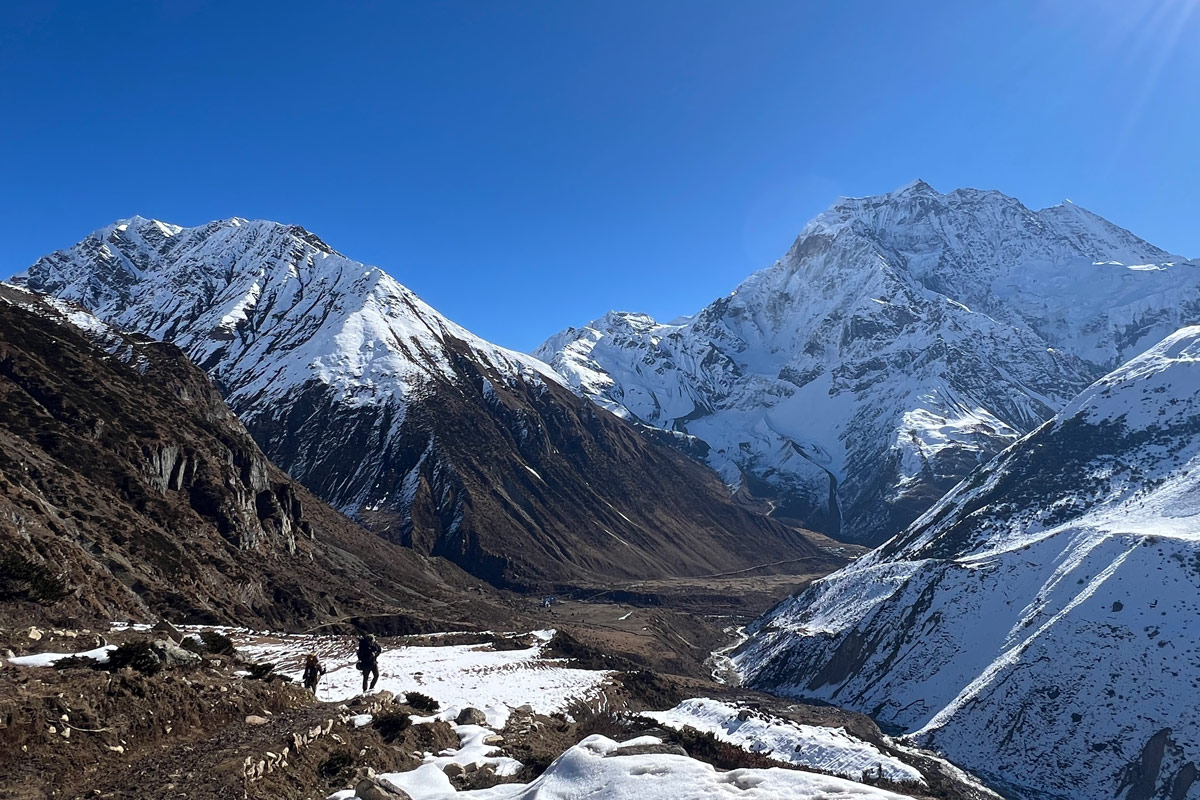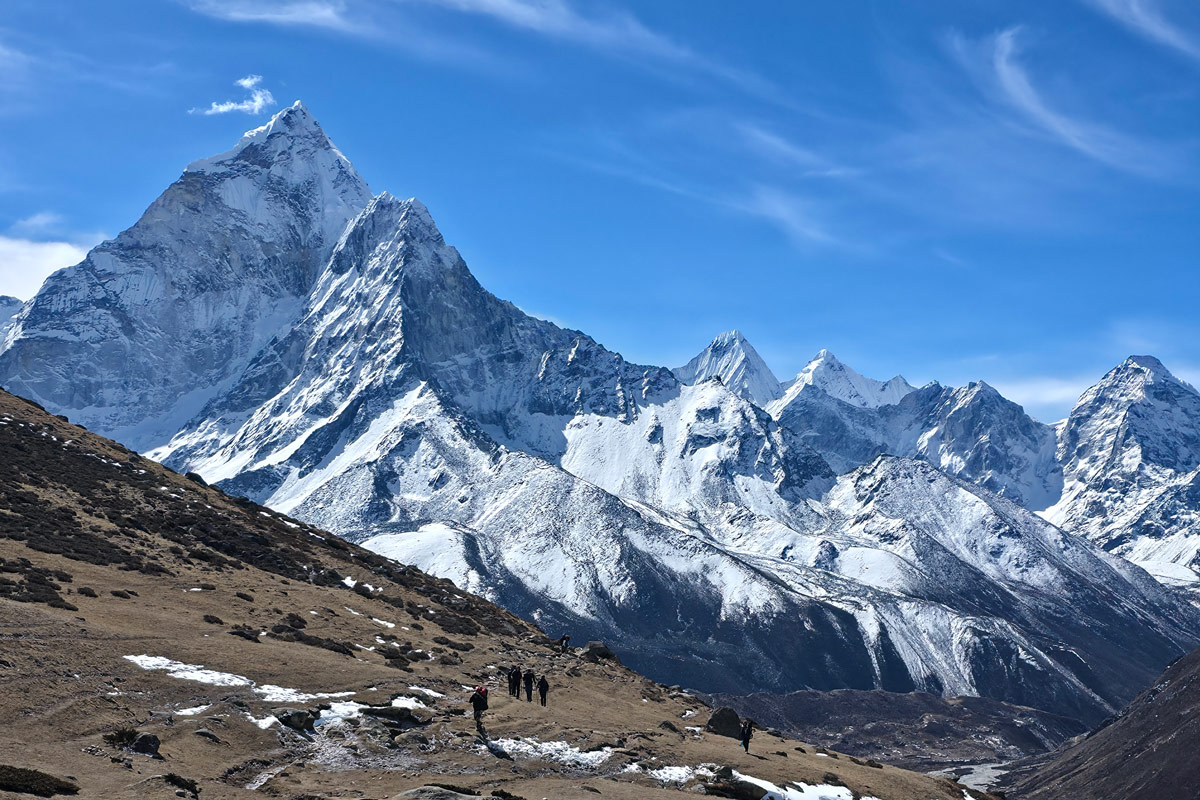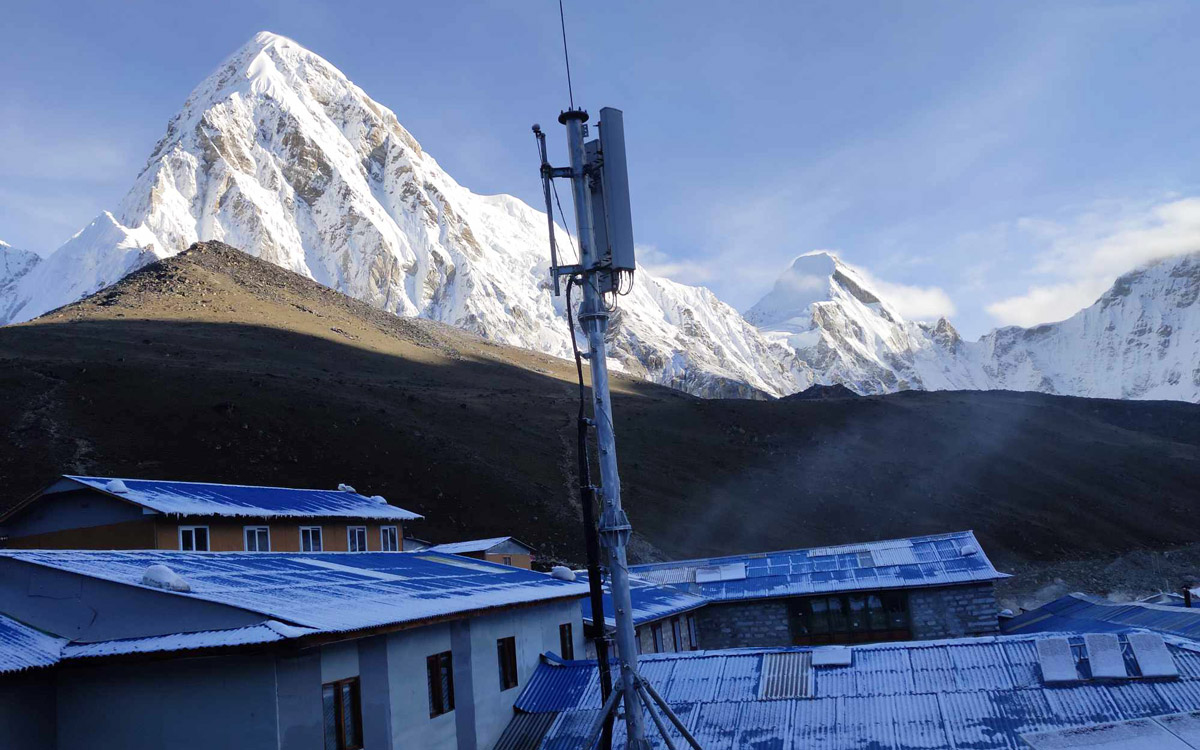



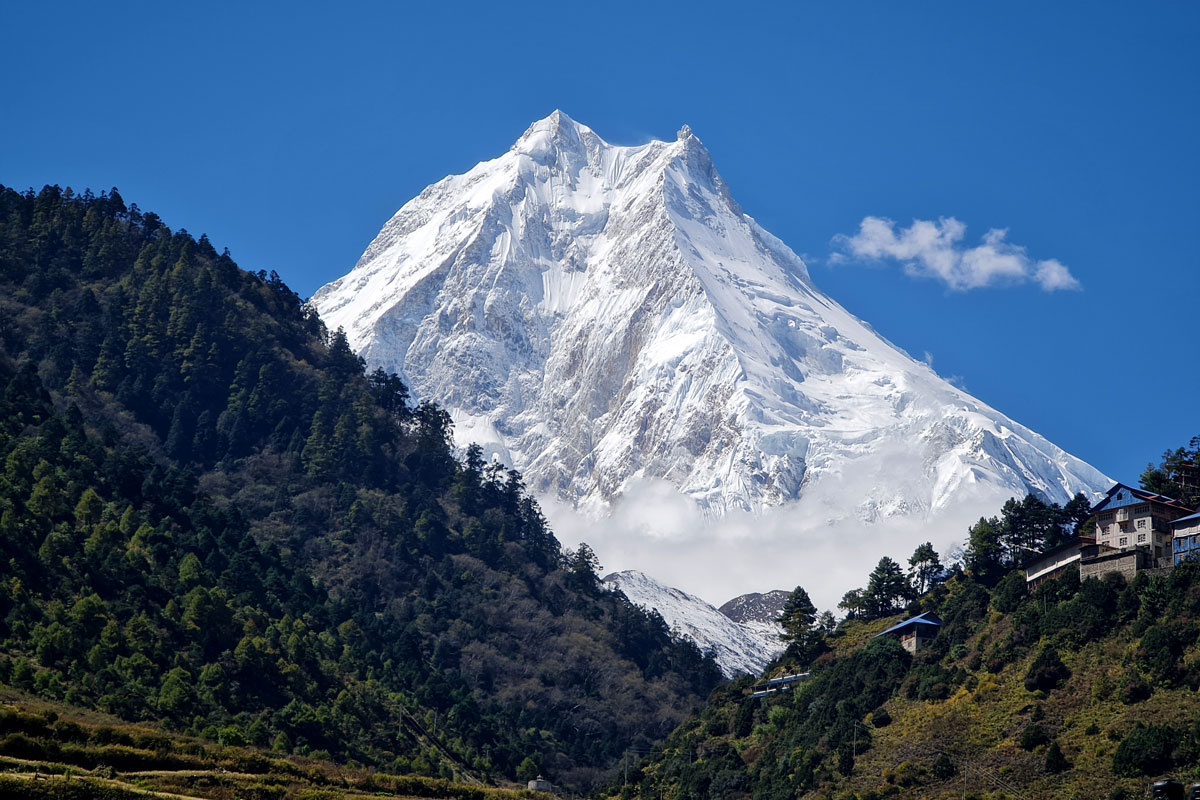
The Manaslu Circuit Trek in autumn offers a memorable journey through green river valleys, traditional Himalayan villages, ancient Buddhist heritage, and some of Nepal’s most impressive mountain scenery.
Circling Mount Manaslu (8,163 m), the eighth-highest mountain in the world, this trek in Nepal takes you from the warm foothills of the Budhi Gandaki River to the rugged alpine landscapes surrounding Larkya La Pass.
Autumn, from September to November, is one of the best seasons for trekking in the Manaslu region.
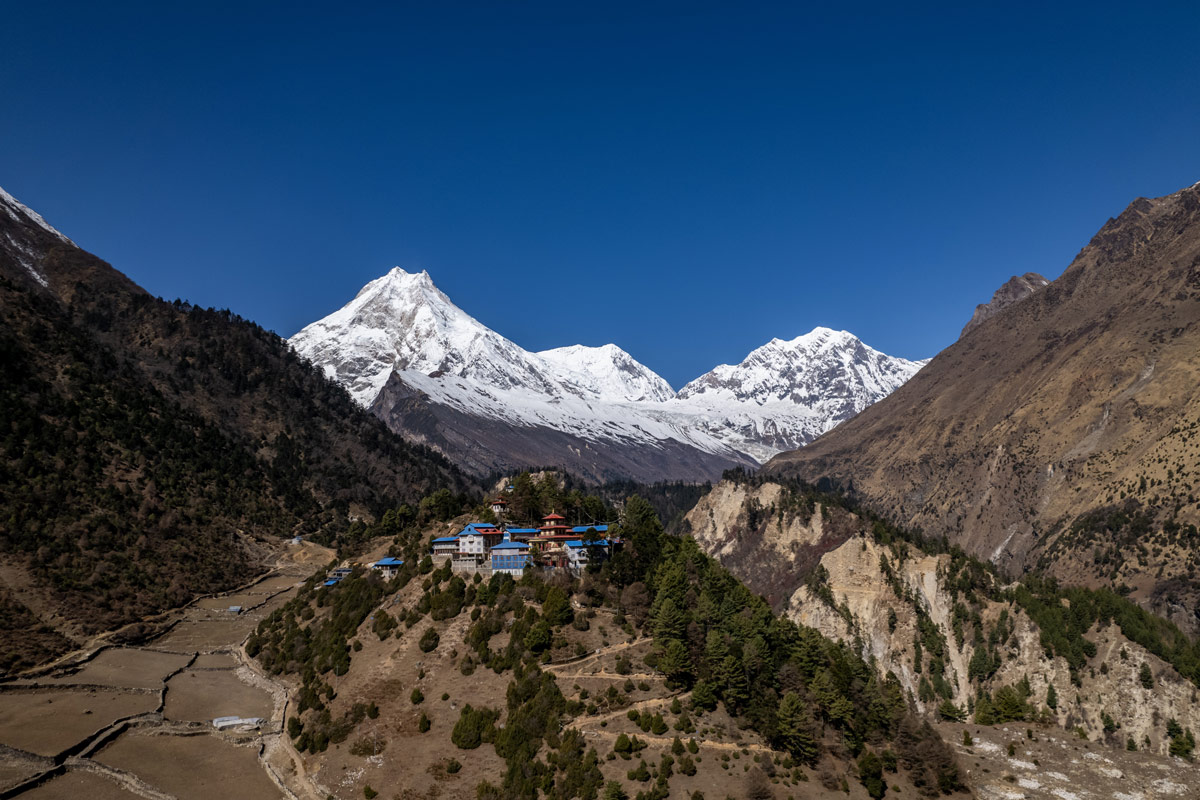
As the summer monsoon retreats, mountain views generally become clearer, rainfall decreases, and trail conditions improve.
October is particularly popular for its relatively stable weather, while September offers greener landscapes and November brings crisp mountain views and colder temperatures when trekking in Nepal, mountain regions.
The experience changes considerably as you gain altitude. Lower villages may feel warm during the day, but nights around Samagaun, Samdo, and Dharmasala can be freezing.
The crossing of Larkya La Pass, one of the most famous mountain passes in Nepal, at approximately 5,160 m is another major consideration, requiring good preparation, proper acclimatization, and attention to the latest weather conditions.
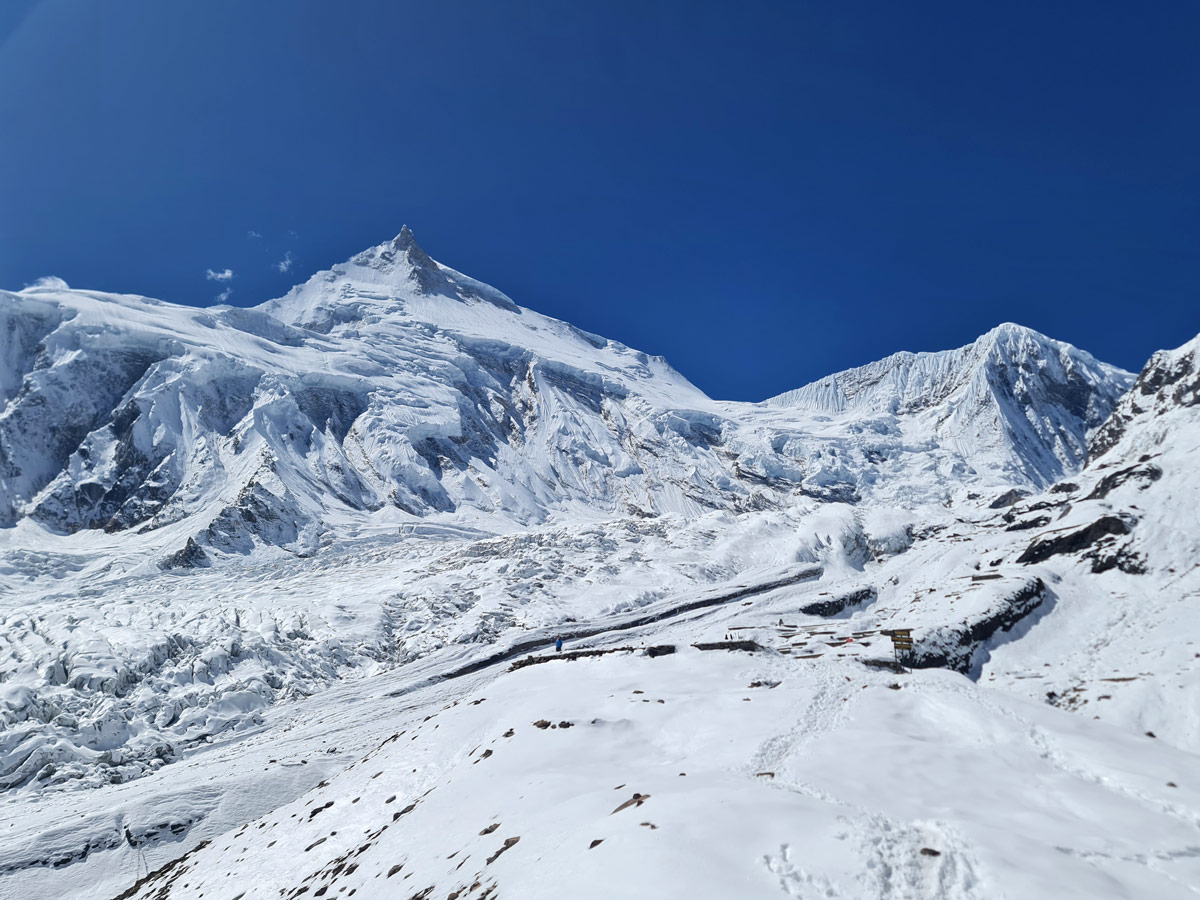
Although Manaslu is generally quieter than Nepal’s most popular trekking destinations, autumn is still a busy period, especially in October.
Planning your Manaslu Circuit Trek accommodation, permits, transportation, and itinerary ahead of time can help you enjoy the journey without unnecessary stress.
Whether you are drawn to Himalayan photography, remote mountain culture, or the challenge of crossing a high mountain pass, the Manaslu Circuit in autumn offers a rewarding combination of adventure and cultural discovery.
Manaslu Circuit Trek in Autumn at a Glance
- Best overall month: October, for generally stable weather and clear mountain views.
- Trekking season: September to November.
- Highest point: Larkya La Pass, at 5160 metres.
- Mountain highlight: Mount Manaslu (8,163 m), Himlung Himal (7,126 m), Cheo Himal (6,820 m), Kang Guru (6,981 m), and Annapurna II (7,937 m).
- Typical trek duration: Around 14-18 days, depending on the itinerary and side trips.
- Accommodation: Primarily local teahouses and mountain lodges.
- Trek difficulty: Moderate to Strenous, with a demanding high-altitude pass crossing.
- Main challenges: Changing weather, cold nights, long walking days, altitude, and limited accommodation in some villages.
- Best preparation: Gradual fitness training, an acclimatization focused itinerary, layered clothing, and an experienced trekking agency/guide.
Why Trek the Manaslu Circuit in Autumn?
Enjoy Clearer Views of the Himalayas
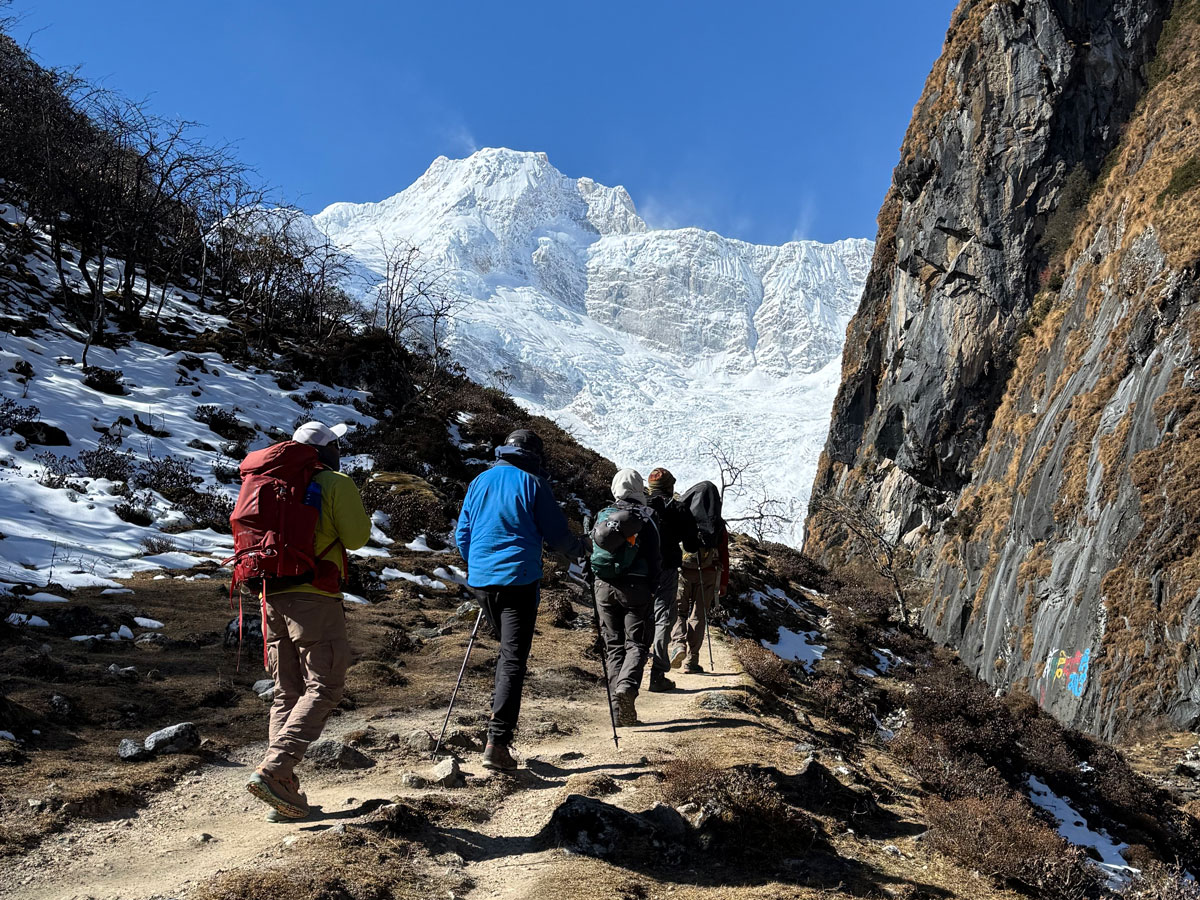
One of the biggest attractions of autumn is the opportunity to see Mount Manaslu and the surrounding Himalayan range in clearer conditions.
After the monsoon, the skies often open up, revealing snow-covered peaks, deep valleys, and dramatic mountain ridges.
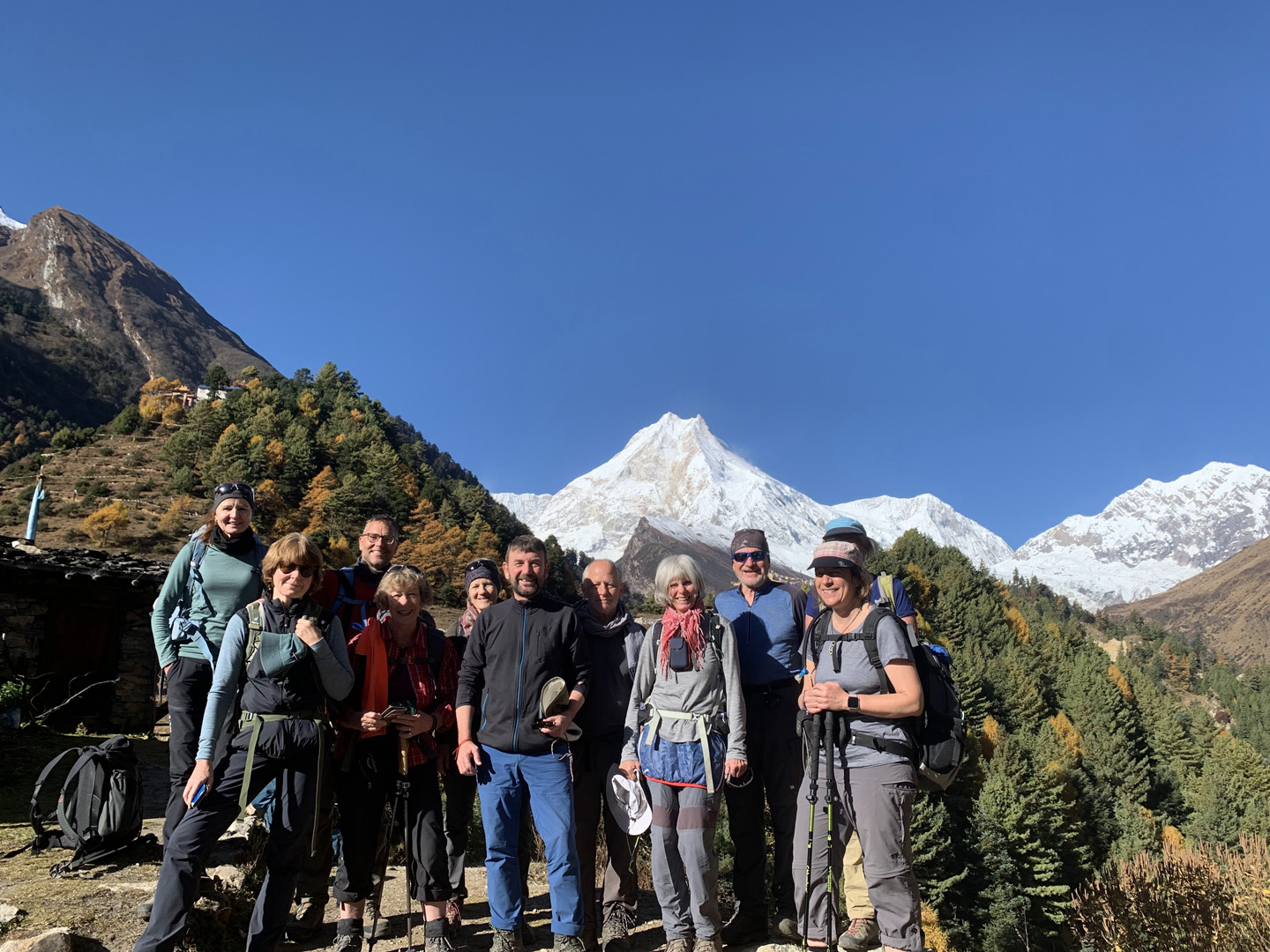
As you walk through Namrung, Lho, and Samagaun, the changing viewpoints offer different perspectives of the surrounding mountains.
Further along the route, the landscape becomes increasingly rugged, with rocky slopes and high alpine terrain leading toward Larkya La Pass.
Walk on Generally Dry Designated Trails
The lower Manaslu trail passes through forests, river valleys, suspension bridges, and settlements along the Budhi Gandaki River.
As autumn progresses, muddy or slippery sections caused by rainfall usually decreases and many sections become easier to walk on.
October often provides a good balance of manageable trail conditions and comfortable daytime temperatures.
Experience Traditional Himalayan Communities
The Manaslu Circuit is passes through communities where Tibetan-influenced Buddhist traditions, local farming practices, traditional stone houses, and mountain livelihoods remain an important part of everyday life.
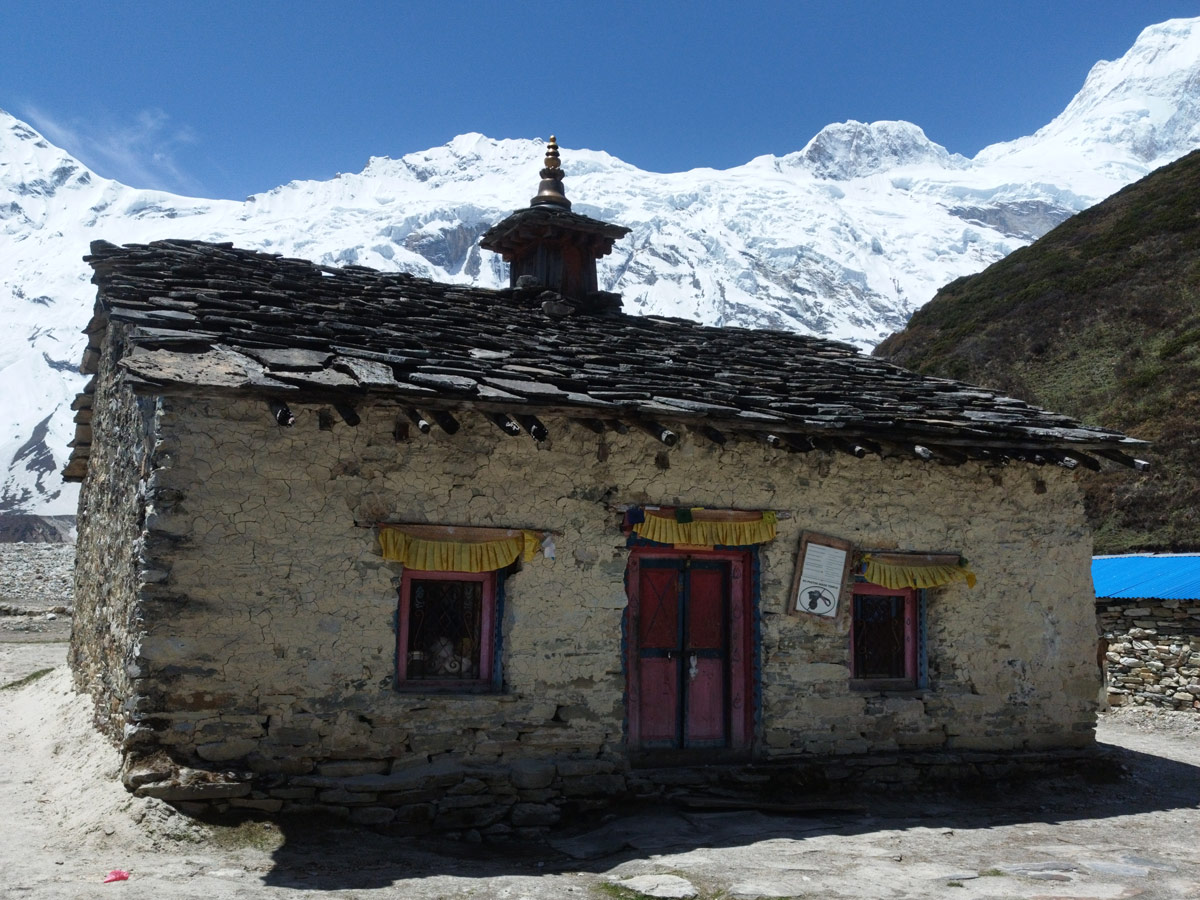
In villages such as Lho, Samagaun, and Samdo, you may encounter prayer flags, mani walls, chortens, and monasteries that reflect the region’s spiritual heritage.
Autumn may coincide with major Nepali festivals such as Dashain and Tihar. Depending on your travel dates and location, you might notice festive preparations or local celebrations.
Enjoy a Quieter Alternative to Popular Trekking Routes
The Manaslu Circuit generally receives fewer trekkers comparatively than the Everest Base Camp, Annapurna Base Camp, and Annapurna Circuit trek routes.
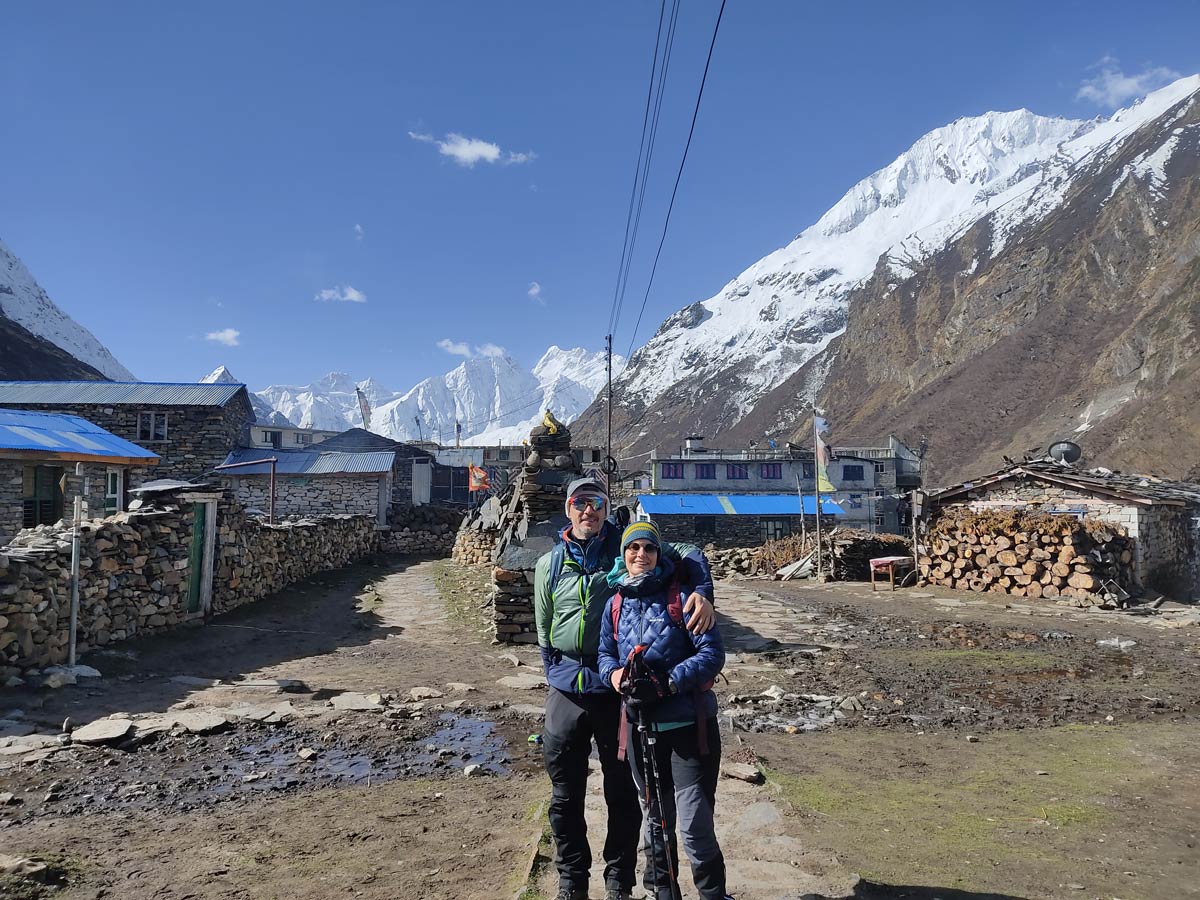
Its restricted-area regulations and more remote setting help preserve a different atmosphere along much of the trail.
However, quieter does not mean empty. October is peak trekking season, and limited lodge capacity can make some settlements busy.
Manaslu Circuit Trek Weather in Autumn
Weather on the Manaslu Circuit depends heavily on elevation, exposure, and the time of day as the route rises from the lower river valleys to a mountain pass above 5,000 m.
| Trekking area | Elevation | Typical autumn conditions |
| Machha Khola | 869 m | Warm to mild days, cooler evenings |
| Jagat | 1,340 m | Mild daytime weather, cooler nights |
| Deng | 1,860 m | Mild to cool, depending on the month |
| Namrung | 2,630 m | Cool days and colder evenings |
| Samagaun | 3,530 m | Cool days, freezing nights increasingly possible |
| Samdo | 3,860 m | Cold mornings and nights |
| Dharmasala | 4,460 m | Cold, exposed conditions, nights often below freezing |
| Larkya La Pass | Approx. 5,160 m | Very cold, windy, and exposed conditions |
September: The Monsoon Begins to Retreat
September is a transitional month. Early in the month, the lower trail may still experience rainfall, humidity, slippery stones, and muddy forest paths. Heavy rain can also affect road access and sections of the trekking route.
As the month progresses, conditions often improve. The forests and valleys remain green, rivers and waterfalls may carry substantial water, and mountain views can become clearer as clouds lift.
September can suit trekkers who appreciate lush scenery and prefer to avoid October’s busiest period.
October: The Most Popular Month
October is generally the strongest all-round choice for the Manaslu Circuit. Rainfall is usually lower than during the monsoon, trails are often drier, and clear mornings provide excellent opportunities to see the mountains.
Daytime walking can be comfortable in the lower valleys, while the upper villages are noticeably colder.
October also brings higher visitor numbers. Teahouses in Samagaun, Samdo, and Dharmasala have limited capacity, so advance arrangements are particularly useful during busy weeks.
November: Crisp Views and Colder Nights
November is often dry and can offer excellent visibility, particularly on clear mornings.
The lower sections may remain comfortable for walking during the day, but temperatures fall as you approach the higher villages.
By late November, freezing conditions, fresh snowfall, and icy sections become more important considerations.
November may appeal to trekkers who prefer fewer people on the trail and are prepared for colder conditions.
Which Autumn Month Is Best for the Manaslu Circuit Trek?
| Factor | September | October | November |
| Weather | Transitional, rain possible early in the month | Generally more settled | Generally dry but colder |
| Landscapes | Lush and green | Clear mountain scenery and fresh vegetation | Crisp, late-autumn landscapes |
| Mountain visibility | Often improves through the month | Frequently excellent in clear conditions | Often excellent when skies are clear |
| Trail conditions | Wet or muddy sections may remain | Usually drier | Frost or ice possible at altitude |
| Crowds | Generally fewer than October | Busiest period | Generally quieter |
| Accommodation | Availability varies after the monsoon | Advance booking recommended | Less busy, but high-altitude options remain limited |
| Main concern | Residual monsoon effects | Crowds and limited lodge capacity | Cold, snow, and ice late in the month |
What are the Trail Conditions Like in Autumn?
The Manaslu Circuit changes considerably as you travel from the lower Budhi Gandaki valley toward the high Himalayas.
In September, some forest paths may remain damp, while stream crossings and exposed slopes can be affected by recent rain. Landslides or road damage are possible in the lower region after heavy rainfall, so local updates are important.
By October, many sections are generally drier and easier to navigate. The route still includes uneven stone steps, steep climbs, suspension bridges, narrow paths, and long ascents or descents.
November introduces different challenges. Frost can form overnight, and ice or snow may appear at higher elevations. Loose stones and exposed terrain also require care, particularly when descending after crossing Larkya La.
Wear well-fitting trekking boots with reliable grip and use trekking poles. Follow your guide’s instructions around river crossings, damaged trails, and unstable slopes.
Crossing Larkya La Pass in Autumn
Crossing Larkya La Pass is one of the defining moments of the Manaslu Circuit. At approximately 5,160 m, it offers wide views of the surrounding Himalayan landscape.
The crossing usually begins early from Dharmasala. Trekkers climb through high, exposed terrain before reaching the pass and then descend toward Bimthang.
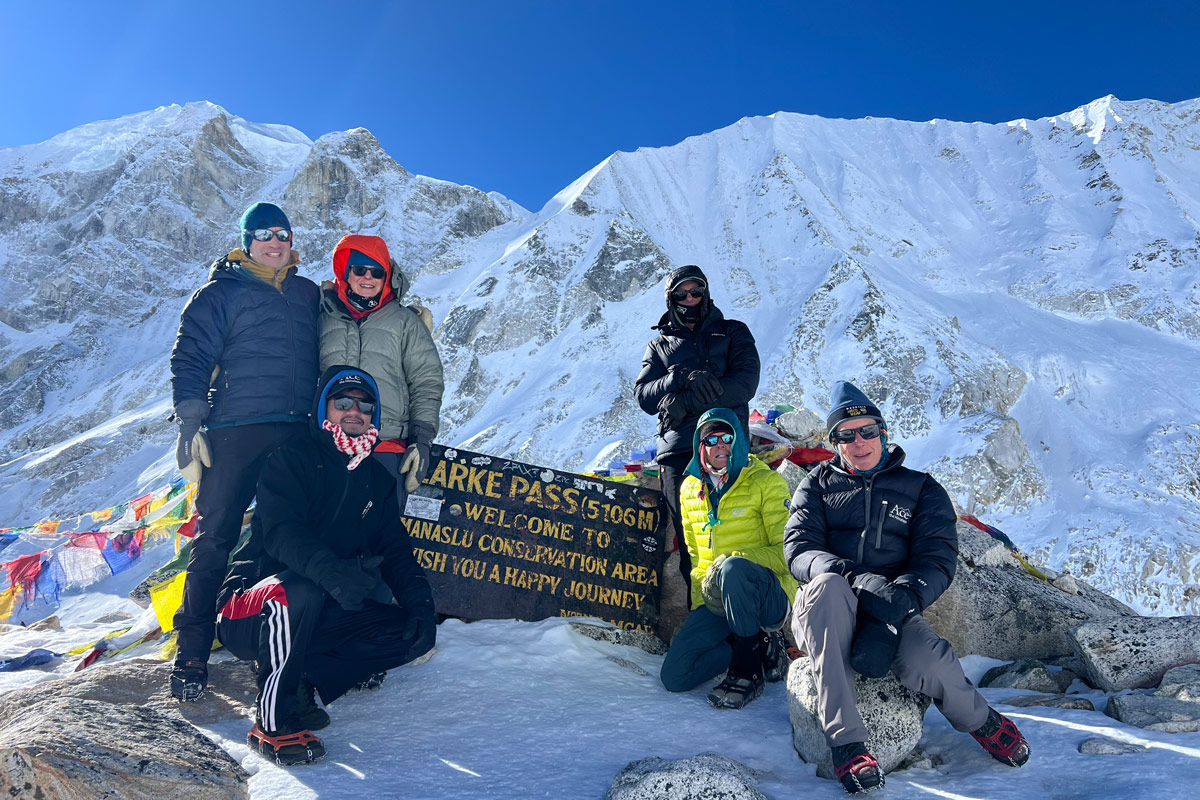
It is a long and physically demanding day, combining altitude, cold, and many hours of walking.
October often offers comparatively favorable conditions for the crossing, but the pass is never guaranteed to be clear or snow-free. Wind, snowfall, visibility, and trail conditions can change quickly.
Preparation should include:
- Allowing sufficient time to acclimatize before reaching the pass.
- Carrying warm layers, insulated gloves, and suitable eye protection.
- Starting early to allow for the long ascent and descent.
- Following your guide’s advice about pace, weather, and trail conditions..
- Remaining flexible incase of snowfall, ice, or strong winds.
Food and Accommodation on the Manaslu Circuit in Autumn
Local teahouses provide the main accommodation and meals along the Manaslu Circuit. Facilities are generally simple, especially in the higher settlements, but they offer a place to rest, eat, and prepare for the next day.
What Food Can You Expect?
Dal bhat, rice, lentil soup, and vegetables is a common meal along the route because it provides carbohydrates and other nutrients.
Depending on the lodge and elevation, menus include:
- Noodles and noodle soup
- Fried rice and pasta
- Momos
- Tibetan bread and pancakes
- Eggs, potatoes, and seasonal vegetables
- Tea, coffee, and other hot drinks
Menus tend to become more limited at higher elevations because transporting supplies is challenging and expensive.
What Are the Teahouses Like?
Most teahouses offer basic rooms, commonly with twin beds, mattresses, and shared bathroom facilities. Hot showers, Wi-Fi, and charging points may be available in some places, often for an additional fee ranging from USD 4-10.
Autumn can be busy, so arranging accommodation in advance through your trekking agency is sensible.
Carry enough Nepalese rupees for personal expenses and optional services, as reliable ATM access is not available throughout the trekking route.
How Difficult Is the Manaslu Circuit Trek in Autumn?
The Manaslu Circuit include walking days of approximately five to eight hours.
However, it does not demand technical mountaineering skills on the standard route. You only need good preparation, endurance, and the ability to walk over uneven terrain.
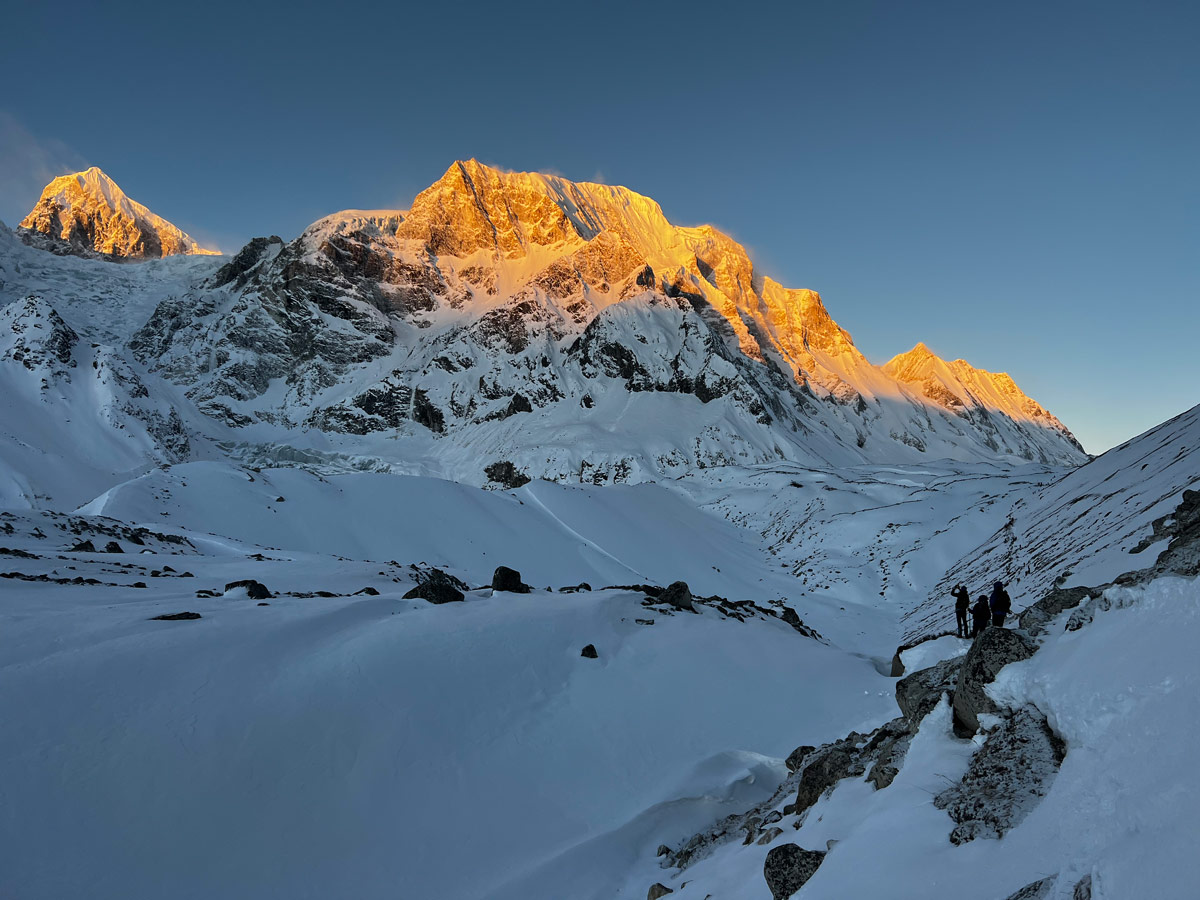
Autumn’s generally drier conditions can make walking more manageable than during the monsoon. However, the high altitude, cold nights, long pass-crossing day, and remote setting remain significant challenges.
You may prepare for the trek with gradual training and a suitable itinerary. Doing cardiovascular exercise, hill walking, stair climbing, and leg-strength exercises can help build endurance.
Increase the difficulty progressively rather than attempting to prepare through sudden, exhausting workouts.
Altitude and Acclimatization
Altitude is one of the most important considerations on the Manaslu Circuit. As you ascend, the air contains less available oxygen, and altitude sickness can affect trekkers regardless of their fitness or experience.
A well-planned itinerary normally includes time to acclimatize around Samagaun before continuing toward Samdo and Dharmasala.
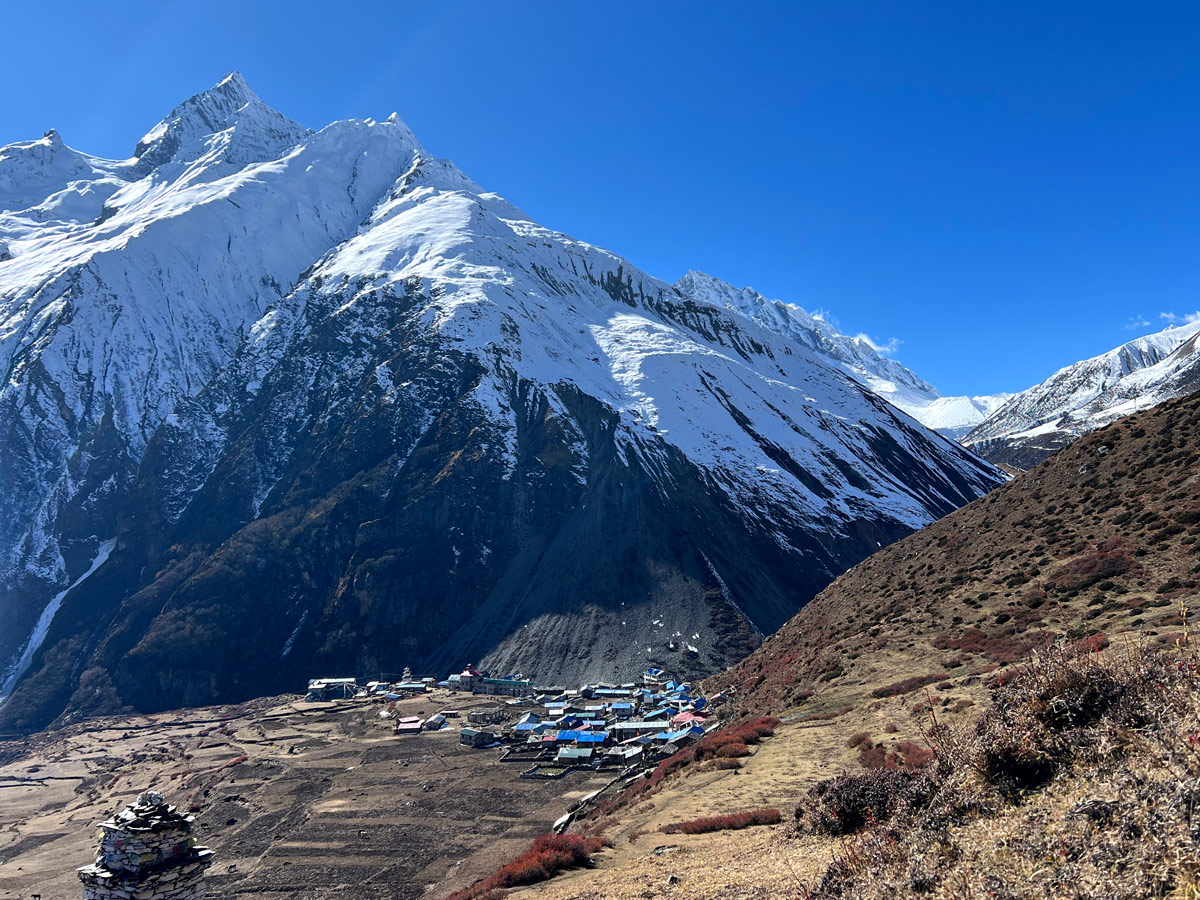
Optional hikes should be chosen according to your condition and the advice of your guide.
Possible symptoms of altitude sickness include headache, nausea, dizziness, unusual tiredness, and loss of appetite.
Tell your guide promptly if symptoms develop. Do not continue ascending when altitude sickness is suspected, and seek medical assessment. Severe or worsening symptoms require immediate descent and emergency assistance.
Cold, Sun, and Dehydration
Cold weather can reduce your sense of thirst, but regular fluid intake remains important during long walking days. Eat regularly and carry sufficient drinking water, using an appropriate treatment method where necessary.
Sun exposure also increases at altitude. Sunglasses with suitable UV protection, sunscreen, a hat, and lip balm are useful throughout autumn, particularly on exposed terrain and near snow.
For the higher sections, pack warm base layers, an insulating jacket, gloves, and a sleeping bag suitable for expected nighttime conditions. The correct equipment depends on the forecast, accommodation, and your personal needs.
What to Pack for the Manaslu Circuit in Autumn
The most useful approach is to pack for changing temperatures rather than assuming autumn will be warm. Layering lets you adjust clothing as you move from lower valleys to colder mountain terrain.
Clothing
- Moisture-wicking base layers
- Trekking shirts and trousers
- Fleece or another insulating mid-layer
- Warm down or insulated jacket
- Waterproof and windproof outer shell
- Thermal bottoms for cold nights
- Warm gloves, hat, and trekking socks
Footwear and trekking equipment
- Broken-in trekking boots with good grip
- Trekking poles
- A comfortable daypack and rain cover
- A sleeping bag suitable for cold conditions
- Headlamp with spare batteries
- Water bottles or a hydration system
Sun protection and personal essentials
- UV-protective sunglasses
- Sunscreen and lip balm
- Personal medication and basic first-aid supplies
- Water purification tablets or a suitable filter
- Toiletries and quick-drying towel
- Power bank and charging cables
- Snacks for long walking days
Documents and practical items
- Passport and valid visa details, as applicable
- Trekking permits arranged for the journey
- Travel insurance documents
- Nepalese rupees for personal expenses
- Copies of important travel information
Permits and Regulations for the Manaslu Circuit Trek in Autumn
The Manaslu Circuit passes through a restricted trekking area and the Manaslu Conservation Area.
Trekkers generally need a Manaslu Restricted Area Permit (RAP), a Manaslu Conservation Area Permit (MCAP), and an Annapurna Conservation Area Permit (ACAP) for the standard route that continues toward Dharapani.
The Nepal Tourism Board lists the Manaslu restricted-area fee for September-November as US$100 per person for the first seven days, plus US$15 per person for each additional day.
The listed December-August rate is US$75 for the first week, plus US$10 per additional day.
The Nepal Tourism Board lists the foreign-visitor entry fee for the Manaslu Conservation Area as NPR 3,000. The Annapurna Conservation Area permit is also generally required for the standard circuit.
Permit rules and administrative requirements can change. A registered trekking agency can confirm the current requirements, arrange the permits, and explain the documentation needed before departure.
If you extend your trek into Tsum Valley, additional permits and arrangements may be required.
Practical Tips for Planning Your Autumn Trek
- Book early for October: Popular trekking weeks can put pressure on room availability, especially in Samagaun, Samdo, and Dharmasala. Advance arrangements are particularly valuable for groups.
- Allow flexibility in your itinerary: Rain, road conditions, snowfall, or other unexpected delays can affect the schedule. A buffer day can be useful when your travel arrangements allow it.
- Check conditions before the Larkya La crossing: Recent snowfall, wind, visibility, and ice matter more than the month alone. Follow your guide’s assessment and be prepared to delay if necessary.
- Prepare for long walking days: Build your endurance with regular hikes and gradual elevation gains before travelling. Comfortable boots and a well-fitted backpack can make a considerable difference.
- Respect local culture: Dress modestly when visiting religious sites, ask permission before photographing people, and follow local customs around monasteries, prayer wheels, and mani walls.
- Carry sufficient cash: Remote villages have limited financial services, and additional costs may include hot showers, charging, snacks, and drinks.
- Choose suitable travel insurance: Check that your policy covers trekking at the elevations you will reach and includes appropriate emergency evacuation cover. Understand the policy’s conditions before setting out.
Is the Manaslu Circuit Trek in Autumn Worth It?
For trekkers seeking Himalayan scenery, cultural encounters, and a challenging high-pass journey, autumn is an excellent time to consider the Manaslu Circuit.
October generally provides the best all-round balance, while September can offer greener landscapes and November brings a quieter atmosphere with colder conditions.
The trek’s appeal lies in its variety from rushing river through a forested valley, from villages shaped by Tibetan Buddhist traditions to stark alpine landscape beneath towering Himalayan vistas.
If you plan to trek Manaslu Circuit journey around your available time seek local tour operators like Ace the Himalaya who have trekking experience, and seasonal preferences, with attention to permits, accommodation, acclimatization, and local conditions.