


Somewhere between landing in Kathmandu and boarding your short flight to Lukla, while trekking to Everest Base Camp one question probably crosses your mind more than once: Will you be able to get online up there? and it’s a fair thing to wonder.
You’re heading to the base of world’s highest mountain, and yet you still want to send a photo home, check tomorrow’s weather, or just let your family know you’re safe.
The good news is that Wi-Fi and internet access during the Everest Base Camp trek are more available than most people expect.
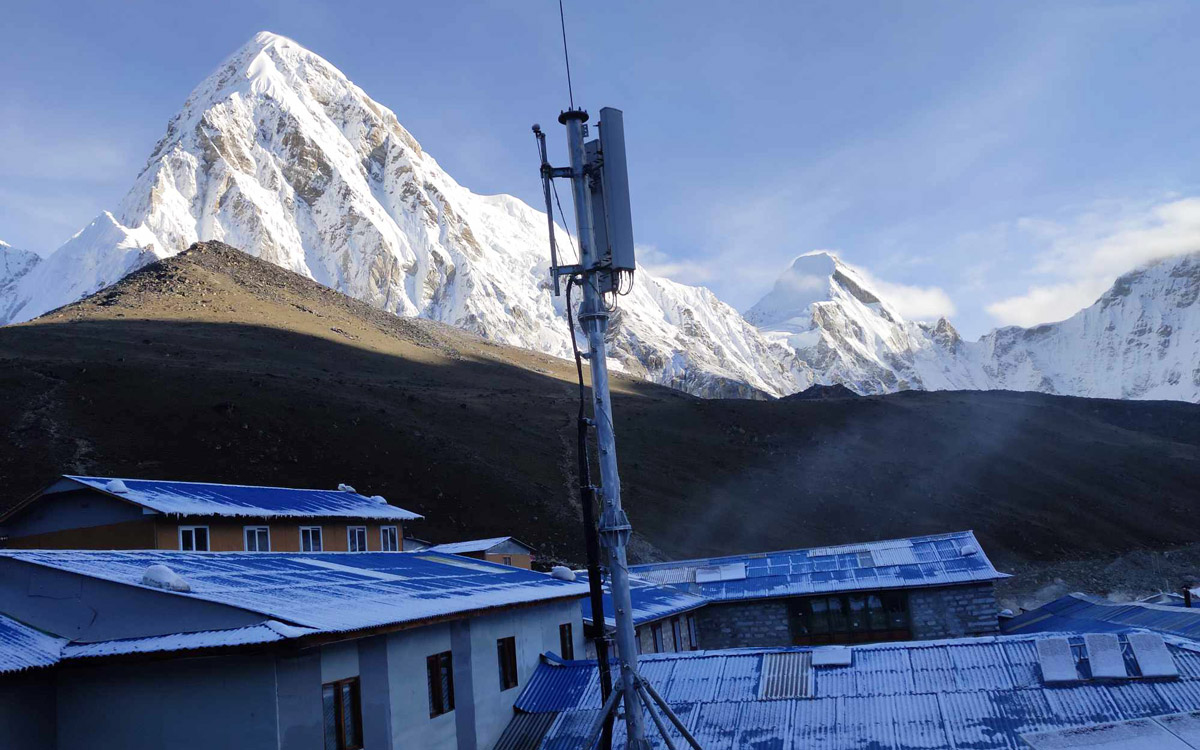
Wi-Fi and internet access during Everest Base Camp Trek is available through different options at different points along the route. NTC 4G generally works up to Dingboche, while AirLink WiFi provides internet access at higher settlements, including Lobuche and Gorak Shep.
This guide explains Wi-Fi and Internet services on the Everest Base Camp trek, mobile network coverage, SIM cards, AirLink, internet costs, and practical tips for staying connected.
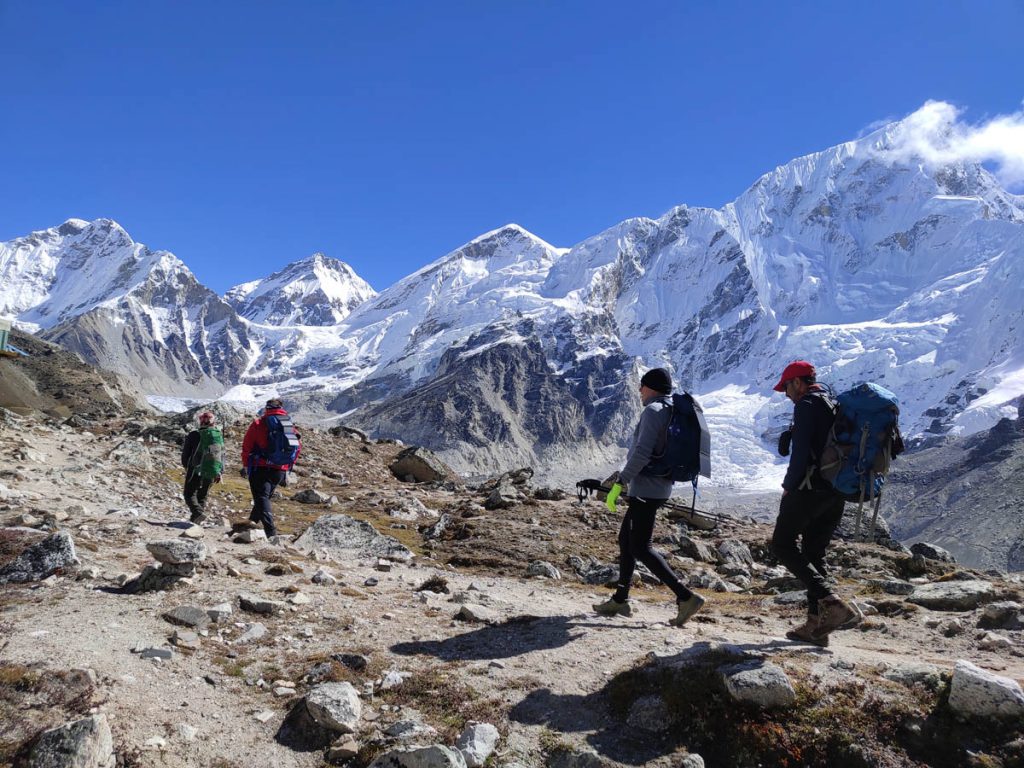
Trekkers on the EBC trail
Why Do You Need Internet Access on the Everest Base Camp Trek?
You don’t need internet to enjoy the mountains, but a little connectivity goes a long way for peace of mind. Here’s what most trekkers actually use it for:
- Check weather updates: Check the latest weather conditions before heading out for the day, especially when approaching higher elevations or planning your flight to and from Lukla.
- Stay in touch with family and friends: Send a quick message to let your loved ones know that you have safely reached your next stop along the trail.
- Confirm flight information: Lukla flights can be affected by changing mountain weather, so internet access can help you check the latest flight updates.
- Share photos and trip updates: Upload your favorite photos or share updates from the trail while your memories are still fresh instead of waiting until you return home.
- Handle urgent work or personal matters: If you have work responsibilities or personal matters that cannot wait until the end of your trek, occasional internet access can help you stay on top of them.
- Stay informed about trail conditions: Checking current information about weather and local trail conditions can help you and your trekking team plan the day more effectively.
- Access important travel documents: If you keep your travel insurance, flight details, booking information, or other important documents online, having internet access can make them easier to retrieve when needed.
How to Get a SIM Card in Nepal for the EBC Trek
Nepal has two major mobile operators that trekkers commonly consider: Nepal Telecom (NTC) and Ncell.
You can purchase a SIM card at Tribhuvan International Airport in Kathmandu after you arrive. SIM cards are available at counters inside the airport, making it convenient to get connected as soon as you land. You can also buy one from authorized mobile outlets in Thamel if you prefer to get your SIM after checking into your hotel.
When purchasing a SIM card, you have to show your original passport for registration. Once your SIM is registered and activated, you can choose a suitable data package and use mobile services during your trek.
Which SIM is best for Everest Base Camp Trekking?
There is no permanent winner because mobile coverage in the Himalayas can change with network upgrades, terrain, and local conditions.
Since Nepal has two major mobile operators Ncell and NTC. For the Everest Base Camp trek, we recommend NTC because it has coverage almost 70% of the trek, upto Dingboche.
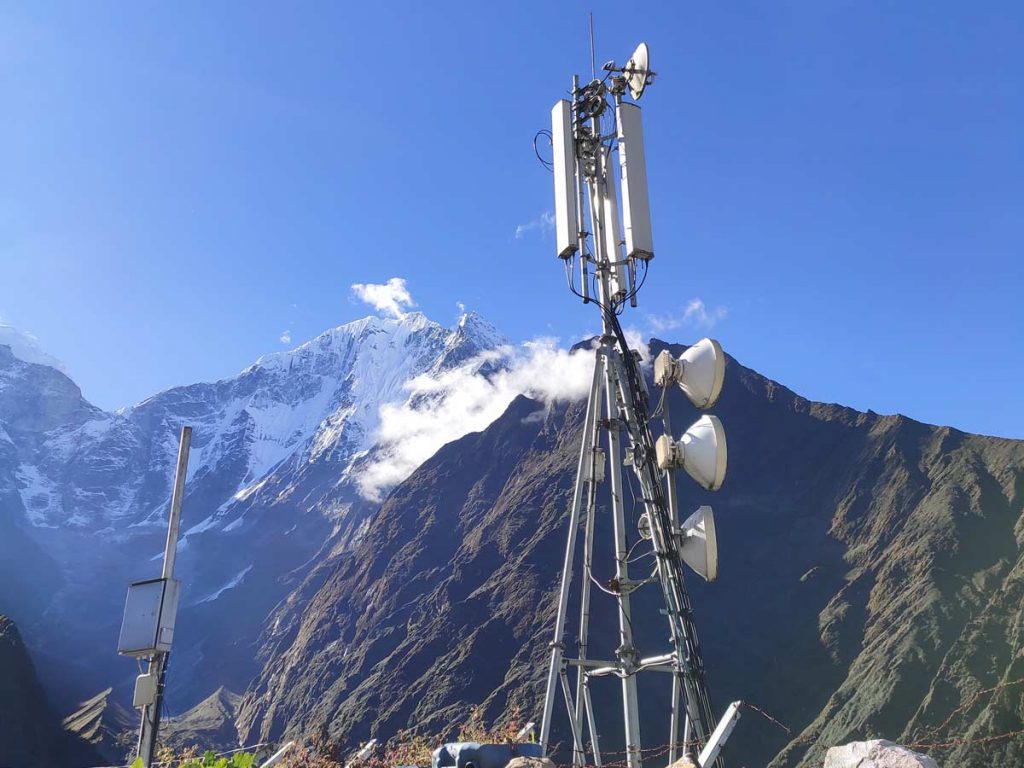
Is There Mobile Network Coverage on the Everest Base Camp Trek?
Yes, but coverage isn’t uniform, and that’s the part people underestimate. Both Ncell and NTC have base stations scattered along the route, starting from Lukla and continuing partway up the valley.
Here we have a brief outline of the network conditions enroute:
| Location | Mobile Network Coverage | Internet Service | What to Expect |
| Lukla (2,840 m/9,318 ft) | Ncell & NTC | Wi-Fi and data | Good mobile connectivity, with Wi-Fi. |
| Phakding (2,610 m/8,563 ft) | Ncell & NTC | Wi-Fi and data | Generally good mobile connectivity, with Wi-Fi available at some lodges. |
| Namche Bazaar (3,440 m/11,286 ft) | Ncell & NTC | Wi-Fi and data | One of the best-connected places on the trail, with mobile data and paid Wi-Fi options. |
| Hotel Everest View (3,880 m/12,730 ft) | Ncell & NTC | Wi-Fi and data | Mobile signal may be available during the acclimatization hike, while internet availability can vary by location. |
| Tengboche (3,860 m/12,664 ft) | Ncell & NTC | Wi-Fi and data | Mobile coverage can be inconsistent, so a dedicated Wi-Fi service can be useful. |
| Dingboche (4,410 m/14,469 ft) | NTC | Wi-Fi (Airlink) | Wi-Fi is a useful alternative for messaging and basic browsing. |
| Lobuche (4,910 m/16,109 ft) | No mobile data | Wi-Fi (Airlink) | AirLink may provide internet access where a hotspot is available. |
| Gorak Shep (5,190 m/17,028 ft) | No mobile data
|
Data (not reliable), Wi-Fi (Airlink) | Wi-Fi is generally the more practical option for getting online. |
| Everest Base Camp (5,364 m/17,598 ft) | No mobile data | Data (not reliable) | AirLink signal can be minimal to nonexistent. |
Internet Access along the trail using Mobile Data
In places such as Lukla and Namche Bazaar, you may be able to browse the web, send photos, make internet calls, and use navigation apps. As you move farther up the valley, data speeds and reliability can decrease.
However, the signal strength drastically reduces beyond Dingboche, becoming non-existent in Lobuche, Gorak Shep and Everest Base Camp.
One thing to keep in mind, however, is that the signal could often face problems. Depending on where you are on the trail, there could be problems in connection, but this is inevitable due to rapid weather changes.
So, if your phone works perfectly in Namche, do not assume it will work the same way at Gorak Shep.
Where to Buy Recharge Cards on the Everest Base Camp Trek
Running low on data doesn’t mean you’re stuck. Recharge cards for both Ncell and NTC are sold in shops throughout Lukla, Phakding, and Namche Bazaar, and you’ll usually spot a small sign or sticker in the shop window advertising them.
A smart habit is topping up in Namche Bazaar during your acclimatization day, before you head onward to Tengboche and Dingboche.
Do Teahouses and Guesthouses Have Wi-Fi on the EBC Trek?
Yes. Wi-Fi is available at many teahouses and lodges on the Everest Base Camp trek. But there is an important difference between having Wi-Fi and having fast Wi-Fi.
At lower elevations, you may find a connection that works well but as we go higher up, the internet can lag in bad weather conditions.
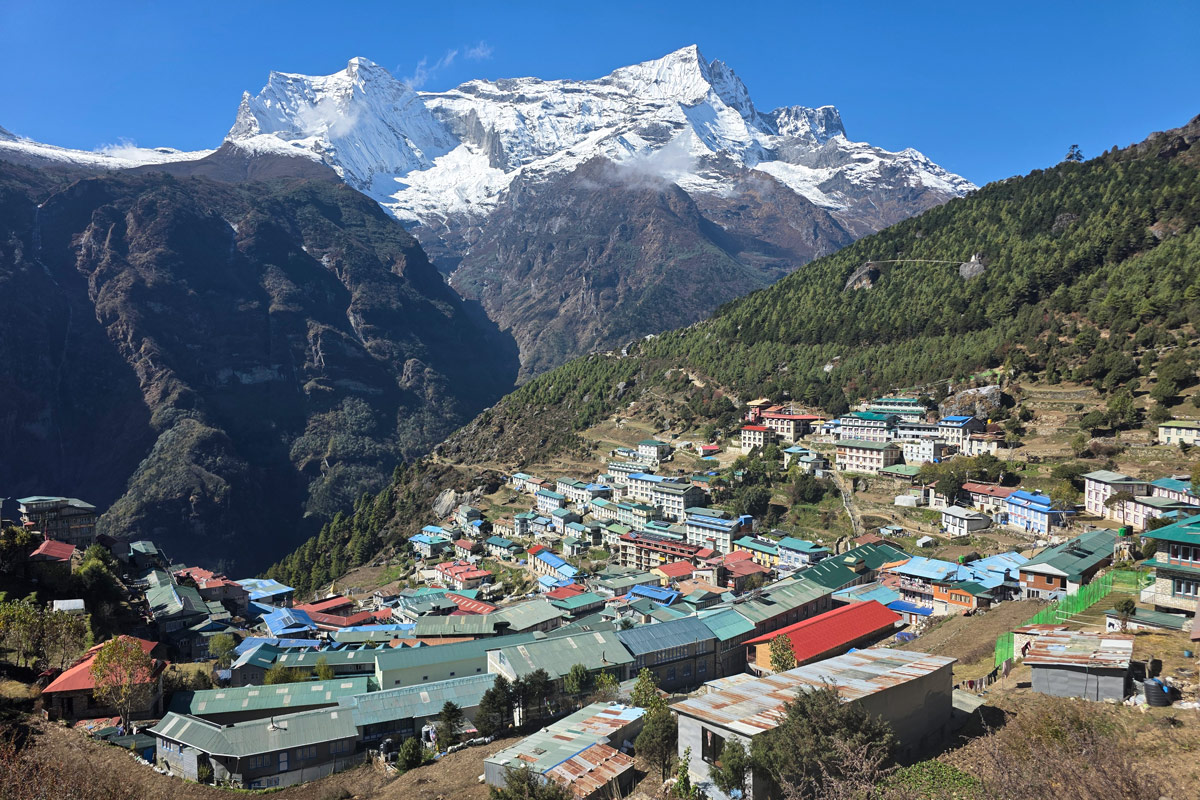
Nepal AirLink has Wi-Fi hotspots across numerous locations, including Lukla, Namche Bazaar, Tengboche, Dingboche, Lobuche, and Gorakshep.
That does not mean every hotspot will offer the same speed or reliability. Mountain internet is shared, weather-dependent, and affected by the infrastructure available at each location.
AirLink Wi-Fi and Internet access during Everest Base Camp Trek
Higher on the Everest Base Camp trail, mobile data becomes less reliable. This is where AirLink Wi-Fi can help. It is a paid internet service available at many teahouses and lodges in the Khumbu region.
Using AirLink is simple. You can buy a prepaid card from a teahouse or local shop. The card gives you a login code. Connect your phone to the AirLink Wi-Fi, enter the code, and you can access the internet.
The cost of AirLink Wi-Fi depends on how long you want to use it. You will have one day and two-day packages:
| Package Duration | Price (NPR) | Data Allocation |
| 24 hours | 1500 | 10 GB |
| 48 hours | 2000 | unlimited |

You’ll get the most mileage out of AirLink from Dingboche onward, and especially around Lobuche and Gorak Shep, where your SIM card’s signal won’t be same.
Worth noting, too, that the connection isn’t always steady. In the evening when every trekker in the lodge logs on at the same time, speeds can drop noticeably.
The smartest way to look at it is to treat AirLink as your backup plan, not a replacement for your Nepalese SIM. Lean on mobile data wherever the signal is strong, and switch over to AirLink once you’ve climbed past the point where your SIM gives up.
Combined, they’ll keep you loosely connected without ever promising an uninterrupted internet experience, which, this high up, is really all you can ask for.
Is There Wi-Fi on the Everest Base Camp Trek?
Yes, Wi-Fi is available on much of the Everest Base Camp route, particularly in villages with established teahouses and AirLink hotspots extending from Lukla through higher settlements till Gorakshep.
However, the quality changes as you climb.
You can generally expect better connectivity around Namche Bazaar than in remote areas near the upper Khumbu.
At high altitude, your internet can be slow, shared by many trekkers, or temporarily unavailable due to weather or infrastructure problems.
Can You Use 4G at Everest Base Camp?
This is one of the most common questions about the internet at Everest Base Camp.
Everest Base Camp does not have reliable 4G coverage. On the EBC trail, Gorak Shep is generally the last major stop where trekkers may access mobile data and Wi-Fi before heading to Base Camp. As you continue toward Everest Base Camp, mobile connectivity becomes very limited.
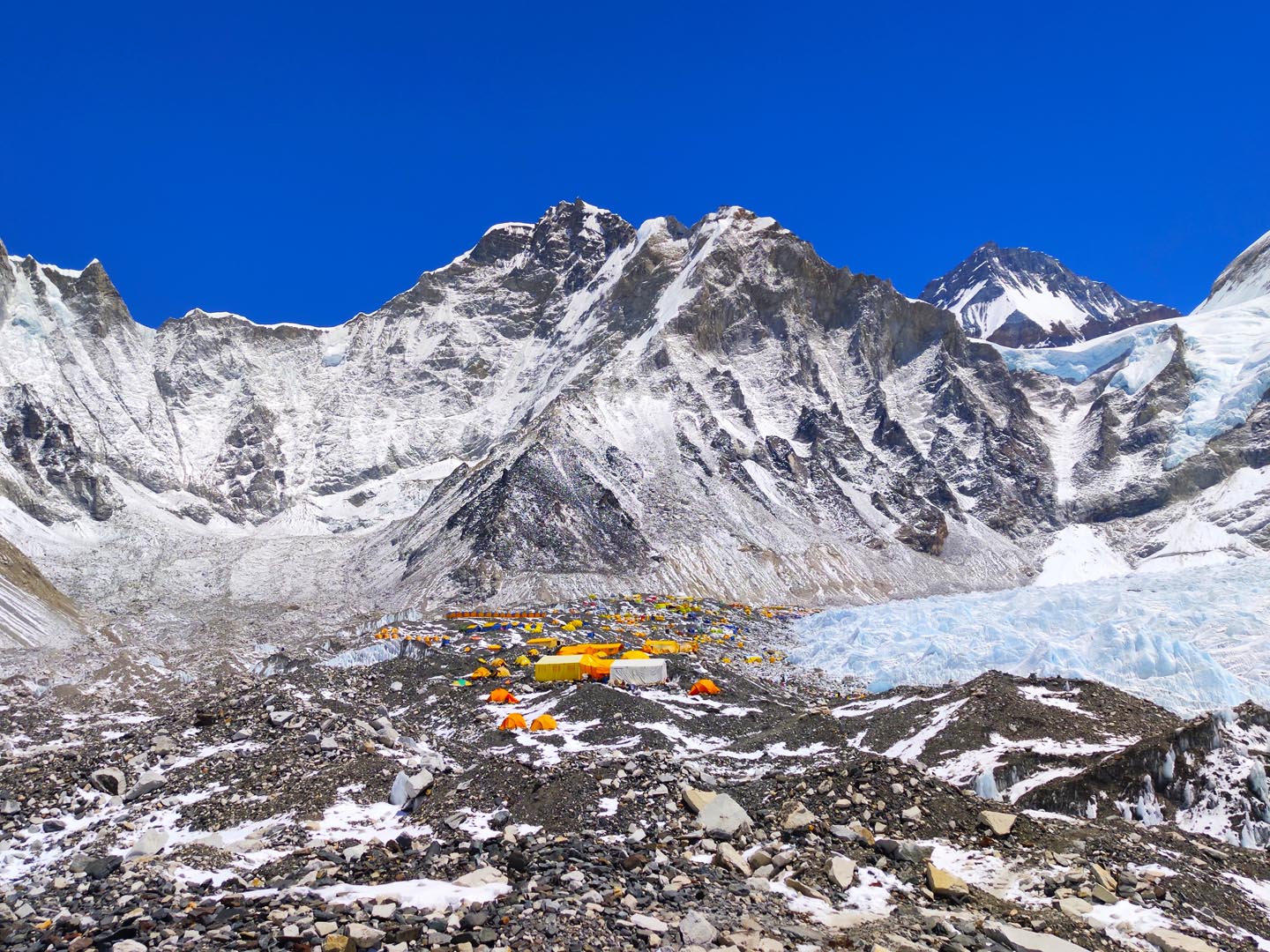
For internet access at higher elevations, AirLink Wi-Fi can be a useful option where the service is available. The connection is generally good, although it can become a little slow when weather conditions worsen.
Is There Internet Access on the EBC Trek During Off-Season?
Connectivity itself doesn’t really change with the season, since the same towers and Wi-Fi providers operate year-round. What does change is the experience around it.
During the quieter monsoon and winter months, fewer lodges may keep their Wi-Fi routers running at full capacity if guest numbers are low, and cloud cover or storms can occasionally disrupt AirLink signals.
Tips for Staying Connected on the Everest Base Camp Trek
Staying connected during the Everest Base Camp trek does not mean you need to be online all day. A little preparation before the trek can help you communicate when necessary while avoiding unnecessary battery, data, and time consumption.
- Buy a local SIM card before starting the trek: Get a registered Nepalese SIM (Ncell/ NTC) in Kathmandu.
- Use mobile data where the network is available: Local SIM data can be convenient in villages and sections of the trail with mobile coverage.
- Keep Wi-Fi as a backup at higher elevations: When mobile data becomes unreliable farther up the trail, AirLink Wi-Fi can provide another way to get online.
- Carry a reliable power bank: Bring a power bank with enough capacity to recharge your phone.
- Charge your devices whenever you get the chance: Do not wait until your phone or camera is almost empty.
- Download important information for offline use: Save trekking maps, your itinerary, accommodation details, emergency contacts, travel documents, and other essential information before leaving Kathmandu.
- Tell your family about possible communication gaps: Let your family know that you may not have a reliable connection every day, particularly during remote sections of the trek, so they do not worry if you cannot respond immediately.
- Limit data-heavy activities: Avoid streaming videos, downloading large files, or constantly uploading high-resolution photos because these activities can quickly use your data and drain your battery.
- Keep some cash for internet and charging: Carry enough Nepalese rupees to pay for Wi-Fi cards, internet access, or device charging at teahouses, especially in the higher villages.
- Take breaks from your phone and enjoy the trail: Use the internet when you need to communicate or check important information, but put your phone away at other times so you can fully experience the landscapes, villages, and mountains around you.
Do You Really Need Internet on the EBC Trek?
No, you do not need constant internet access to complete the Everest Base Camp trek. But having some connectivity is useful.
Staying connected matters most for safety, checking weather ahead of high-altitude days, and letting someone know your general status.
Many trekkers deliberately reduce their internet use once they reach the mountains. They check messages once or twice a day, upload photos when the connection is good, and then return their attention to the trail.
That is probably the best balance.
Conclusion
Wi-Fi and internet access during the Everest Base Camp trek are absolutely possible, just not guaranteed everywhere.
Between a local SIM card for the lower trail, and AirLink Wi-Fi cards higher up, you’ll have enough connectivity to stay safe and stay in touch without turning your trek into a scroll-fest.
Most importantly, remember why you came.
The goal of the Everest Base Camp trek is not to maintain a perfect internet connection at 5,000 meters (16,404 feet). It is to experience the mountains, meet the people of the Khumbu region, walk through remarkable landscapes, and stand beneath some of the world’s highest peaks.
The Wi-Fi card at a teahouse table isn’t going to compete with those mesmerizing views of mountains in Everest region, no matter how fast the connection is.
Stay connected when it matters only, else just let the mountains have your full attention once in a while.