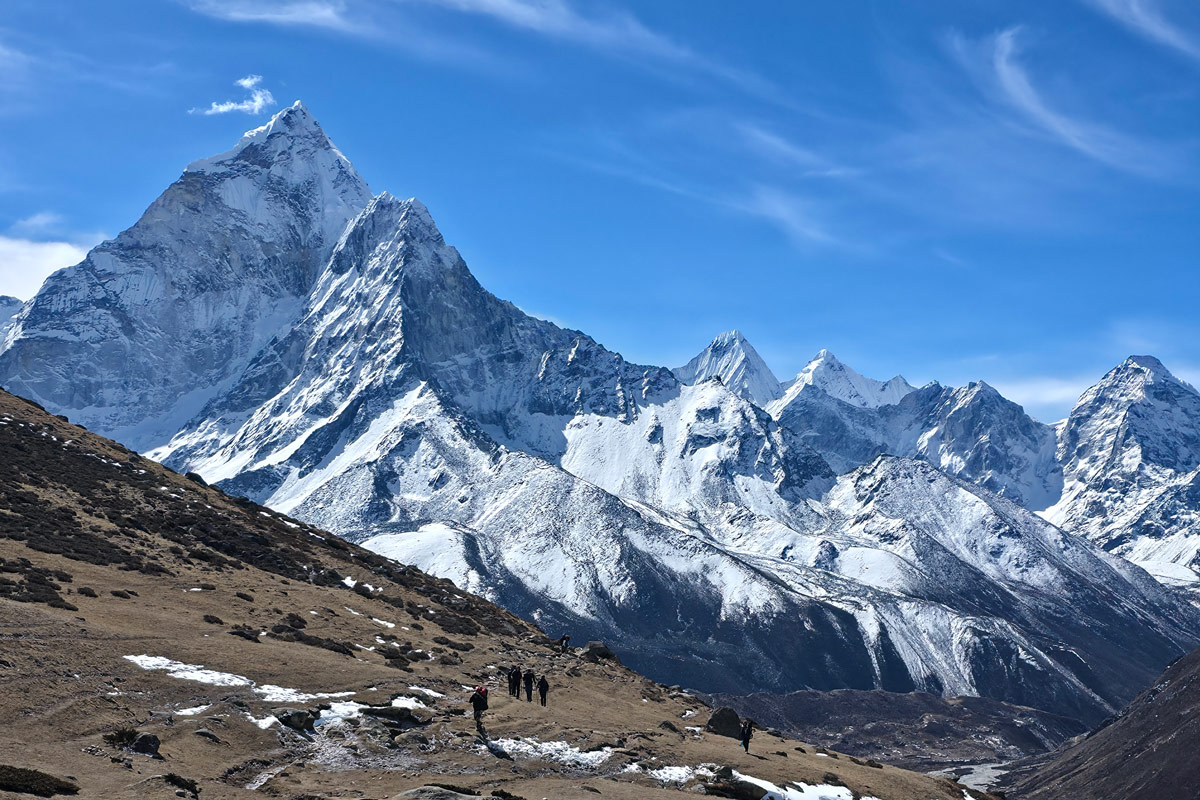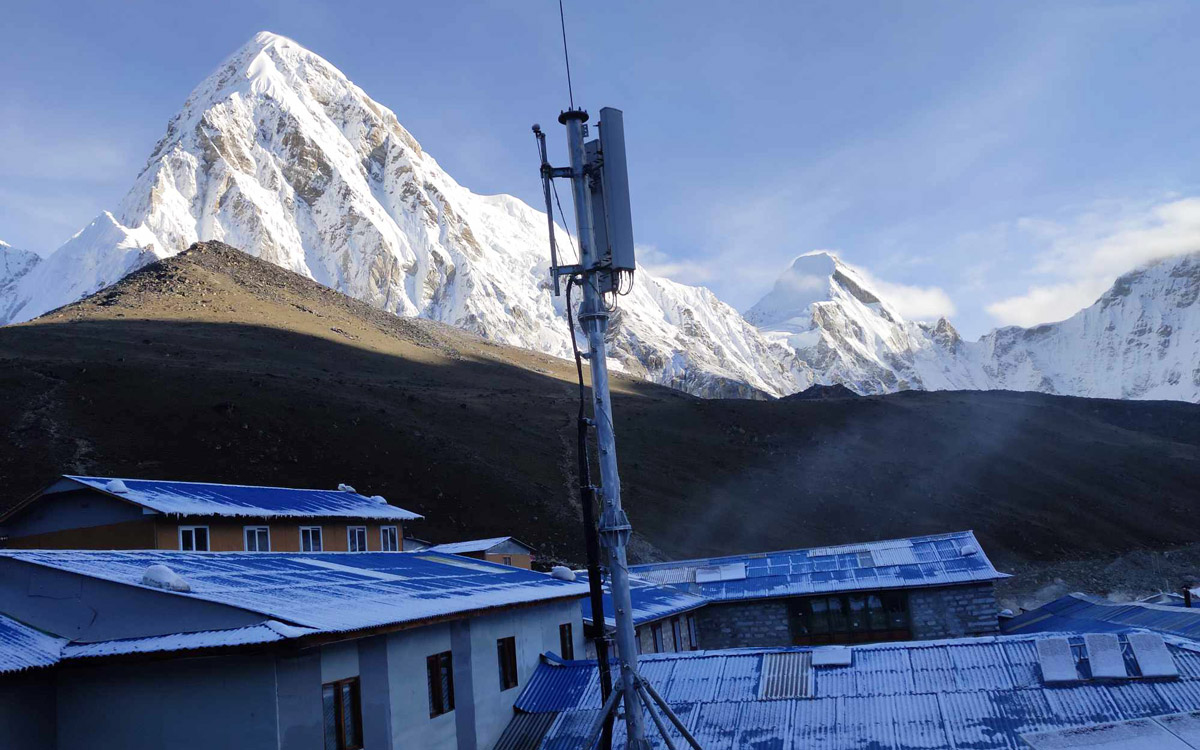



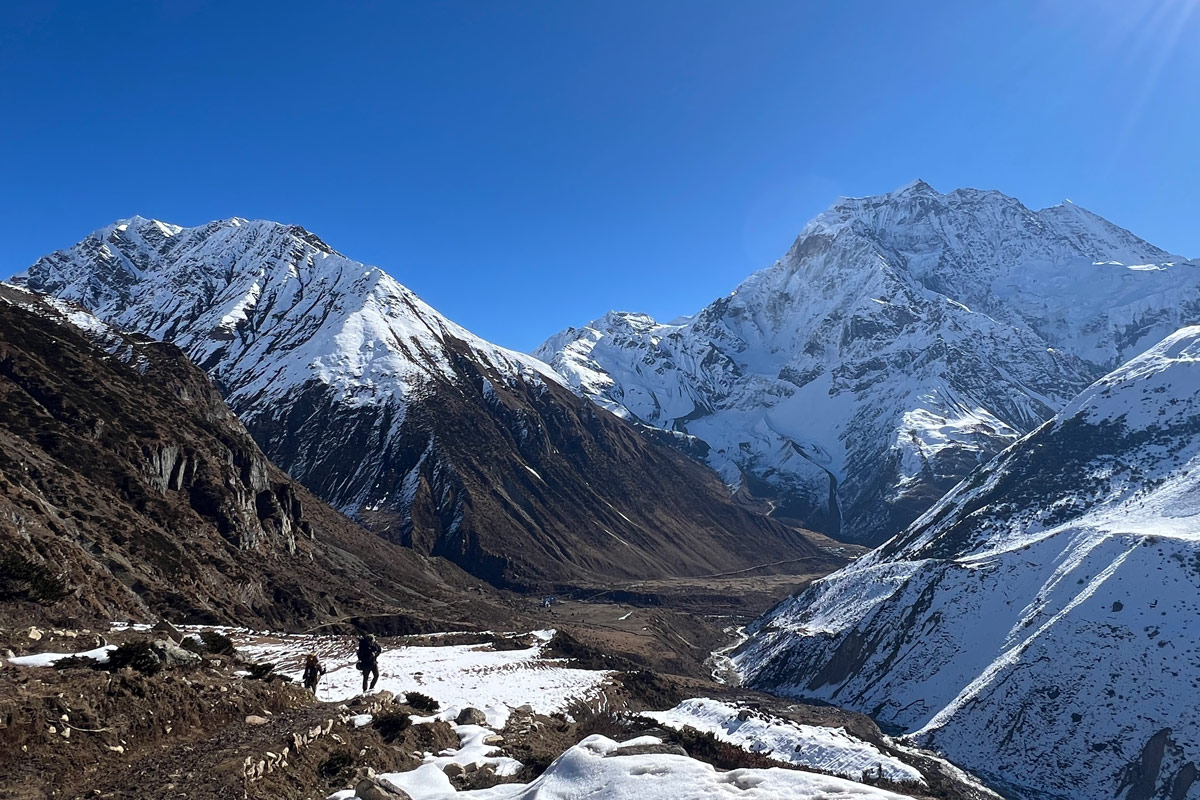
The Manaslu Circuit Trek is one of Nepal’s most rewarding choices for travelers embarking on a remote Himalayan journey around eight highest mountains on Earth, Mt. Manaslu (8,163 m).
Trekking in Nepal such as Manaslu region offers diverse range of experiences rewarding trekkers with dramatic mountain scenery, remote villages, Buddhist traditions, ancient monasteries, forests, glaciers, and high Himalayan terrain.
While the highest point of the trek is Larkya La Pass (5,160 m/ 16,929 ft). Here, crossing the pass requires well-preparation for trek, patience, understanding, and appropriate acclimatization.
The Manaslu region is also protected as the Manaslu Conservation Area and restricted-area permits is required when passing through such varied ecosystems.
This guide by Ace the Himalaya brings together to you most essential safety tips needed for successful completion of Manaslu Circuit trek in Nepal..
Is the Manaslu Circuit Trek Safe?
The Nepal Tourism Board describes the Manaslu region as a remote conservation area with trekking, lodges and a strong connection to local culture and traditional mountain life.
For a properly prepared trekker travelling with the required arrangements, major attractions in Manaslu region can be a safe and highly rewarding Himalayan adventure.
However, safety does not come from the route alone, it comes from taking sensible decisions throughout the journey.
Safety precautions like allowing time to acclimatize, walking at sustainable pace, packing smart, checking conditions before difficult sections, and communicating as soon as something feels wrong helps during unpredictable conditions.
Why Safety Matters on the Manaslu Circuit Trek
The Manaslu Circuit route passes through a broad range of environments, beginning in warmer river valleys and gradually entering colder, higher mountain terrain.
The journey eventually reaches the Larkya La region, one of the highest mountain passes of Nepal, where altitude, snow, wind and fatigue can become serious considerations.
Several factors deserve particular attention, such as:
- High-altitude exposure and altitude-related illness
- Long trekking days and physical fatigue
- Unpredictable mountain weather
- Snow and ice around high passes
- Narrow, rocky and uneven sections of trail
- Landslides and loose rock, particularly after heavy rainfall
- Limited medical facilities
- Limited mobile connectivity in some sections
- River crossings and suspension bridges
- Restricted-area trekking regulations
Some Essential Safety Tips for the Manaslu Circuit Trek
Manaslu Circuit Trek is famous for one of the best off-the-beaten-path treks in Nepal unlike busier trails such as Everest Base Camp, Annapurna Base Camp, or Annapurna Circuit trek.
Spanning over two weeks, the distance of the Manaslu Circuit trek is approximately 177 km demanding good physical fitness while taking you through diverse remote villages, authentic culture, deep river valleys, and high Himalayan landscapes.
Some of the best safety tips for Manaslu Circuit trek are:
Prepare Your Body Before The Trek
The trek involves repeated days of walking, often on uneven terrain with sustained uphill and downhill sections.
As the trek demands being active and comfortable for several hours a day, you should begin preparing several weeks to a few months before departure.
Regular hiking, walking on hills or carrying a daypack can help you to become accustomed to spending prolonged periods on your feet and understand how your body responds to sustained climbing.
You can combine hiking with activities such as:
- Cycling
- Swimming
- Running
- Stair climbing
- Leg and core strengthening
- Cardiovascular exercises
- Balance exercises
Understand Altitude Sickness
Altitude is one of the most important safety considerations due to high altitude and difficulty of the Manaslu Circuit trek.
As you climb higher, atmospheric pressure decreases and the amount of oxygen available with each breath becomes lower.
The body needs time to adapt to this change as the Manaslu route climbs into terrain above 4,000 metres and eventually crosses Larkya La at more than 5,000 metres requiring proper acclimatization.
Some important reminders are:
Know the early symptoms
Acute Mountain Sickness (AMS) can include:
- Headache
- Dizziness
- Nausea
- Unusual tiredness
- Loss of appetite
- Difficulty sleeping
- Reduced ability to perform normally
Tell your guide or trekking companions when symptoms appear. Early communication gives the team more options to monitor your condition and adjust the itinerary if necessary.
Never ascend through worsening symptoms
One of the most important principles of high-altitude trekking is that worsening symptoms should not be ignored should be adressed rather than attempting to continue simply to remain on itinerary schedule.
If a trekker becomes increasingly unwell, particularly with serious problems such as confusion, difficulty walking or breathing difficulty at rest, the priority is medical assessment and moving to a lower elevation.
Give your body time to acclimatize
A good Manaslu itinerary includes time for acclimatization for high-altitude treks.
Acclimatization days are commonly incorporated for trekkers to make shorter exploratory walks around higher settlements such as Samagaon (3,520m), which helps in preventing altitude sickness in Himalayas.
Stay Hydrated
Long days of walking, cold temperatures and altitude can affect appetite and energy.
Even though water requirements vary from person to person and with activity, weather and altitude, however try to drink water atleast 3-4 liters per day.
Use boiled, filtered or otherwise appropriately treated water rather than drinking untreated water directly from streams or taps.
At Ace the Himalaya, we use sustainable Katadyn filters to purify the natural water sources to make them safe to drink. Depending on your daily water consumption and local prices, this can help you save around USD 5-15 per person per day.
Eat Regularly
Meals on the route are also generally simple and designed around what local lodges can supply.
Dal bhat (rice, lentils, vegetables) provide a familiar combination of carbohydrates and protein while noodles, dumplings, soups, potatoes, Tibetan-influenced dishes and other teahouse meals also help you to maintain the energy needed for long trekking days.
Remember Fitness Is Endurance, Not Speed
In high-altitude trek such as Manaslu, endurance matters more than speed. Most common mistake trekkers make is by assuming that being able to walk quickly means being ready for a high-altitude trek.
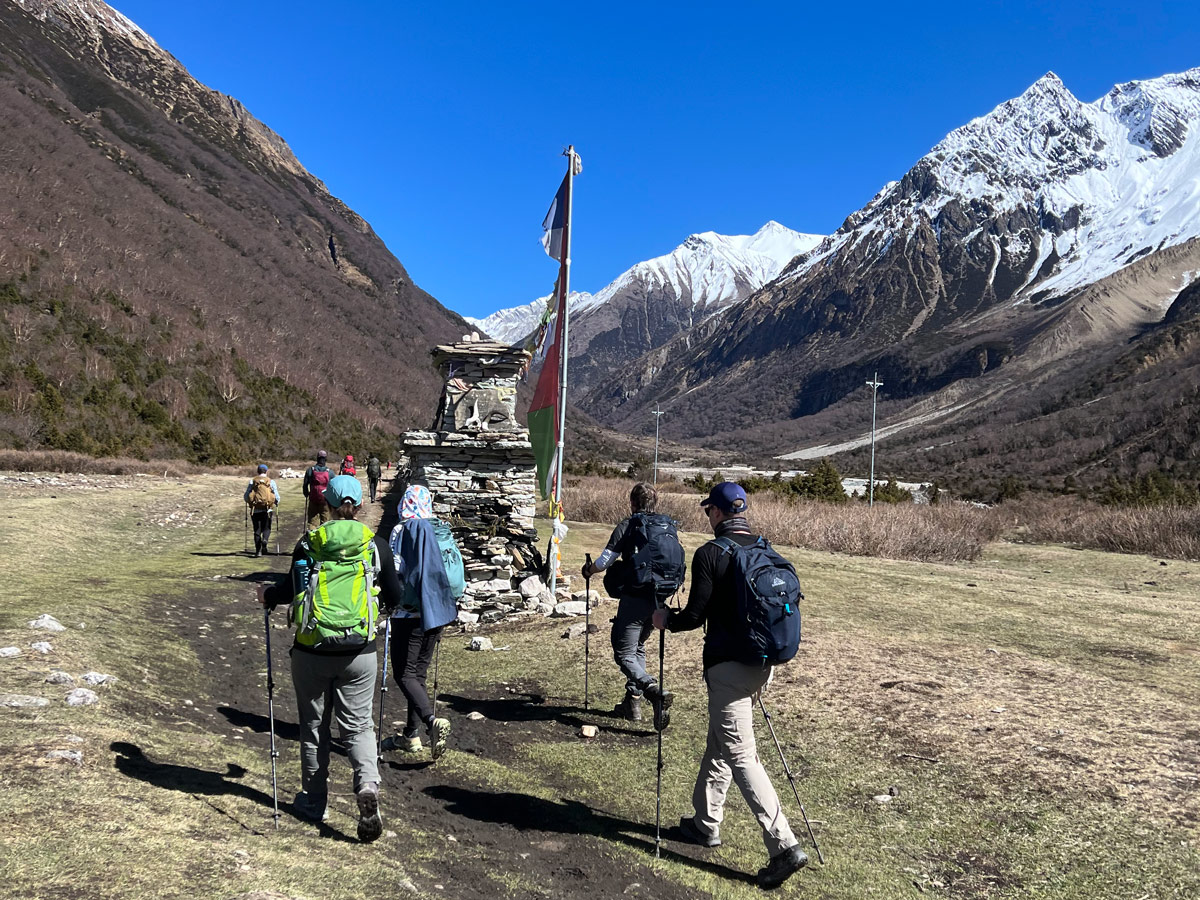
A steady pace that you maintain for hours is generally more useful than pushing hard as it helps your body to adapt to increasing altitude.
Take Larkya La Pass Seriously
Larkya La Pass is one of the key defining moments of the Manaslu Circuit, but it is also one of its most demanding sections.
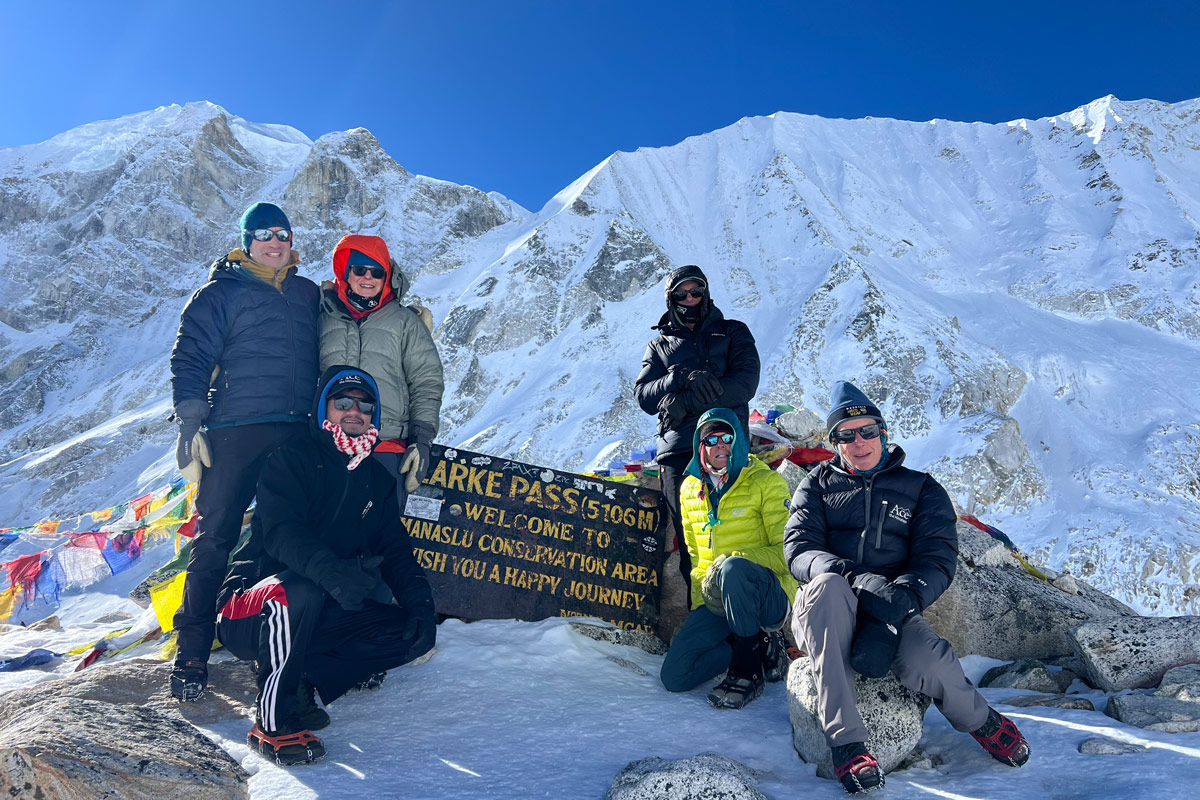
Be thoroughly prepared as crossing combines high altitude with cold conditions, long walking hours and potentially snowy or icy terrain.
Start early and follow the guide’s plan
The pass crossing is normally planned as an early start with decision based on the season, weather, trail conditions and the group’s pace.
This provides more daylight and allows the group to tackle the demanding section before conditions become less favourable later in the day.
Walk slowly on snow and ice
If snow or ice is present, take shorter steps and concentrate on stable footing.
Trekking poles can provide additional balance, while footwear with suitable traction is important. If the conditions become unsafe, the sensible response is to listen to the guide and reassess the crossing.
Choose the Right Trekking Season
The Nepal Tourism Board identifies March to May and September to November as the main recommended seasons for trekking in the Manaslu Conservation Area.
Choosing right season also has a direct influence on trekking conditions.
Spring (March to May): Spring brings gradually warmer conditions in the lower sections and colourful rhododendron forests. Higher elevations can still be cold, and snow may remain around the pass depending on conditions.
Autumn (September to November): Autumn follows the summer monsoon. As rainfall decreases, the mountain atmosphere often becomes clearer, making this one of the most popular trekking periods in Nepal.
Monsoon (June to August): Rain can create additional challenges on the lower and middle sections of the Manaslu route. Slippery trails, landslides, swollen rivers and reduced visibility can complicate travel.
Winter (December to February): Winter brings cold temperatures and greater potential for snow and ice at higher elevations. Conditions around Larkya La can be demanding so, careful planning, suitable equipment and current information about pass should be prioritized.
Check Weather Before Every Trekking Day
Mountain weather can change much faster than it does in the cities and lowlands. A flexible itinerary is often a safer itinerary in the Himalayas, hence, before leaving each morning, ask your guide about:
- The expected weather
- Trail conditions
- Snow or ice around higher sections
- River conditions
- Possible landslide areas
Trek With Licensed Guide and Agency Arrangements
Nepal Tourism Board’s current TIMS guidance lists the Manaslu Circuit Trek among routes where trekkers must be accompanied by a licensed trekking guide and carry an agency-issued TIMS Card.
The Department of Immigration also identifies the Gorkha, Manaslu area as a restricted trekking area requiring a special trekking permit, and permits are obtained through authorized trekking agencies rather than individually.
As this is more than paperwork that help trekkers with route navigation, communicate with local, monitor changing weather and recognize trekker conditions ensuring practical support throughout the trek.
Pack for the Mountain, Not Just the Forecast
A safety-conscious and smart packing list is helpful for several different environments. The lower valleys can feel warm during the day, while higher sections can be cold and windy.
Therefore, a layering system is more useful than relying on one heavy item of clothing.
Essential clothing
Consider carrying breathable gears like:
- Moisture-managing base layers
- Warm insulating layers
- Waterproof and wind-resistant outerwear
- Comfortable trekking trousers
- Warm gloves
- Hat or beanie
- Sun hat
- Warm trekking socks
- Reliable trekking boots
- Sunglasses with adequate UV protection
Useful safety equipment
Your personal equipment can also include:
- Trekking poles
- Headlamp with spare batteries
- Suitable sleeping bag
- Reusable water bottles or hydration system
- Water purification method
- Sunscreen and lip protection
- Personal first-aid supplies
- Personal medications
- Waterproof bags for important documents and electronics
Protect Yourself from Cold
Cold exposure becomes increasingly important as the trail rises. Pay particular attention to your hands, feet and head.
Keep your clothing dry, use layers rather than allowing yourself to become chilled, and change out of wet clothing when possible.
At night, use a sleeping bag appropriate for the conditions and keep essential clothing dry for the following morning. If you become unusually cold, or unable to warm yourself, tell your guide rather than simply trying to endure it.
Be Careful on Narrow and Uneven Trails
The Manaslu Circuit is a high altitude Himalayan adventure so expect rocky sections, steep climbs and descents, uneven surfaces and narrow trails.
Walk with your attention on the trail, particularly when crossing exposed and fragile sections. Keep a comfortable distance from other trekkers and avoid overtaking in places where there is little trail space.
Suspension Bridges Need Patience
The Manaslu route includes suspension bridges over mountain rivers and gorges. When crossing walk calmly, follow instructions and avoid unnecessary rushing. If a bridge is crowded, wait for space rather than trying to force your way through.
Understand Landslide and Rockfall Risks
The lower and middle sections of the route can include areas affected by unstable slopes, particularly following periods of heavy rain.
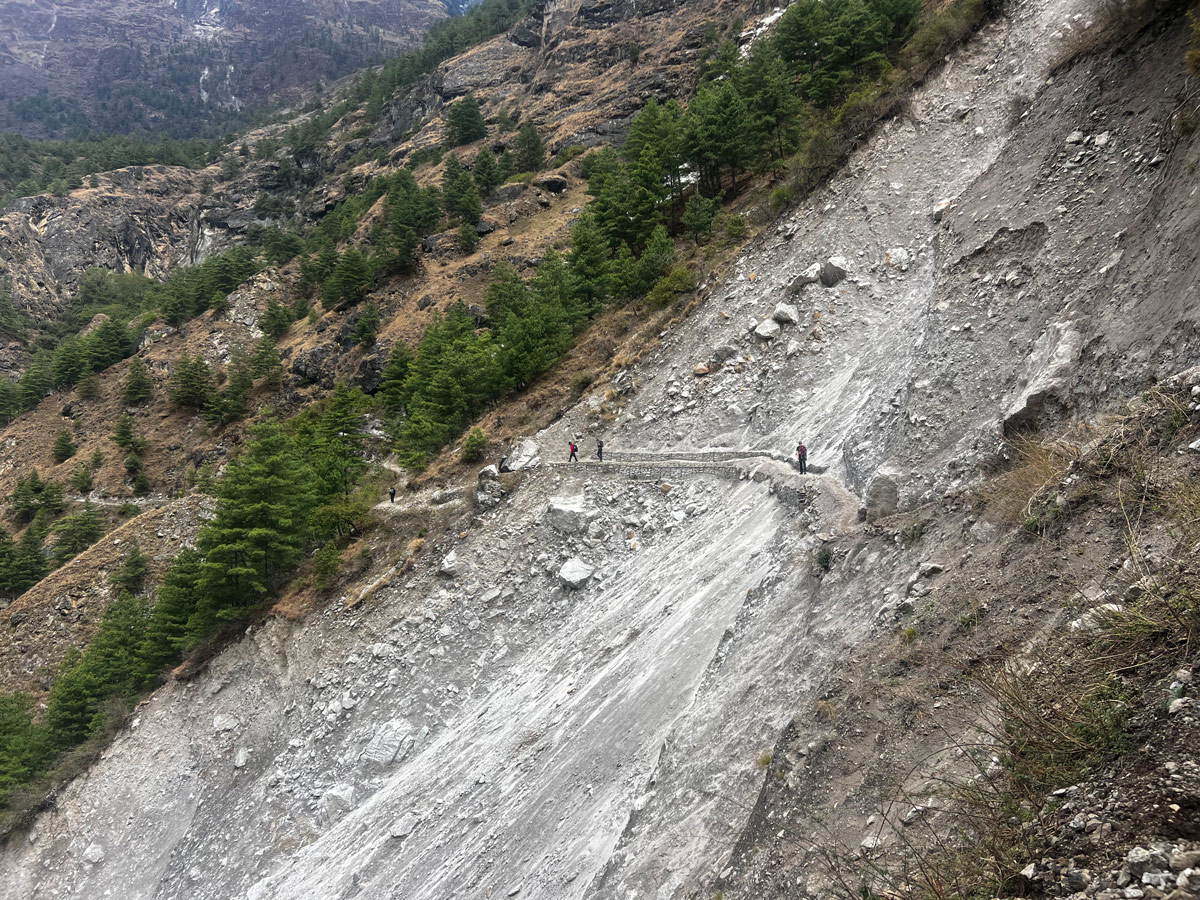
Watch for loose stones and pay attention to your guide when approaching exposed slopes. If you hear or see signs of falling debris, move according to your guide’s instructions rather than stopping to take photographs or pass quickly.
Take River Crossings Seriously
Mountain rivers can change character with rainfall and snowmelt. Try to stay alert and never attempt to cross fast-flowing water. Instead, use established crossing points and follow the instructions of your guide and local staff.
Protect Your Health From Food and Water-Borne Illness
A stomach problem can turn a demanding trek into a serious logistical challenge. Choose clean teahouses where food is freshly prepared, drink treated water, and maintain basic hand hygiene before meals.
If persistent vomiting, severe diarrhea, significant weakness or other concerning symptoms develop, tell your guide promptly.
Know What to Expect From Medical Support
One of the realities of the Manaslu Circuit is that medical support is basic comparable to what you would find in Kathmandu. Only small health posts and basic medical services are available in parts of the region,
Get Appropriate Travel Insurance
Travel insurance should be arranged before you begin the trek while needing to keep a digital and printed copy of important policy information.
You should read the policy carefully and check whether the policy includes:
- Emergency medical treatment
- Emergency evacuation
- Helicopter evacuation where medically necessary and covered by the policy
- Trip interruption or cancellation where applicable
- Other relevant travel emergencies
Keep Your Emergency Information Accessible
Do not rely entirely on your phone for important information. Carry the key details you may need if communication becomes difficult, including:
- Passport information
- Permit details
- Insurance information
- Trekking company and guide’s contact
- Emergency home contact
- Local emergency numbers
Stay Connected With Your Family or Travel Partner
Before leaving for the trek, share your itinerary with someone you trust.
Let them know the expected route, approximate trekking dates and the name of your trekking company or guide. During the journey, inform with updates when communication is available.
Respect Local Culture
Safety in Manaslu is not only about altitude and weather. The route passes through communities with strong Buddhist and Himalayan cultural traditions.
Prayer flags, monasteries, mani walls and chortens are part of the landscape, while villages maintain customs that have developed over generations. Hence, the best approach is to travel as a respectful guest.
Ask before photographing people, homes or religious ceremonies. Avoid touching religious objects unnecessarily and walk around mani walls and chortens in the customary direction.
Trek Responsibly to Protect the Trail
The Manaslu Conservation Area is home to diverse wildlife, bird species, forests and mountain ecosystems that stretches from lower Himalayan environments toward the high mountains. Here, simple habits make a difference:
- Carry reusable water bottles
- Avoid unnecessary single-use plastic
- Pack in and out
- Stay on established trails
- Do not feed wildlife
- Keep a respectful distance from animals
- Avoid damaging plants
- Use local lodges, food, and services where practical
Things You Can Do When Something Goes Wrong
Unexpected situations are part of remote trekking, which is why preparation matters. Depending on the situation, if you become ill, injured or unusually exhausted:
- Stop and assess the situation.
- Tell your guide immediately.
- Follow professional advice.
- Be willing to change the itinerary.
- Descend when medical assistance are necessary.
A Practical Manaslu Circuit Safety Checklist
The Manaslu Circuit Trek is one of the most rewarding high-altitude treks in Nepal. However, before leaving for the trek, check that you have:
- Completed appropriate physical preparation
- Planned an itinerary
- Included adequate acclimatization
- Arranged a licensed guide
- Obtained the required trekking permits and TIMS
- Checked current route conditions
- Purchased appropriate travel insurance
- Packed suitable trekking gear
- Prepared a personal first-aid kit
- Packed safe water-treatment equipment
- Saved important emergency contacts
- Shared your itinerary with someone at home
- Understood the symptoms of altitude sickness
- Permits checked against latest official information
Conclusion
The Manaslu Circuit is a demanding high-altitude trek involving long walking days, sustained ascents and descents, remote terrain and crossing high mountain passes.
When trekking, understanding the mountains, following essential safety practices, and making sensible decisions are key to a safe and rewarding journey.
Walk at a steady pace, allow your body to acclimatize, respect changing weather conditions, follow your guide’s advice, and speak up immediately if you feel unwell.