


So you’ve decided to trek to Everest Base Camp (EBC). That’s one of the boldest decisions you’ll ever make in your life, and honestly, we’re here for it. But let’s be real with each other for a second: this isn’t a casual weekend hike.
The Everest Base Camp (EBC) trek is a 130 km (about 80 miles) round-trip journey through the heart of the Khumbu region of Nepal that challenges every trekker with altitude, steep inclines, and long days on the trail.
Your journey takes you to an altitude of 5,364 m (17,598 ft) at Mount Everest Base Camp and all the way up to 5,555 m (18,192 ft) at Kala Patthar, which is a remarkable high-altitude achievement.
As you prepare for this life-changing trek, you must follow a progressive training plan for Everest Base Camp Trek that strengthens both your body and mind.
Why is it necessary to train for EBC?
Let’s cut straight to it: training for the Everest Base Camp trek is not optional, it’s a survival strategy at high altitude.
Here’s the cold, hard truth you must know before prepare for Everest Base Camp Trek. You’ll be walking 5 to 7 hours every single day for about 12 to 14 consecutive days.

The terrain isn’t flat either. You’ll climb steep rocky paths, cross suspension bridges, push through altitude, and do it all while carrying a daypack weighing 9 to 11 pounds (4 to 5 kg).
Here’s why Everest Base Camp trek training matters so much:
- Cardiovascular endurance keeps you moving hour after hour without collapsing from exhaustion.
- Leg and core strength helps you tackle steep uphills and punishing descents without wrecking your knees.
- Mental preparation keeps you pushing forward when your body wants to quit on Day 7 at Dingboche (4,410 m/ 14,470 ft).
- Flexibility and mobility reduce your risk of injuries, muscle strains, and sprains on uneven terrain.
And here’s something that surprises a lot of first-timers for ebc trek: physical fitness does not guarantee you won’t get altitude sickness. But it absolutely reduces your risk of over-exertion, which does increase your chances of developing Acute Mountain Sickness (AMS).
How Fit Do You Need to Be for Everest Base Camp Trek?
Good news: you don’t need to be an Olympic athlete to trek Everest Base Camp. People of all ages, from teenagers to retirees in their 70s, successfully reach Base Camp every year.
At Ace the Himalaya, even a 7-year-old child has completed the Everest Base Camp trek.
The EBC trek is non-technical, meaning it requires zero mountaineering or climbing skills.
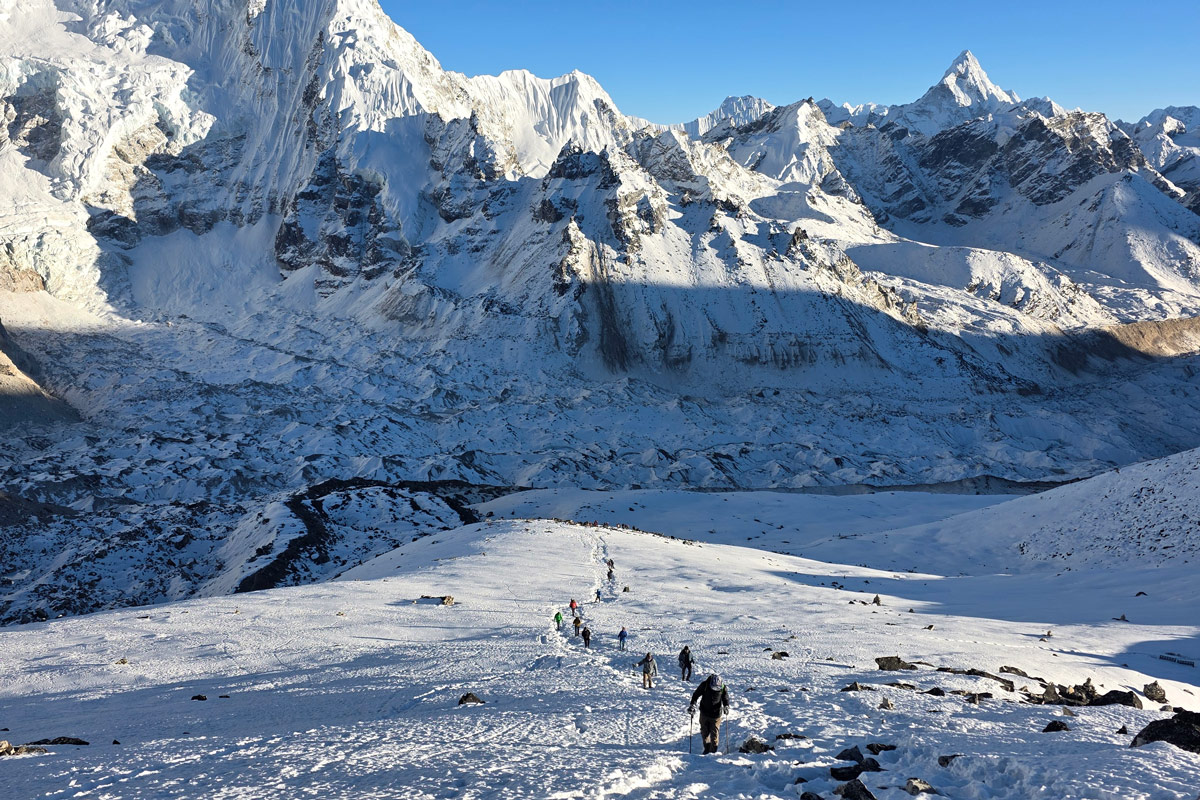
But “non-technical” doesn’t mean “easy.” You need a moderate to good fitness level before you even start your 12-week training plan. Here’s a simple fitness checklist to assess where you stand right now:
- Can you walk uphill continuously for 45 to 60 minutes without stopping?
- Can you comfortably hike 10 to 15 kilometers in a day?
- Can you climb 20 to 30 flights of stairs without feeling like your heart will explode?
- Do you have healthy knees and ankles that handle downhill walking without pain?
- Have you done any multi-day hiking, even at low altitudes?
If you checked most of those boxes, you’re already starting from a decent base. If you checked very few, don’t panic. That’s exactly what the 12-week training plan in this guide is for. The important thing is honest self-assessment before you begin.
When Should You Start Training for Everest Base Camp?
The experts are pretty unanimous on this one: start training at least 8 to 12 weeks before your trek date. If you’re starting from a low fitness baseline, push that to 16 to 20 weeks to give your body enough time to adapt safely and progressively.
Here’s a smart rule of training to trek EBC:
- 12+ weeks out: Start cardiovascular base building and light strength training.
- 8 weeks out: Increase intensity, introduce weighted hikes.
- 4 weeks out: Peak training with long hikes in your actual trekking boots.
- 2 weeks out: Taper down intensity, rest more, let your body consolidate the gains.
- 1 week out: Light activity only, focus on sleep, nutrition, and gear preparation.
Also worth noting: The best time to actually do the EBC trek is during spring (March–May) or autumn (September–November). These are the pre-monsoon and post-monsoon seasons with the most stable weather, clearest skies, and safest trail conditions.
The Four Pillars of EBC Fitness
Think of your EBC training like a table; it needs four solid legs to stand strong. Miss any one of them, and the whole thing gets wobbly. Here’s a deep look at each pillar.
Cardiovascular Endurance
Cardiovascular endurance is the single most important fitness component for the EBC trek. Your heart and lungs are the engine that powers every step at altitude.
At high altitude, the reduced pressure directly affects how much oxygen your body can absorb.
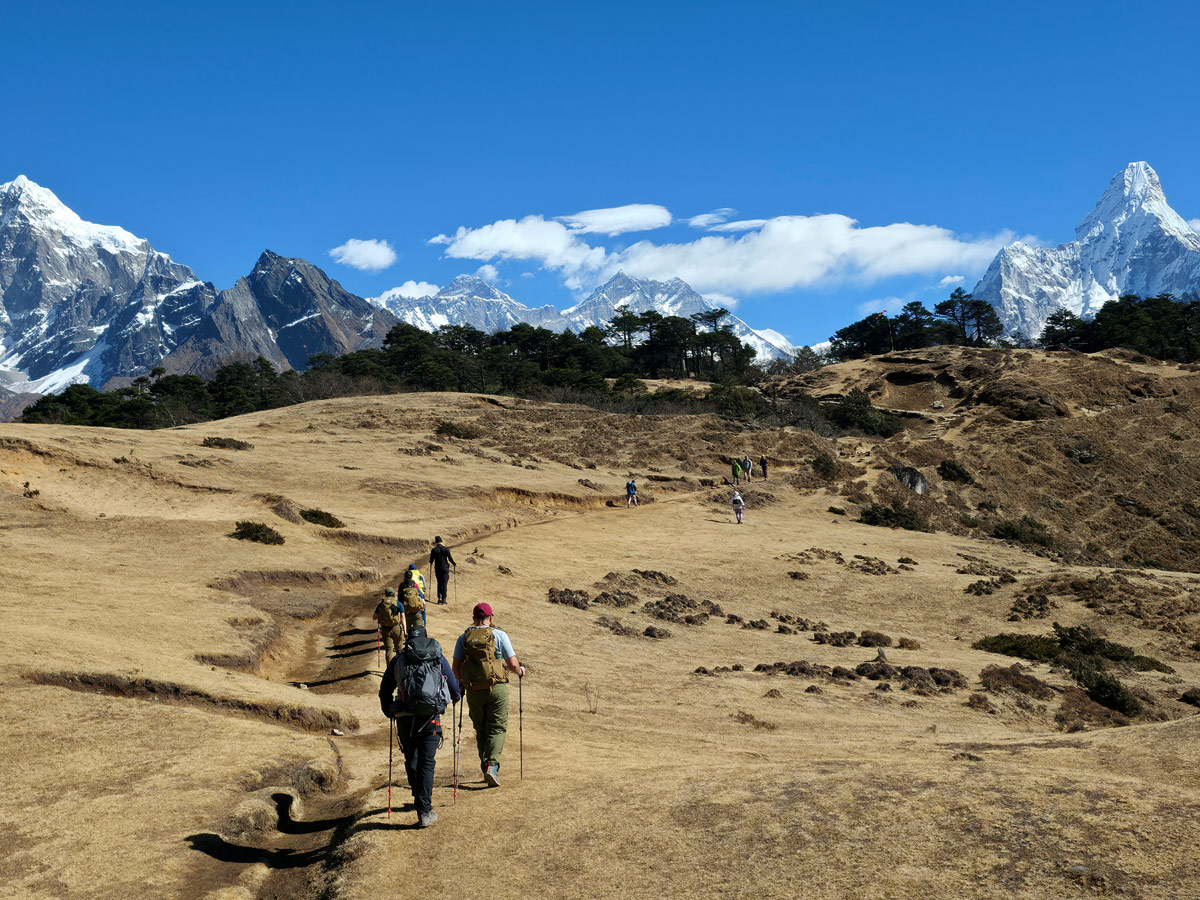
As a result, above 3,000 m (9,842 ft), your cardiovascular system has to work harder, your breathing becomes faster and deeper, and your heart pumps more blood to supply enough oxygen to your muscles, making even normal activities feel more strenuous.
The goal of cardio training for EBC isn’t to make you fast. It’s to make you more efficient.
Best cardiovascular exercises for EBC training:
- Hiking: Nothing beats hiking for trek-specific training. Start with 1 to 2 hour hikes and build to 5 to 6 hour continuous hikes.
- Running/Jogging: You must aim for at least 30 minutes, 3 to 4 times per week. Choose hilly terrain to simulate trail conditions whenever possible.
- Cycling: A fantastic low-impact alternative that builds stamina and leg strength simultaneously. Great for recovery days.
- Swimming: It is an excellent full-body workout for EBC training plan, which is easy on the joints and builds lung capacity.
- Stair Climbing: Possibly stair climbing is the single best gym-based training for EBC. The repetitive upward motion directly mimics the trek’s demands like EBC trail from Phakding to Namche.
Strength & Muscular Endurance
While cardio helps you keep moving, strength training ensures your body can handle the physical load of trekking. Every uphill climb, downhill descent, and uneven trail step relies heavily on your leg muscles and core stability.
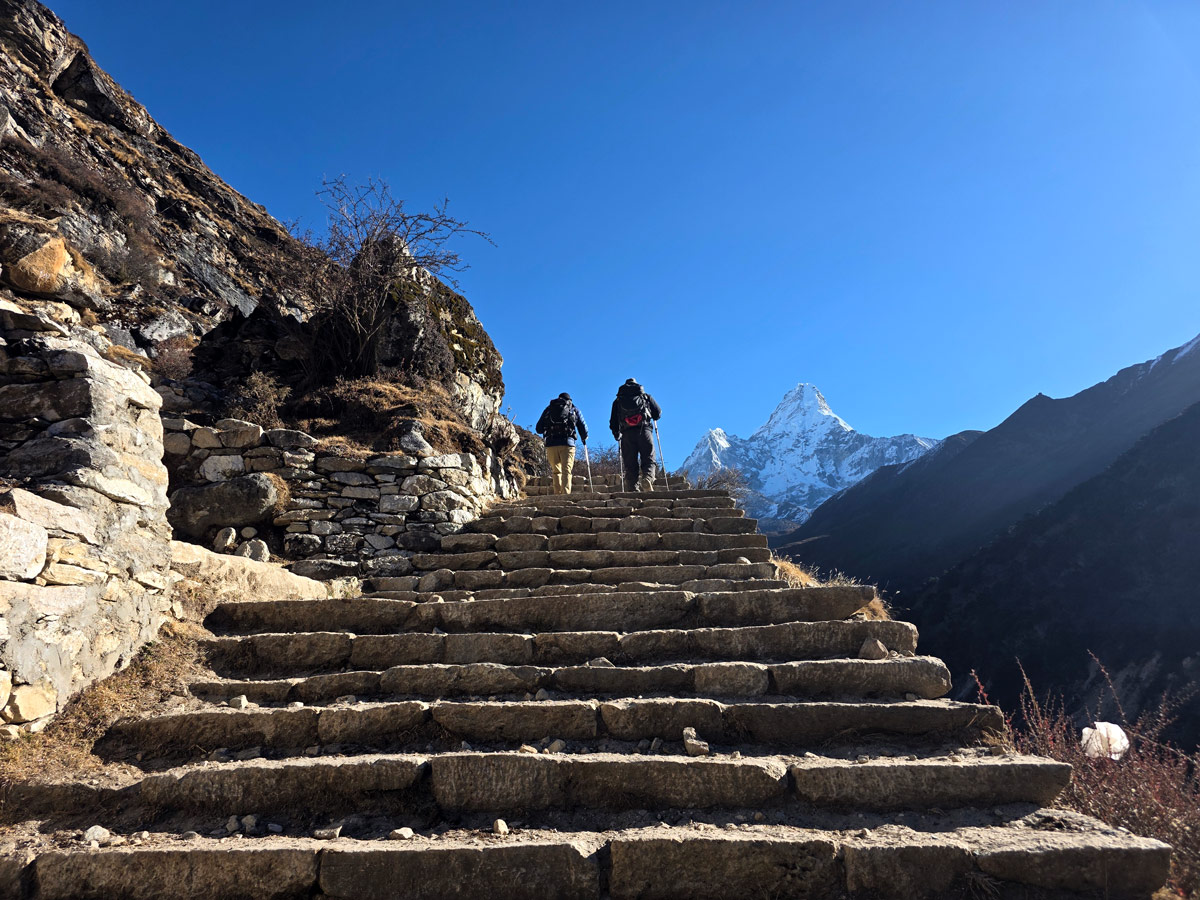
Strength training for EBC isn’t about building big muscles. It’s about building muscles that last, that can keep working through hour six of a steep climb without giving out.
Glutes, Quadriceps, Calves, abs, lower and upper backs are the parts of your body that take the biggest beating on the EBC trek.
Best strength exercises for EBC training:
- Squats and Goblet Squats: Squats are the king of EBC exercises. Build quad and glute strength directly. Aim for 3 sets of 15 to 20 reps.
- Lunges (forward, reverse, and lateral): Mimic the stepping motion of hiking while building unilateral leg strength.
- Step-ups: Use a box or a park bench. Step up and down repeatedly with a loaded backpack for maximum trek simulation.
- Deadlifts: Build posterior chain strength (glutes, hamstrings, lower back) that protects your spine under pack weight.
- Planks: Hold a plank for 45 to 60 seconds, 3 times.
- Push-ups: Full body stabilizer and upper body builder. Do them on your training rest days.
Mental Preparation
Physical fitness alone doesn’t guarantee a successful trek, your mindset plays a huge role in how you experience the journey.
Trekking to Everest Base Camp involves long days, basic facilities, and some moments of discomfort, especially at higher altitudes like Lobuche and Gorak Shep where you’ll spend two nights.
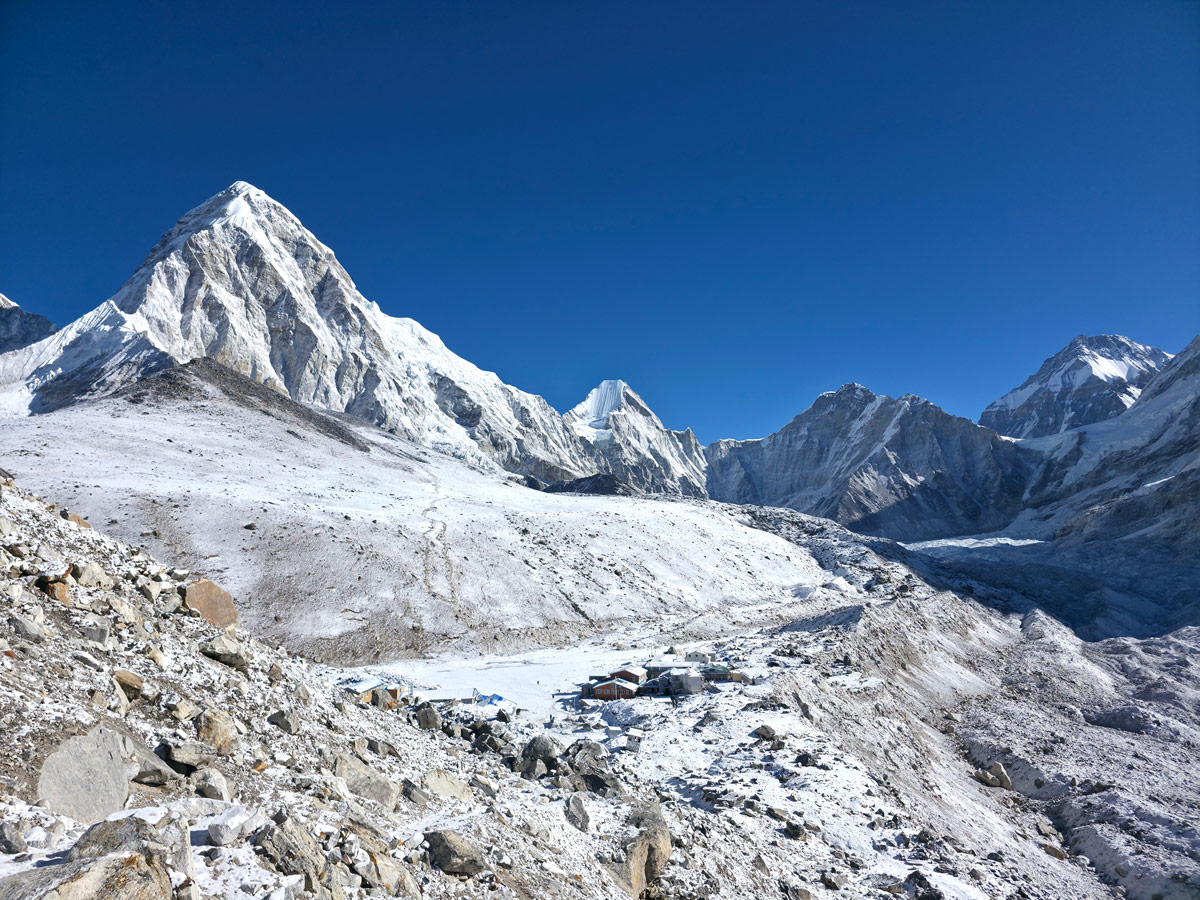
Mental preparation helps you stay focused, patient, and positive when things feel challenging. Developing this resilience ensures you can push through difficult sections of EBC.
How to build mental toughness for EBC:
- Practice discomfort in training: Push through the last 30 minutes of a long hike even when your legs beg you to stop.
- Meditation and breathwork: Practicing deep breathing exercises (like box breathing or diaphragmatic breathing) builds lung efficiency and helps you stay calm when altitude stress hits.
- Visualization: Spend 5 minutes each day mentally walking the trail. Picture yourself at Namche Bazaar, at Tengboche, at Base Camp. This builds confidence and familiarity with the journey.
- Long solo hikes: Spending time alone with your thoughts on long training hikes builds the kind of mental solitude tolerance that really helps on the trail.
- Read trek blogs and watch videos: Familiarizing yourself with the terrain, the teahouses at EBC, and the challenges remove the fear of the unknown.
Flexibility and Mobility
Flexibility and mobility often get overlooked, but they are crucial for maintaining smooth movement and preventing injuries. When your muscles and joints move freely, you use less energy and recover faster after long trekking days.
Tight muscles, on the other hand, can lead to discomfort and reduced performance. Incorporating mobility work into your routine helps your body stay balanced and efficient throughout the trek.
Best flexibility practices for EBC training plan:
- Stretch for 10 to 15 minutes after every workout, never before, as cold muscles tear more easily.
- Try yoga 1 to 2 times per week. Even beginner-level yoga dramatically improves hip mobility and body awareness.
- Practice ankle circles and hip mobility drills daily, especially important if you sit at a desk all day.
12-Week Everest Base Camp Training Plan (Step-by-Step)
A structured timeline makes your training more effective and easier to follow. Instead of guessing what to do each week, a phased approach allows you to gradually increase intensity while giving your body time to adapt.
This 12-week Everest Base Camp training plan is designed to build your fitness progressively, starting with a solid base, then increasing strength and endurance, and finally preparing you for real trekking conditions. Each phase has a purpose, and together they create a complete preparation system.
Weeks 1 to 4: Building the Base
These first four weeks are not about pushing yourself to the limit. They’re about consistency. You’re teaching your body a new normal, regular exercise, progressive load, and recovery.
If you try to go too hard in Week 1, you’ll burn out or get injured before you even get to the good stuff. Think of it as setting the groundwork for everything that follows.
- Start with 30 to 45 minutes of easy cardio (brisk walk, light jog, or cycling)
- Full-body strength training, 3 sets of squats, lunges, step-ups, planks, and calf raise
- Light yoga/stretching (15 to 20 minutes)
- Light Hike with your actual trekking boots!
Key milestones by the end of Week 4:
- Comfortable walking for 3 hours without significant fatigue
- 3 to 4 cardio sessions per week completed consistently
- Trekking boots starting to break in
Weeks 5 to 8: Strength and Intensity
Once your base is established, it’s time to increase the challenge. This phase focuses on building strength and improving endurance under slightly more demanding conditions.
Adding incline training and carrying weight begins to simulate real trekking scenarios. Your body starts adapting to longer efforts and heavier loads.
- Complete 45 to 60 min moderate-to-intense cardio; interval training or hilly runs
- Strength training adding weight to squats and deadlifts
- 30 to 40 min easy walk, swim, or yoga
- Stair climbing session for 45 to 60 minutes
- Long hike on hilly routes carrying your loaded daypack for 3 to 4 hours
Key milestones by end of Week 8:
- Completing 4.5 to 5 hour hikes with a loaded pack
- Noticeably stronger in squats and lunges
- Cardiovascular endurance significantly improved, same routes feel easier
Weeks 9 to 12: Peak Training Phase
This is the most important phase, where your training closely resembles actual trekking conditions. Longer hikes, back-to-back training days, and increased load help prepare your body for the realities of the Everest Base Camp trek.
By the end of this phase, you should feel confident in your ability to handle long days on the trail.
For Weeks 9 to 11:
- 60 min cardiovascular training, challenging intensity, hilly terrain
- Full strength session with heavier weights, compound movements, full core circuit
- 45 min moderate cardio or yoga
- Light walk or swim
- Long hike for 5 to 6 hours with full pack on hilly terrain
Key milestones by end of Week 11:
- Completing 5 to 6 hour hikes comfortably with a loaded pack
- Strong mentally being able to push through discomfort without stopping
- Back-to-back hiking days feel manageable
For Week 12 (Taper Week):
Cut volume by 50 to 60%. Do short, easy walks (30 ti 45 minutes). Do one light strength session. Sleep more and Eat well. Focus on gear organization and mental preparation.
Your fitness is already locked in, now you just need to show up fresh.
Best Exercises for Everest Base Camp Preparation
Here’s your quick-reference exercise library, the moves that give you the most return on your training plan for Everest Base Camp:
Lower Body Power:
- Squats: 3 sets × 15–20 reps
- Lunges (forward, reverse, lateral): 3 sets × 12 reps each leg
- Step-ups with pack: 3 sets × 15 reps each leg
- Calf Raises (single-leg on a step): 3 sets × 25 reps
Core and Stability:
- Plank: 3 sets- 45 seconds
- Side Plank: 3 × 45 seconds each side
- Dead Bug: 3 × 10 reps, amazing for lower back protection
Upper Body and Posture:
- Bent-over Rows: 3 × 8 reps
- Push-ups: 3 × 15–20 reps
Trek-Specific Training (Don’t Skip These!):
- Stair climbing with pack: 45 to 60 minutes, 2× per week
- Treadmill incline walking: Set incline to 8 to 12%, walk for 45 min at moderate pace
- Downhill walking practice: Deliberately include steep downhill sections to condition your quads and knees
Everest Base Camp Trek Training Plan PDF
Want the full step-by-step program? Download the complete Everest Base Camp Trek Training Plan PDF.
Common Training Mistakes to Avoid
Even with a good plan, certain mistakes can slow down your progress or lead to unnecessary setbacks. Many trekkers either train too hard, too late, or without proper balance.
Recognizing these common errors early helps you stay on track and avoid injuries or burnout. Smart training isn’t just about what you do, it’s also about what you avoid.
- Starting Too Late: Begin training as soon as you book your trek so your body has enough time to adapt.
- Ignoring Downhill Training: Include steep downhill practice in your EBC training plan because descents like descending from Kala Patthar can be harder on your knees than climbs.
- Not Training in Your Actual Trekking Boots: Break in your trekking boots during training to avoid painful blisters on the trail.
- Skipping Rest and Recovery: Schedule regular rest days since recovery is essential for muscle growth and injury prevention.
- Neglecting Hydration During Training: Build the habit of drinking 3 to 4 liters of water daily so proper hydration becomes natural during the trek.
- Training on Flat Ground Only: Train on hills, stairs, or inclines to prepare for the constant elevation changes on the EBC trail.
- Skipping Strength Training: Add strength workouts for legs and core to support endurance and prevent back pain while carrying a pack.
- “Summit Fever” Mindset: Train at a steady, patient pace to develop the discipline needed to avoid altitude-related problems on the trek.
Training Tips for High Altitude Trekking
High altitude adds a unique challenge that cannot be fully replicated during training. Even with good fitness, your body needs time to adjust to the oxygen present at high altitudes.
The key is to prepare your endurance, control your pace, and understand how to manage your energy efficiently during the trek.
- Focus on building long-duration endurance through cardio training.
- Walk at a slow and steady pace instead of rushing.
- Maintain consistent breathing, avoid shallow breaths.
- Stay well hydrated before, during, and after activity.
- Train regularly at higher elevations if accessible.
- Avoid overexertion during the early days of the trek.
- Include back-to-back training days to simulate trekking fatigue in your EBC training plan.
- Learn to listen to your body and recognize early signs of fatigue.
- Eat balanced meals during EBC to support energy levels and recovery.
Practice hiking with a loaded backpack to mimic real conditions of Everest trekking.