
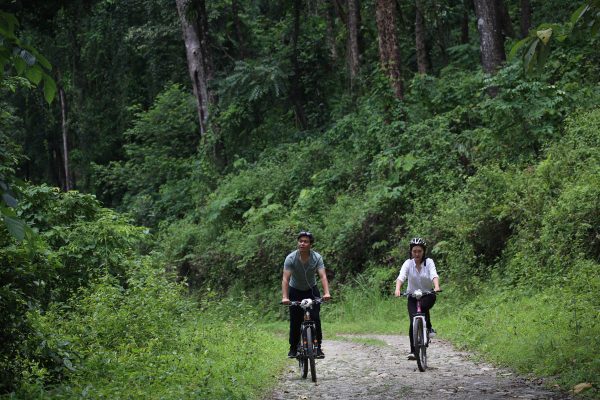
Bhutan Biking - 8 Days
Price on Request
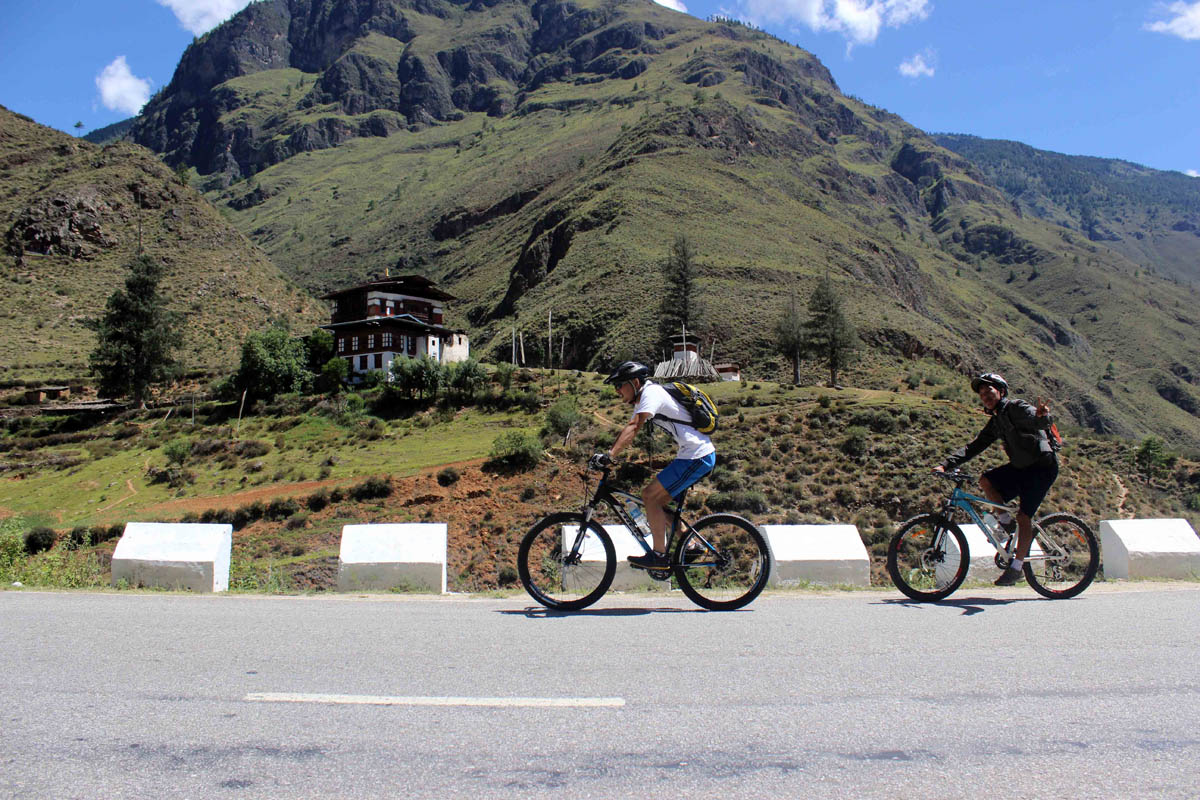
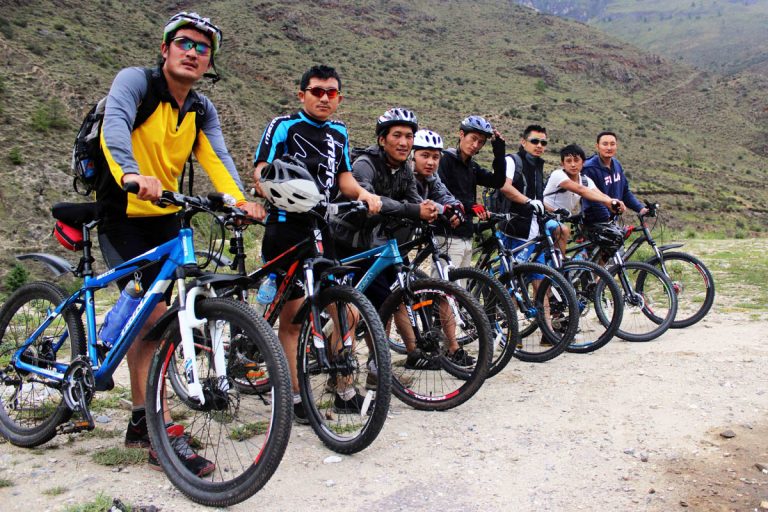
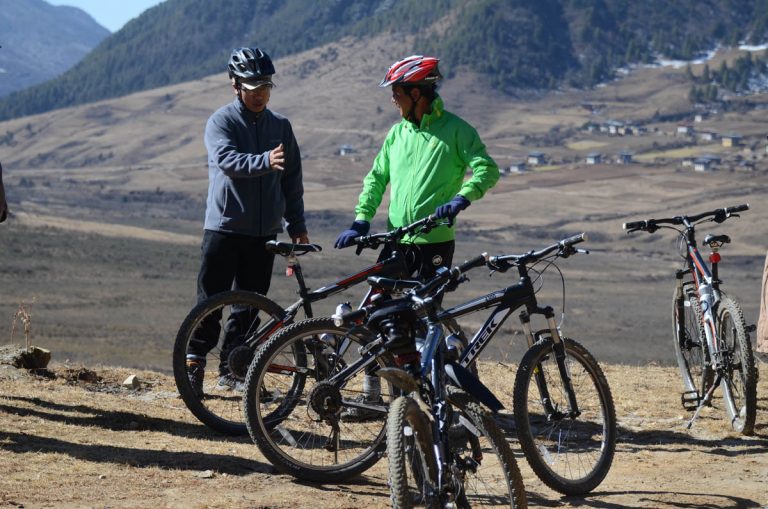
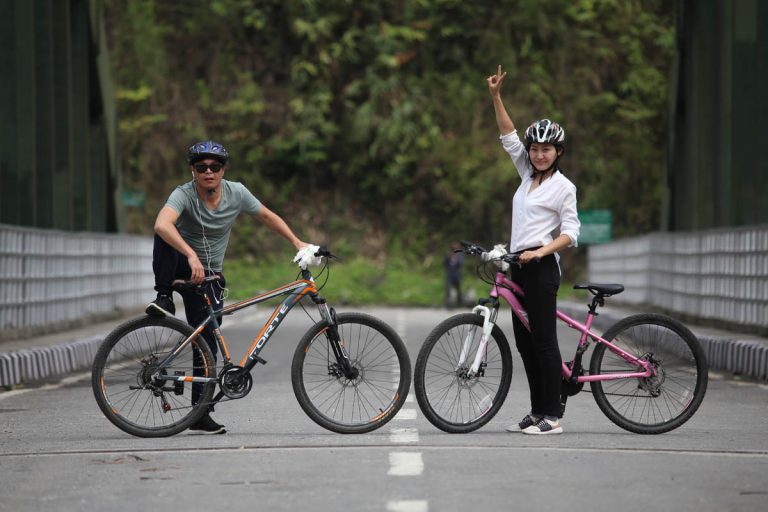
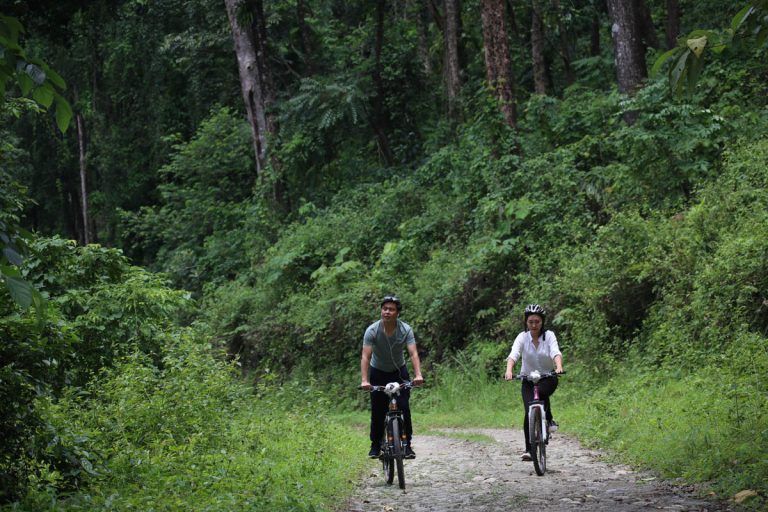
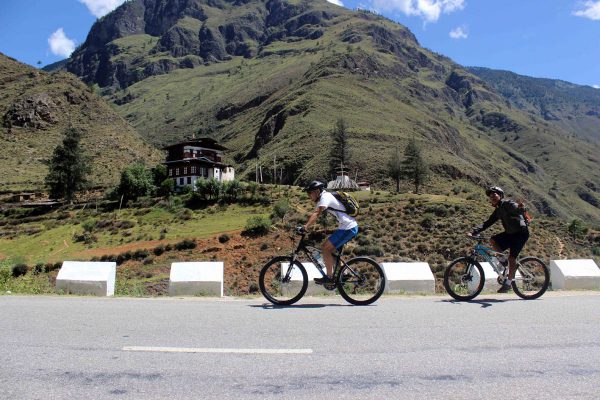
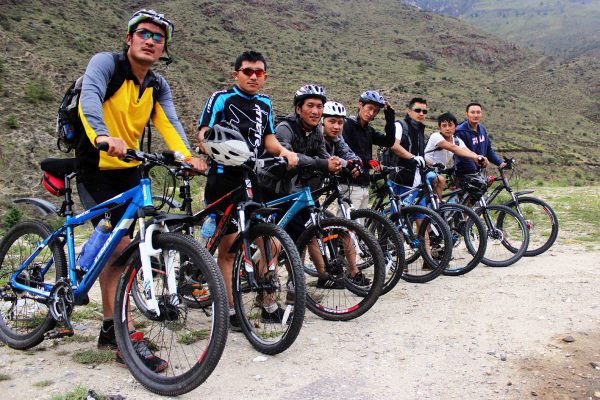
Embark on an unforgettable 8-day Bhutan Cycling Tour through the Land of the Thunder Dragon. Ride across mountain passes, serene valleys, and ancient monasteries while exploring Thimphu, Punakha, and Paro

Trip Highlights
- Scenic cycling adventure through Bhutan’s pristine landscapes and charming valleys
- Explore major destinations like Thimphu, Punakha, Dochula, and Paro on two wheels
- Enjoy breathtaking views from iconic high mountain passes including Dochula Pass (3,100 m/10,171 ft) and Chele La Pass (3,800 m/12,467 ft)
- Experience Bhutan’s living heritage with visits to ancient monasteries, fortress, and dzongs
- Hike to the sacred Taktsang Monastery (Tiger’s Nest) perched above Paro Valley
- Encounter Bhutan’s serene countryside, friendly locals, and vibrant traditions
- Immerse in warm Bhutanese hospitality and culture throughout the tour
- Balanced itinerary combining scenic cycling, cultural immersion, and comfortable stays
Trip Overview
This 8-day Bhutan Cycling Tour takes you on a spectacular journey through one of the world’s most unique Himalayan kingdoms.
You’ll begin in Thimphu, Bhutan’s lively capital, where modern life and monastic traditions blend seamlessly, and then head to the serene valleys of Punakha and Paro where every ride reveals a spectacular side of Bhutan.
Then, you will ride through pine forests and winding mountain roads to Punakha, crossing the spectacular Dochula Pass, blessed by panoramic Himalayan vistas and fluttering prayer flags.
In Punakha, discover the stunning Punakha Dzong and quiet riverside villages before continuing toward Paro, the spiritual heart of Bhutan.
One of the most unforgettable key highlights awaits at Chele La Pass, Bhutan’s highest motorable road. The exhilarating downhill ride from here to Paro offers sweeping views and a pure sense of freedom.
Between cycle rides, there’s time to immerse yourself in local culture by savoring traditional cuisine, meeting respectful monks, and discovering the unique warmth of Bhutanese hospitality.
This Bhutan biking journey concludes with a rewarding hike to the legendary Taktsang (Tiger’s Nest) Monastery, perched dramatically on a Cliffside. A memorable fitting finale to this adventure through the Land of the Thunder Dragon.
Perfect for cycling enthusiasts and active travelers, this tour blends adventure with authenticity, rewarding you not just miles, but once-in-a- lifetime memories in the heart of the Himalayas.
Short Itinerary
Arrive in Paro (2,250 m/7,382 ft) and transfer to Thimphu (2,320 m/7,610 ft). Overnight at Pelyang Boutique or similar-class hotel.
Bike check and warm-up ride to Buddha Point (2,600 m/8,530 ft). Afternoon sightseeing in Thimphu. Overnight at Pelyang Boutique or similar-class hotel.
Ride to Punakha (1,250 m/4,101 ft) via Dochula Pass (3,100 m/10,171 ft) from Thimphu. Overnight at Zhingkham Resort or similar-class hotel.
Sightseeing and riding excursion around Punakha Valley (1,250 m/4,101 ft). Overnight at Zhingkham Resort or similar-class hotel.
Ride to Dochula Pass (3,100 m/10,171 ft) from Punakha, ride downhill to Paro (2,250 m/7,382 ft) from Simtokha and then sightseeing around Paro. Overnight at Tashi Namgay Resort or similar-class hotel.
Morning transfer to Chele La Pass (3,800 m/12,467 ft) and enjoy a thrilling downhill ride to Paro (2,250 m/7,382 ft). Overnight at Tashi Namgay Resort or similar-class hotel.
Full-day excursion to Taktsang Monastery/ Tigers Nest Monastery (3,120 m/10,232 ft) – 20 minutes drive then 5 to 6 hours hike. Overnight at Tashi Namgay Resort or similar-class hotel.
Transfer to Paro International Airport for final departure.
Departures & Availability
Bhutan Biking Tour is organized as a private trip. Fill out the form below, and our team will get in touch with you to plan your trip.
Price Includes
Accommodation
- Standard government-approved 3-star accommodation (in twin-sharing rooms) for the duration of the tour.
Meals and Drinking Water
- Full-board meals – 7 breakfasts, 7 lunches, 7 dinners, and tea & snacks – for the duration of your stay.
- A refreshing light replenishments on the rides
- Unlimited supply of packaged drinking water for the duration of the tour.
Transportation
- All (international and domestic) airport transfers on a tourist vehicle
- Private transportation and a designated driver within Bhutan. SUV vehicles for solo/pairs, Hiace vans for small groups, and Coaster buses for larger groups.
Guide and Staff
- Licensed English-speaking and first aid experienced Bhutanese tour, cycling, and hiking
- Additional or assistant guides are provided for groups over 11 or when special support is needed, such as for senior travelers.
- Guided city tour in Paro by private tourist vehicle.
- The required number of local staff and porters to carry your equipment and luggage during the trip.
- Wages, accommodation, meals, gear, insurance, and medications for all staff
Permits and Fees
- Bhutan visa fees and processing assistance.
- All route access and monument entry permit and fees.
- Monument and museum entrance fees for all sightseeing locations are detailed in the itinerary.
- Government-mandated Sustainable Development Fee of US$100 per person per night.
Benefits and Takeaways
- Country presentation and tour Briefing on the evening of Day 1 with welcome drinks.
- 1 Ace the Himalaya’s duffel/kit bag, sun hat, and Buff (Neck Gaiter) if your flight originates from Kathmandu, Nepal.
- Cycle Rental, Helmets, and Water Bottles facilitated during the tour
Administrative
- All government taxes, official expenses, tourist service charges, and 5% GST
Price Excludes
Bhutan Cycling Tour Itinerary
Expand AllDay 01: Arrive in Paro & Transfer to Thimpu in a private vehicle
You’ll fly into Paro International Airport, Bhutan’s only international gateway, with direct flights from cities like Kathmandu, Bangkok, New Delhi, and Dhaka.
For the smoothest and most scenic experience, we recommend flying Kathmandu–Paro–Kathmandu.
It not only makes logistics easier but also allows us to personally greet you with some necessary travel gear or souvenirs, including a duffle bag, sun hat, and neck gaiter which is yours to keep as part of the journey.
As you soar through the Himalayas, you’ll witness jaw-dropping views of snow-capped giants, including Mount Everest, before landing in the stunning Paro Valley at 2,250 m (7,382 ft).
This fertile region is known for its golden rice fields, apple orchards, and fresh organic produce.
Once you land, our representative will be there to welcome you with a traditional silk khada, a Bhutanese gesture of good luck and warm hospitality. After completing arrival formalities, you’ll embark on a scenic one-hour drive to Thimphu, Bhutan’s charming capital.
The journey follows the Pa Chhu and Wang Chhu rivers, passing terraced rice fields, rustic farmhouses, and lush hillsides, with occasional roadside stupas and prayer flags marking the route.
The sacred river confluence marked by three Buddhist stupas symbolizing a spiritual monument believed to ward off evil spirits
Arriving in Thimphu (2,320 m.7,610 ft), a fascinating blend of tradition and modernity, you’ll quickly notice its unique charm. It’s a capital without traffic lights, where policemen still direct the flow with graceful hand gestures.
Depending on your arrival time, you may explore the lively weekend market, watch an archery match (Bhutan’s national sport), or simply unwind and soak in the peaceful mountain atmosphere.
Day 02: Bike check and warm-up ride to Buddha Point. Afternoon sightseeing in and around Thimphu
This morning, we begin with a visit to the Institute for Zorig Chusum, also known as the Painting School, where students undergo a six-year training in Bhutan’s 13 traditional arts and crafts.
These include sculpture (both statues and masks), calligraphy, mural and scroll painting, woodcarving, pottery, weaving, embroidery, leather and bamboo crafts, carpentry, gold and silver smithing, blacksmithing, casting, and masonry.
It’s a fascinating window into Bhutan’s artistic heritage.
Next, we explore the Folk Heritage Museum, which offers deep insights into Bhutanese rural life, material culture, and ancient domestic traditions.
We then continue to the Institute of Traditional Medicine, where natural remedies are prepared following ancient medical texts and holistic healing practices still in use today.
A visit to the National Library follows, home to an impressive collection of centuries-old Buddhist manuscripts, scriptures, and academic works on Himalayan culture.
One of the key highlights here is Bhutan, the world’s largest published book, created and printed at MIT, USA.
We also visit Bhutan Post, famous for its vibrant and collectible postage stamps. Here, you can browse the display gallery, purchase postcards or souvenir stamps, and even visit the Bhutan National Bank nearby to glimpse the country’s financial system.
We then drive to the Thimphu Viewpoint at Sangaygang, stopping en route to see the Takin Preserve, home to Bhutan’s rare national animal — the takin.
Later, we visit the National Memorial Chorten, one of Thimphu’s most revered landmarks, built in memory of His Majesty King Jigme Dorji Wangchuck, the “Father of Modern Bhutan.”
The monument’s intricate paintings and statues beautifully reflect Buddhist philosophy and serve as a symbol of peace and prosperity.
If it’s a weekend (Friday–Sunday), we’ll stop by the Thimphu Farmers’ Market, where locals from across the country gather to sell fresh produce and household goods.
As the day winds down, we take a leisurely stroll through Thimphu Bazaar, exploring shops and local handicrafts before preparing for our motorcycling adventure.
In the late afternoon, we’ll check and test our bikes, ensuring everything is ready for the upcoming cross-country ride. We’ll also enjoy a short warm-up ride to the Buddha Point (Kuensel Phodrang), home to one of the world’s largest Buddha statues, offering sweeping views of the capital city below.
Day 03: Ride/Cycle to Punakha via Dochula Pass from Thimphu
After breakfast, we begin our scenic ride toward Punakha, crossing the breathtaking Dochula Pass (3,100 m/10,171 ft) , one of Bhutan’s most beautiful mountain passes.
On a clear morning, the pass offers panoramic views of the snow-capped eastern Himalayas, stretching endlessly across the horizon.
We’ll pause at the pass to admire the 108 Druk Wangyal Chortens, built in honor of His Majesty the Fourth King and as a tribute to world peace and prosperity.
The tranquil mountain air, fluttering prayer flags, and serene stupas create an atmosphere of spiritual calm giving us the perfect start to our day’s journey.
From here, the ride continues with a thrilling downhill descent through lush forests into the warmer, subtropical Punakha Valley.
Along the way, we stop at the Royal Botanical Park, home to an array of rare Himalayan flora and fauna, and if it’s the right season, we’ll drop by the wayside farmers market at Lobesa to sample fresh, organic local fruits.
In the afternoon, we enjoy a gentle walk or cycle through charming villages and rice fields to Chimi Lhakhang, also known as the Temple of Fertility.
This temple is dedicated to Drukpa Kuenley, affectionately called the Divine Madman, who is celebrated for his unorthodox teachings and playful spiritual wisdom.
Childless couples from across Bhutan and beyond visit this sacred site to receive blessings for fertility and happiness.
As the day winds down, we continue our journey through the awe-inspiring valley toward Punakha, surrounded by terraced hillsides, farmhouses, and the soothing rhythm of Bhutan’s countryside life.
Day 04: Sightseeing and riding excursion around Punakha Valley
Today unfolds with a perfect blend of cultural immersion and scenic riding through the heart of the Punakha Valley, one of Bhutan’s most serene and historically significant regions.
We begin by riding across a traditional wooden cantilever bridge that leads to the magnificent Punakha Dzong, also known as the Palace of Great Happiness.
Gracefully positioned at the confluence of the Pho Chhu (Male River) and Mo Chhu (Female River), this architectural masterpiece is among Bhutan’s most beautiful fortresses.
Built in 1637, the Dzong once served as the country’s administrative and religious capital, and it remains the winter residence of the Central Monk Body. It was here, in 1907, that Bhutan’s first king was crowned, an event that shaped the nation’s modern history.
Despite being damaged multiple times by fire, floods, and earthquakes, the Dzong has been lovingly restored, showcasing Bhutanese craftsmanship at its finest.
Next, we enjoy an exhilarating ride across Bhutan’s longest suspension bridge, offering breathtaking views of the Punakha River meandering through the valley below. The gentle hum of prayer flags fluttering in the wind makes this a truly spiritual experience.
We then visit a youth-operated handicraft center, an inspiring community initiative that empowers local artisans from underprivileged backgrounds through sustainable craft production.
If the weather allows, we’ll enjoy a picnic lunch by the tranquil riverside, surrounded by the sounds of nature and the peaceful rhythm of rural life.
In the afternoon, we either ride or hike (approx. 1.5-2 hours round trip) to the enchanting Khamsum Yulley Namgyal Chorten, a majestic temple perched high above the valley.
Built to ward off negative forces and promote peace, stability, and harmony, this temple offers sweeping views of the Punakha Valley and the distant Himalayan peaks showcasing Bhutan’s spiritual and natural harmony.
We return to our cozy accommodation by evening, filled with vivid memories of Punakha’s cultural grandeur, natural splendor, and the deep spiritual calm that defines this sacred valley.
Day 05: Drive to Dochula Pass from Punakha then ride downhill to Paro from Simtokha and sightseeing around Paro.
After morning breakfast, we begin our ascent from Punakha, retracing the winding mountain road that leads to the breathtaking Dochula pass.The ride today is among the most challenging yet rewarding sections of the Bhutan Motorcycling Tour.
The climb is steep and thrilling, offering panoramic views of the mist-shrouded valleys and pine forests below. As we gain elevation, the crisp mountain air and prayer flags fluttering against the blue sky make the journey feel almost spiritual.
Our support vehicle will accompany the group throughout the ride, ensuring full safety and assistance whenever needed. Riders can take their time, enjoying frequent photo stops and soaking in the peaceful Himalayan ambiance.
At the summit, the 108 Druk Wangyal Chortens stand proudly against the backdrop of snow-capped Himalayan peaks.
You can also visit the nearby Druk Wangyal Lhakhang, a temple dedicated to Bhutan’s Fourth King, which beautifully depicts Bhutan’s history through intricate murals.
After some rest and relaxation at the pass, we begin an exhilarating downhill ride toward Paro, passing through Simtokha and scenic countryside dotted with prayer wheels, forests, and traditional Bhutanese homes.
Upon arrival in Paro, we enjoy a leisurely sightseeing tour around the charming valley while visiting its vibrant local markets, traditional handicraft shops, and historic landmarks.
By evening, settle into your hotel and unwind, surrounded by the tranquil beauty of Paro’s picturesque lush landscapes.
Day 06: Morning transfer to Chele La Pass and enjoy a thrilling downhill ride to Paro
After breakfast, we gear up for one of the most spectacular rides of the entire journey which is the scenic ascent to Chele La Pass perched at 3,800 m(12,467 ft), Bhutan’s highest motorable road.
The winding mountain route unfolds through pine forests, rhododendron groves, and highland meadows adorned with colorful prayer flags fluttering in the wind.
At the summit, the views are truly breathtaking. On a clear day, you can spot Mount Jomolhari (7,326 m/24,035 ft) and even the distant peaks marking the border with Tibet.
From here, we enjoy a thrilling downhill ride back toward Paro, gliding through the curves and valleys that define Bhutan’s rugged beauty. Upon reaching Paro, we spend the afternoon exploring some of its most iconic cultural landmarks.
Visit the Paro Rinpung Dzong, a majestic fortress built in 1646 by Zhabdrung Ngawang Namgyal. This masterpiece of Bhutanese architecture houses both the monastic body and the district administration.
We take the traditional 15-minute walk across the 16th-century cantilever bridge, offering incredible photo opportunities and a closer look at local life along the riverbanks.
Next, we head to the National Museum (Ta Dzong), once a watchtower, now transformed into a treasure trove of Bhutanese art, bronze works, and historical artifacts. The exhibits here beautifully interpret Bhutan’s rich heritage and deep-rooted spiritual traditions.
As the sun sets, enjoy some free time in Paro town, strolling through its lively streets lined with handicraft shops, cafes, and teahouses.
Day 07: Full-day excursion to Taktsang Monastery/ Tigers Nest Monastery
After an early breakfast, embark on one of Bhutan’s most iconic adventures. The scenic hike to Taktsang Monastery, famously known as the Tiger’s Nest.
This sacred monastery clings dramatically to a 900-meter-high cliff above the Paro Valley, offering both a spiritual and visual spectacle that defines the very essence of Bhutan.
Legend holds that Guru Rinpoche (Padmasambhava) flew to this site on the back of a tigress and meditated in a cave, subduing local demons and sanctifying the land.
The monastery was later built around this holy cave, and though partially damaged by a fire in 1998, it has been lovingly restored to its former glory, remaining a revered pilgrimage site for Bhutanese and travelers alike.
The trail ascends gradually through fragrant pine forests, where the air is alive with the flutter of prayer flags and the murmur of distant waterfalls.
Midway up, you’ll stop for lunch and refreshments at a scenic mountainside cafeteria, where the monastery appears ethereal as if seemingly suspended between heaven and earth.
After descending from Tiger’s Nest, your cultural exploration continues with a visit to Kyichu Lhakhang, one of Bhutan’s oldest and most sacred temples, dating back to the 7th century.
Built by Tibetan King Songtsen Gampo, this serene temple marks the dawn of Buddhism in Bhutan and showcases timeless Bhutanese artistry in its intricate murals and statues.
As evening falls, take a leisurely stroll through Paro town, where cobbled lanes, vibrant handicraft shops, and cozy teahouses invite you to unwind and reflect on your Himalayan journey.
You can either return to your hotel for a well-deserved rest or enjoy the warm atmosphere surrounded by the peaceful charm of the Paro Valley.
Day 08: Transfer to the international airport for your final departure
After a hearty breakfast at your hotel, your immersive Bhutan cycling journey comes to a close as we transfer you to Paro International Airport for your onward flight.
Our friendly representative will assist you with all departure formalities and ensure a smooth check-in process before bidding you with traditional Bhutanese farewell.
Gears and Equipment
All you need to bring for this Bhutan Cycling Tour is simply some comfortable clothes; there is no requirement for special equipment on the tour.
However, for your ease, the following gives you a general idea about the personal items you need to manage for the trip. The personal items referred to here are optional and depend upon your choice.
The most important factor to be considered while choosing the types of equipment and your Bag-pack is the time of the year you are traveling.
In a tour, the vehicle transfers all the heavy items and equipment. But the Personal belongings of the clients which are required at any moment like money, water bottle, camera, sunscreen, and toilet paper, etc. should be carried by yourself.
It is therefore advisable that you pack your personal belongings into your daypack.
If you’re flying from Kathmandu, we’ll provide you with a complimentary, windproof duffel bag for the trip. This bag will be carried by porters or mountain transportation like mules, and horses in high-altitude regions and is yours to keep after the trip.

Riding Kit
- Helmet
- Bike gloves x 3 pairs
- Biking glasses
- Padded cycling shorts (to last at least 5 rides)
- Long-sleeved base layers
- Short-sleeved and long-sleeved cycling tops
- Biking socks (at least 5 pairs)
- Hat and non-biking gloves
- Head torch
If you’re bringing your own bike:
- Brake pads specific to your bike x 2 sets
- Rear mech hanger specific to your bike x 2
- Bottle of dry lube
- Four inner tubes, or spare bottle of fluid for
- tubeless tyres (two for each tyre)
- Quick link to suit your chain
- For 29” wheels bring extra spare tubes; these are more difficult to find in Nepal
Please note: If you’re bringing your own bike, you must make sure that you have it professionally serviced before the trip, and ask your bike shop to use dry lube on your chain.
List of Recommended Equipment
- Duffel or Rucksack bag or suitcase (We will provide one complimentary ACE duffel bag for you to keep.)
- Daypack
- Warm wool or synthetic hat that covers your ears (only if you are travelling in the cold season i.e January, February, and December)
- Goggles or sunglasses for sunbeams, dust, and wind.
- A neck warmer is another piece of gear for extra warmth if you feel you will need it and is for cold season i.e January, February and December. (optional)
- 1 pair warm gloves (This is required if you are travelling in cold season i.e January, February and December).
- T-shirts (2).
- Waterproof (preferably breathable fabric) shell jacket (preferable if you are travelling in rainy season from June to September.)
- 1 pair cotton pants (loose jeans/khakis), 1 pair shorts.
- 2 pairs lightweight long underwear/thermals (if you are traveling in winter January, February, and December).
- 2 pairs of liner socks, synthetic or capilene.
- 1 pair light camping shoes or sneakers.
- 1 pair sandal (Optional).

Medicines and First Aid Kits
(Please note our guide will also carry the first aid kit bag during the trip. However, we still recommend you bring your personal first aid kit as well)
- Extra Strength Excedrin for altitude related headaches.
- Ibuprofen for general aches and pains.
- Immodium or Pepto bismol capsules for upset stomach or diarrhea.
- Diamox (commonly prescribed as Acetazolamide) 125 or 250mg tablets for altitude sickness. Please discuss with us before starting to take this medicine.
- 1 small personal sized first-aid kit with blister treatments such as mole skin, band-aids, some waterproof tape, anti-infection ointments, etc. Your guides will have more extensive medical gear, but you should have the basics for general use.

Other Essentials
- Passport and extra passport photos (4 copies).
- Airline ticket (Please make a copy and leave on at our office in KTM just in case if you need to change the date of your).
- Durable wallet / pouch for travel documents, money & passport.
- Lip balm. At least SPF 20, 2 sticks. A string taped to the stick is helpful; to hang around your neck and some are now being sold with a cord already attached. Handy as it avoids you from having to stop and look for it.
- Sunscreen. SPF 40 is recommended and should be relatively new since it loses its’ effectiveness over time.
- Pocket knife or small Swiss Army type.
- Water purification Iodine tablets or Polar-pure crystals.
- Toiletry kit. Be sure to include toilet paper stored in a plastic bag, hand wipes, and liquid hand sanitizer, towel, soap, etc.
- 2 bandanas.

Optional
- 1 pair adjustable trekking poles. Although these are listed as optional, they can be of great assistance especially when going downhill (Optional).
- Favorite snack foods, no more than 2 pounds (Optional).
- Paperback books, cards, mp3 player (there are a couple of stops where you could recharge. Avoid players with moving hardware as it may not function. Remember, keep these items lightweight (Optional).
- Binoculars (Optional).
- 1 lightweight point-and-shoot camera or 1 large SLR. Digital cameras are ok, but you must keep the batteries warm when not in use (Optional).
- Hydration bladder with drinking tube and tube insulator (Optional).
- A pee bottle for men and a pee funnel for women, some swear by them to avoid that chilly late-night trip (Optional).
- 1 small stainless-steel thermos (Optional).
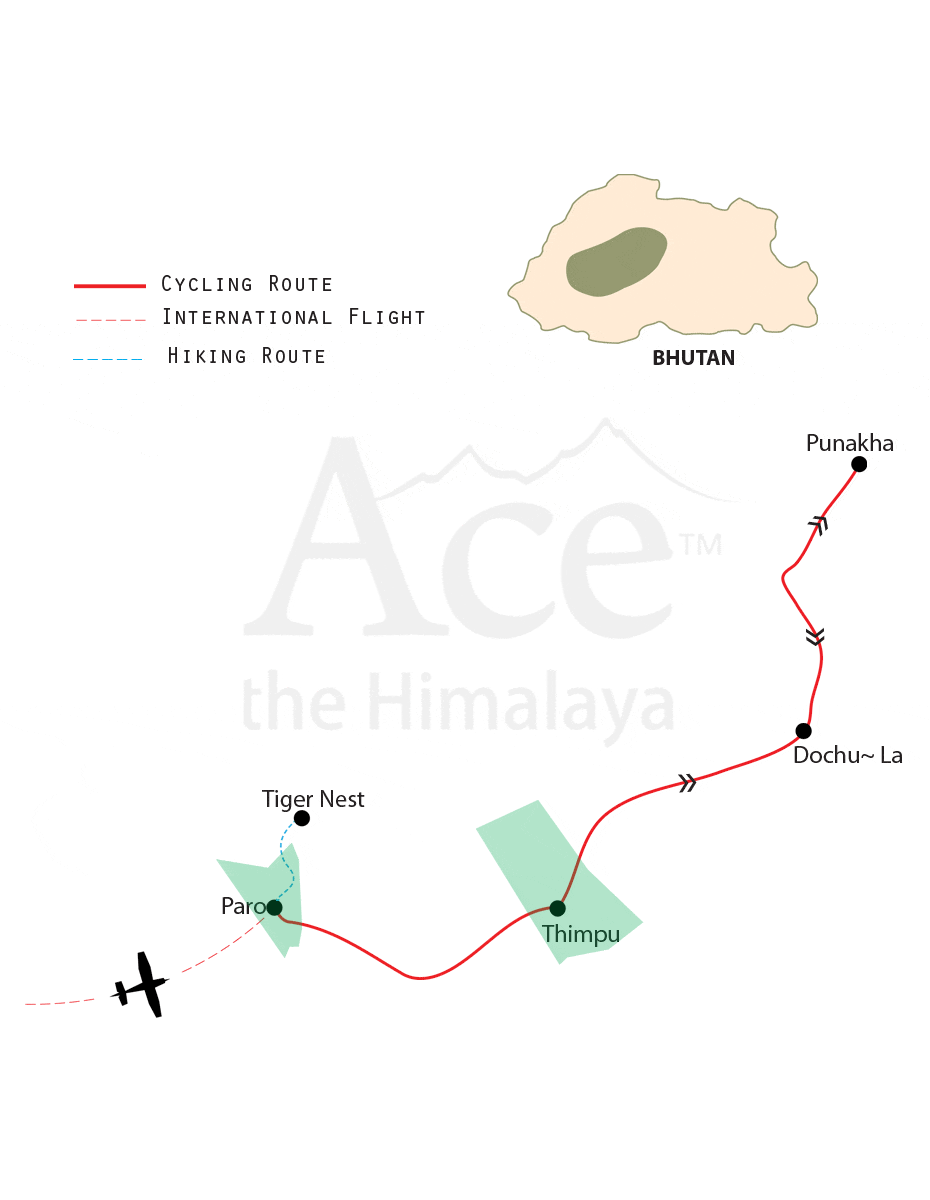
FAQs for Bhutan Biking
General
Is this a guaranteed departure for dates listed on the website?
Yes, this trip offers guaranteed departures on the specified dates. You can view and select available departure dates directly from the booking calendar on our website. Each listed date is confirmed to operate. Furthermore, Bhutan trips must be booked at least one month in advance due to travel regulations and logistics.
Additionally, we provide group discounts based on the size of your group. The larger your group, the more substantial the discount, enhancing your travel experience.
Are Bhutan trips available as group departures or only as private journeys?
Normally, most of the Bhutan trips are private departures, meaning they are organized based on preferred dates, an excellent option for families or friends traveling together.
However, if you’re interested in an open-group departure for Bhutan, please inquire with us at the time of booking.
Why travel with Ace the Himalaya?
Ace has a reputation for successfully leading treks with knowledgeable leaders and staff taking care of all your travel needs. We are a certified sustainable travel company that also endorses the idea of giving back to the community by participating in various philanthropic activities. Here are 18 reasons to hike with Ace the Himalaya.
What essential documents do I need to bring with me on tours?
Here are some documents that you will need to carry with you:
- Valid Passport – must be valid for up to 6 months after you return from your tour (Keep a separate photocopy)
- Travel insurance (Keep a separate photocopy)
- Cash and Traveller’s Cheques (Keep numbers and proof of purchase separately)
- Flight tickets
- Emergency contact numbers for T/C’s, banks, insurance, family contacts
Weather and Temperature
What is the best season for this tour?
The best time for Bhutan Cycling tour is between January to June and between September and December.
What is the weather and temperature like on this tour?
It depends on the season you’re traveling.
During January to February (Winter), days are crisp and sunny, while nights can be quite cold, especially in higher altitudes. Temperatures range between 4°C at night to 20°C during the day.
Between March to June (Spring & Early Summer), one of the most pleasant times to ride. The valleys are lush and green, with daytime temperatures averaging around 22°C to 26°C and cooler mornings and evenings.
While between September to December (Autumn & Early Winter), following the monsoon, skies turn crystal clear and the air fresh, ideal for mountain views and smooth rides. Daytime temperatures range between 18°C to 24°C, dropping to around 6°C to 10°C at night in higher regions.
These months offer clear skies, lush valleys, and comfortable conditions for motorcycling, rafting, hiking, and village walks.
The vehicles and the hotels during the trip will be air-conditioned making your travel very comfortable.
Arrival and Visas
Do I need to obtain VISA for Bhutan?
We will handle the visa procedures for you. The Govt. will sanction the VISA only after the receipt of full payment in advance. The visa fee is included with our tour price. Actual Bhutan VISA will be stamped in your passport on arrival on Paro airport. Without visa clearance number, tourists cannot board the flight or enter the country.
The Ministry of Foreign Affairs forwards a copy of this visa clearance to the concerned Druk Air stations and other entry points; we also fax a copy of the visa clearance document to our clients for their reference. While the actual visa is stamped on arrival, the initial visa clearance is also required at the time of issuing Druk Air Tickets.
All you need is to carry 2 copies of original passport-sized photographs, which are required on arrival in the country. Please e-mail us the clear color copy of the passport for the visa procedures.
Will somebody come to pick me up at the airport upon my arrival?
Yes, our airport representative will be there to greet you at the airport. S/he will be displaying a signboard with your name on it outside the airport terminal. Upon arrival, you will be transferred to your hotel by our tourist vehicle.
Payments and extra costs
How much additional money do I need per day?
It depends on your personal spending habits. In general, all meals, accommodation, and hot drinks are included in the trip price.
You may want to budget around USD 10 to USD 20 per day for additional beverages such as soft drinks, chocolates, or occasional treats.
For personal expenses such as laundry, shopping, bar bills, and tips the amount will vary depending on individual preferences and consumption. These costs are not included in the package and should be planned based on your experience and spending habits.
Can I use credit cards in the places visited on tour?
There are just a few ATM’s in Bhutan for credit cards (Master card / Maestro) & only a few establishments in Bhutan accept credit card payments hence US Dollars (cash or Amex traveler’s cheques) or Euros Cash is suggested and convenient to cover any personal expenses (eg. beverages, laundry, phone bills, tipping, shopping, etc) that the Pax may make in the Kingdom.
1US$ is equivalent to Nu. 84.33 & 1 Euro is equivalent to Nu.95.54 as of today (the day we are writing this text). NU= Ngultrum, the Bhutanese currency.
Who Can Participate?
How fit do I have to be and is this tour for me?
To participate in our Bhutan Biking Trip, you need to be in good health and reasonably fit. Moderate trips are ideal for cycling enthusiasts who enjoy nature and culture, as well as occasional climbs and mud. Some experience is recommended for the this biking trip. There are several ups and downs in this trip as you soar through some the most ancient Bhutanese, popular hilltops with stunning views of the Himalayas, religious sites and serene gardens. Moderate biking trips include a mixture of paved roads, jeep tracks and single tracks.
Do we need to be experienced cyclists for longer tours?
No. The guide will carefully pace the ride to include rest and refreshment along the way. Where available, the support vehicle will accompany you and you can always hitch a ride if you need a break.
Biking Related
What type of bike is required for this trip and what brands are available for hire?
Either hard-tail or full suspension mountain bikes will do fine. In some parts of the routes, you can take downhill shortcuts for which we strongly recommend full suspension bikes. (Your guide will let you know if there are any shortcuts you can take.)
All the brands we provide are properly serviced and fully functional standard hardtail rentals best suited for the trips. We provide full suspension bikes (if preferred by our clients) for an additional charge.
Trek: 3-, 4-, 6- and 8-series
Cube: Comp, LTD, CMPT, Reaction
Giant: ATX, Tralon
Other brands: Capic and V-Ket
Are hired bikes guaranteed for the trip?
Bikes are hired at the time of booking, and are included in the price. The frame size of the bike has to be matched with your height, and since there is a limited number of each size, we strongly suggest you provide us with this information well ahead. In case of any damage incurred to the bike or the equipments, the client will be liable to pay for the repair and/or replacement, depending on the nature of the damage.
What equipment and tools are included with the bike hire?
We provide a helmet, a pump, a spare tube, a water bottle and a repair kit with a rental bike.
What additional equipment is available upon request for an additional cost?
Cycle computer and a GPS unit for USD 2 and USD 5, respectively, per day per person.
Can I bring my own bike and accessories?
You definitely can! It is highly recommended that you have your bike thoroughly serviced before coming on the trip. Spare parts are available in Kathmandu, but may not always be compatible with your bike.
Most airlines are quite used to people travelling with bikes, and if a bike is properly boxed and within the luggage allowance, it is a relatively hassle-free experience. On arrival at your destination you will be met by your leader, and you will just need a baggage trolley to take your bike as far as the transfer vehicle.
Make sure the bikes are properly packed. You may do it yourself (here’s a guide or if you’re not sure, you could have a local bike shop pack it for you).
We take every care to ensure your bike is well treated, but it is normal for a bike to sustain minor scratches, resulting during the daily ride as well as loading and unloading from support/transport vehicles.
What is the procedure of checking in with a bike and what luggage weight allowance do I have?
Your bike is part of your baggage allowance on the plane, details of which are shown on your flight ticket, and maximum weights are usually between 20 and 25 kgs. A boxed bike weighs around 16 kg, so you need to pack carefully. Put heavy items in your hand baggage, wear your heavy/bulky jacket when you check in. Ace the Himalaya will not be liable for any excess baggage charges brought by the airline as a result of your exceeding the baggage allowance, whether you have a hire bike or take your own bike. In practice excess luggage charges are rare for those who pack sensibly, even if you are a little over the specified limit.
Few airlines impose specific standard bike carriage charges. All such charges are beyond our control, and to be paid by the client. Where we know of a bike carriage charge in advance, this will be added to the relevant trip notes. In the unlikely event of any of your luggage and or bike being misplaced or damaged while in the care of the airline, a Property Irregularity Report (PIR) must be filed with the appropriate airline on arrival. This is essential if you subsequently wish to make a claim against the airline or on your travel insurance. This must be done at the airport where your baggage arrived, or should have arrived.
Are there any bike maintenance and repairs while on the trip?
The support vehicle (where available) and the guide will carry the required repair tools and spares. We do recommend you carry some basic tools and spares (like a puncture kit and Allen keys). Our guides are also qualified mechanics and have ample experience maintaining bikes on the trips.
What cycling gear do I need?
Safety and comfort are what you’re looking for here. Here’s a quick list of what you’ll need for the trip:
Cycling helmet (included with the bike rent)
- Touring shoes
- Cycling gloves
- Cycling shorts (1 to 3 pair)
- Socks – wool or synthetic (2 or 3 pair)
- Leg warmers or tights for riding
- Short-sleeved shirts (2)
- Light, long-sleeved shirt for layering and sun protection
- Windcheater, rain gear, jacket and pants
- Waterproof shoe covers
It is recommended that you carry a backpack with your valuables like camera and passport. Panniers are not suitable for the trips.
Can I bring my own saddle and pedals?
Yes. All the bikes are compatible with customized bike parts. The support team accompanying the group will be able help with any bike alterations or damage to the bike along the entire trip. Please inform us in advance if you plan to bring your own saddle and pedals.
Accommodation
What sort of accommodation can I expect in tour?
Accommodation includes a combination of comfortable hotel stays and well-equipped 3-star hotel. In cities like Thimphu and Paro, you are accommodated in a minimum of 3-star deluxe hotels.
Upgrades to 4-star semi-luxury or 5-star luxury hotels can be arranged upon request, with applicable supplement charges.
During overnight at Gangtey you’ll experience the warm hospitality of the locals and gain deeper insight into the rural lifestyle of Bhutan.
What sort of food can I expect in tour?
Most restaurants in Bhutan offer an eclectic mix of Bhutanese, Nepalese, Indian, Chinese, Western, and Continental cuisine, ensuring there’s always plenty to choose from. Local Bhutanese dishes tend to be spicy, similar to Indian cuisine, and provide a rich cultural culinary experience.
Is the water available drinkable? Do I need to bring purifying tablets/filter?
The trip price included the drinking water for the all Bhutan trip. You don’t need to bring any bring purifying tablets/filter or pay for the water.
Are refreshments provided during the ride? Are they brought by the riders or provided by the company?
Yes, we provide tea, coffee, light beverages, and light snacks at regular stops to keep riders energized and hydrated. All refreshments are arranged by the company, so riders don’t need to bring their own.
Will it be possible to get any clothes washed/Laundry ?
Laundry service is easily available at your hotel. Please note that laundry service is not included in the package price.
Can I charge my digital camera or other equipments on my trip?
These facilities will be available in most of the places in your hotel. Remember to bring travel adapters!
Health and Safety
Is Ace the Himalaya's staff insured?
Our company insures all our trekking staff members, including guides, cooks, Sherpa, and porters. Please browse through our legal docment page to view insurance details.
What immunizations will I need?
No vaccinations are compulsory for traveling in Nepal, but we do recommend you are covered for diphtheria & TB, hepatitis A, hepatitis B, *malaria, typhoid, polio, and tetanus.
We also recommend:
- A dental check-up prior to traveling
- Know your blood group in case of an emergency
If you have any pre-existing medical conditions that might affect you on tour, you make these known to your tour leader and Ace the Himalaya at the time of your booking.
Practical Matters
What is your cancellation policy?
Notice should be provided 30 days before the trip start date in case of cancellation. The trip can be canceled with a valid written notice and approval. If the trip is canceled 30 days or more before departure, 30% of the total trip cost will be retained, and the remaining amount will be refunded. If only the 30% deposit has been paid, it is fully non-refundable.
However, the trip amount is entirely non-refundable if the cancellation is made less than 30 days before departure, as per our Terms and Conditions. For submitting a claim to your insurance company after cancellation, we can assist with documentation such as receipts of monies paid. Refunds will not be provided for any unused meals, accommodation, or other services if the trip is not completed.
More information about our cancellation policy can be found here on our Terms and Conditions page.
Do I need to tip my guide and porters? How much would that be?
This is a difficult thing to gauge. We have seen everything from USD 20 to USD 1000 per person for guides and porters. Tipping is not required, but a small gesture of thanks to your guides and local porters thanking and appreciating their help. The level of the tip should reflect the level of satisfaction from and personal involvement with your guide.
When do you provide an assistant guide for group tours?
An additional guide is provided for groups of 12 or more participants. However, we may also assign an assistant guide depending on the age group of the participants (e.g., for senior citizens) or if special assistance is required.
Is the government-mandated Sustainable Development Fee (SDF) of US$100 per person per night still applicable?
All SDF charges are included in your package, so you do not need to pay anything extra.
The government-mandated SDF is US$100 per person per night. Children under 12 years old are eligible for a reduced rate of US$50 per child per night, and there is no SDF charged for children under 5 years of age.
Are there any communication facilities during the trip?
Telephones and Internet and international calls are readily available in most of the town for this trip.
Are there any photography restrictions?
You will have many photo opportunities during the trip. Please ask for permission before taking a person’s photo. Photography in, monasteries, shrine rooms of Dzongs, and religious institutions is generally not permitted, but outdoor photography is.
To be sure when visiting such places, you may consult with your guide just to make sure. Carry plenty of films and batteries. Photo shops in Bhutan do not sell equipment or accessories.
Can I add extra days to my trip?
No, because we can’t change your Druk air flight once it is booked.
Is there a minimum and a maximum number for your groups?
We cater to all group sizes, while maintaining the field staff ratio to give you the best quality and experience.
Transportation and flights
Do we book our international flights and Druk air flights?
Yes, you will need to book your international flights (to/from Asia, Europe, or other continents) independently. We are a local agent, and booking international flights through us could result in higher costs.
However, Druk Air and Bhutan Airlines are the only two airlines that operate flights to and from Bhutan (Paro International Airport).
We can assist you with booking Druk Air flights to and from Bhutan and will email you the e-tickets once booked.
Please note:
- Druk Air flights are not included in the trip price.
- Flight fares vary depending on route, season, and forex rates.
We recommend flying from Kathmandu, Nepal, for a seamless transfer and smooth operations. This route also allows us to provide you with convenient service and necessary takeaways such as a duffle bag, sun hat, and neck gaiter which are yours to keep after the trip.
Approximate Druk Air Roundtrip Fares (Economy/Business Class):
- Kathmandu – Paro – Kathmandu: US$500 / US$770
- Bangkok – Paro – Kathmandu: US$850 / US$1,275
- Bangkok – Paro – Bangkok: US$1,000 / US$1,470
- New Delhi – Paro – New Delhi: US$650 / US$1,070
- Kolkata – Paro – Kolkata: US$500 / US$700
- Bangkok – Paro – New Delhi: US$1,050 / US$1,500
- Dubai – Paro – Dubai: US$1,550 / US$2,650
Note: Please note that the airfares fluctuate slightly every day in accordance with the forex rates
How often does Druk Air operate flights, and what is the schedule like for major routes?
Druk Air operates regular flights on several international routes, with daily flights between Kathmandu–Paro–Kathmandu and Bangkok–Paro–Bangkok.
The frequency of flights in other sectors such as Bangkok–Paro–Kathmandu, New Delhi–Paro–New Delhi, Kolkata–Paro–Kolkata, and Dubai–Paro–Dubai varies depending on the season, airport slot availability, and flight clearance at respective international airports.
It’s best to check the updated flight schedule closer to your travel date for accurate availability.
That’s why we recommend flying from Kathmandu, Nepal, for a seamless transfer and smooth operations, as this route offers the most consistent and convenient service for travelers heading to Bhutan.
What mode of transportation do you use?
At Ace the Himalaya, we prioritize comfort, safety, and an authentic local experience. All transportation used on our tours is private and exclusive to our guests, we do not use public transport.
For solo travelers and pairs, we provide private vehicles to ensure a personalized and comfortable journey. Smaller groups typically travel in well-maintained Toyota Hiace or Hyundai minibuses, while larger groups are accommodated in spacious Toyota Coaster buses.
During sightseeing, city tours, and airport transfers, we use reliable tourist vehicles. For more rugged routes and remote Himalayan regions, we deploy sturdy 4WD SUVs as support vehicles to enhance safety and comfort.
This variety of transportation ensures a smooth and enjoyable travel experience across diverse terrains.
During road cycling or mountain biking rides, which cycles are used, and what are their features?
We use a mix of Trek Marlins, Marin Bobcats, Cannondale CX3, and Kona Lava Dome mountain bikes for our cycling and mountain biking segments.
These are high-performance bikes designed for both comfort and durability on Bhutan’s varied terrains.
Our fleet consists of 25 well-maintained cycles equipped with lightweight alloy frames, hydraulic disc brakes, and reliable suspension systems which are ideal for both smooth roads and rugged trails.
Each bike is regularly serviced to ensure safety and optimal performance throughout the journey.
Are there any weight restrictions on Druk air flights?
Yes, Druk Air has luggage weight restrictions based on your class of travel. Passengers in Economy Class are allowed up to 30 kg, while those in Business Class can carry up to 40 kg of checked baggage.
If your luggage exceeds the permitted limit, excess baggage charges apply at a rate of USD 5 per kilogram. It’s advisable to pack accordingly to avoid additional costs at the airport.
I want to extend my holiday, any recommendations?
Yes, you can extend your holiday. Ace the Himalaya offers many options and alternatives for your holiday extension. For more information, you can visit our Day trips pages.
Traveler Reviews
These full and frank reviews are from travelers who have traveled with Ace the Himalaya previously. The reviews and experiences shown here are from reputable travel websites like TripAdvisor & Google.





 Google Reviews


What makes this trip different ?

Our CSI with Sambhav Nepal
Ace the Himalaya supports the communities that make tourism in Nepal possible. Since 2007, we have partnered with Sambhav Nepal a local NGO, founded by our MD & CEO Prem Khatry, supporting education, health, women’s empowerment, disaster relief, and community volunteer programs.
Sambhav Nepal Major Works (Till October 2026)
- Supported 25,000+ students in Gorkha District community schools with winter clothing, school bags, and other supplies.
- Established and supported 10 health laboratories, benefiting 230,000+ people.
- Empowered 8,000+ women through cultural promotion and livelihood development projects.
- Provided 13 ambulances and served as a frontline responder during the 2015 earthquake, COVID-19, floods, landslides, and other disasters.
- Supported 34+ students in pursuing PCL-level higher education.
- Built or supported 75+ houses for earthquake-affected households, and rebuilt school buildings and hostels benefiting 4,500+ students.

Sustainability and Responsible Tourism
- Ace the Himalaya is one of the few Travelife Certified companies in Nepal. Our treks are socially and environmentally conscious, leaving the lowest possible impact in the Himalayas.
- On most of our treks, we provide filtered water wherever running water is available, helping reduce single-use plastic bottle waste in the mountains.
- Trekkers are given garbage bags during treks to carry out their waste and keep the trails clean.
- About 80% of our staff are natives of the regions where our trips are organized. This helps local communities, supports small businesses, and promotes regional culture and ways of life.