


Nepal has long been shaped by ancient pagodas, timeless shrines, and heritage that speaks to a very old civilization.
But beyond its monuments, Nepal’s deeper story is how it has historically acted as a meeting point, linking the warm lowlands of India with the high, arid regions beyond the Himalayas in Inner Asia.
Among the many sacred sites across the country, Muktinath Temple in Nepal stands as a powerful symbol of harmony between Hindu and Buddhist traditions.
Located in the Mustang district, the temple is popularly known for its unique spiritual identity where two faiths coexist in devotion and respect.
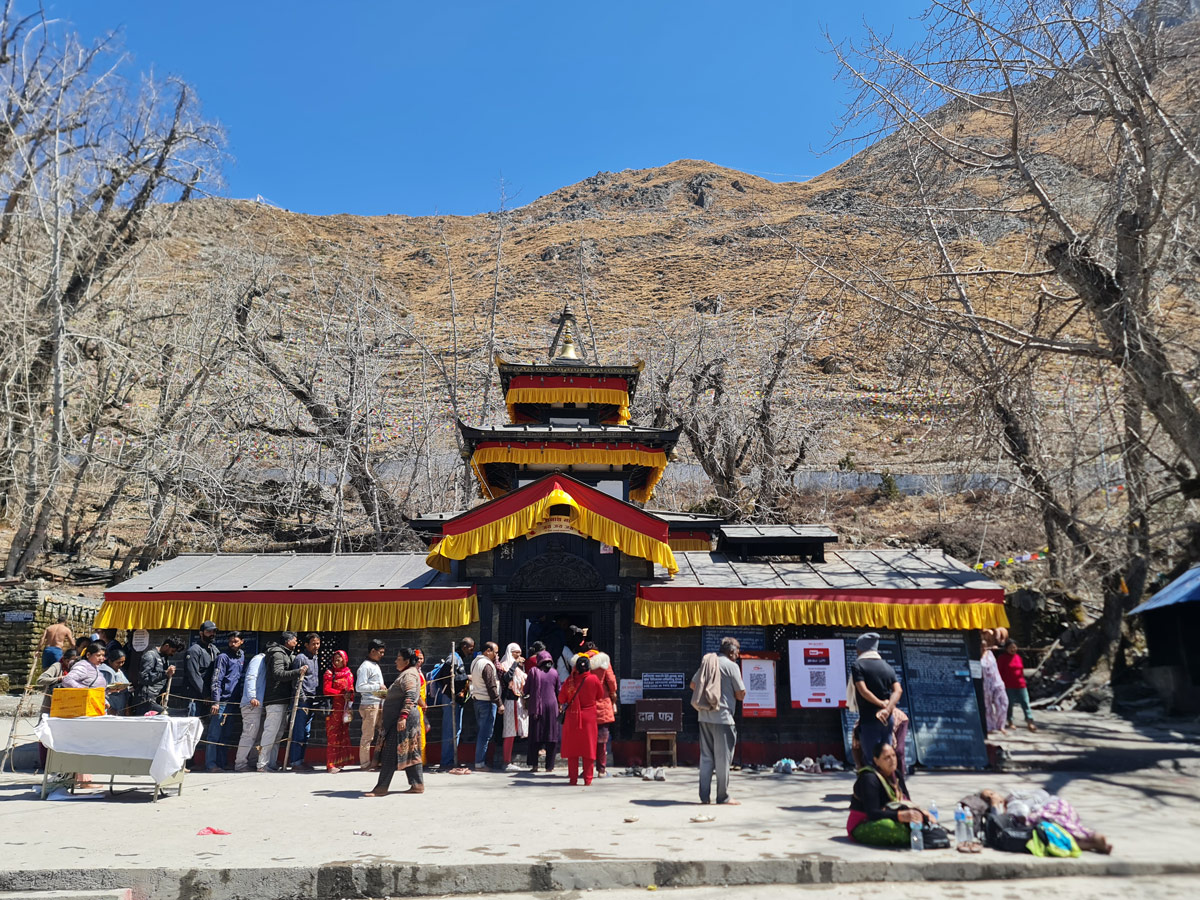
Built in pagoda style and traditionally believed to have been rebuilt or restored around 1815 AD under Queen Subarna Prabha Devi, the temple remains one of the most significant high-altitude pilgrimage destinations in the Himalayas.
Whether you arrive with prayer on your lips or curiosity in your heart, Muktinath has a way of slowing you down. The air is thinner, the silence is deeper, and the experience stays with you long after you leave.
Let’s dive into the facts what makes Muktinath special and sacred Himalayan sanctuary of liberation.
What does Muktinath mean?
Mukti, which means freedom or salvation from the cycle of birth and rebirth, and Nath, which means lord or master, combine to form the Sanskrit word Muktinath. Thus, the literal meaning of Muktinath is “Lord of Liberation.”
The name has deep spiritual significance in both Buddhism and Hinduism because devotees believe that worshipping at this sacred location helps them achieve spiritual freedom and liberation (moksha).
Muktinath is one of the most important spiritual destinations in Nepal, a revered pilgrimage site for both Hindu and Buddhist traditions.
It is famous for its peaceful temple complex, high-altitude setting, and sacred elements that symbolize purification and liberation.
The 108 waterspouts (Muktidhara) represent purification and renewal for pilgrims, while the eternal flame at Jwala Mai adds a powerful sense of mystery and devotion, fire and water existing side by side in the high Himalayas.
In many ways, Muktinath quietly reflects Nepal’s historic role: connecting cultures, welcoming different identities, and standing as a shared spiritual “crossroads” between the southern plains and the highlands leading toward Tibet.
Where is Muktinath Temple located?
Nestled at an altitude of 3,760 meters (12,336 feet), Mustang District of Nepal, the Muktinath Valley, close to the trail that links Manang to Mustang via Thorong La Pass i.e. Annapurna Circuit trek.
This high altitude is part of what gives the place its unique feeling, crisp air, wide valleys, dry landscapes, and strong mountain winds.
It also means you should take your time, especially if you’re coming from lower elevations.
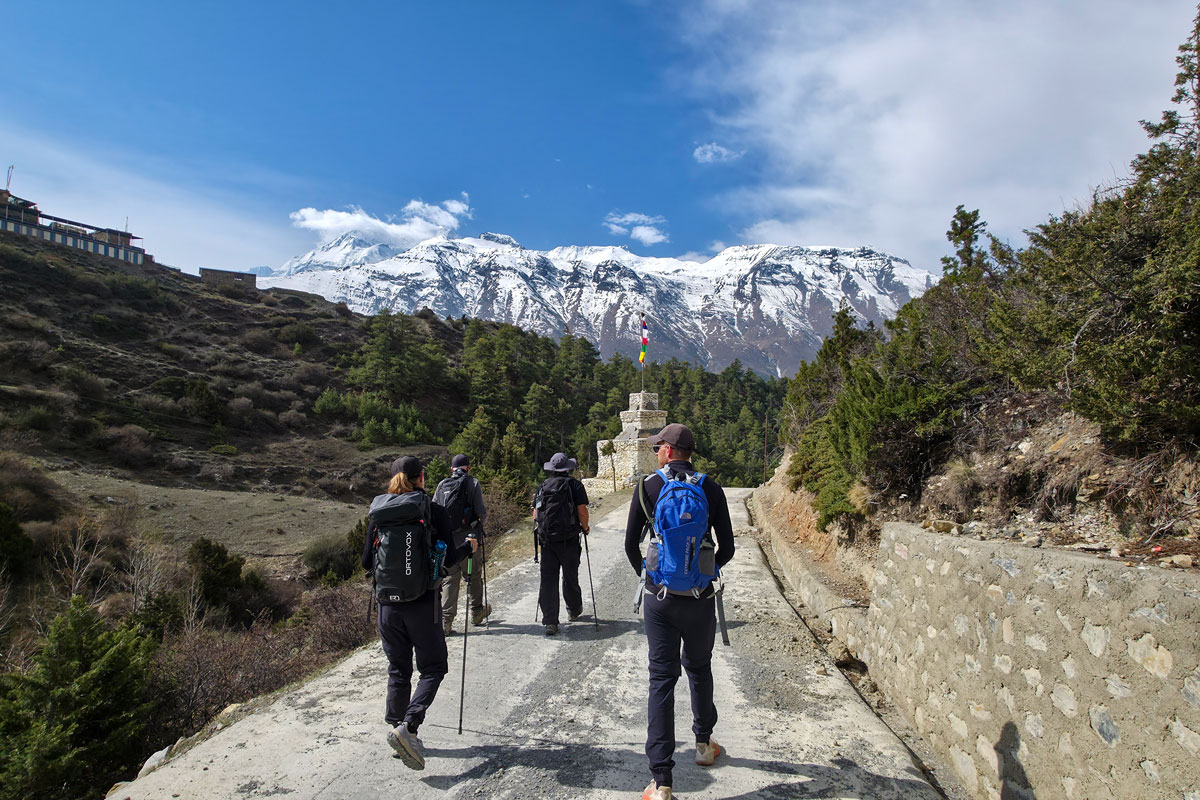
Many trekkers reach Muktinath right after crossing Thorong La on the classic Annapurna Circuit (anti-clockwise) route.
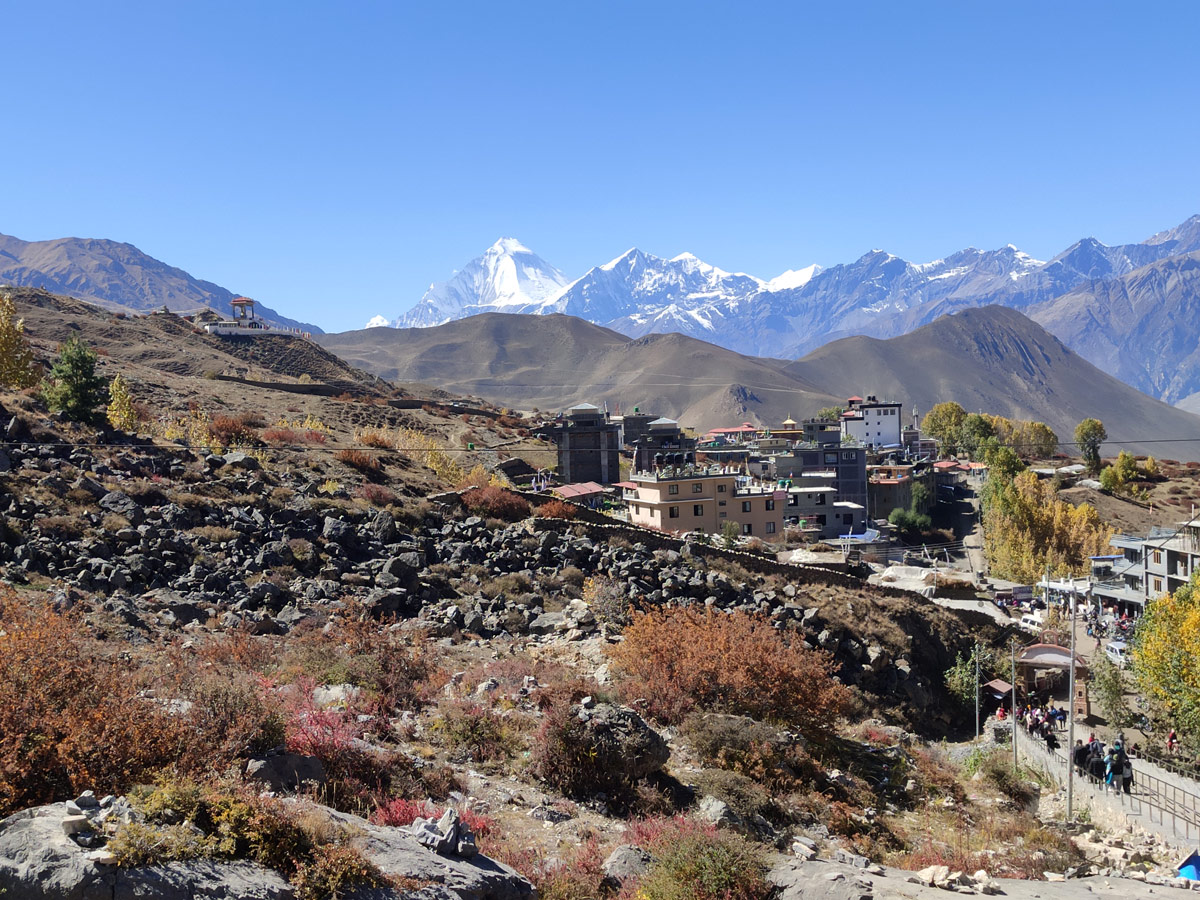
The nearby settlement you’ll hear about most is Ranipauwa (the main base for lodges, teahouses, small shops, and transport). In simple terms, you sleep in Ranipauwa, and you walk to the temple complex.
Journey to Muktinath
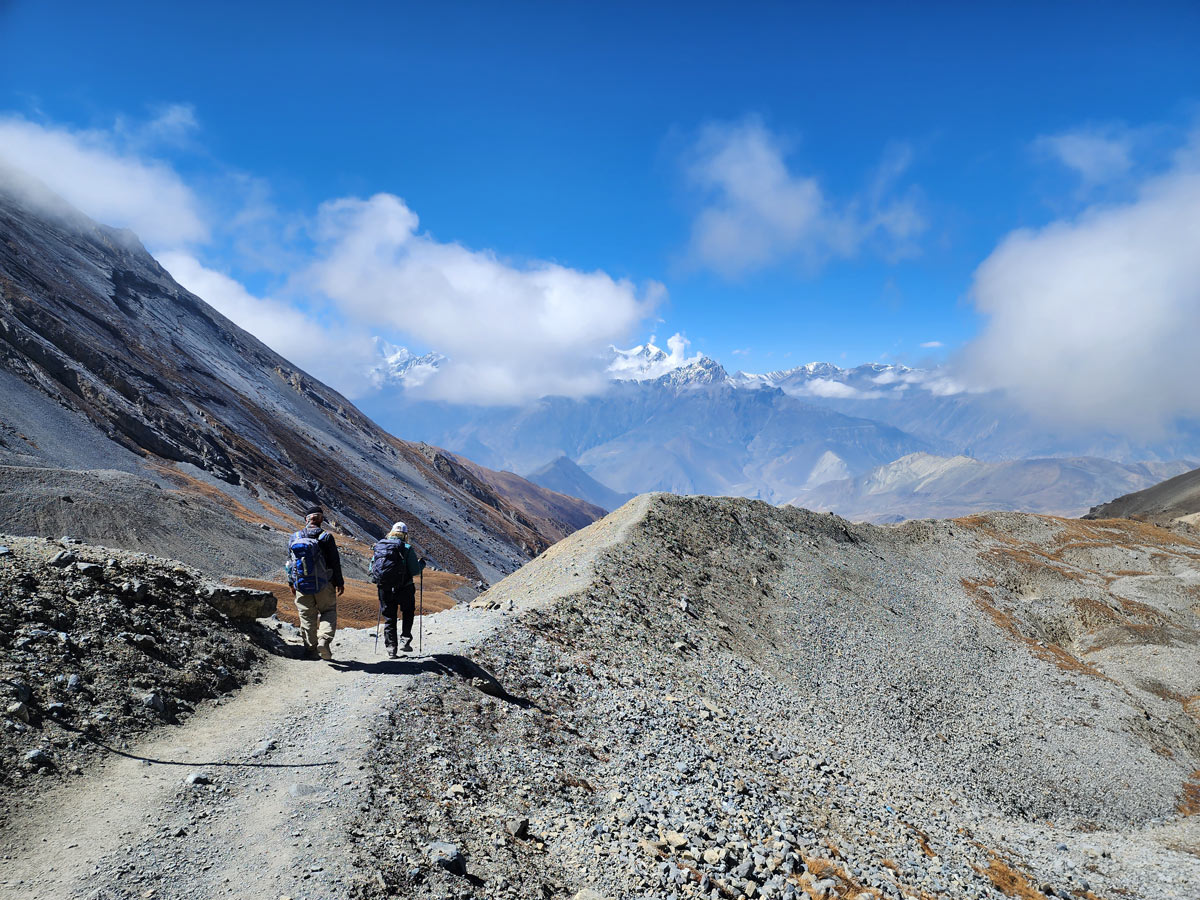
Muktinath is accessible not only through the classic Annapurna circuit trail after crossing Thorong La Pass, but also there are other routes that takes you straight to the destination. It’s a meaningful stop for pilgrims and trekkers alike.
If you decide to take a vehicle route, you arrive by road through Pokhara crossing serene stops like Beni, Myagdi, Tatopani, Lete, Marpha, Jomsom, and Kagbeni. You can reach the destination in a day to final check point “Ranipauwa”.
Or else you can decide and choose to fly from Pokhara to Jomsom which is around 68-70 km long. The flights typically take around 20-30 minutes depending on the weather.
Most of the flights usually take early morning avoiding strong Himalayan winds. Airlines such as Tara Air, Summit Air, and Sita Air regularly serve this route.
For international travelers, fares typically fall around USD $100–$160, while Nepali citizens usually pay a lower local rate.
Muktinath, a sacred sanctuary above the clouds
Whether you continue onward or reach the temple on foot after days in the mountains, on bus, or via flight, the experience often settles into you like a quiet blessing offering a deep sense of calm, gratitude, and renewal.
That’s the feeling that makes Muktinath unforgettable.
High in Mustang’s wind-swept valley, this sacred sanctuary feels as if it’s perched above the clouds, framed by stark trans-Himalayan terrain and far-off snow peaks.
Pilgrims arrive carrying prayers. Trekkers arrive with tired legs and wide, grateful eyes. And almost everyone leaves with the same thought echoing softly inside: something here is truly different.
Muktinath Elevation
Muktinath sits at an elevation of approximately 3,760 meters (12,336 feet) above sea level in Nepal’s Mustang district. This high-altitude setting is one of the defining features of the temple, giving it a unique spiritual and natural atmosphere.
Because of its elevation, the air is thinner and noticeably cooler than in lower regions like Pokhara or Kathmandu. Visitors often feel the crisp mountain breeze, intense sunlight, and wide-open Himalayan skies that make the experience even more memorable.
The high elevation also places Muktinath within the trans-Himalayan rain-shadow zone. This means the surrounding landscape is dry and desert-like, contrasting dramatically with the snow-covered peaks of the Annapurna and Dhaulagiri ranges visible on clear days.
Significance for Hindus and Buddhists
What makes Muktinath truly unique is its shared sacred value for two major faiths.
Either trekkers or travelers and Hindus or Buddhists, Muktinath is a major pilgrimage destination for visitors from across Nepal along with those who complete the Annapurna circuit trek.
For Hindus
Muktinath is deeply connected to Lord Vishnu often worshipped here as Mukti Narayan. Many devotees believe that praying here brings spiritual liberation and removes obstacles from life’s path.
That’s why you’ll see pilgrimages traveling long distances often with family to offer prayers, light lamps, and take ritual baths.
For Buddhists
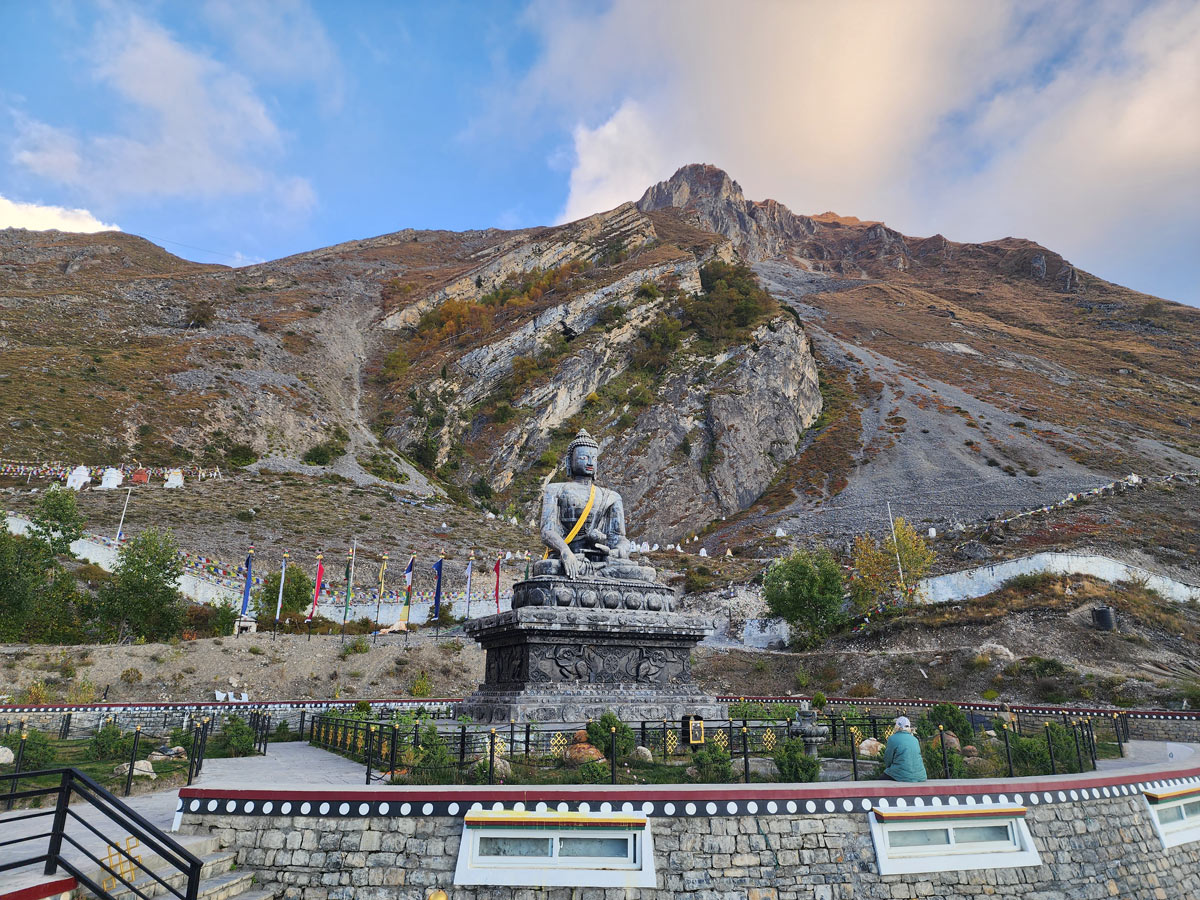
For Buddhists, Muktinath is also sacred and is associated with Avalokiteshvara often known as Chenrezig.
The natural elements here, water, fire, wind, and earth, are seen as powerful manifestations of spiritual truth and compassion.
This shared reverence gives the site a rare harmony. You’ll see different rituals happening side by side, without conflict, just devotion, respect, and quiet focus.
Major Attractions at Muktinath
Muktinath is one of those rare places where your experience depends on how you arrive. More than anything, Muktinath’s magic lives in its symbols, atmosphere, and dramatic Himalayan setting.
Here are the main attractions you shouldn’t miss:
The Main Muktinath Temple
At the heart of the complex is the Muktinath Temple, dedicated to Lord Vishnu and revered across traditions. It’s famous for its ancient, high in the Himalayas, and deeply tied to the idea of liberation and renewal.
The shrine area is simple, peaceful, and grounded. Prayer flags flutter overhead, bells ring softly, and monks, priests, and pilgrims move with intention.
Tip: For a quieter visit, arrive early morning or go later in the late afternoon when group tours thin out.
The 108 Water Spouts (Muktidhara)
One of Muktinath’s most iconic sights is Muktidhara, a curved row of 108 water spouts where many pilgrims take a ritual bath as a symbol of purification.
The tradition is simple however intense. Pilgrims step under each spout one after another, letting the icy water wash over them. At this altitude, the water is freezing and the air is thin, yet many people still perform for cleansing, devotion, and renewal.
Even if you don’t take the bath yourself, watching this ritual respectfully is unforgettable. It’s one of the most genuine and powerful scenes you’ll witness in the Himalayas.
The Eternal Flame at Jwala Mai Temple
A short walk from the main temple area is Jwala Mai, famous for a natural flame that burns continuously, often described as fuelled by natural gas. What makes this place feel almost magical is the symbolism: fire and water appear close together, two opposing elements sharing the same sacred space.
Narsingh Gompa (Narsingh Monastery)
If you want a quieter, more intimate spiritual stop, visit Narsingh Gompa, located on the northern side of the Muktinath temple area. In local Buddhist tradition, it is often called the “Temple of 1,000 Lamps.”
This monastery is a powerful reminder of Mustang’s layered identity, a Buddhist spiritual space that also connects with Hindu interpretations of the region’s sacredness.
Mountain View Spot: A Stunning Himalayan Panorama
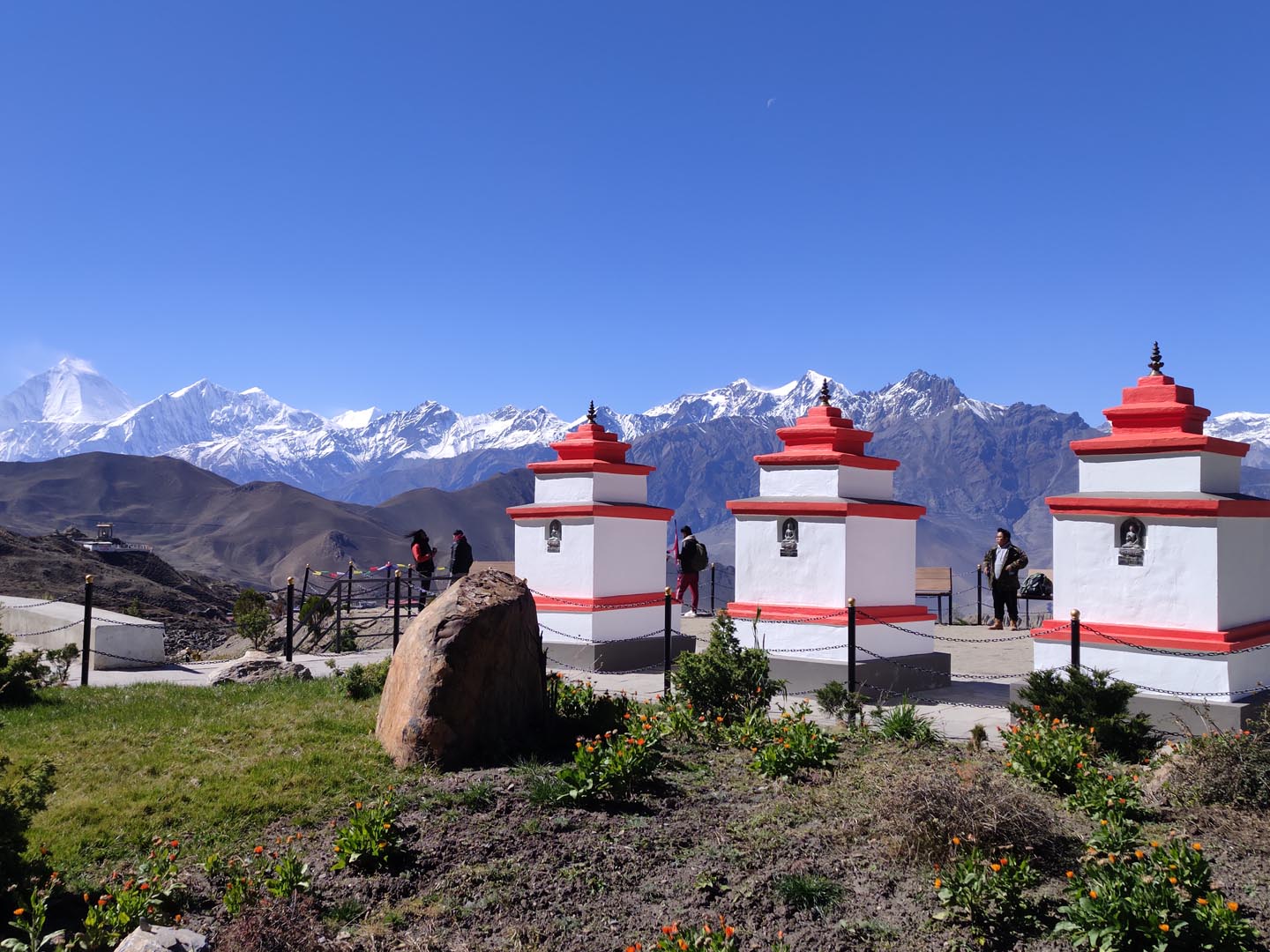
Beyond the sacred sites, Muktinath Temple also rewards you with views that feel unreal. The area around the temple offers natural viewpoints where you can pause, breathe, and simply look.
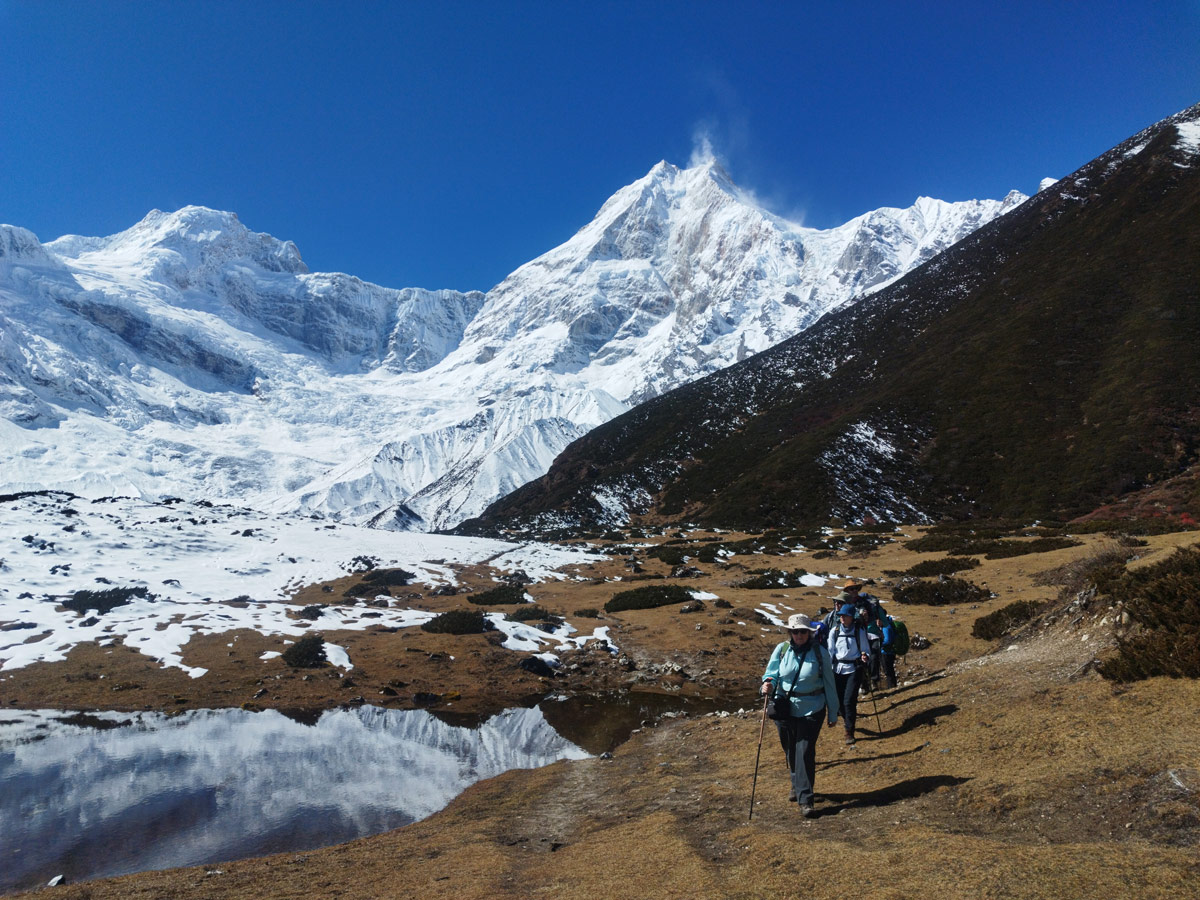
On a clear day, you’ll witness a stunning Himalayan panorama, with the mighty Dhaulagiri and Annapurna ranges rising like white walls against the sky.
From the temple area and nearby viewpoints around Muktinath/Ranipauwa, clear days often reveal a dramatic Himalayan skyline, most notably Dhaulagiri I (8,167 m/26,795 ft) towering to the west, with several giants of the Annapurna range including Annapurna I (8,091 m/26,545 ft) along with Nilgiri North (7,061 m/23,166 ft).
The contrast is striking as you can witness snowy peaks above, dry valleys below, and prayer flags fluttering right in between. This is one of the best places in Mustang to experience the Himalayas without needing a long trek to a high pass.
Panoramic Views of the Trans-Himalayan Arid Desert
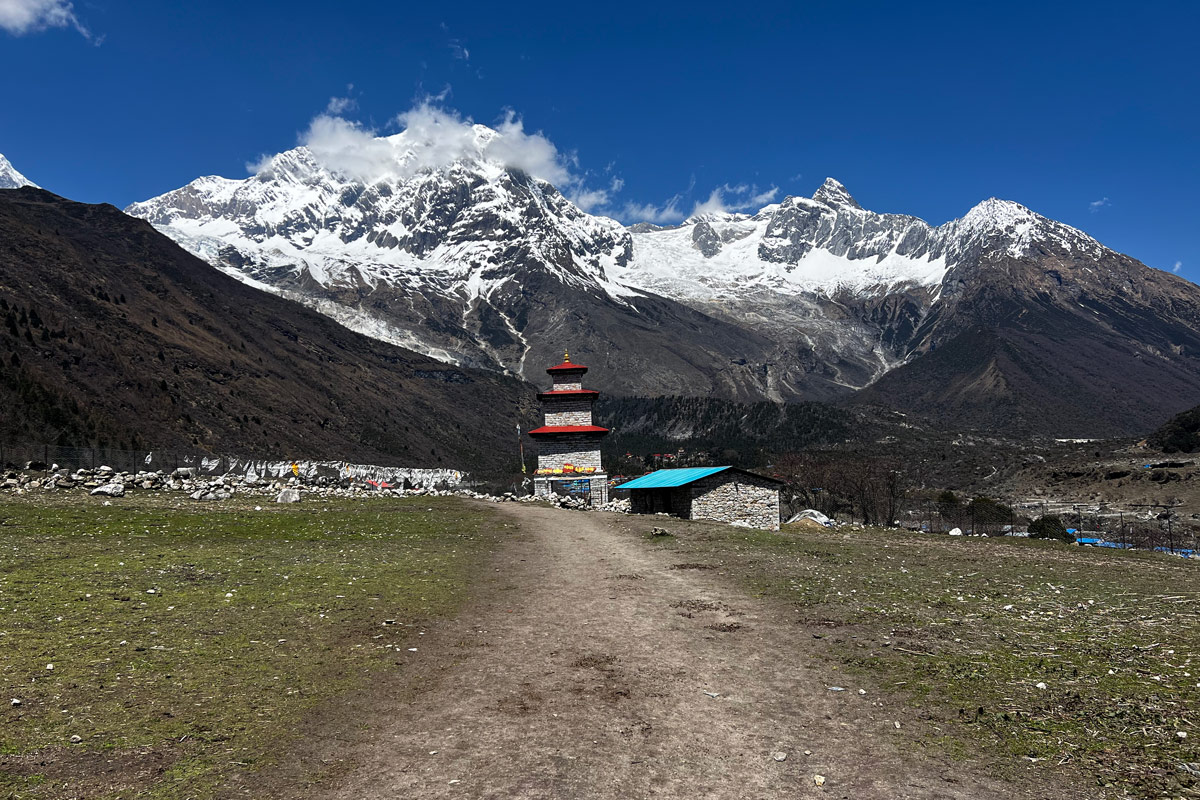
Muktinath sits in the rain-shadow zone, so the landscape around it feels almost desert-like. This is where Mustang becomes visually unique, a blend of rugged brown cliffs, wide open valleys, and wind-carved terrain that looks like another planet.
From the hills around Ranipauwa and the temple pathways, you can enjoy panoramic views of the trans-Himalayan arid desert, stretching far into Mustang’s dry valley systems.
It’s raw, dramatic, and incredibly photogenic, especially at sunrise and late afternoon when the light turns the mountains golden.
Photographer’s Paradise: Desert and Mountains in One Frame
This richnessthe blend of desert textures and Himalayan giants, makes Muktinath a true photographer’s paradise, whether you shoot with a camera or just a phone.
Few places in Nepal offer such a powerful contrast in one frame such as ancient temple courtyards and fluttering prayer flags, desert-toned hills and empty wide valleys, sharp sunlight, deep shadows, and crisp mountain air, and snowy peaks of Annapurna and Dhaulagiri in the background
The “Altitude Experience” in a Single Day
Muktinath also gives many travelers a rare experience where you can feel the high-altitude Himalayan world in a single day.
Because the region is accessible by road and short flights to Jomsom, people often go from lower elevations to around 3,760m relatively quickly. The result is unforgettable blend of thin air, brighter skies, sharper winds, and that distinct feeling of standing in a place that feels both close to the mountains and close to the heavens.
Amenities Available near Muktinath Temple
You won’t find accommodation inside the temple complex, but the nearby base area makes visiting practical.
Accommodation
Most travelers stay in Ranipauwa, where you’ll find teahouses and small lodges ranging from basic to comfortable with common dining spaces. The rooms can be available in private or dormitory based style along with private or shared bathroom spaces.
Food
Since Ranipauwa is well facilitated with road sections so, the places can offer unique Nepali and multi cuisine items on your needs and preferences.
Teahouses or hotels typically serve filling meals such as dal bhat, noodles, soups, momo, pasta, burgers, sandwiches, tea and coffee, along with a variety of Western options depending on the season and availability of supplies.
Connectivity and Essentials
The region has Wi-Fi and basic internet access, and you’ll usually find essential supplies, small local shops, and transport options close by, making it easy to pick up last-minute necessities or arrange onward travel.
Preparation Required for Muktinath
Visiting Muktinath (3,760 m/12,336 ft) is easier than many high-Himalayan destination especially if you go by road or via Jomsom but it’s still a high-altitude, windy, and dry place.
A little preparation helps you enjoy the temple experience, the viewpoints, and the Mustang landscape comfortably and smoothly.
Best Time to Visit Muktinath
The main thing to keep in mind while visiting Muktinath is choosing the right season.
You want clear skies for the Himalayan panorama and comfortable conditions for walking around the temple complex without battling heavy rain, dust storms, or extreme cold.
The best time to visit Muktinath is during Spring (March to May) and Autumn (September to November). These months usually offer:
- clearer mountain views (Annapurna, Dhaulagiri, Nilgiri)
- stable weather for travel via Jomsom and Mustang
- pleasant daytime temperatures, though mornings and evenings remain cold
- better road and flight reliability compared to monsoon season
Winter (December to February) can be beautiful and quieter, but it’s much colder, and snow or strong winds may affect access. Monsoon (June to August) often brings cloud cover, rain disruptions, and less predictable travel, especially for flights.
Precautions to take while Visiting Muktinath
Visiting Muktinath is a beautiful and rewarding experience, and a little preparation will help you enjoy it comfortably. Since the temple is located at over 3,700 meters above sea level, it’s important to be mindful of the altitude.
At this elevation, some visitors may notice:
- Shortness of breath
- Mild headache
- Fatigue
- Reduced appetite
- Slightly disturbed sleep
These are normal responses to higher altitudes and usually improve with proper care.
If you’ve trekked gradually, such as along the Annapurna Circuit, your body typically adjusts naturally. However, if you arrive quickly by road or flight, take your time walking around, stay well hydrated, eat light and regular meals, and allow your body time to adapt.
Move at a steady pace, rest when needed, and listen to your body. With simple awareness and preparation, your visit to Muktinath can be both safe and deeply fulfilling.
Packing Essentials for Muktinath Temple Visit
What you carry can make a big difference, Muktinath is known for strong winds, bright sun, and sudden temperature drops, even on a sunny day making it unpredictable and thrillingly exciting too.
Here are the essentials that you need dirng the visit to Muktinath:
- Warm layers (base layer + fleece + insulated jacket)
- Windproof outer layer (a must in Mustang)
- Comfortable walking shoes/trekking boots (warm socks too)
- Gloves and a beanie (early morning visits are cold)
- Sunglasses + sunscreen + lip balm (high UV + dry air)
- Reusable water bottle + hydration salts (optional)
- Basic first-aid + altitude support (pain relief, Diamox if prescribed)
- Power bank (charging can be limited)
- Cash in small notes (ATMs aren’t reliable in remote areas)
- Scarf or buff (helps with wind and dust)
Tips for Visiting Muktinath
- Respect the altitude: Even if you arrive by jeep, you’re still at 3,760m. Walk slowly, hydrate, eat enough, and don’t rush the steps around the complex.
- Go early for a calmer experience: Morning is quieter and feels more spiritual where late afternoon can also be peaceful once crowds thin out.
- Acclimatize if you’re trekking: If you’re coming via the Annapurna Circuit, include acclimatization days earlier in Manang side and keep your pace steady and your health in constant check.
- Avoid alcohol and heavy smoking: These increase dehydration, makes you feel lethargic, and can worsen altitude symptoms.
- Be patient during peak periods: Lines at the main shrine can form during festivals and pilgrimage seasons. Stay patient and observe the life happening around as this will give you new insights to the experience.
- Dress modestly and follow temple etiquette: It’s best if shoulders covered is ideal rather than showcasing revelaing clothes. Remove your shoes where required and be mindful when photographing rituals.
- Plan buffer time for flights: If you are using the Jomsom flight route, the chances are weather can delay schedules, keep flexibility in your itinerary for seamless experience.
- Get travel insurance: Especially if your trip includes trekking or remote road travel, later evacuation and medical support can be expensive.
Final Thoughts
Muktinath is an ancient pilgrimage site in Nepal’s Mustang region, but it feels bigger than its geography. It’s the way two faiths share one sacred space with dignity where Himalayas make everything quieter, clearer, and more meaningful.
The chance to see snowy giants like Dhaulagiri and Annapurna above a trans-Himalayan arid desert, all in one breathtaking setting.
This makes Muktinath Temple a must-visit place to experience and immerse yourself in the lap of the Himalayan kingdom. It is not just a destination on a map, but a journey into culture, faith, and inner stillness.
Whether you arrive as a pilgrim seeking blessings, a trekker completing a Himalayan trail, or a traveler drawn by curiosity, Muktinath offers something deeply personal.