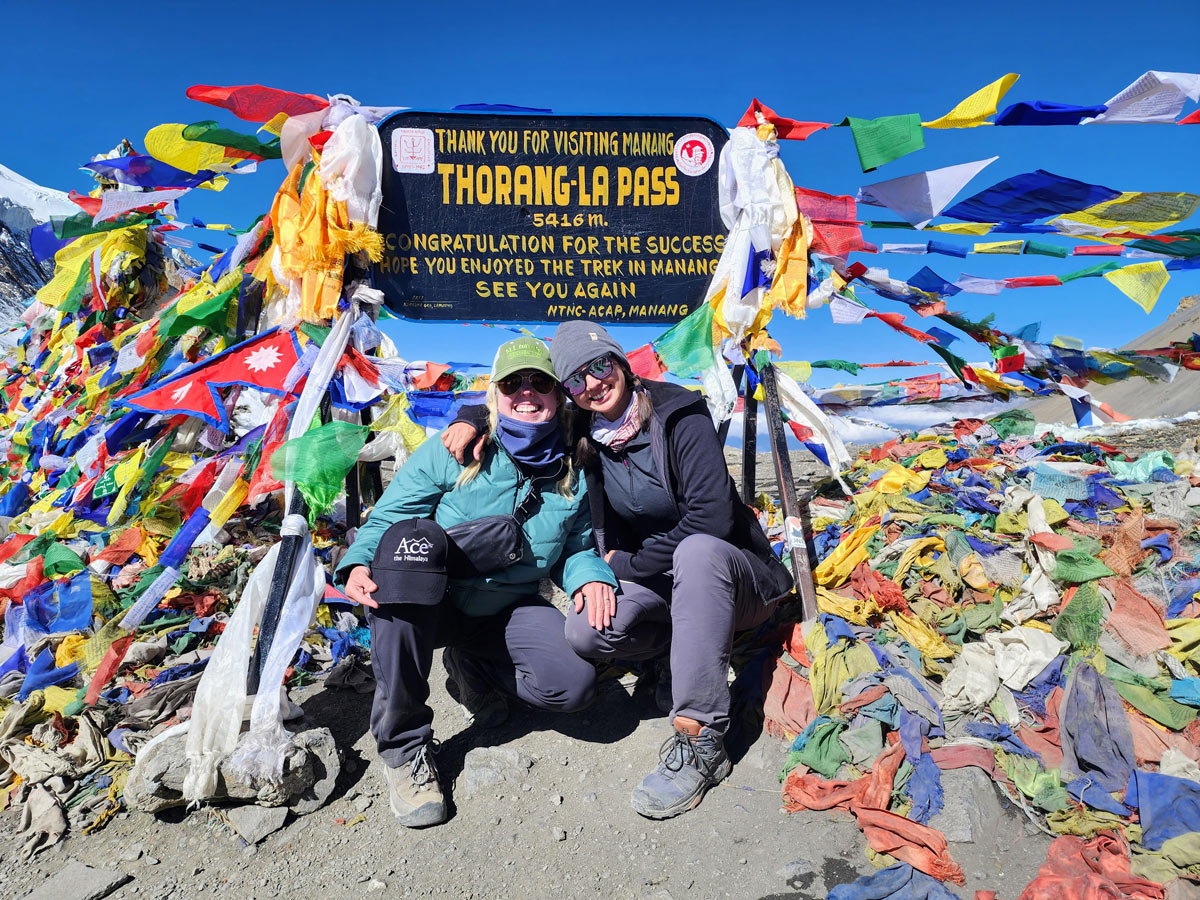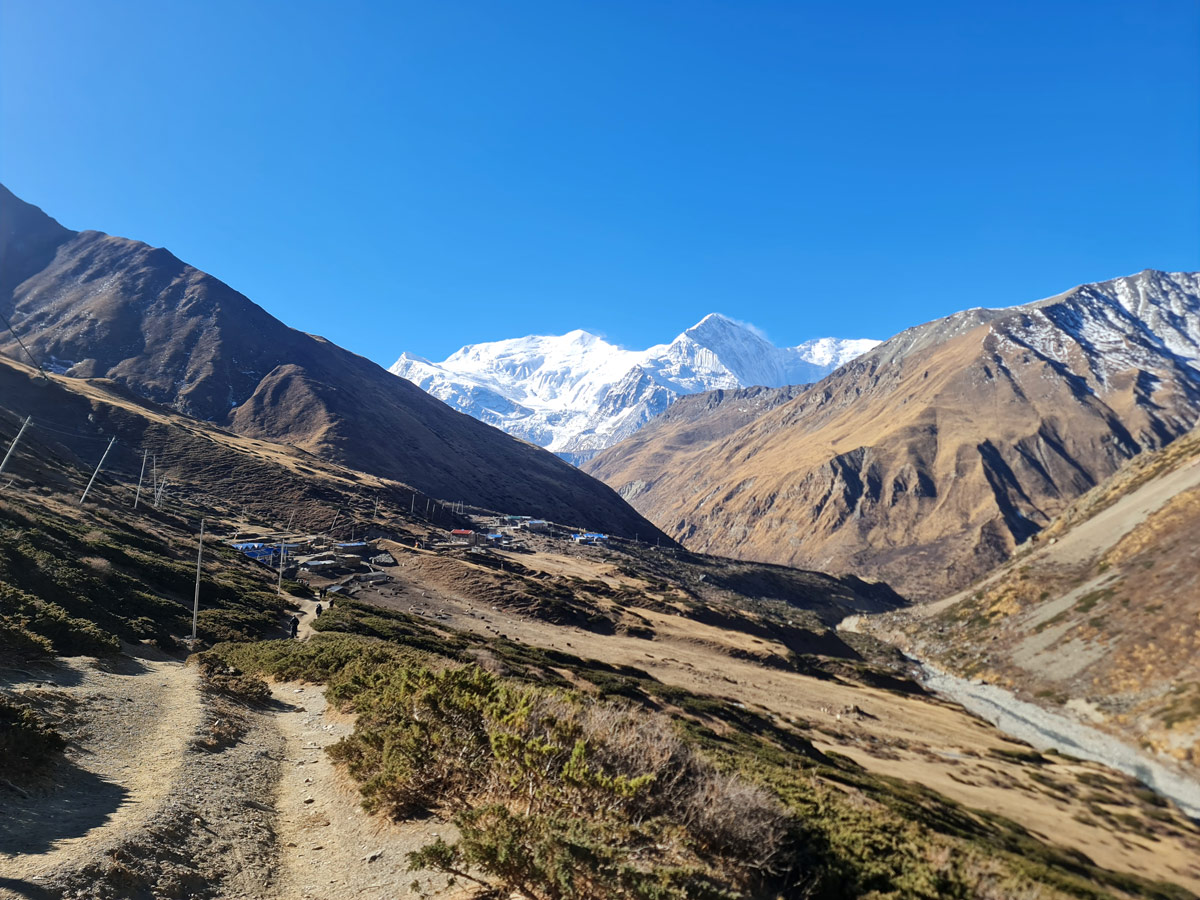



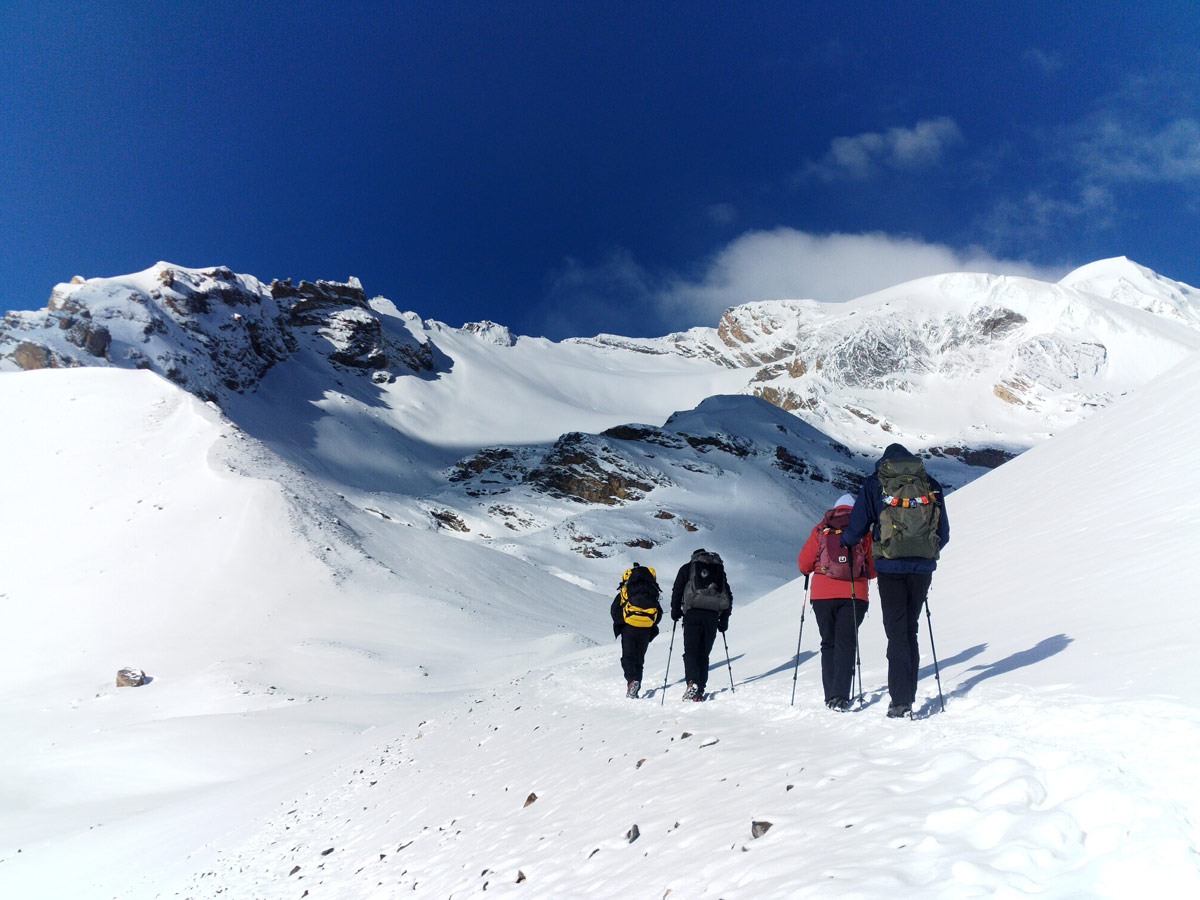
The Annapurna Circuit trek elevation profile is one of the most dramatic in the world, a sweeping journey from subtropical river valleys all the way up to the roof of the circuit, Thorong La Pass, at 5,416 meters (17,769 ft).
While trekking to Annapurna Circuit, you are not just walking long distances. You are slowly climbing into thinner air, where every step feels heavier and every breath becomes more important.
The Annapurna Circuit altitude ranges from Dharapani at 1,860 meters (6,102 feet) in the lower regions to 5,416 meters at Thorong La Pass. That is a massive vertical change. To put it simply, it is like climbing from a warm valley to a cold, dry world where even standing still feels like effort. This variation is what makes the trek exciting, but it is also what makes it challenging.
This isn’t just a trek. It’s a full-on altitude adventure. And if you’re serious about completing it safely and comfortably, understanding the Annapurna Circuit altitude day by day is not optional. It’s essential.
Annapurna Circuit Trek Elevation Gain and Elevation Loss
The Annapurna Circuit is one of Nepal’s classic high-altitude treks, and its elevation profile tells the whole story of why. Starting at Dharapani at 1,860 meters (6,102 feet), the trail climbs gradually through forested river valleys, terraced farmland, and increasingly remote mountain terrain before exploding upward to Thorong La Pass at 5,416 m (17,769 ft).
The total elevation gain of the Annapurna Circuit trek from start to summit is approximately 3,556 meters.
But here’s what makes the Annapurna Circuit special: after Thorong La Pass, the trek descends sharply to Muktinath at 3,760 m and eventually drops all the way down to Tatopani at 1,190 m, giving your body a welcome dose of thick oxygen before the trail climbs gently again to Ghorepani and Poon Hill.
The elevation loss during the Annapurna Circuit trek is as dramatic as the gain, and that descent plays a crucial role in recovery and acclimatization.
Detailed Annapurna Circuit Elevation Profile (Day-by-Day Breakdown)
Here’s your day-by-day elevation breakdown for the Annapurna altitude profile:
Day 3: Dharapani to Chame Elevation
Distance: 15.7 km/9.76 mi
Duration: 5-6 hrs trek
Starting Altitude: Dharapani (1,860 m/6,102 ft)
Ending Altitude: Chame (2,670 m/8,760 ft)
Ascend: ~810 m (2,657 ft)
Descend: Minimal
Dharapani to Chame is where the Annapurna Circuit really starts to feel like a high-altitude trek. This day marks the beginning of steady altitude gain. You leave behind the lush lower valleys and enter the Marshyangdi River gorge, where the landscape starts shifting from green and tropical to drier, more rugged terrain.
The climb is gradual, but gaining around 800 meters in one day is noticeable. You may feel slightly out of breath, especially on uphill sections.
Day 4: Chame to Upper Pisang Elevation
Distance: 16.2 km/10.07 m
Duration: 6-7 hrs trek
Starting Altitude: Chame (2,670 m/8,760 ft)
Ending Altitude: Upper Pisang (3,300 m/10,827 ft)
Ascend: ~630 m (2,067 ft)
Descend: Minimal
As you trek from Chame toward Upper Pisang, the valley opens up dramatically and you get your first glimpse of towering Paungda Dada rock face, and other giants in the range.
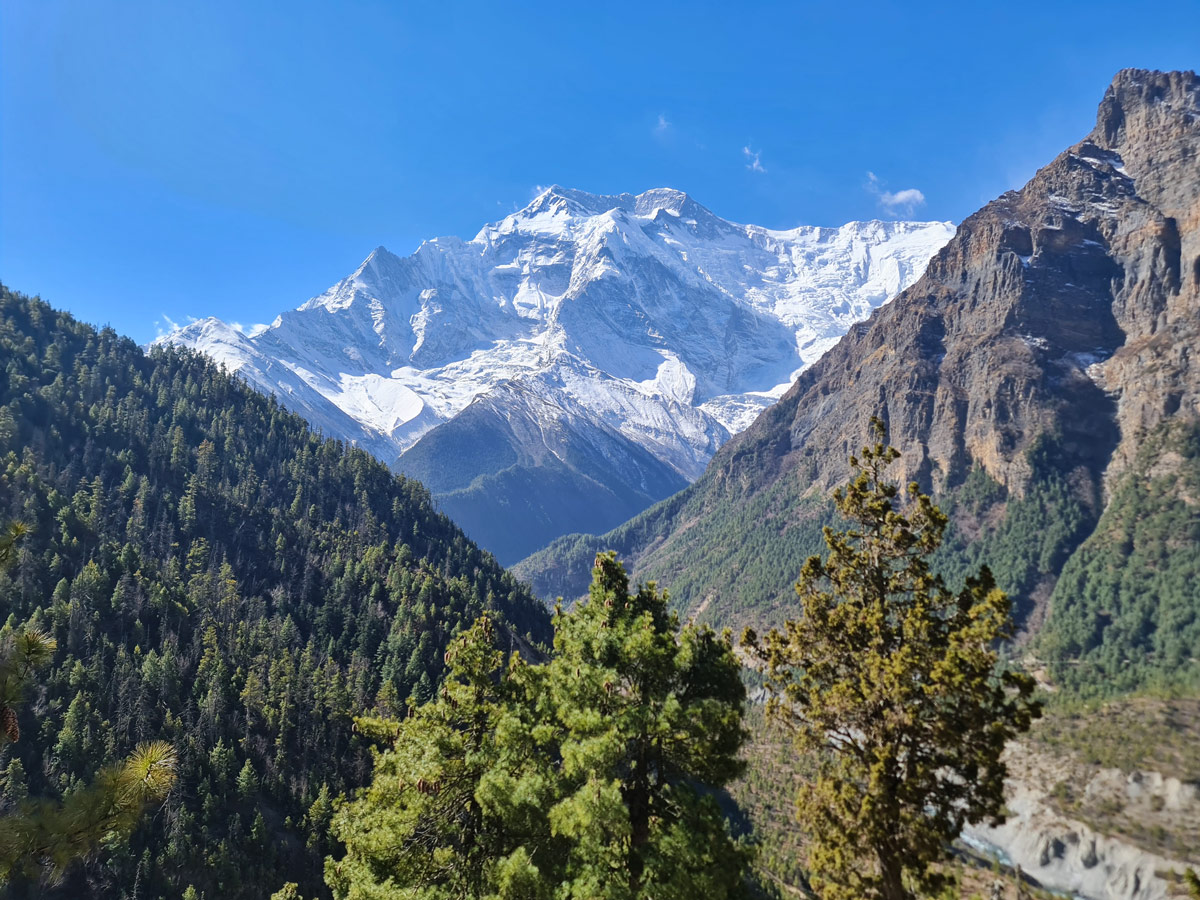
The Upper Pisang elevation at 3,300 m (10,827 ft) puts you firmly in high-altitude territory, with majestic views of Annapurna II standing tall to the south. Breathe slowly, drink plenty of water, and take in those jaw-dropping views.
Day 5: Upper Pisang to Ngawal Elevation
Distance: 10.6 km/6.59 mi
Duration: 4-5 hrs trek
Starting Altitude: Upper Pisang (3,300 m/10,827 ft)
End Altitude: Ngawal (3,660 m/12,008 ft)
The trek from Upper Pisang to Ngawal follows the high route above the Marshyangdi Valley, and this is the route you want to take if it’s your first time on the circuit.
The views of the Annapurna and Pisang Peak are absolutely unreal. Ngawal at 3,660 m (12,008 ft) is a small, traditional Gurung village, and the altitude gain here is manageable.
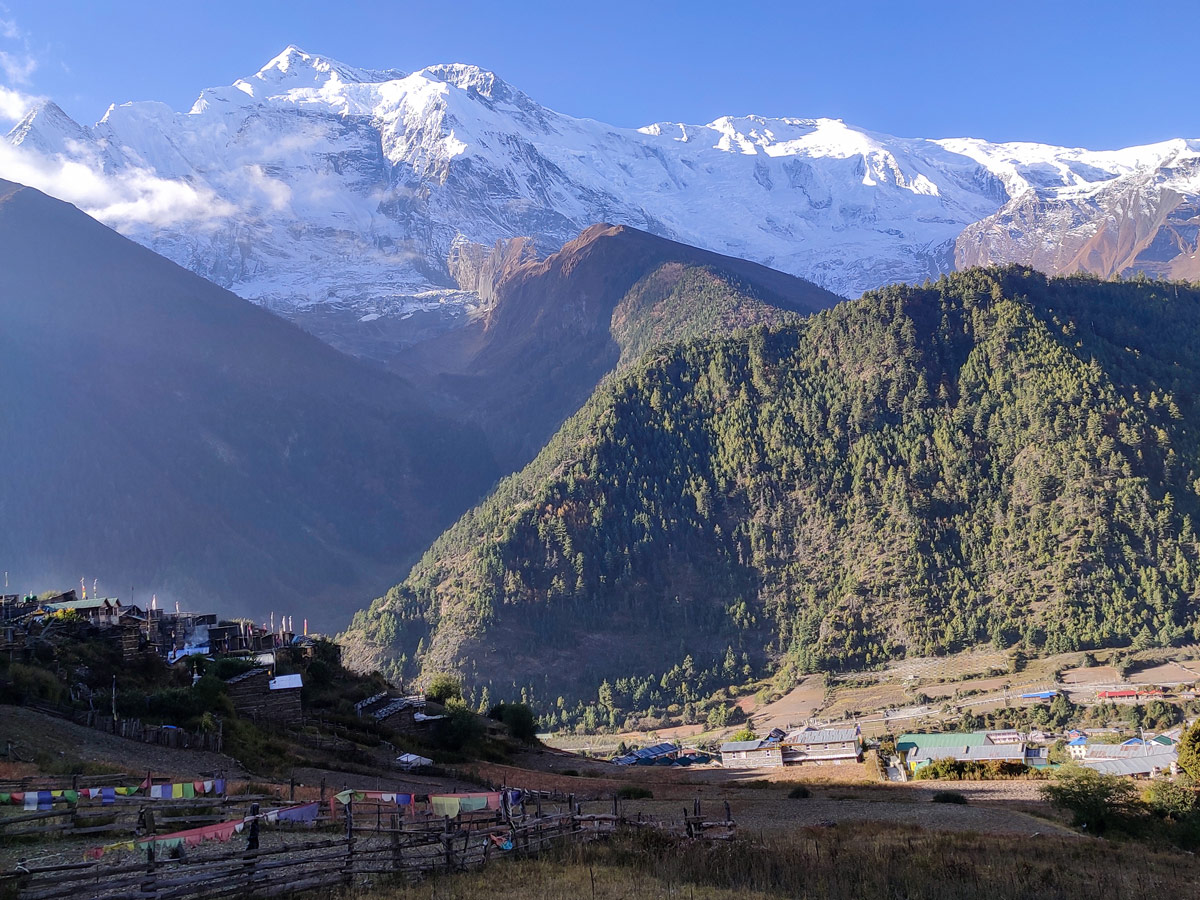
This route follows the higher trail, which is better for acclimatization. The climb is steady, and the air feels thinner. The landscapes become dry and open, giving you a clear sense that you are entering high-altitude terrain.
Day 6: Ngawal to Manang via Bhraka
Distance: 9.1 km/5.65 mi
Duration: 3-4 hrs trek
Starting Altitude: Ngawal (3,660 m/12,008 ft)
End Altitude: Manang (3,540 m/11,614 ft)
Notice something interesting here? The route actually dips slightly from Ngawal (3,660 m) through Bhraka (3,360 m) before rising again to Manang (3,540 m). This gentle elevation fluctuation is actually quite helpful for your body’s acclimatization process: walking high but sleeping slightly lower is a tactic altitude experts recommend. Manang is one of the most important acclimatization stops on the entire Annapurna circuit, and for good reason.
Day 7: Acclimatization Day at Manang Village
Stay: Manang (3,540 m/11,614 ft)
Do not skip your acclimatization day at Manang.
Manang sits at 3,540 m (11,614 ft) and is the last major village before the final push to Thorong La. You’ll witness a spectacular panoramas of Annapurna II, Annapurna III, Gangapurna, and Tilicho Peak. The golden rule of altitude is: hike high, sleep low.
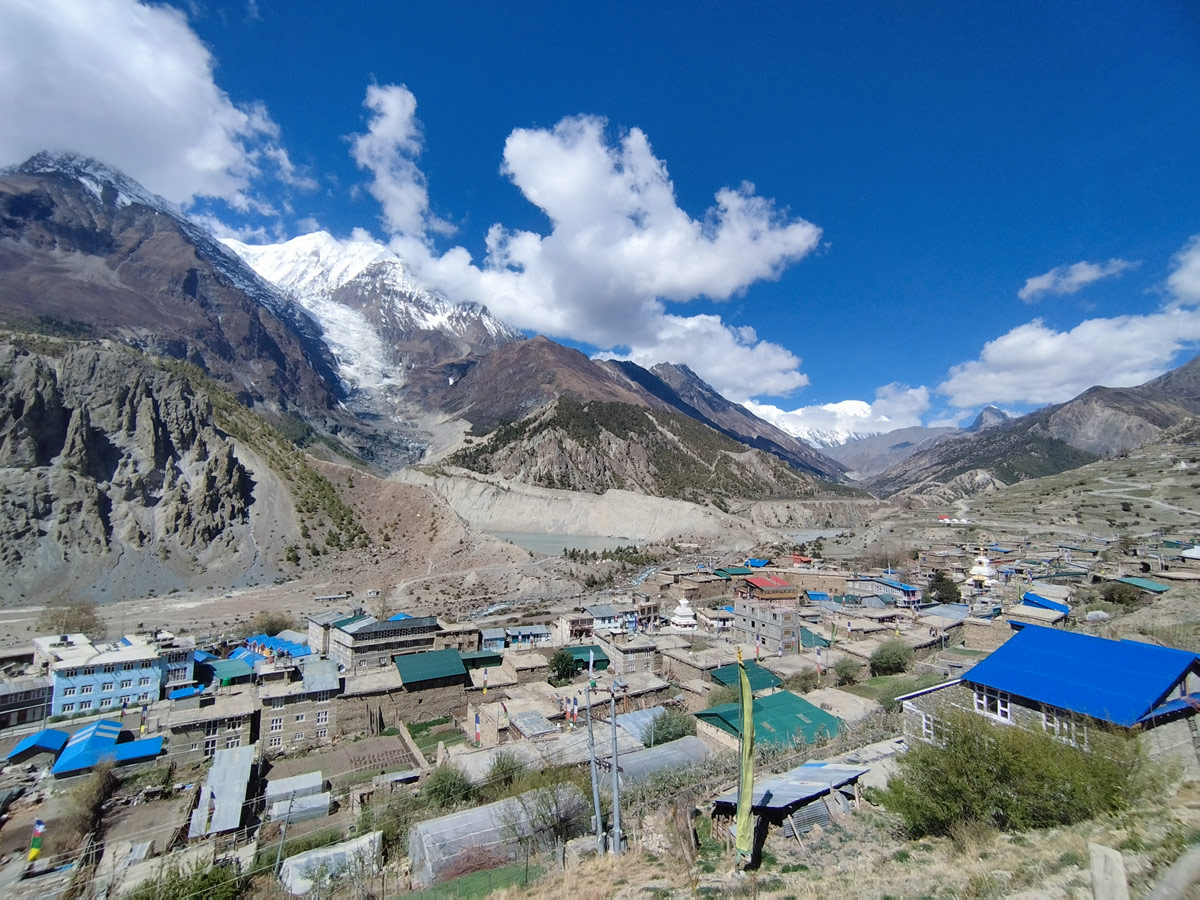
On your rest day at Manang, do a half-day hike to higher ground, then return to sleep at the lower Manang elevation. This stimulates red blood cell production without overtaxing your system.
Day 8: Manang to Yak Kharka Elevation
Distance: 10.7 km/6.65 mi
Duration: 5-6 hrs trek
Starting Altitude: Manang (3,540 m/11,614 ft)
End Altitude: Yak Kharka (4,050 m/13,287 ft)
Now you enter serious high- altitude territory. This is where the Annapurna Circuit altitude starts feeling genuinely demanding. From Yak Kharka, 4,050 m (13,287 ft) ,you can feel the challenge at this height as you gain about 500 meters.
Your pace will slow, and that’s perfectly normal. The landscape transforms here: no more trees, just vast open land with enormous mountain walls rising on all sides.
Day 9: Yak Kharka to Thorong Phedi Elevation
Distance: 6.5 km/4.04 mi
Duration: 5-6 hrs trek
Starting Altitude: Yak Kharka (4,050 m/13,287 ft)
End Altitude: Thorong Phedi (4,525 m/14,846 ft)
Thorong Phedi, meaning ‘base of Thorong’, is the last stop before the famous pass. At 4,525 m (14,846 ft), it’s a high, cold, and rather sparse place. Sleep here as early as you can.
Most trekkers aim for a 4:00 to 5:00 AM departure the next morning to summit Thorong La before afternoon winds and clouds move in. The total elevation gain from Thorong Phedi to Thorong La Pass is approximately 891 meters, and you’ll cover it in around 5 to 6 hours.
Day 10: Thorong Phedi to Muktinath via Thorong La Pass
Distance: 16.4 km/10.19 mi
Duration: 8-9 hrs trek
Starting Altitude: Thorong Phedi (4,525 m/14,846 ft)
Max Altitude: Thorong La Pass (5,416 m/17,769 ft)
End Altitude: Muktinath (3,760 m/12,336 ft)
This is the toughest and most important day of the Annapurna Circuit trek. You gain nearly 900 meters to reach the pass and then descend more than 1,600 meters.
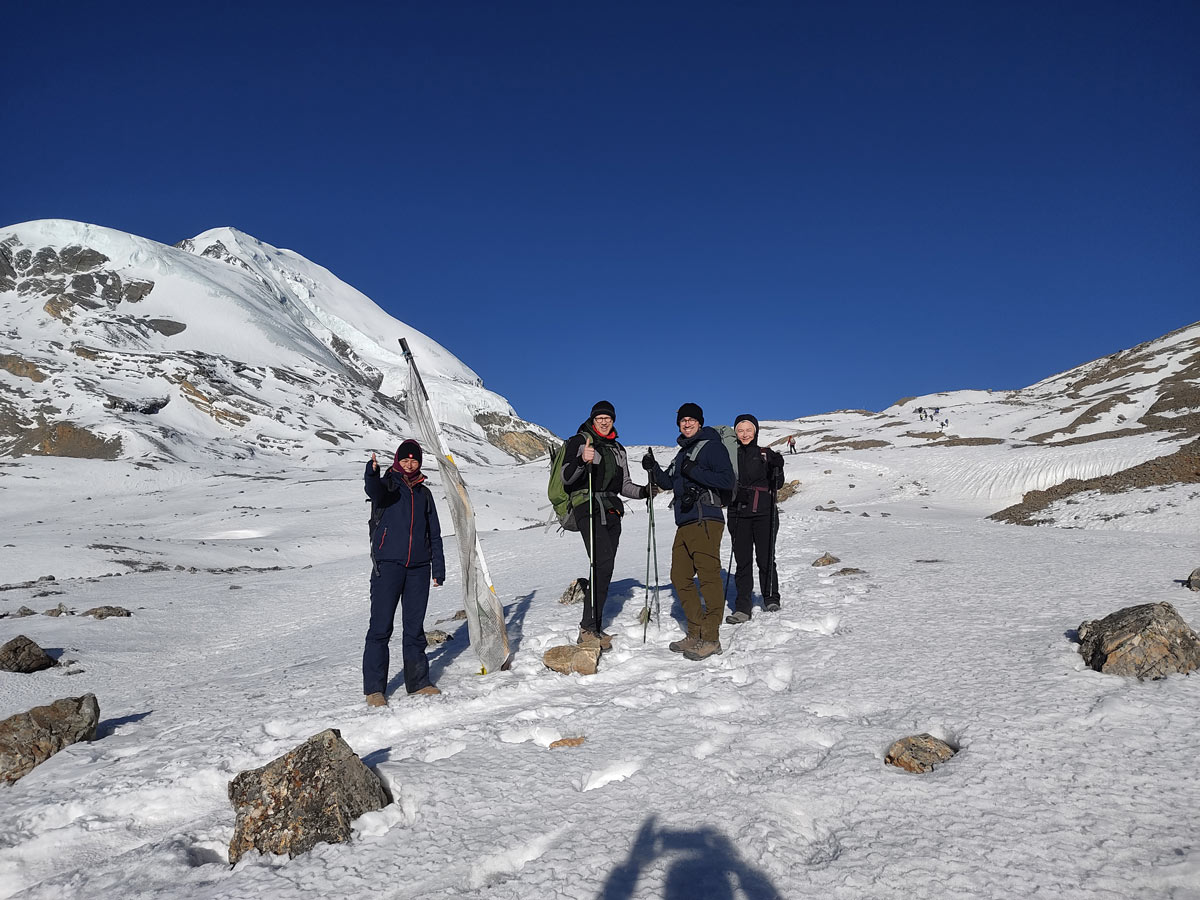
The climb to the top is slow and steady. Every step feels heavy, but reaching the pass gives you a huge sense of achievement. Then again the descent to Muktinath is long and can be hard on your knees.
Day 11: Muktinath to Tatopani (Drive) via Jomsom
Starting Altitude: Muktinath (3,760 m/12,336 ft)
End Altitude: Tatopani (1,190 m/3,904 ft)
This day brings one of the biggest elevation changes of the entire journey, but without trekking effort. You drive descending more than 2,500 meters in a single day. It feels almost unreal after spending days slowly climbing.
As you leave Muktinath and more towards Tatopani, the landscape changes quickly. The dry, windy, high-altitude terrain transforms into greener valleys and warmer surroundings. This dramatic drop in Annapurna circuit altitude gives your body a break.
Day 12: Rest Day at Tatopani
Stay: Tatopani (1,190 m/3,904 ft)
Tatopani sits at a much lower elevation, and this day is all about recovery. After the high-altitude challenge of Thorong La Pass, your body finally gets the chance to fully relax.
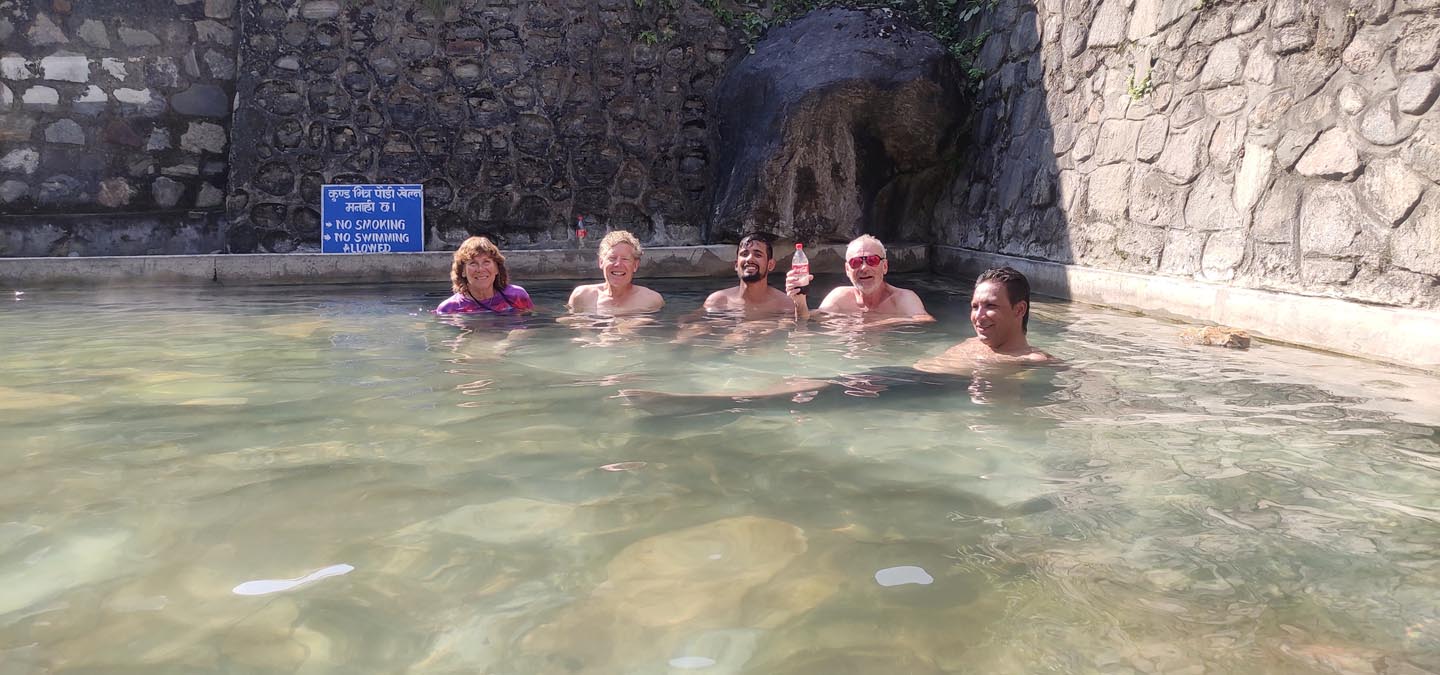
The highlight here is the natural hot springs. Soaking in warm water helps reduce muscle soreness and improves blood circulation. It is one of the most enjoyable moments of the entire Annapurna Circuit.
Day 13: Tatopani to Ghorepani Elevation
Distance: 15.2 km/9.44 mi
Duration: 6-7 hrs trek
Starting Altitude: Tatopani (1,190 m/3,904 ft)
End Altitude: Ghorepani (2,880 m/9,449 ft)
After a relaxing day, you return to trekking with a long and steady climb. This day involves gaining nearly 1,700 meters in elevation on the Annapurna Circuit, making it one of the more physically demanding days, even though you are no longer at extreme altitude.
Even though oxygen levels are much better compared to earlier days, the steep climb can still feel tiring. This reminds you that the elevation of the Annapurna Circuit trek is not only about high altitude but also about how much you climb in a day.
By the time you reach Ghorepani, the temperature drops again slightly, but it is still much more comfortable than the high Himalayan sections.
Day 14: Morning hike to Poon Hill, trek to Birethanti and drive to Pokhara
Distance: 16.2 km/10.07 mi
Duration: 5-6 hrs trek
Starting Altitude: Thorong Phedi (4,525 m/14,846 ft)
Max Altitude: Poon Hill (3,210 m/10,531 ft)
End Altitude: Pokhara (822 m/2,696 ft)
The final day starts early, usually before sunrise. You hike up to Poon Hill, which is famous for its panoramic mountain views of peaks like Annapurna, Machhapuchhre, and Dhaulagiri landscapes glowing in the morning light.
Although Poon Hill is not extremely high compared to Thorong La Pass, the short climb still feels challenging due to the steep steps.
After enjoying the sunrise, you descend back to Ghorepani and continue trekking down to Birethanti. This is mostly downhill, passing through forests, streams, and small settlements.
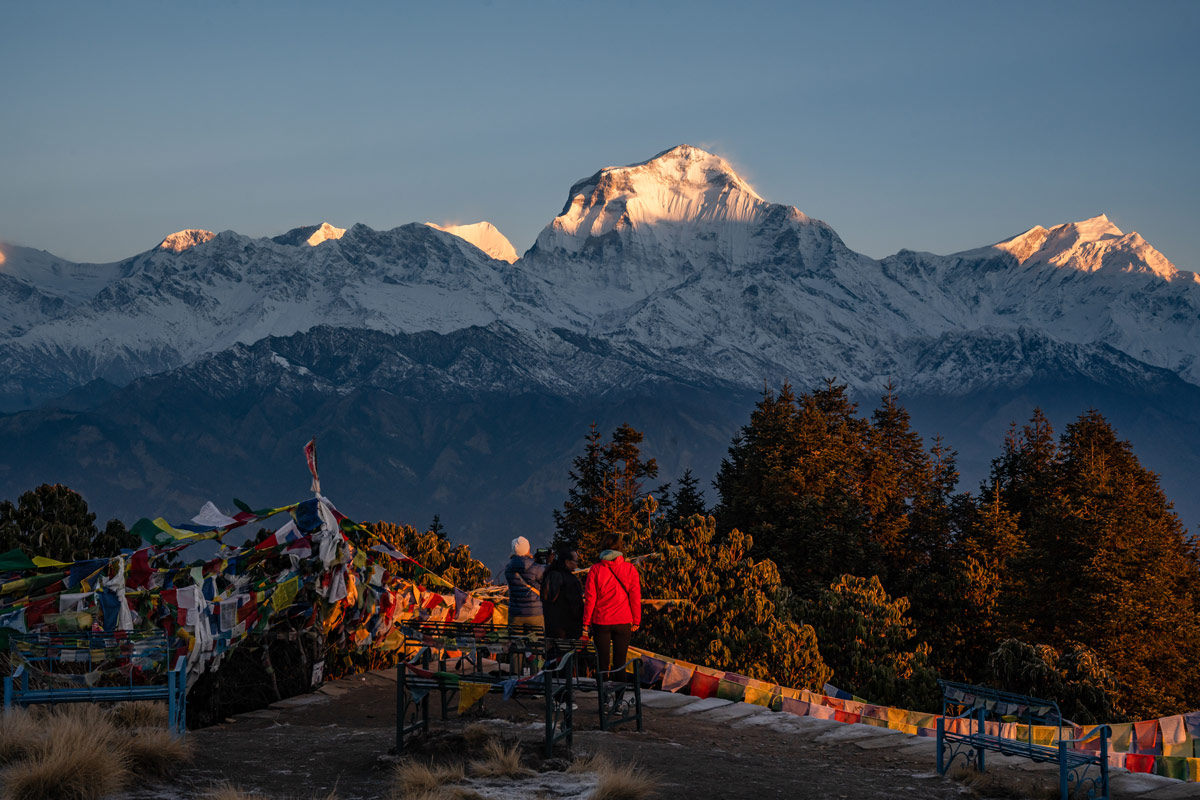
The descent marks the final phase of the Annapurna circuit trek elevation journey.
From Birethanti, you drive to Pokhara, officially completing the trek. By now, your body has experienced the full range of Annapurna Circuit altitude, from low valleys to one of the highest trekking passes in the world.
Highest Point of Annapurna Circuit: Thorong La Pass
The highest point of the trek elevation is Thorong La Pass at 5,416 m (17,769 ft), which is also one of the highest trekking passes in the world. At this altitude, the air pressure is roughly half of what you’d experience at sea level, this means your body works much harder to perform simple tasks.
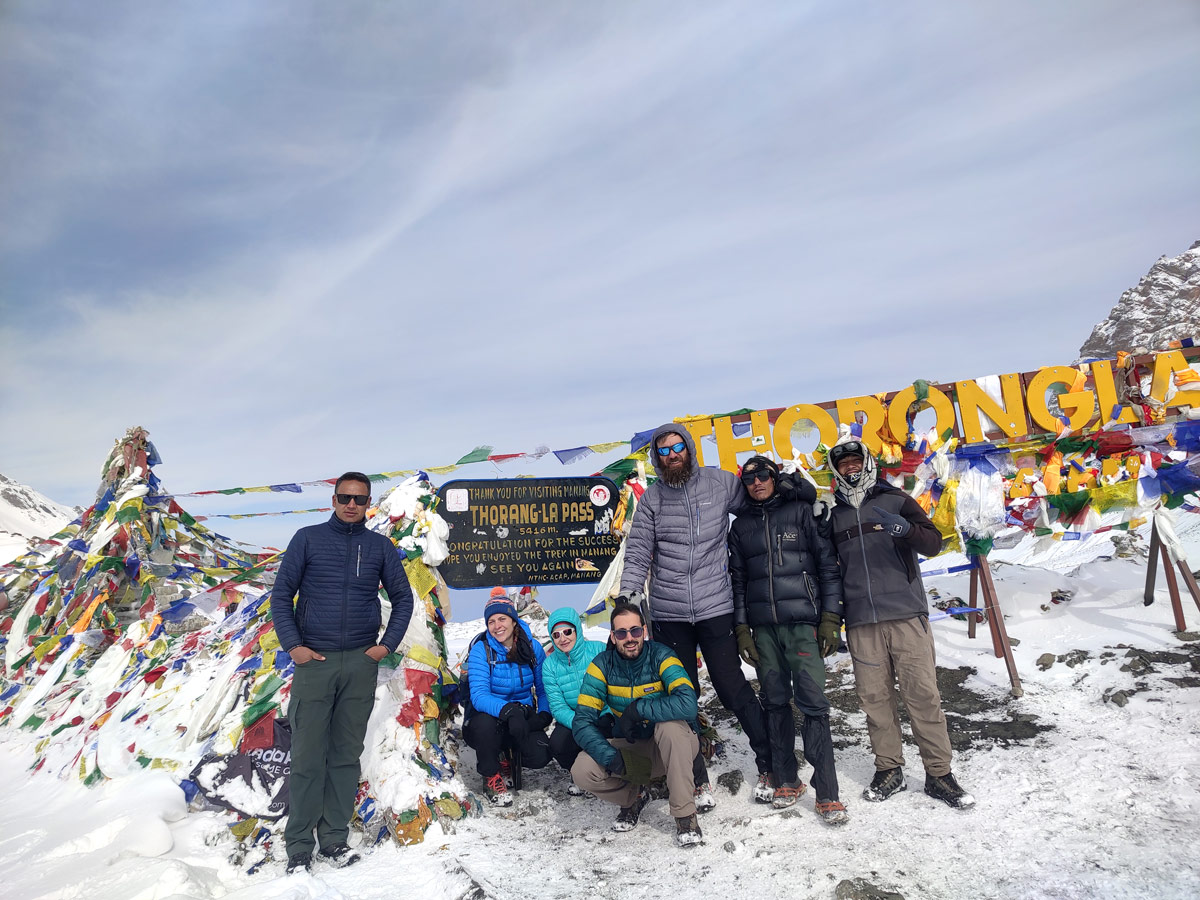
The ascent from Thorong Phedi to the pass itself gains nearly 900 meters over 5 to 6 hours of steep climbing.
Crossing the pass feels slow and intense. You may need to take breaks every few steps. The weather can be cold and windy, and temperatures can drop below freezing. But standing at the top gives you one of the most rewarding views in the Himalayas.
Annapurna Circuit Trek Altitude Gain and Loss
The elevation gain of Annapurna circuit trek is significant, but so is the descent. When you know about both the altitude gain and altitude loss during the Annapurna Circuit trek, it is helpful for planning your acclimatization strategy. Here’s a summary of the key altitude changes:
- Total elevation gain: around 3,500 to 4,000 meters
- Total elevation loss: over 4,000 meters
- Largest single-day elevation gain: Day 10: Thorong Phedi to Thorong La Pass (+891 m)
- Largest single-day elevation loss: Day 10: Thorong La Pass to Muktinath (-1,656 m)
- Second major descent: Muktinath to Tatopani via Jomsom (Day 11), dropping to 1,190 m
- Final climb: Tatopani to Ghorepani (Day 13), rising back up to 2,880 m
The Annapurna Circuit trek elevation loss after Thorong La is one of the most dramatic descents in trekking anywhere in the world. In a single day, you go from one of the highest trekking passes on the planet to a mid-altitude sacred temple town.
Annapurna Circuit Trek Distance vs Elevation
The total distance of the Annapurna circuit trek is approximately 122 km (76 miles), completed in 16 days, crossing Thorong La Pass through diverse landscapes and villages. However, distance alone does not define difficulty.
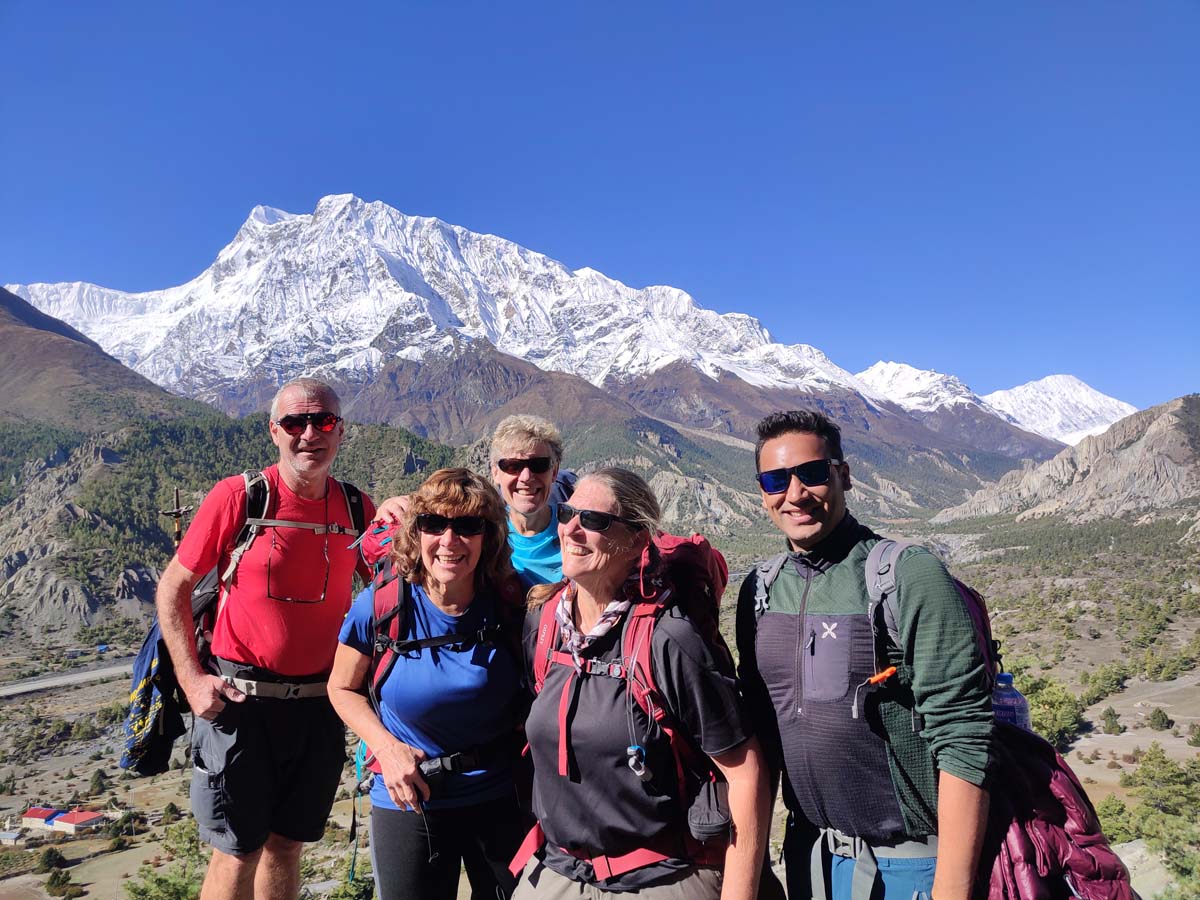
A short distance at high altitude can feel much harder than a long walk at lower elevation. This is why Annapurna height and altitude play a bigger role than distance.
Altitude Sickness and Acclimatization on the Annapurna Circuit Trek
Acute Mountain Sickness (AMS) is the biggest safety concern on the Annapurna Circuit trek due to altitude. It affects people at altitudes above 2,500 m and becomes increasingly serious above 3,500 m. Importantly, altitude sickness does not discriminate. Fitness level, age, and prior trekking experience do not guarantee immunity.
Symptoms of AMS to Watch For during Annapurna Circuit Trek:
- Persistent headache (the earliest warning sign)
- Nausea or vomiting
- Dizziness or lightheadedness
- Fatigue disproportionate to exertion
- Loss of appetite
- Difficulty sleeping
Acclimatization Strategy for the Annapurna Circuit:
The standard itinerary builds in a full rest day at Manang (3,540 m): take it seriously as it somehow prevents altitude sickness.
- The ‘climb high, sleep low’ principle is built into several days of the itinerary
- Drink 3 to 4 liters of water daily, even if you don’t feel thirsty.
- Avoid alcohol above 3,000 m, as it dehydrates you and disrupts sleep quality at altitude.
- Consider carrying Diamox (acetazolamide) after consulting a doctor before departure.
- Never ascend to a higher sleeping altitude if you are experiencing AMS symptoms. Descend instead.
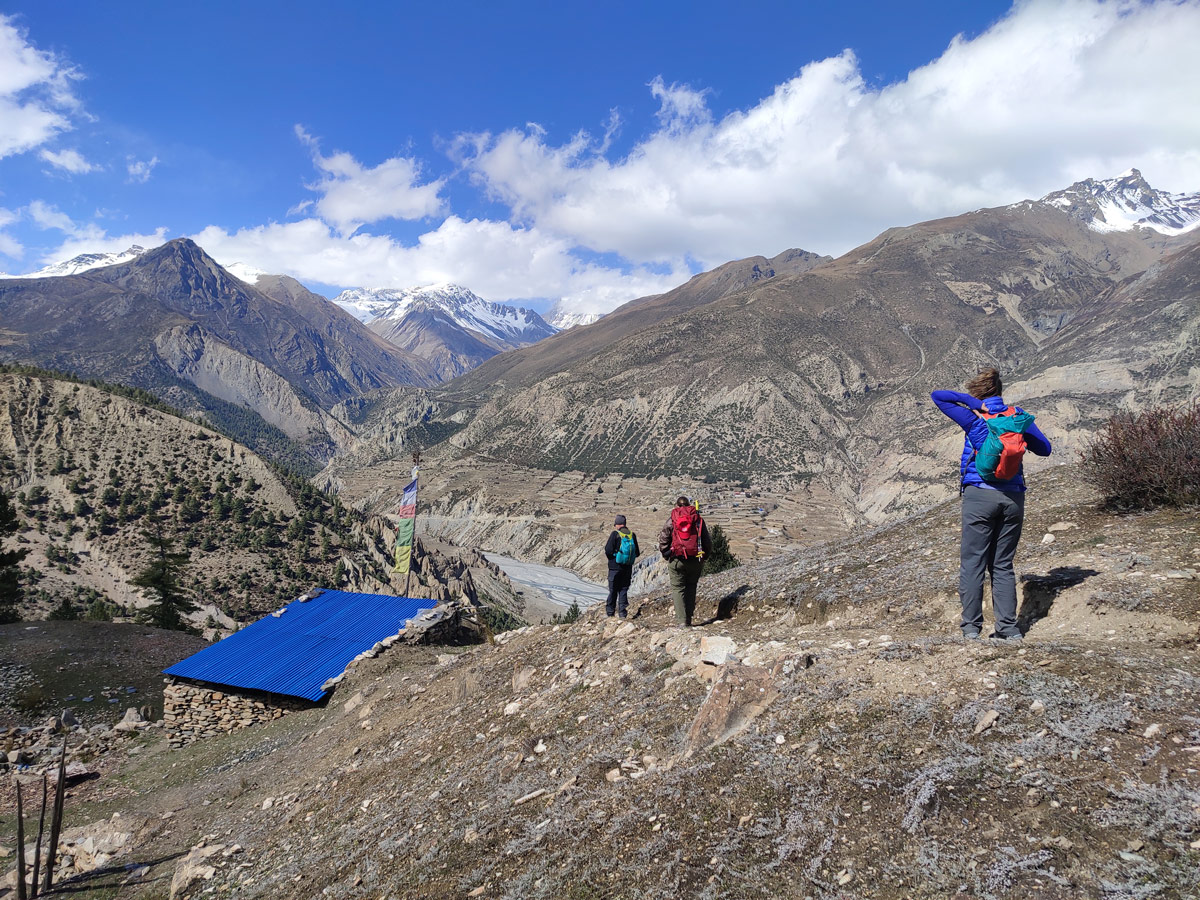
The golden rule is simple but non-negotiable: never ascend with symptoms of AMS. If you wake up in Thorong Phedi with a headache, nausea, and extreme fatigue: do not attempt Thorong La that day. You can properly rest, hydrate, and let your body catch up, the pass will still be there tomorrow.
Annapurna Circuit Trek Elevation in Feet and Meters
| Day | Location | Starting Elevation (Meters/ Feet) | Ending Elevation (Meters/ Feet) | Maxmium Elevation (Meters/ Feet) |
| 3 | Dharapani – Chame | 1,860 m/6,102 ft | 2,670 m/8,760 ft | 2,670 m/8,760 ft |
| 4 | Chame – Upper Pisang | 2,670 m/8,760 ft | 3,300 m/10,827 ft | 3,300 m/10,827 ft |
| 5 | Upper Pisang – Ngawal | 3,300 m /10,827 ft | 3,660 m/12,008 ft | 3,660 m/12,008 ft |
| 6 | Ngawal – Manang (via Bhraka) | 3,660 m/12,008 ft | 3,540 m/11,614 ft | 3,660 m/12,008 ft |
| 7 | Manang Acclimatization | 3,540 m/11,614 ft | 3,540 m/11,614 ft | – |
| 8 | Manang – Yak Kharka | 3,540 m/11,614 ft | 4,050 m/13,287 ft | 4,050 m/13,287 ft |
| 9 | Yak Kharka – Thorong Phedi | 4,050 m/13,287 ft | 4,525 m/14,846 ft | 4,525 m/14,846 ft |
| 10 | Thorong Phedi – Muktinath (via Thorong La Pass) | 4,525 m/14,846 ft | 3,760 m/12,336 ft | 5,416 m/17,769 ft |
| Thorong Phedi – Thorong La Pass | 4,525 m/14,846 ft | 5,416 m/17,769 ft | 5,416 m/17,769 ft | |
| Thorong La Pass – Muktinath | 5,416 m/17,769 ft | 3,760 m/12,336 ft | 5,416 m/17,769 ft | |
| 11 | Muktinath – Tatopani (Drive) | 3,760 m/12,336 ft | 1,190 m/3,904 ft | 3,760 m/12,336 ft |
| 12 | Tatopani Rest Day | 1,190 m/3,904 ft | 1,190 m/3,904 ft | 1,190 m/3,904 ft |
| 13 | Tatopani – Ghorepani | 1,190 m/3,904 ft | 2,880 m / 9,449 ft | 2,880 m/9,449 ft |
| 14 | Ghorepani – Poon Hill – Birethanti – Pokhara | 2,880 m/9,449 ft | 822 m/2,696 ft | 3,210 m/10,531 ft |
| Poon Hill (round trip) | 2,880 m/9,449 ft | 2,880 m/9,449 ft | 3,210 m/10,531 ft |
Annapurna Circuit Trek Elevation Vs Everest Base Camp Trek Elevation
A question that comes up constantly in trekking forums: which is harder, the Annapurna Circuit or the Everest Base Camp (EBC) trek?
The highest point on the Annapurna circuit is Thorong La at 5,416 m, while the highest elevation on Everest Base Camp is Kala Patthar at 5,645 m.
| Feature | Annapurna Circuit | Everest Base Camp |
| Highest Point | Thorong La Pass (5,416 m/17,769 ft) | Kala Patthar (5,645 m/18,519 ft) |
| Trek Duration | 16 to 21 days | 12 to 14 days |
| Total Distance | ~122 km (76 miles) | ~130 km (80 miles) |
| Start Altitude | 1,860 m (Dharapani) | 2,860 m (Lukla) |
| Difficulty | Moderate to Challenging | Moderate to Challenging |
| Max Elevation Gain | ~4,656 m from start | ~2,785 m from Lukla |
| Best Season | March–May, Oct–Nov | March–May, Oct–Nov |
Difficulty Level on Annapurna Circuit Trek Based on Elevation
So, how hard is the Annapurna Circuit Trek due to elevation? Here’s an honest answer:
Overall Difficulty: Moderate to Challenging
- Fitness Requirement: You should be able to hike 6 to 8 hours daily with a loaded pack over multiple consecutive days.
- Prior High-Altitude Experience: Helpful but not required if you follow the itinerary carefully and allow proper acclimatization.
- The Hardest Day: Day 10: the Thorong La Pass crossing is a long (8 to 9 hours), high (5,416 m), and physically demanding day that requires everything you have.
Beginners can absolutely complete the Annapurna Circuit, provided they train consistently for 3 to 4 months beforehand, follow the acclimatization itinerary without rushing, and listen to their bodies.
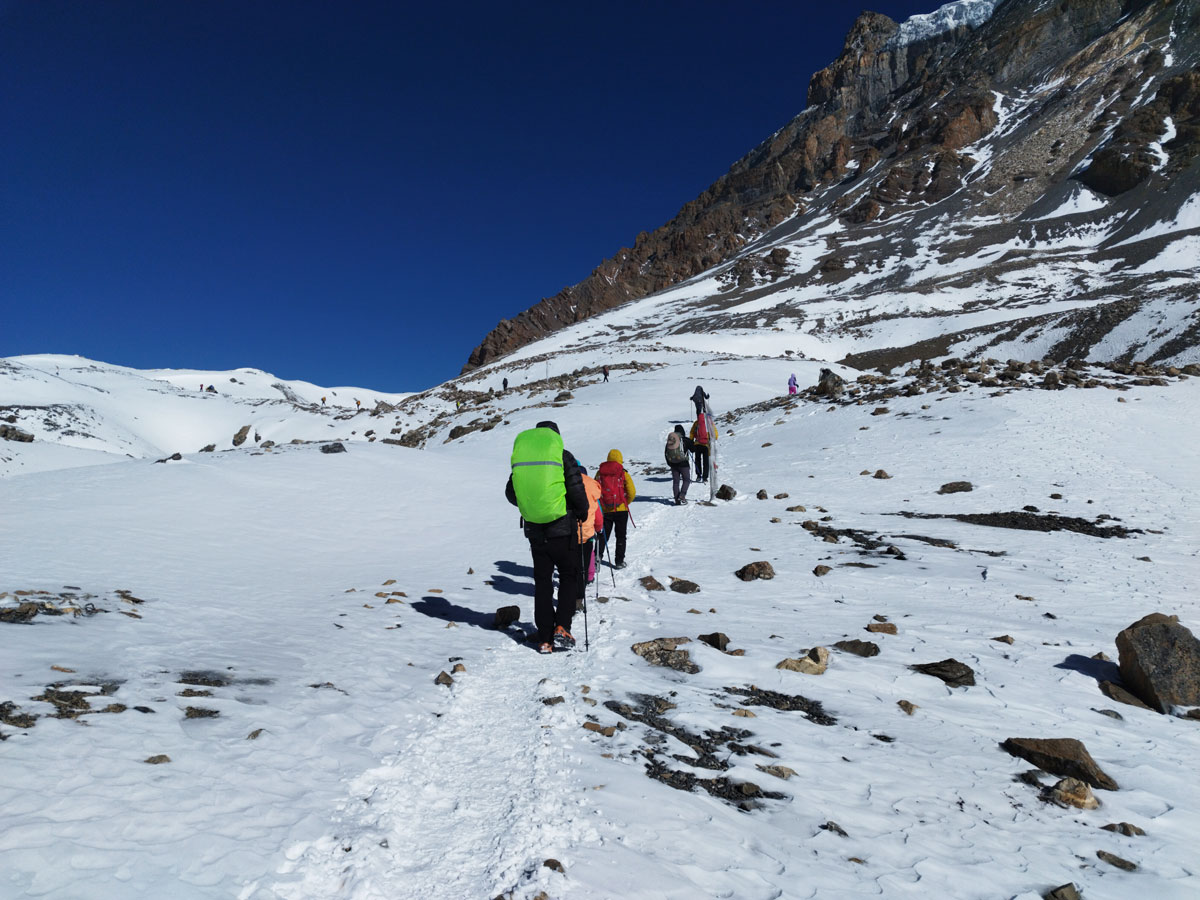
The Annapurna Circuit trek is challenging, but not extreme. With the right preparation, it’s one of the most rewarding things you’ll ever do.
Tips for Trekking at High Elevation
Heading to high altitude requires more preparation than just buying good hiking boots. Here’s what actually makes the difference:
- Train before you go. Cardiovascular fitness doesn’t prevent altitude sickness, but it makes everything easier. Run, cycle, or hike with a loaded pack for at least 3 months before the trek.The better your base fitness, the more energy reserves you’ll have for the long days above 4,000 m
- Trek with licensed guide. Not only do they carry equipment and navigate, they also spot early signs of altitude illness that you might miss in yourself.
- Pack smart layers, not bulk. Temperatures near Thorong La can drop to -15°C or colder at night. But you’ll sweat on the uphill sections. Moisture-wicking base layers, insulating mid-layers and a wind-proof hard-shell jacket is the winning combination for the Annapurna Circuit altitude range.
- Eat carbohydrates. At altitude, your body burns carbohydrates more efficiently than fat. Dal bhat, the classic Nepali trekking meal of lentil soup and rice, is genuinely one of the best high-altitude foods on the planet. It’s warm, calorie-dense, and infinitely available along the circuit.
- Walk slowly. Every trekking guide on the circuit will tell you this constantly, and they are absolutely right. Your comfortable pace at sea level will leave you breathless and depleted at 5,000 m. Slow down by at least 30 to 40% compared to your normal hiking pace.
- Take rest days even if you feel fine. Acute Mountain Sickness often appears 12 to 24 hours after arriving at a new altitude. Feeling great in the afternoon doesn’t mean you’ll feel great the next morning. The scheduled acclimatization day at Manang exists for a very good reason. Use it and enjoy your Annapurna Circuit Trekking.
FAQs About Annapurna Circuit Elevation
What is the highest point of Annapurna Circuit Trek?
The highest point of the Annapurna Circuit trek is Thorong La Pass at 5,416 m (17,769 ft). It is one of the highest trekking passes in the world and serves as the dramatic centerpiece of the circuit. Crossing this pass is the defining challenge and highlight of the entire journey.
How hard is the elevation gain during Annapurna Circuit Trek?
The total elevation gain from Dharapani to Thorong La Pass is approximately 4,656 m. The gain is spread over 9 to10 trekking days, making it gradual and manageable with proper acclimatization.
The steepest and most demanding day is Day 10, climbing from Thorong Phedi (4,525 m) to Thorong La Pass (5,416 m), a gain of roughly 891 m over steep terrain. This can be challenging but very achievable.
Can beginners handle Annapurna Circuit Trek altitude?
Yes, beginners can complete the Annapurna Circuit trek, but preparation is non-negotiable. You don’t need prior high-altitude trekking experience, but you do need 3 to 4 months of consistent cardio training, a willingness to follow the acclimatization schedule without rushing.
What are the common mistakes trekkers make with elevation?
Many trekkers make simple mistakes that can lead to serious altitude problems.
- Ascending too fast without allowing proper acclimatization.
- Skipping acclimatization days, especially at Manang.
- Ignoring symptoms of AMS like headache, nausea, and dizziness.
- Walking too fast, which increases strain at high altitude.
- Not drinking enough water, leading to dehydration.
- Drinking alcohol at high elevation, which worsens acclimatization.
- Not listening to your guide or body signals and continuing to trek despite worsening symptoms.