


The Annapurna Circuit Trek is one of Nepal’s most iconic long-distance treks, renowned for its dramatic mountain scenery, cultural diversity, and the challenge of crossing a high Himalayan pass.
Despite its popularity, many trekkers feel uncertain about attempting the Annapurna Circuit due to confusion around how long the trek actually is and how much distance is covered on foot.
In this blog, we break down the Annapurna Circuit trek distance day by day, helping you clearly understand the total trekking distance and what to expect along the route.
How Long is the Trek to Annapurna Circuit?
The total trekking distance of the Annapurna Circuit is approximately 122 kilometers (about 76 miles). This figure includes only the sections covered on foot and clearly excludes all driving segments.
The excluded drive sections include the Kathmandu to Dharapani drive at the start of the trek and the road journeys from Muktinath to Tatopani (via Jomsom) and from Birethanti to Pokhara at the end of the route.
The walking distance is spread across multiple trekking days, from Dharapani to Muktinath via Thorong La Pass, along with the Tatopani to Ghorepani section and the Poon Hill hike.
While the number may seem substantial, the trek is well-paced with gradual ascents, acclimatization days, and varied terrain, making it manageable for trekkers with good fitness and proper preparation.
Annapurna Circuit Trek Daily Distance Breakdown
| Day | Segment | Distance (km) | Distance (miles) | Mode | Typical Time |
| 02 | Kathmandu – Dharapani | 222.0 | 137.9 | Drive | 8 to 9 hours |
| 03 | Dharapani – Chame | 15.7 | 9.8 | Trek | 5 to 6 hours |
| 04 | Chame – Upper Pisang | 17.2 | 10.7 | Trek | 6 to 7 hours |
| 05 | Upper Pisang – Ngawal | 10.6 | 6.6 | Trek | 4 to 5 hours |
| 06 | Ngawal – Manang via Bhraka | 9.1 | 5.7 | Trek | 3 to 4 hours |
| 07 | Acclimatization in Manang | 4.6 | 2.9 | Hike | Flexible |
| 08 | Manang – Yak Kharka | 10.7 | 6.6 | Trek | 5 to 6 hours |
| 09 | Yak Kharka – Thorong Phedi | 6.5 | 4.0 | Trek | 5 to 6 hours |
| 10 | Thorong Phedi – Muktinath via Thorong La | 16.4 | 10.2 | Trek | 8 to 9 hours |
| 11 | Muktinath – Tatopani (via Jomsom) | 72.0 | 44.7 | Drive | 3 to 4 hours |
| 12 | Rest Day in Tatopani | 0 | 0 | Rest | — |
| 13 | Tatopani – Ghorepani | 15.2 | 9.4 | Trek | 6 to 8 hours |
| 14 | Ghorepani – Poon Hill – Birethanti – Pokhara | 16.2 | 10.1 | Trek + Drive | 5 to 6 hours trek and 1 to 3 hours drive |
Day 02: Drive from Kathmandu to Dharapani
After a scenic 222 km (137.9 mi) drive alongside the Marshyangdi River from Kathmandu to Dharapani that takes around 8 to 9 hours, you settle in for the night and prepare for the trek ahead.
An exploration of the landscapes of the lower Annapurna region while meandering alongside the banks of the Marshyangdi River sets the stage for the exciting adventure that awaits you throughout the Annapurna Circuit trek. If you are planning your journey, it is helpful to review how to prepare for the Annapurna Circuit trek in advance.
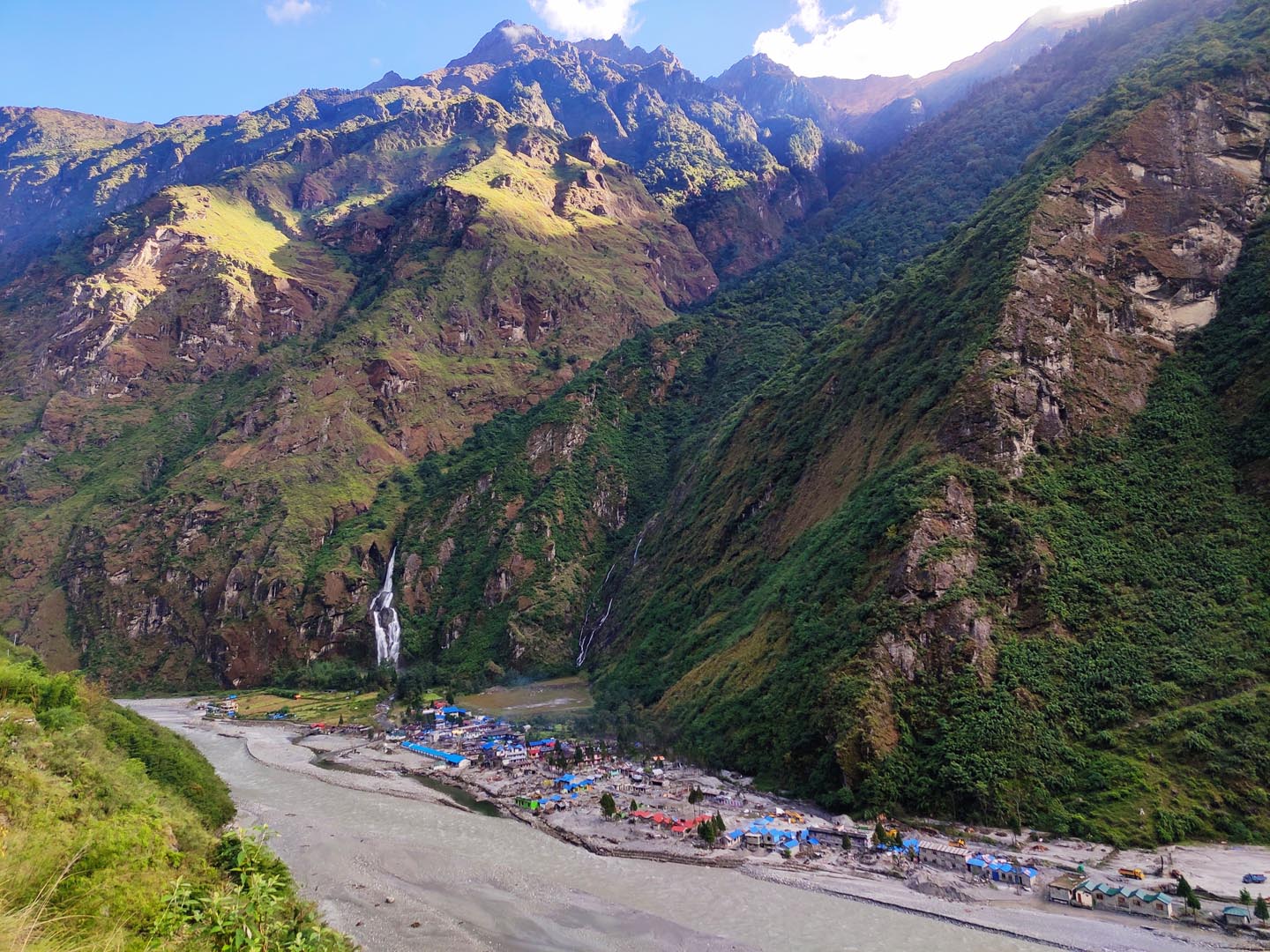
Being the approach day to the trek, the journey brings you steadily into the valley and closer to the mountains on a gradually ascending road.
Small traditional villages displaying the remoteness of Nepal like Bhulbhule, Jagat, and Tal pass by your window, with beautiful waterfalls and lush forests dotting the gorge.
Upon reaching the Dharapani area, the valley narrows and the air feels crisper as you gear up for tomorrow’s walk.
The day comes to an end at the picturesque and hospitable village of Dharapani where you can unwind and prepare for the next day of adventure.
Day 03: Trek from Dharapani to Chame
For the trek from Dharapani to Chame, the trail continues alongside the Marshyangdi River, covering 15.7 km (9.8 mi) within a period of about 5 to 6 hours, taking you deeper into the Annapurna region.
You will pass the villages of Bagarchhap and Danaque, with pine forests and stands of fir appearing more frequently as you gain altitude. The long climb to Timang rewards you with your first wide mountain views.
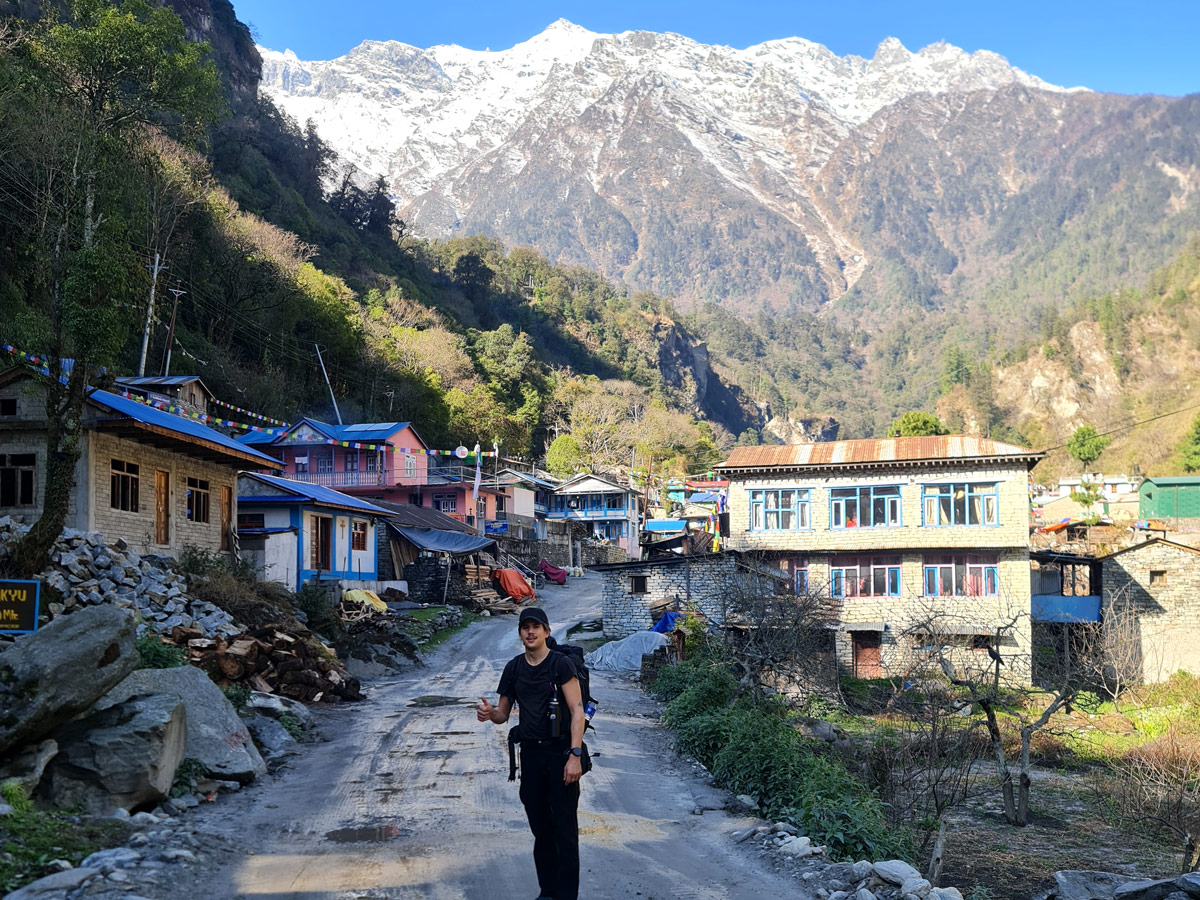
There are several suspension bridges along the way, and Annapurna Conservation Area Project (ACAP) checkpoints operate in this section, including at Dharapani and Chame. Keep your permits handy.
From Timang, the track undulates through Thanchok and Koto before the final, gentle approach into Chame at 2,670 m (8,760 ft).
Chame is the administrative center of Manang District and has comparatively better facilities, including bakeries, shops, and gear needs if you forgot small items (check the Annapurna Circuit trek packing list).
On a clear day, you can spot Annapurna II (7,937 m/26,040 ft) rising impressively above the valley, along with glimpses of Pisang Peak (6,091 m/19,984 ft).
- Trek Duration: 5 to 6 hours
- Trek Difficulty: Gradual ascent along river trails with forested sections and suspension bridges
- Difficulty Level: Moderate
- Walking Distance:7 km (9.8 miles)
- Starting Altitude: Dharapani – 1,860 m (6,102 ft)
- Maximum Altitude: Chame – 2,670 m (8,760 ft)
- Ending Altitude: Chame – 2,670 m (8,760 ft)
- Ascend: ~810 m (2,657 ft)
- Descend: Minimal
Day 04: Trek from Chame to Upper Pisang
A comparatively easier day, the journey from Chame to Upper Pisang is moderately challenging as you will be covering around 17.2 km (10.7 mi) with an elevation gain of about 630 m (2,067 ft) over 6 to 7 hours.
You walk through forests of pine and fir, with waterfalls crashing down the cliffs. The deep river gorge opens up into bigger views, and Paungda Danda, the dramatic curved rock face above the river, is a striking landmark.
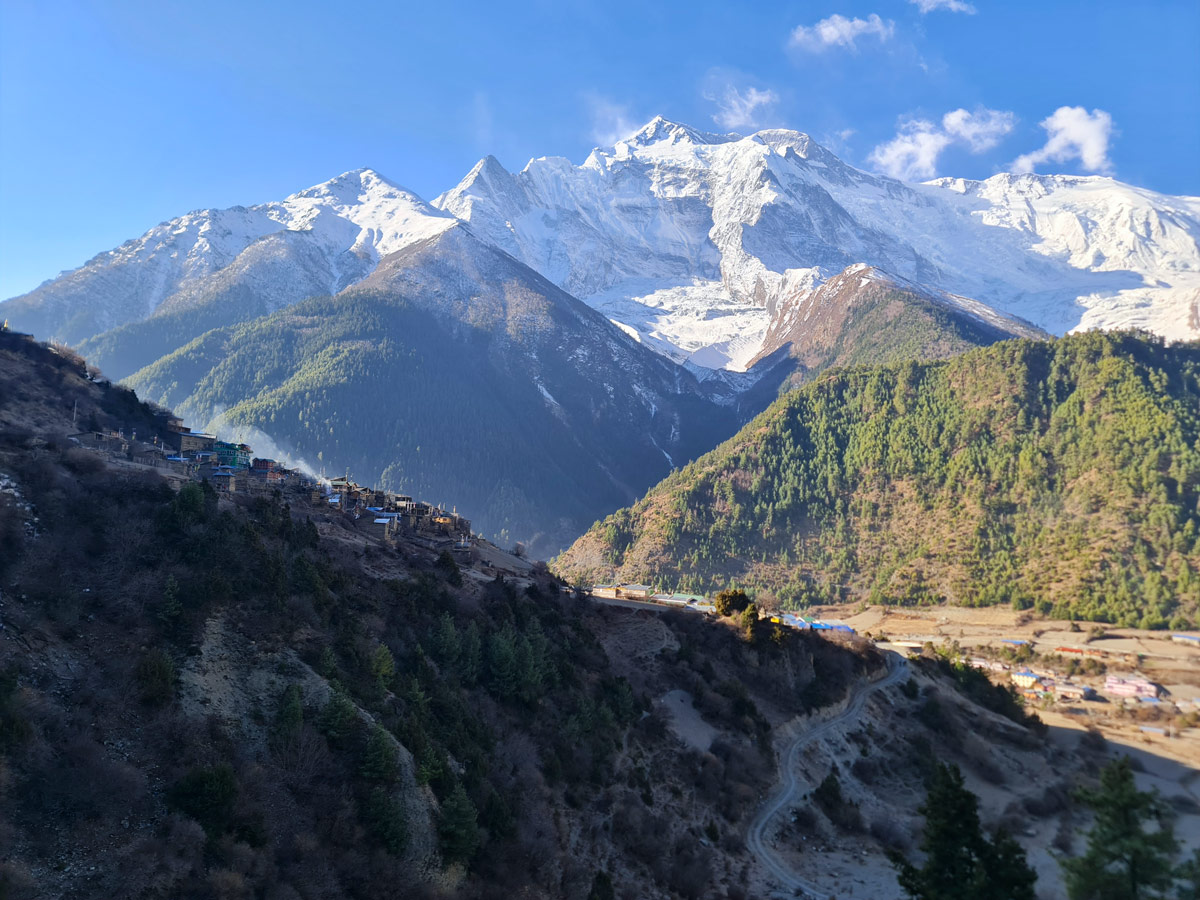
You will be nearing the Annapurna range, with frequent views of Annapurna II and Pisang Peak.
Cultural touches continue, from prayer wheels and mani walls to village courtyards in places like Thanchowk and Koto earlier and then on toward Lower and Upper Pisang.
After 6 to 7 hours of walking, you reach Upper Pisang, a photogenic settlement with a monastery above and stone-lined alleys that look across to Annapurna II.
- Trek Duration: 6 to 7 hours
- Trek Difficulty: Gradual to moderate ascent through forested trails and open valleys with some uphill sections
- Difficulty Level: Moderate
- Walking Distance:2 km (10.7 miles)
- Starting Altitude: Chame – 2,670 m (8,760 ft)
- Maximum Altitude: Upper Pisang – 3,300 m (10,827 ft)
- Ending Altitude: Upper Pisang – 3,300 m (10,827 ft)
- Ascend: ~630 m (2,067 ft)
- Descend: Minimal
Day 05: Trek from Upper Pisang to Ngawal
Wake to breathtaking views of Pisang Peak (6,091 m/19,984 ft) and Annapurna II (7,937 m/26,040 ft), with the first light hitting the high faces.
After breakfast in Upper Pisang, the trek continues toward Ngawal. This is the higher route toward Manang and is known for its big panorama.
A steady climb from Upper Pisang takes you to Deurali Danda (3,486 m/11,437 ft), one of the region’s fine viewpoints. You then continue upward toward the ridge beside the village of Ghyaru, where long mani walls and a hillside cluster of houses make an unforgettable scene.
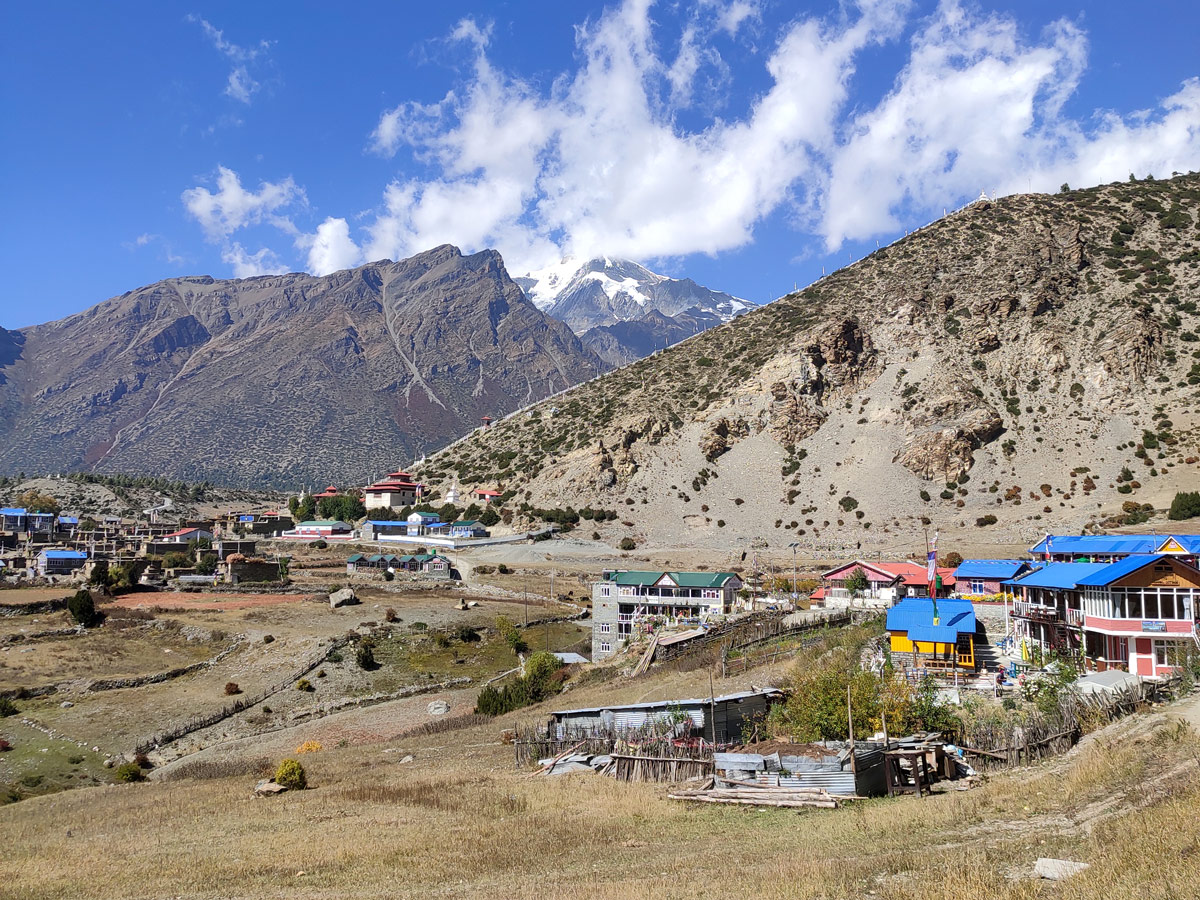
The total journey from Upper Pisang to Ngawal is 10.6 km (6.6 mi), full of prayer flags and dryland junipers, with a good chance of seeing high-altitude birds. The highlight is the continual vista of Annapurna II and III, Pisang Peak, and Gangapurna.
You reach Ngawal at 3,660 m (12,008 ft), a traditional village on a terrace above the valley. Expect an elevation gain of around 360 m (1,181 ft) over 4 to 5 hours.
- Trek Duration: 4 to 5 hours
- Trek Difficulty: Steady uphill climb on exposed high trails with panoramic mountain views
- Difficulty Level: Moderate
- Walking Distance:6 km (6.6 miles)
- Starting Altitude: Upper Pisang – 3,300 m (10,827 ft)
- Maximum Altitude: Ngawal – 3,660 m (12,008 ft)
- Ending Altitude: Ngawal – 3,660 m (12,008 ft)
- Ascend: ~360 m (1,181 ft)
- Descend: Minimal
Day 06: Trek from Ngawal via Bhraka to Manang
One of the major segments in the Annapurna Circuit trek, this day will cover the 9.1 km (5.7 mi) distance between Ngawal and Manang as it takes you there via Bhraka over 3 to 4 hours.
Although the destination and the starting point are not very far in terms of altitude, you will see a significant dip in the elevation from Ngawal at 3,660 m (12,008 ft) to Bhraka at 3,360 m (11,023 ft).
The trek will begin with a descent toward Bhraka followed by another descent toward Manang, encompassing several unique cultural encounters and stunning panoramic vistas.
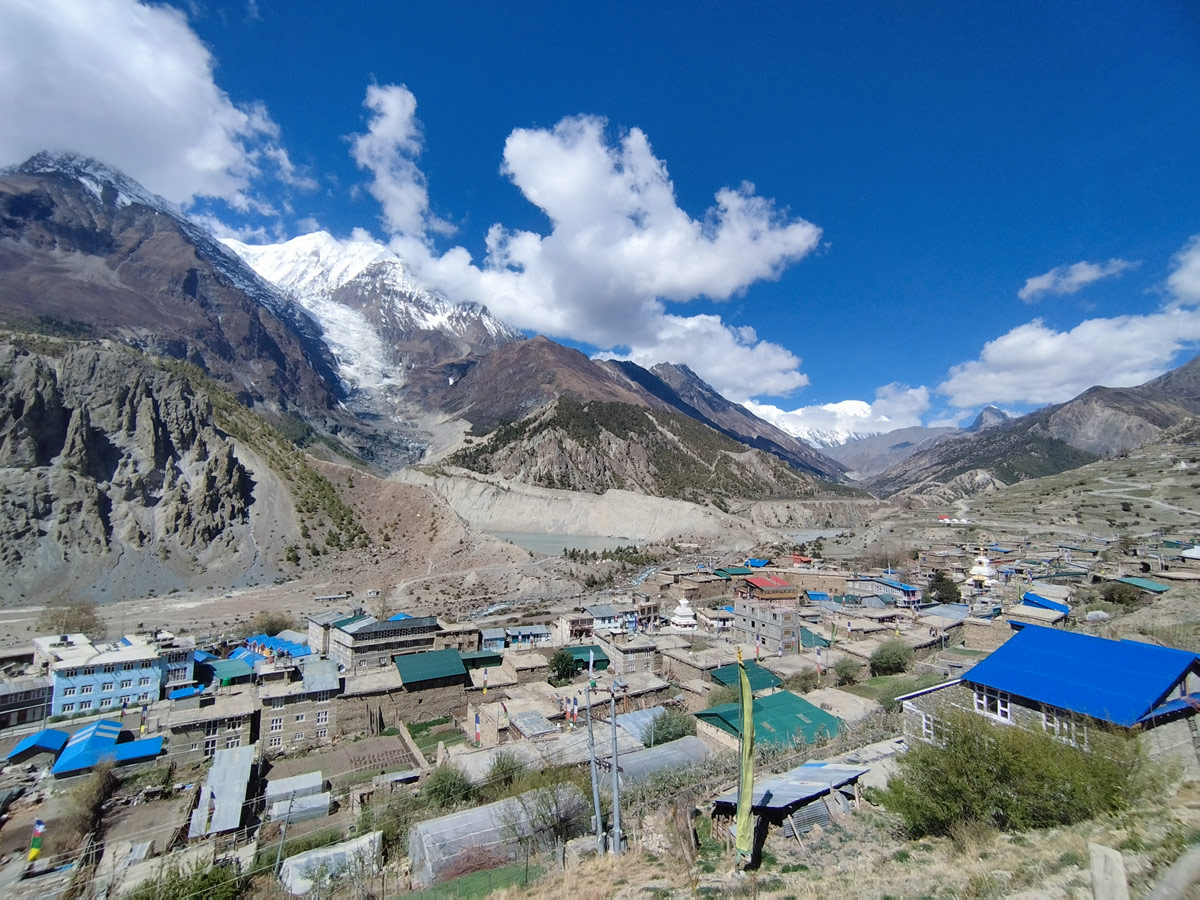
Known for its scenic beauty, the segment from Ngawal to Bhraka passes through big hills and lush forests which look ethereal against the white Himalayan backdrop.
Along with the local flora and fauna, trekkers can witness several small stupas, lama schools, mani walls, and prayer flags that add to the beauty of the region.
Among the several stupas, a significant stop is the ancient Bhraka Gompa, considered around 900 years old and of high religious, cultural, and historical value.
After exploring this landmark, you can make optional stops at other monasteries in the area like Lophelling Monastery, Sher Gompa, and smaller ones before reaching Manang at 3,540 m (11,614 ft) — a crucial stop on the Annapurna Circuit Trek.
- Trek Duration: 3 to 4 hours
- Trek Difficulty: Gentle undulating trail with short descents and gradual ascents via cultural villages and monasteries
- Difficulty Level: Moderate
- Walking Distance:1 km (5.7 miles)
- Starting Altitude: Ngawal – 3,660 m (12,008 ft)
- Maximum Altitude: Ngawal – 3,660 m (12,008 ft)
- Ending Altitude: Manang – 3,540 m (11,614 ft)
- Ascend: Minimal
- Descend: ~120 m (394 ft)
Day 07: Acclimatization Day at Manang
Given the challenging pinnacle of the Annapurna Circuit trek at 5,416 m (17,769 ft), altitude sickness is a high possibility with symptoms like nausea, fatigue, headache, loss of appetite, and sleep disturbance.
While it might seem general, altitude sickness can be dangerous if ignored. Therefore, proper acclimatization is the key to preventing it during the trek.
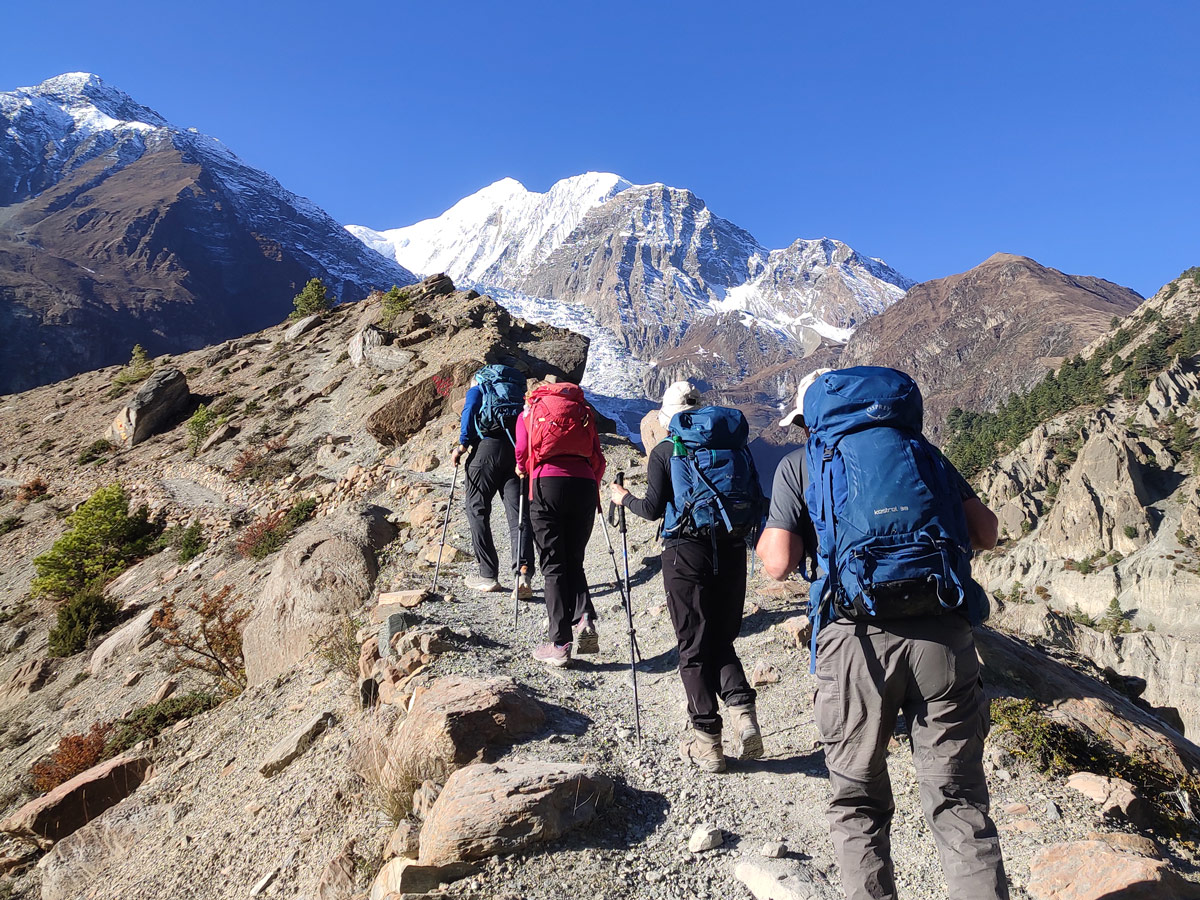
Manang, situated at 3,540 m (11,614 ft), is the perfect acclimatization stop — ideal altitude, great facilities, hiking options, and welcoming culture.
Spend the day exploring the surrounding area to let your body adapt. For a deeper look at villages, culture, and hiking options, you can explore this complete guide to Manang. Short hikes to Gangapurna Glacial Lake (3,900 m/12,795 ft) and nearby monasteries are ideal.
Trekkers with extra time can also hike to Milarepa’s Caves, Tilicho Lake (4,919 m/16,138 ft), or Kicho Tal (4,600 m/15,092 ft) for spectacular views.
Return to your teahouse for local cuisine and the warm hospitality of the Manangis.
- Trek Duration: Flexible (short acclimatization hikes)
- Trek Difficulty: Gentle acclimatization hikes on surrounding ridges and glacial viewpoints
- Difficulty Level: Easy to Moderate
- Walking Distance:6 km (2.9 miles)
- Starting Altitude: Manang – 3,540 m (11,614 ft)
- Maximum Altitude: ~3,900 m (12,795 ft)
- Ending Altitude: Manang – 3,540 m (11,614 ft)
- Ascend: ~360 m (1,181 ft)
- Descend: ~360 m (1,181 ft)
Day 08: Trek from Manang to Yak Kharka
After proper acclimatization, continue the trek toward Yak Kharka.
Covering an altitude difference of about 500 m (1,640 ft), this segment is significant for elevation gain.
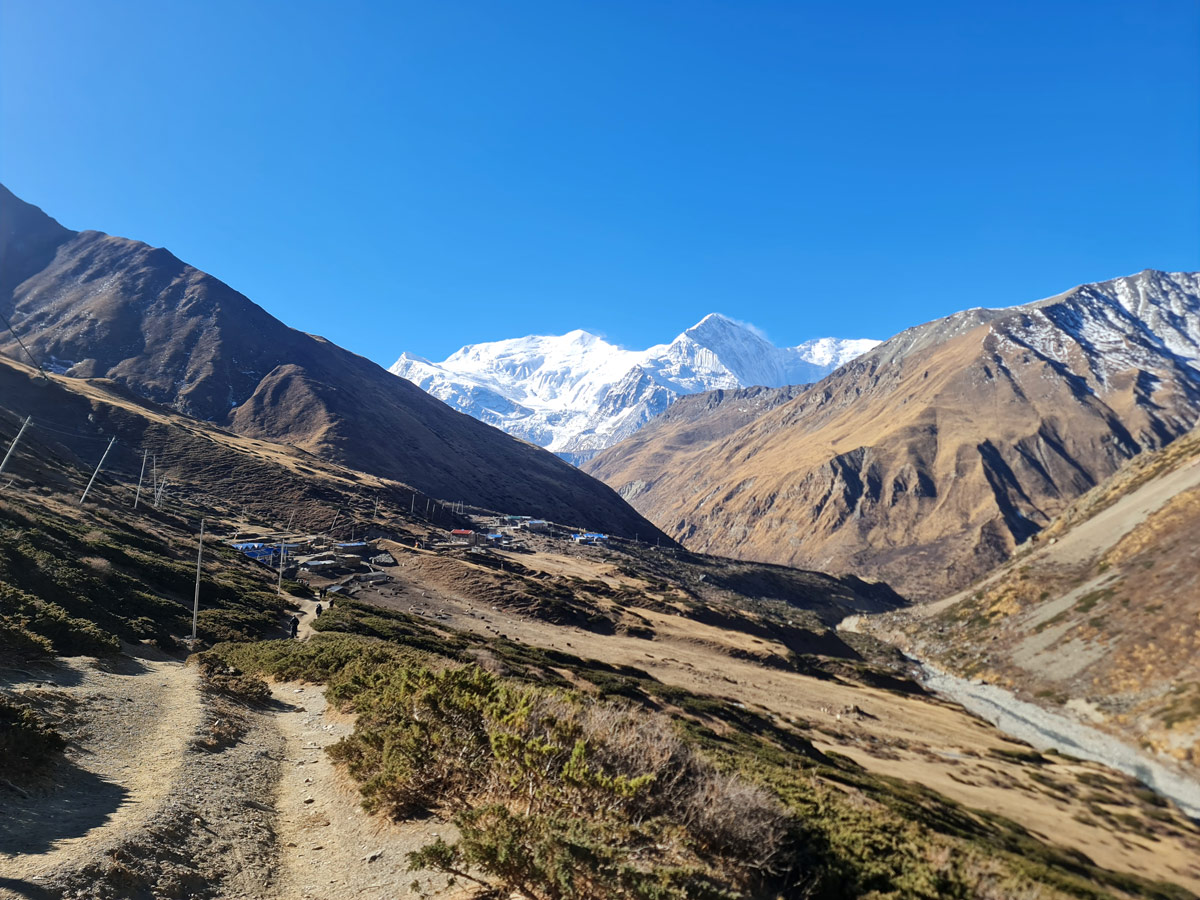
Starting from Manang, a steep ascent brings you to Tengi (3,690 m/12,106 ft). The Annapurna range watches over the trail to Yak Kharka.
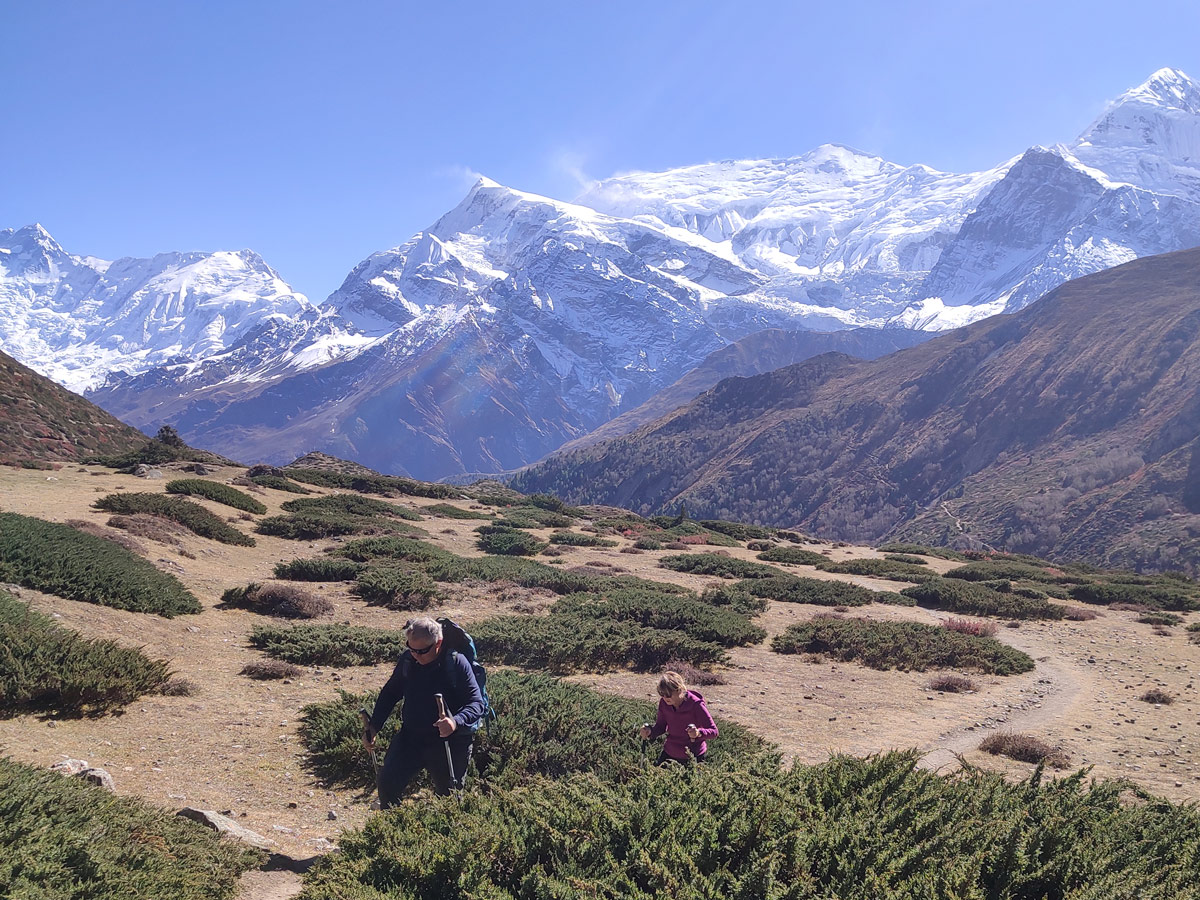
Leaving the Marshyangdi Valley, the trail crosses rivers like Thorung Khola and Ghyanchang Khola. The 10.7 km (6.6 mi) journey takes about 5 to 6 hours.
You’ll pass the Ghusang Monastery (3,950 m/12,959 ft) before reaching Yak Kharka at 4,050 m (13,287 ft), where the landscape opens to yak pastures and stunning views of Gungang Himal, the Chulus, Kangla Himal, and Annapurna.
- Trek Duration: 5 to 6 hours
- Trek Difficulty: Gradual but sustained ascent on high-altitude trails with thinner air and open terrain
Difficulty Level: Moderate to Challenging - Walking Distance:7 km (6.6 miles)
- Starting Altitude: Manang – 3,540 m (11,614 ft)
- Maximum Altitude: Yak Kharka – 4,050 m (13,287 ft)
- Ending Altitude: Yak Kharka – 4,050 m (13,287 ft)
- Ascend: ~510 m (1,673 ft)
- Descend: Minimal
Day 09: Trek from Yak Kharka to Thorong Phedi
From Yak Kharka to Thorong Phedi is a challenging stretch as you will be traversing through several landslide-prone areas and making your way through loose scree and rocky terrains of the region.
The day starts with an ascent towards Ledar (4,200 m/13,779 ft), which is a landslide-prone area, so be very careful. The trail today will be a little undulating with turns of ascent and sudden descents, especially for river crossings.
However, after navigating the challenging trail, you finally climb to reach the base of the Thorong La Pass at the Thorong Phedi.
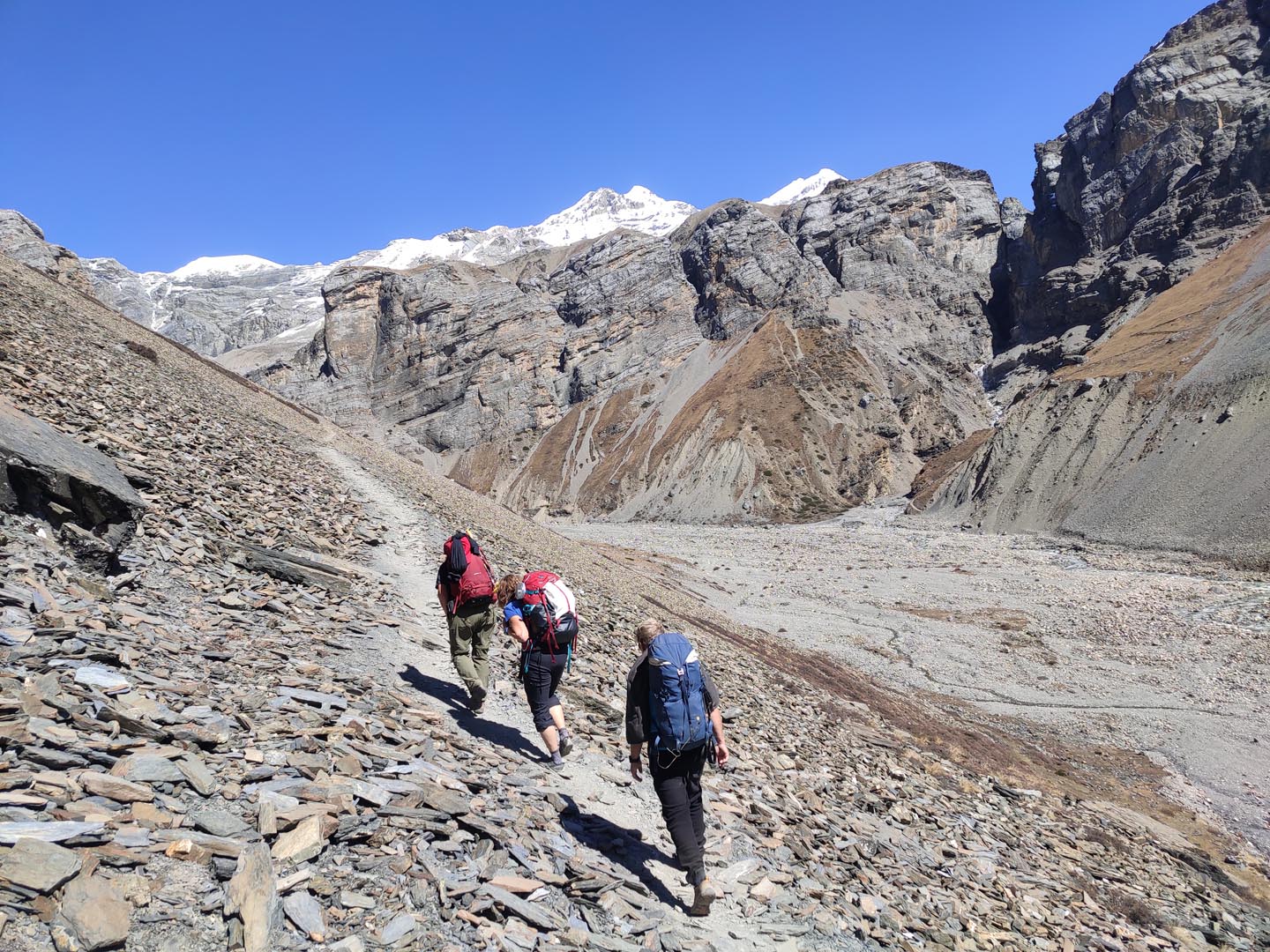
Located at an elevation of 4,525 m (14,846 ft), Thorong Phedi is the final stop before crossing the challenging Thorong La Pass. It is worthy of the challenge as the stark yet captivating landscapes of this high altitude are truly a unique experience.
The total distance covered to reach Thorong Phedi from Yak Kharka is around 6.5 km (4.0 mi), which is covered over a flexible time of 5 to 6 hours. You will be covering an altitude difference of around 475 m (1,558 ft) during this segment.
As this is your resting spot for the day, you will find basic amenities in the teahouses available at the Thorong Phedi. You will also be pleased with the beautiful sight of Thorung Peak, Syagang, and Gundang Himal.
- Trek Duration: 5 to 6 hours
- Trek Difficulty: Challenging high-altitude trek across landslide-prone and rocky sections
- Difficulty Level: Challenging
- Walking Distance:5 km (4.0 miles)
- Starting Altitude: Yak Kharka – 4,050 m (13,287 ft)
- Maximum Altitude: Thorong Phedi – 4,525 m (14,846 ft)
- Ending Altitude: Thorong Phedi – 4,525 m (14,846 ft)
- Ascend: ~475 m (1,558 ft)
- Descend: Minimal
Day 10: Trek from Thorong Phedi to Muktinath via Thorong La Pass
Today is the toughest day of the Annapurna Circuit trek as you cross the high Thorong La Pass.
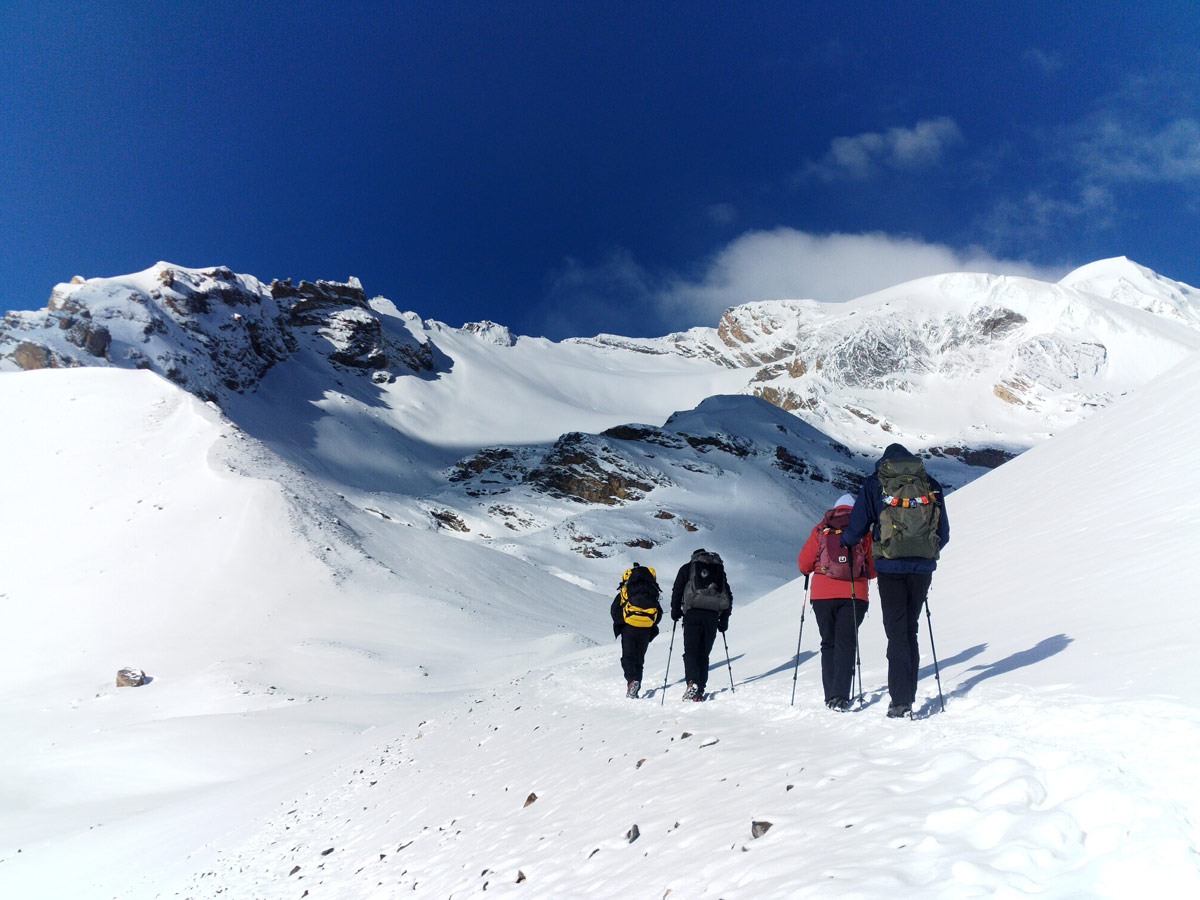
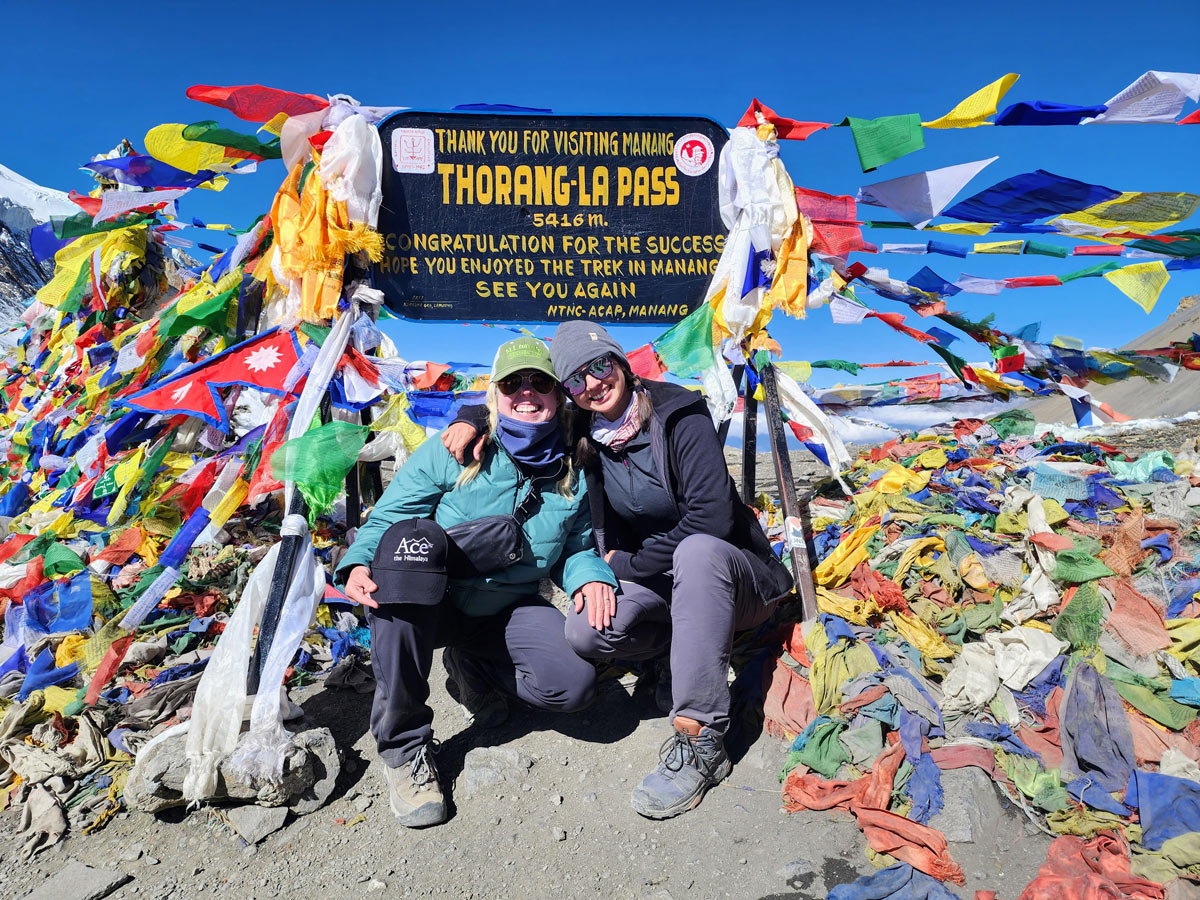
Starting before dawn, you make a steady ascent past Thorong High Camp to reach Thorong La Pass at 5,416 m (17,769 ft). Despite cold temperatures and thin air, the summit rewards you with sweeping views of Annapurna, Dhaulagiri, Manaslu, Machhapuchhre, and surrounding peaks.
After a brief stop at the pass, you descend along the Thorong Khola to reach Muktinath (3,760 m/12,336 ft), a sacred pilgrimage site for both Hindus and Buddhists. The day involves a significant climb followed by a long descent, making it demanding but unforgettable.
- Trek Duration: 8 to 9 hours
- Trek Difficulty: Very demanding high-altitude pass crossing with steep ascent and long descent
- Difficulty Level: Challenging
- Walking Distance:4 km (10.2 miles)
- Starting Altitude: Thorong Phedi – 4,525 m (14,846 ft)
- Maximum Altitude: Thorong La Pass – 5,416 m (17,769 ft)
- Ending Altitude: Muktinath – 3,760 m (12,336 ft)
- Ascend: ~891 m (2,923 ft)
- Descend: ~1,616 m (5,302 ft)
Day 11: Drive from Muktinath via Jomsom to Tatopani
From Muktinath to Tatopani is a relaxing day as your trekking boots finally take a break. The 72 km (44.7 mi) journey from Muktinath to Tatopani is covered in about 3 to 4 hours by a local jeep or bus.
The descent starts from Muktinath (3,760 m/12,336 ft) and passes Ranipauwa before continuing along the Kali Gandaki River to Jomsom (2,720 m/8,924 ft), the headquarters of Mustang District.
The drive takes you through beautiful villages such as Marpha (2,670 m/8,760 ft), Tukuche (2,590 m/8,497 ft), and Kalopani (2,530 m/8,301 ft), revealing a dramatic change in scenery — from the dry Mustang desert to lush green hills.
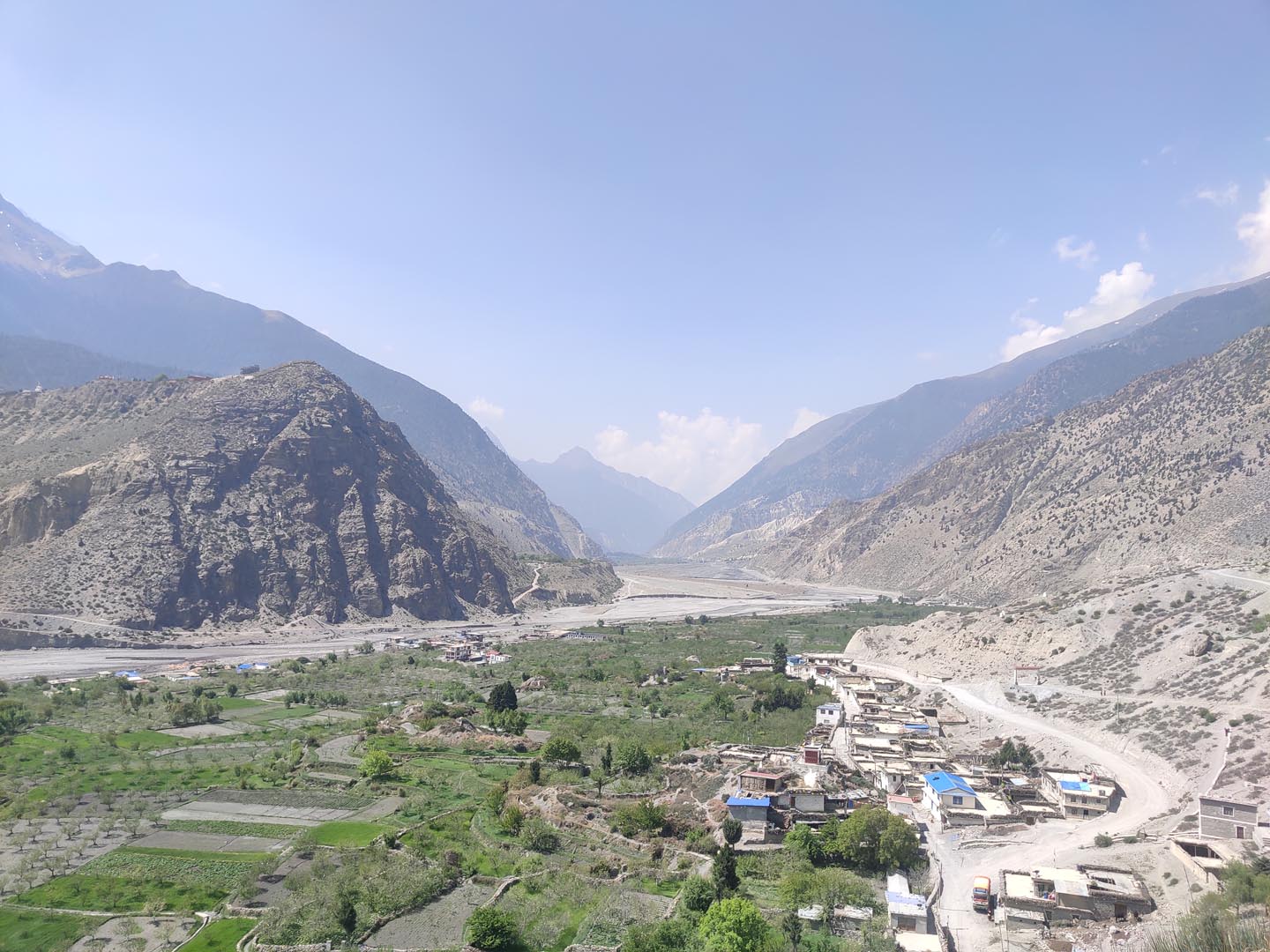
As you descend, you will pass through Ghasa (2,030 m/6,660 ft) and the world’s deepest gorge near Kopchepani (1,620 m/5,315 ft).
After crossing a small suspension bridge at Jalthale, the road winds down to Tatopani (1,190 m/3,904 ft), known for its natural hot springs. This drive beautifully marks your transition from the cold arid highlands to a warmer and greener landscape.
- Travel Duration: 3 to 4 hours
- Travel Type: Scenic drive through Kali Gandaki Valley
- Distance Covered: 72 km (44.7 miles)
- Starting Altitude: Muktinath – 3,760 m (12,336 ft)
- Ending Altitude: Tatopani – 1,190 m (3,904 ft)
- Walking Distance: None
- Ascend: None
- Descend: ~2,570 m (8,432 ft)
Day 12: Rest Day at Tatopani
An important location on the Annapurna Circuit trek, Tatopani is known for its natural hot springs where one can take a relaxing bath surrounded by the hills and the majesty of the Himalayas.
The water here is believed to have healing properties and offers a well-deserved break to soothe sore muscles after the demanding Thorong La crossing.
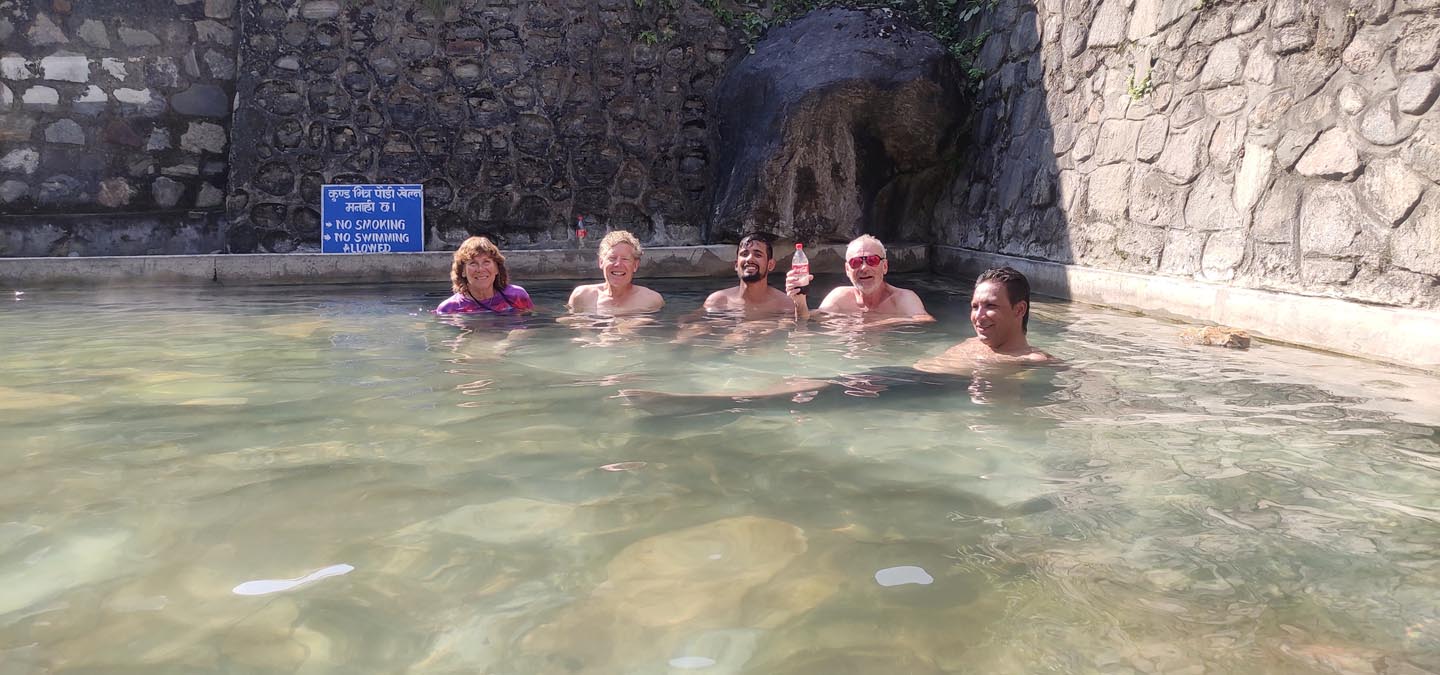
You can spend the day unwinding, strolling around the village, or visiting nearby temples and monasteries. Or simply relax and enjoy the peace that Tatopani has to offer.
This rest day prepares you both physically and mentally for the remaining portion of your trek.
- Activity Duration: Flexible
- Activity Type: Rest and recovery day with optional short walks
- Difficulty Level: Easy
- Walking Distance: Optional short walks
- Starting Altitude: Tatopani – 1,190 m (3,904 ft)
- Maximum Altitude: Tatopani – 1,190 m (3,904 ft)
- Ending Altitude: Tatopani – 1,190 m (3,904 ft)
- Ascend: Minimal
- Descend: Minimal
Day 13: Trek from Tatopani to Ghorepani
Getting back into trekking mode, you start the ascent towards Ghorepani. The day covers around 15.2 km (9.4 mi) over 6 to 8 hours of walking.
The trail takes you through traditional Magar villages like Ghara, Shikha, and Phalate, offering insights into rural Nepali life. Lush forests, cascading waterfalls, and rhododendron-covered hills accompany your climb.
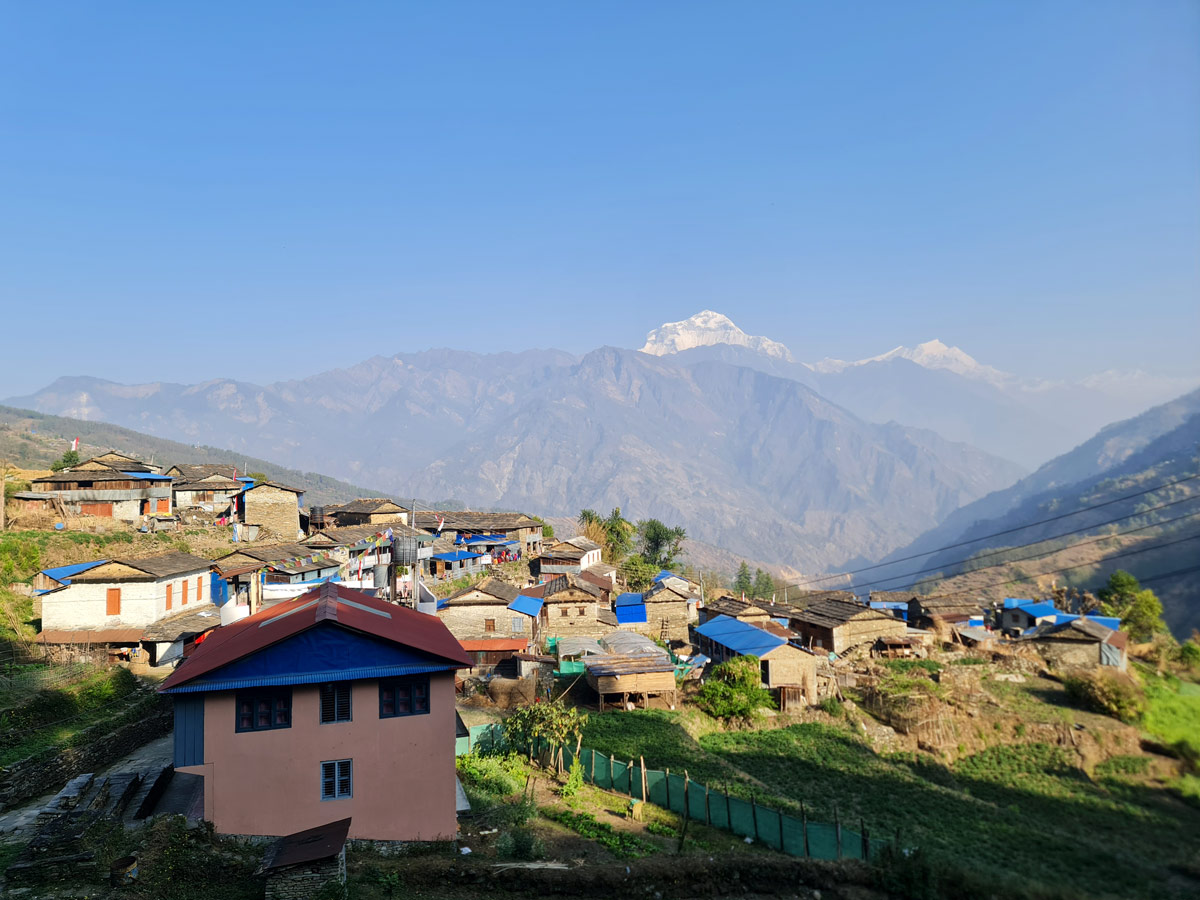
As you reach Ghorepani (2,880 m/9,449 ft), an ACAP checkpoint marks your entry into the popular Ghorepani Poon Hill trail.
This is one of the most scenic stops of the Annapurna Circuit, with sweeping views of Mt. Dhaulagiri (8,167 m/26,795 ft), Annapurna South (7,219 m/23,684 ft), Machhapuchhre (6,993 m/22,943 ft), and Himchuli (6,441 m/21,132 ft).
- Trek Duration: 6 to 8 hours
- Trek Difficulty: Long uphill climb through forested trails and stone staircases
- Difficulty Level: Moderate to Challenging
- Walking Distance:2 km (9.4 miles)
- Starting Altitude: Tatopani – 1,190 m (3,904 ft)
- Maximum Altitude: Ghorepani – 2,880 m (9,449 ft)
- Ending Altitude: Ghorepani – 2,880 m (9,449 ft)
- Ascend: ~1,690 m (5,545 ft)
- Descend: Minimal
Day 14: Hike to Poon Hill and back, Trek to Birethanti and Drive to Pokhara
On this final day of the Annapurna Circuit trek, a small detour to one of the best sunrise viewing points awaits you. You will hike to Poon Hill (3,210 m/10,531 ft) early in the morning — a 3 km (1.9 mi) round trip from Ghorepani.
While starting early might be daunting, the view of the sunrise falling on the snow-capped peaks that greet you at Poon Hill makes it all worthwhile. You get amazing views of the Dhaulagiri (8,167 m/26,795 ft) and Annapurna (8,091 m/26,545 ft) ranges from here.
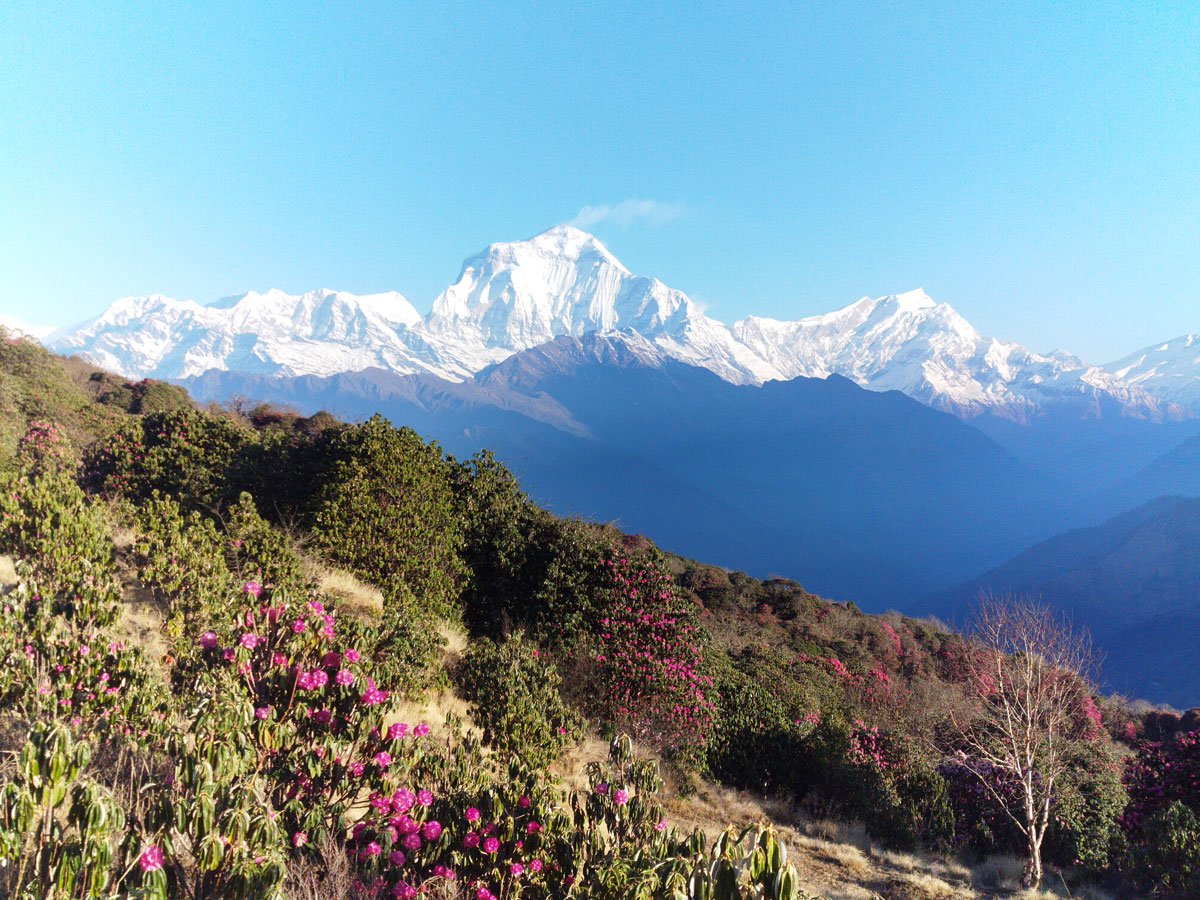
After that, you make your way back to Ghorepani for breakfast. The total distance to Poon Hill and back should be around 3 km (1.9 mi). After breakfast, you will begin your descent toward Birethanti (1,025 m/3,363 ft).
Making your way through the ridges and rhododendron forests while crossing traditional villages like Nange Thanti, Banthanti, Ulleri, and Tikhedhunga, you will descend gradually over about 16.2 km (10.1 mi) in 5 to 6 hours.
Upon reaching Birethanti, the trek officially comes to an end. From here, you will take a short drive of 1 to 3 hours to reach Pokhara (900 m/2,953 ft), where you can finally relax and celebrate the completion of your Annapurna Circuit adventure.
- Trek Duration: 5 to 6 hours (trekking)
- Trek Difficulty: Long descent on stone steps and forested trails with early-morning hike to viewpoint
- Difficulty Level: Moderate
- Walking Distance:2 km (10.1 miles)
- Starting Altitude: Ghorepani – 2,880 m (9,449 ft)
- Maximum Altitude: Poon Hill – 3,210 m (10,531 ft)
- Ending Altitude: Birethanti – 1,025 m (3,363 ft)
- Ascend: ~330 m (1,083 ft)
- Descend: ~1,855 m (6,086 ft)
Why the Annapurna Circuit Trek Distance Is Not Fixed
The total distance of the Annapurna Circuit Trek is not fixed and can vary depending on several factors related to route choices and infrastructure changes over time.
One of the main reasons for variation is the starting and ending points chosen for the trek. While traditional routes started lower and finished at different exit points, many modern itineraries now begin at Dharapani and end at Birethanti, which changes the overall walking distance.
Another key factor is road construction in the Manang and Mustang regions. Over the years, motorable roads have extended into areas that were once fully trekked. As a result, certain sections that used to be walked are now commonly covered by vehicles.
A notable example is the section between Muktinath and Tatopani. In the past, this stretch was entirely trekked through the Kali Gandaki Valley. Today, most itineraries include a drive for this portion, significantly reducing the total trekking distance.
Because of these variations, the Annapurna Circuit can be customized in length, making it flexible for trekkers with different timeframes, fitness levels, and preferences. For a deeper understanding of the challenge level and readiness required, you can read more about how difficult the Annapurna Circuit trek is.
Annapurna Circuit Trek Distance Compared to Other Treks in Nepal
When compared to other popular trekking routes in Nepal, the Annapurna Circuit stands out as a long and varied journey that combines distance, altitude gain, and diverse landscapes. Below is a comparison of the Annapurna Circuit’s trekking distance with some of Nepal’s other well-known treks (walking distance only, excluding drives):
- Everest Base Camp Trek: ~130 km (81 miles)
- Annapurna Base Camp Trek: ~110 km (68 miles)
- Langtang Valley Trek: ~65 km (40 miles)
- Manaslu Circuit Trek: ~177 km (110 miles)
- Upper Mustang Trek: ~125 km (78 miles)
- Mardi Himal Trek: ~50 km (31 miles)
While the Annapurna Circuit is slightly shorter in pure walking distance than some long circuit treks like Manaslu, its challenge comes from sustained high altitude, the Thorong La Pass crossing, and the combination of long trekking days with significant elevation gain and loss. This balance makes it one of the most rewarding long-distance treks in Nepal.