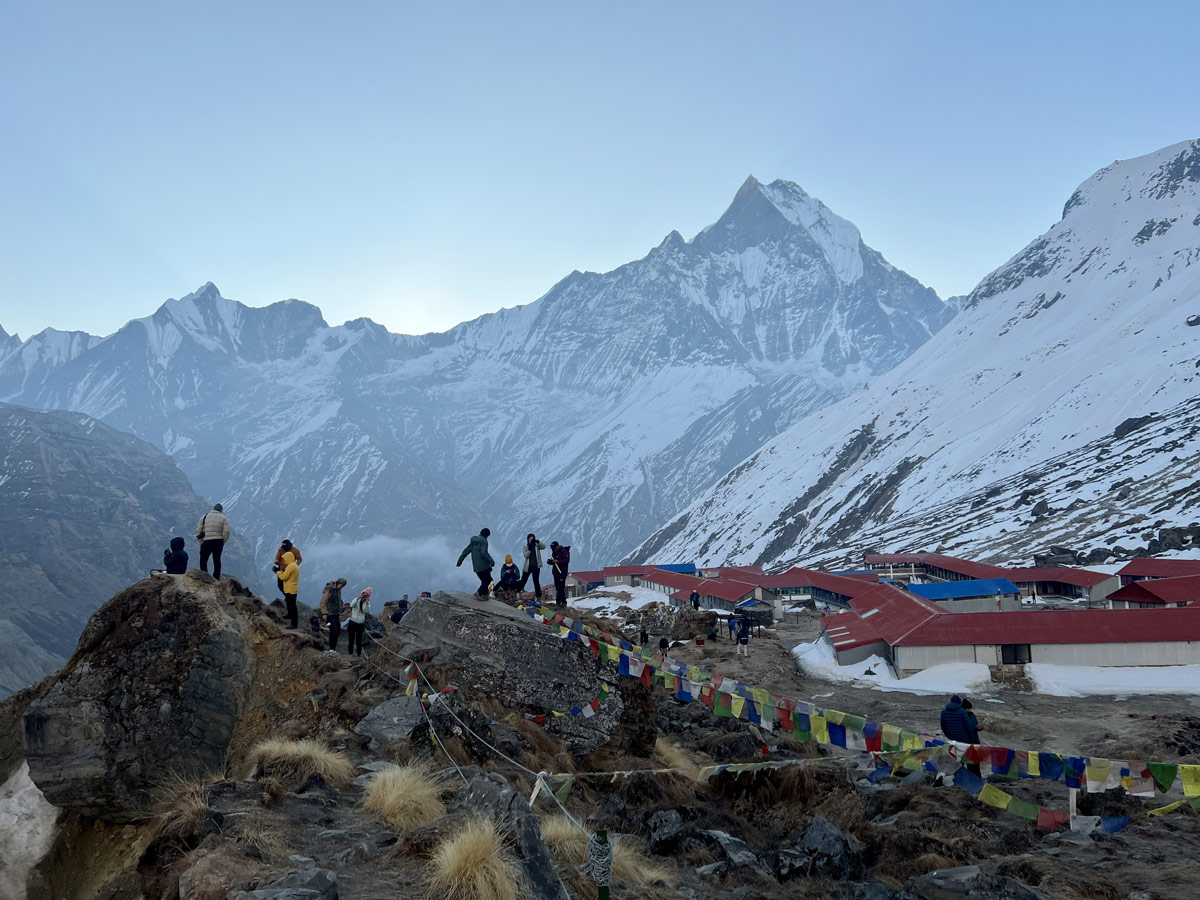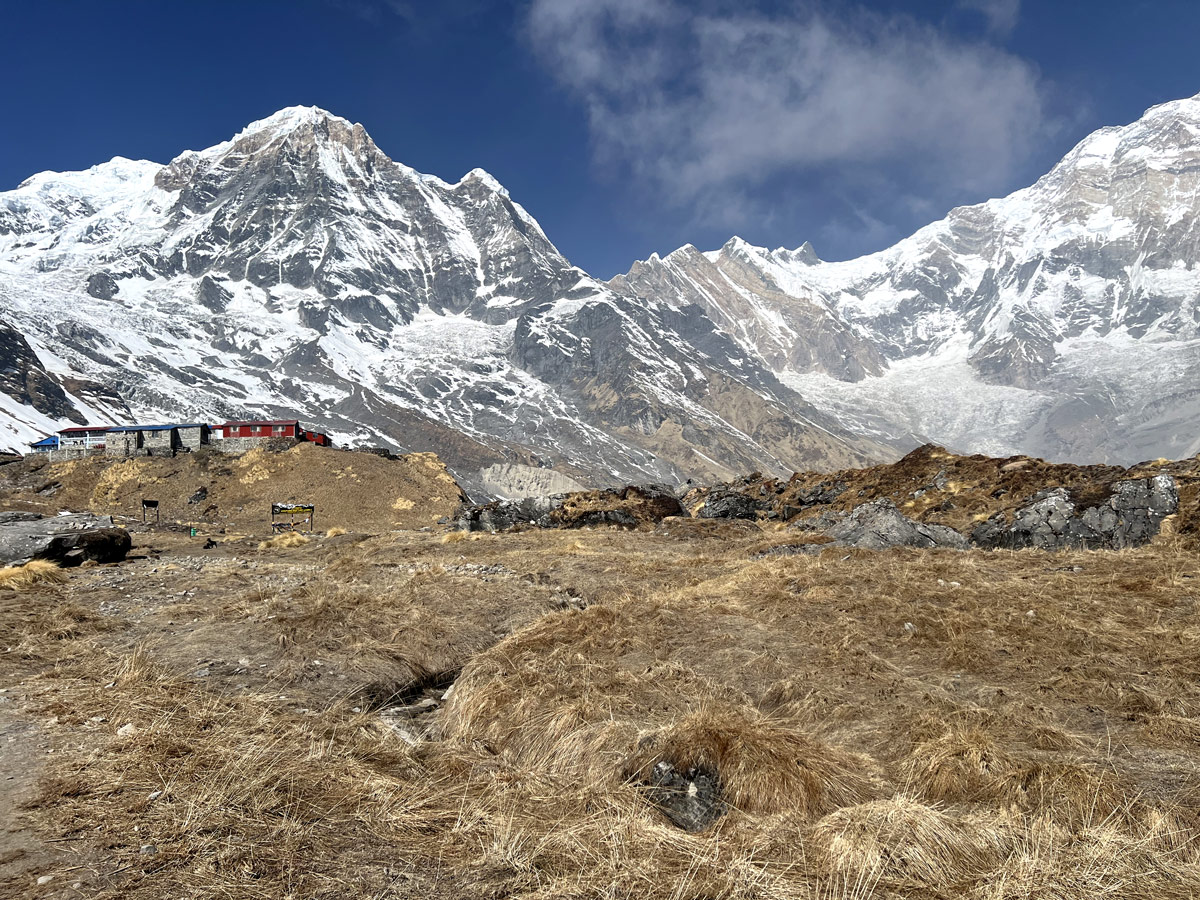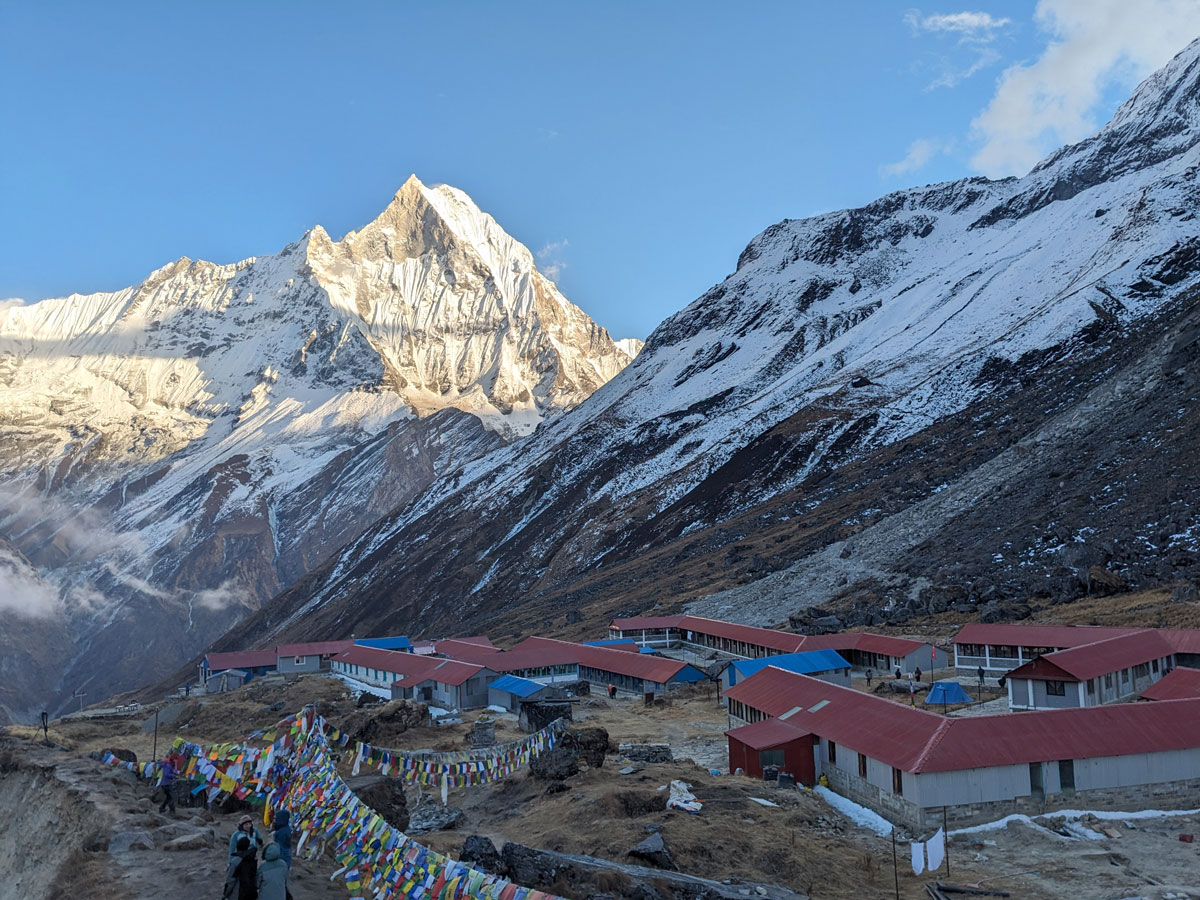



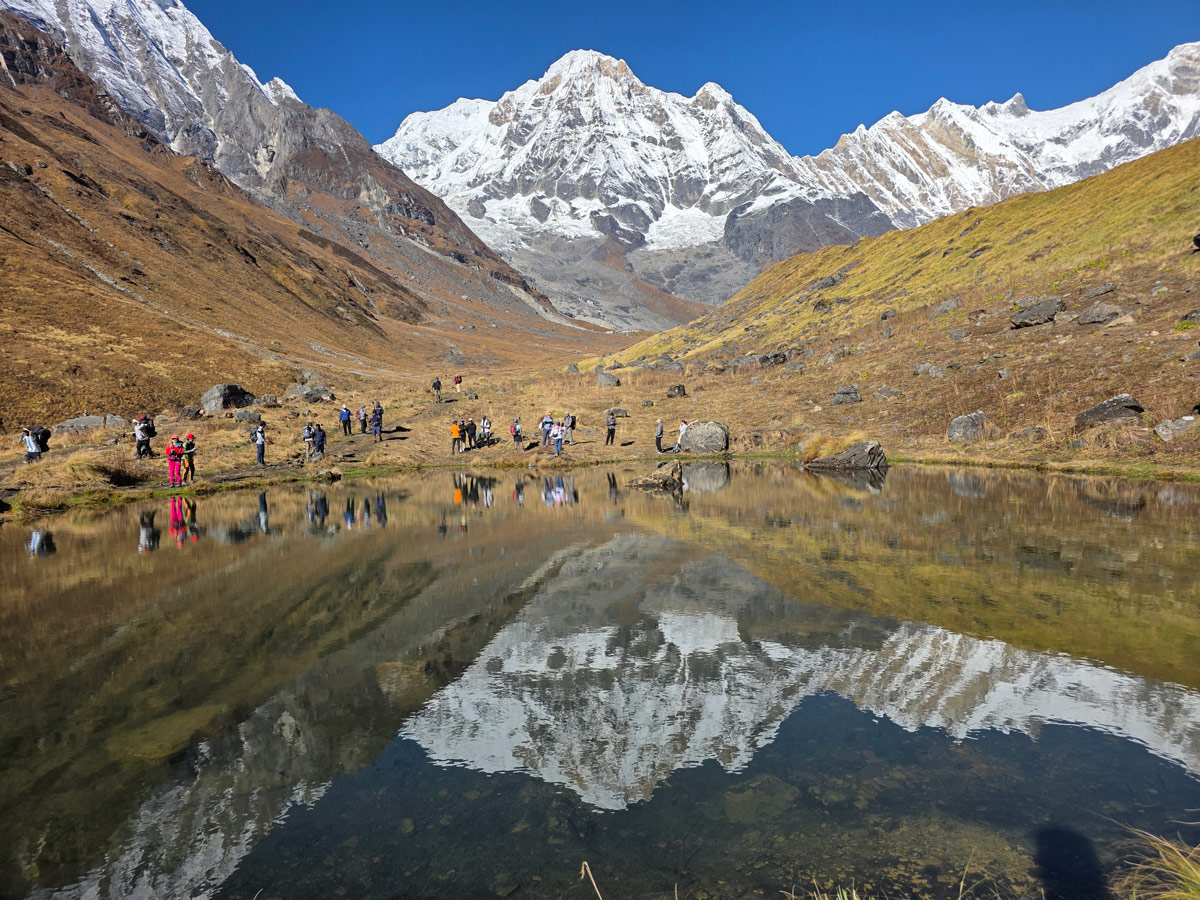
The Annapurna Base Camp Trek is one of Nepal’s most enchanting trekking experiences, set high among the Himalayan peaks and showcasing the region’s remarkable natural beauty within the Annapurna region.
The trek is defined by its diverse landscapes, ranging from lush forests and terraced hillsides to rugged alpine terrain, all framed by the towering Annapurna range.
Beyond scenery, the Annapurna region is rich in flora and fauna. Trekkers often encounter vibrant rhododendron blooms, varied birdlife, and other Himalayan wildlife, adding depth to the journey. The rhododendron is Nepal’s national flower and plays a major role in defining spring landscapes along the trail.
When planning a trek to Annapurna Base Camp, weather is a critical factor. Nepal’s mountain climate can be unpredictable, and conditions can change quickly from one section of the trail to another.
It may be sunny and clear in villages like Chhomrong, while higher sections such as Deurali can experience rain or cloud cover at the same time, directly affecting trail safety and visibility.
Choosing the right season plays a key role in shaping your overall experience, influencing weather conditions, trail accessibility, and the atmosphere along the route.
In this blog, we explore each trekking season and its unique characteristics to help you determine the best time for Annapurna Base Camp trek, whether you are drawn to spring blooms, autumn clarity, winter challenges, or monsoon greenery.
Best Season to Trek Annapurna Base Camp
Annapurna Base Camp is a year-round trekking destination, with trails and teahouse facilities operating in all seasons. However, the best seasons to trek to Annapurna Base Camp are Spring (March to June) and Autumn (end of September to November).
During Spring, you can enjoy clear skies, comfortable temperatures, and blooming rhododendrons. In Autumn, the weather remains stable with clear views and pleasant temperatures.
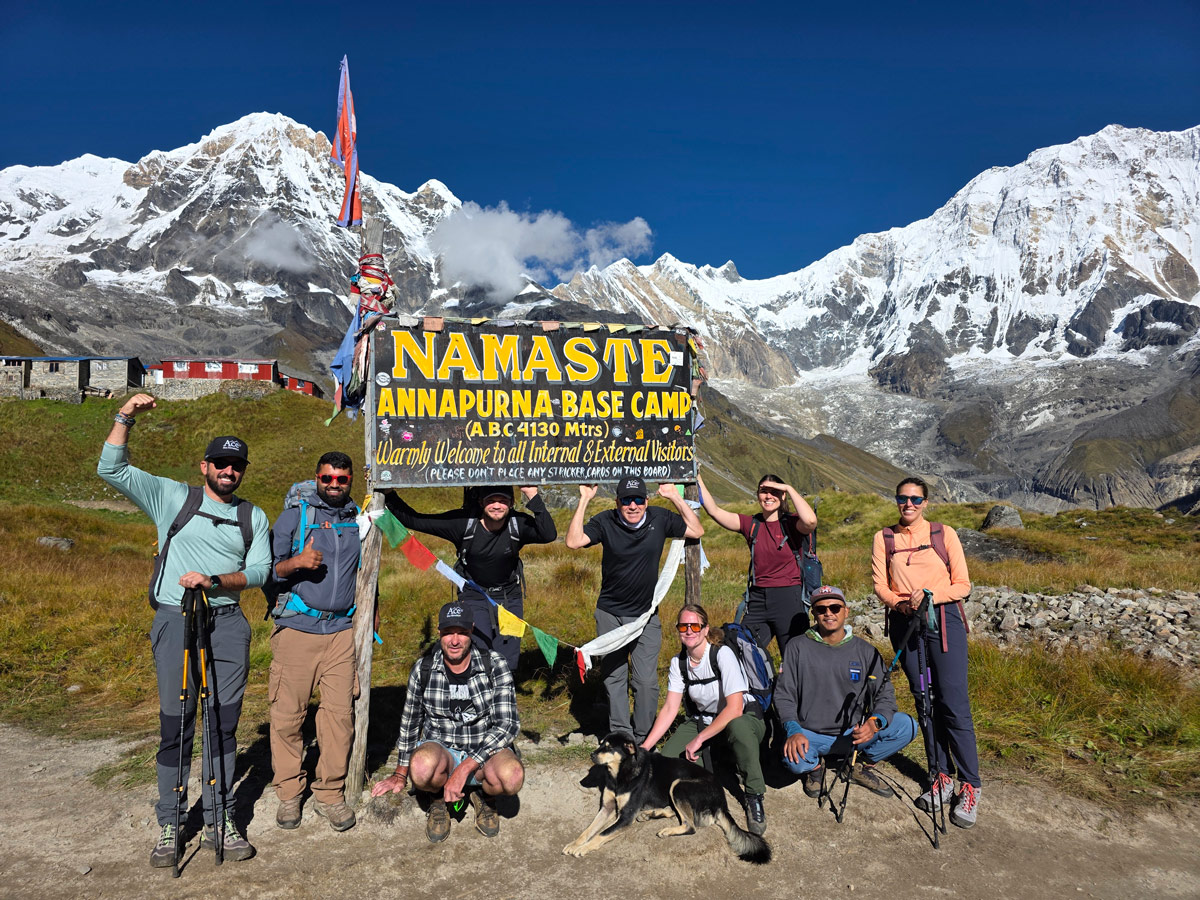
Ultimately, the best time for your Annapurna Base Camp trek depends on your interests, experience level, and willingness to embrace the unique attributes of each season.
Regardless of when you choose to go, careful planning, adequate preparation, and a deep appreciation for the stunning beauty and culture of the region will ensure a memorable and rewarding adventure. Understanding the trek distance, difficulty level, and key stops along the route helps set realistic expectations.
Spring Season (March to June)
Spring, which spans from March to June, is often considered the most rewarding season for the Annapurna Base Camp Trek due to its balanced weather, vibrant landscapes, and reliable trail conditions.
This period marks the transition from winter to summer, bringing clearer skies, warming temperatures, and active natural life across the Annapurna region.
Spring, which runs from March through June, offers stable and relatively predictable weather conditions across the Annapurna region. Days are generally clear with good visibility, although light cloud build-up can occur in the afternoons, especially toward late spring.
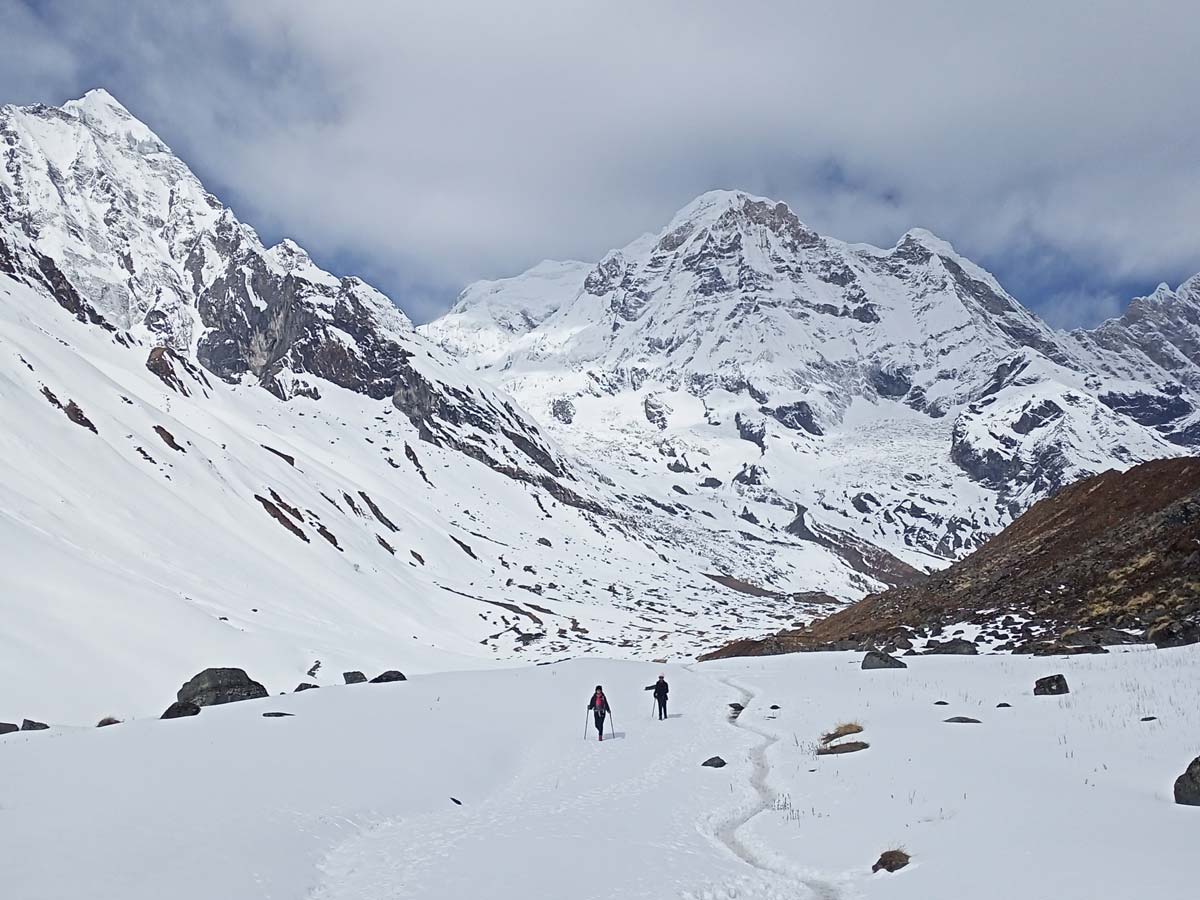
At lower and mid-elevations, daytime temperatures typically range between 10°C and 20°C (50°F to 68°F). Higher elevations near Annapurna Base Camp experience cooler daytime temperatures of around 5°C to 12°C (41°F to 53.6°F).
Nights are noticeably colder, particularly at places such as Deurali, Machhapuchhre Base Camp, and Annapurna Base Camp.
During early spring, temperatures can drop to approximately -8°C (17.6°F) and remain just above freezing later in the season. It is also common to experience occasional snowfall above Deurali during spring, especially in March and early April.
Why Trek Annapurna Base Camp in Spring
- Favorable weather conditions: Spring offers stable and predictable weather in the Annapurna region. Days are comfortably warm for trekking, while skies are generally clear, allowing uninterrupted mountain views.
- Comfortable daytime temperatures: The temperature during the day is neither too hot nor too cold, making long walking hours manageable and enjoyable.
- Chilly but manageable nights: Nights can be cold, especially at higher elevations such as Deurali, Machhapuchhre Base Camp, and Annapurna Base Camp, where temperatures can drop to around -8°C (17.6°F). Proper layering makes this manageable.
- Blooming rhododendron and magnolia forests: Spring brings the trails to life with colorful rhododendron and magnolia blooms, particularly through forested sections between Sinuwa and Himalaya. The landscape becomes vibrant and visually striking.
- Snow gradually melting at higher altitudes: As spring progresses, snow begins to melt above Deurali, improving trail accessibility and reducing the risk of heavy snow obstruction.
- Clear mountain views and sunrise experiences: Clear mornings offer breathtaking sunrise views from Annapurna Base Camp, as golden light illuminates the surrounding snow-covered peaks.
- Rich natural experiences: Trekkers often hear melodious bird calls and see butterflies along the trail, adding a sensory dimension beyond the physical trek.
- Dry and safer trails: Low precipitation during spring keeps trails dry and less slippery, improving safety and comfort while walking.
- Lively trekking atmosphere: Spring is a popular season, meaning trails and teahouses are active and social. While busier, it offers opportunities to meet trekkers from around the world.
Who Should Trek Annapurna Base Camp in Spring
- First-time trekkers looking for stable weather and safer trail conditions
- Nature lovers who want to experience blooming forests, wildlife, and clear Himalayan scenery
- Photographers seeking colorful landscapes and reliable mountain visibility
- Trekkers who prefer moderate temperatures rather than extreme cold or heat
- Those with limited trekking experience who want a balanced and less risky season
- Social trekkers who enjoy a lively trail environment and shared trekking experiences
Spring remains one of the most attractive seasons for the Annapurna Base Camp trek, offering a balance of favorable weather, natural beauty, and trail accessibility. However, trekkers should also be aware of its limitations.
Trails and teahouses can become crowded during peak spring months, especially in April and May, and accommodation often needs to be booked in advance.
Occasional late-season snowfall above Machhapuchhre Base Camp and fluctuating temperatures at night can also add mild challenges, making proper packing and layering essential for a comfortable and safe trek. Following a well-planned packing checklist is highly recommended.
Annapurna Base Camp Trek in Summer and Monsoon Season (July to Mid-September)
The summer and monsoon season, running from July through mid-September, offers a quieter and greener version of the Annapurna Base Camp trek.
This period is marked by warmer temperatures, frequent rainfall, and dramatic changes in landscape, with hillsides turning lush and waterfalls flowing at full force.
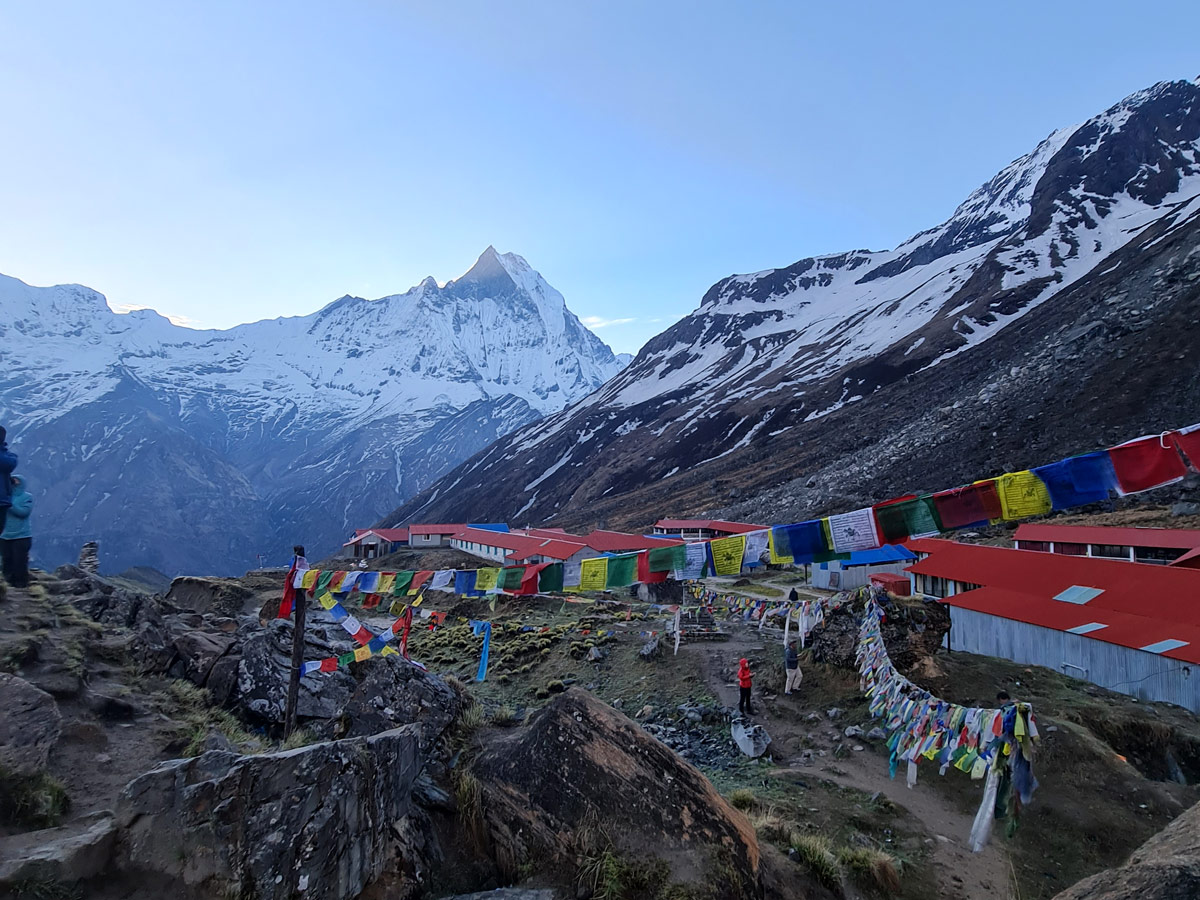
During the day, temperatures in the Annapurna region typically range between 20°C and 25°C (68°F to 77°F), especially at lower and mid-elevations. Nights are cooler, particularly at higher altitudes, where temperatures can drop to around -1°C to 2°C (30°F to 35.6°F).
Why Trek Annapurna Base Camp in Summer and Monsoon
- Lush green landscapes: Monsoon rain transforms forests and valleys into vibrant green scenery, creating a fresh and rejuvenating trekking environment.
- Fewer trekkers on the trail: This is an off-season period, offering a quieter route and more peaceful teahouse stays.
- Warm daytime temperatures: Warmer conditions reduce cold-related discomfort during the day, especially at lower elevations.
- Dramatic mountain atmosphere: Cloud formations, misty valleys, and post-rain clearings create a unique and atmospheric Himalayan experience.
- Active waterfalls and rivers: Seasonal rainfall brings waterfalls and streams to life, adding visual appeal along the trail.
Who Should Trek Annapurna Base Camp in Summer and Monsoon Season
- Experienced trekkers who are comfortable with variable weather and wet trail conditions
- Adventure seekers looking for a quieter and less crowded trekking experience
- Nature enthusiasts who appreciate lush greenery, waterfalls, and dramatic cloud formations
- Trekkers with flexible schedules who can accommodate potential delays or route changes
- Those seeking solitude rather than a busy trekking environment
The summer and monsoon season offers a rewarding experience for well-prepared trekkers, but it also has clear drawbacks.
Frequent rainfall can reduce visibility, trails may become muddy or slippery, and leeches are common in forested areas.
Road conditions leading to trailheads such as Jhinu Danda can also be affected, with occasional landslides and rough sections causing transportation delays, requiring flexibility and careful planning.
Annapurna Base Camp Trek in Autumn Season (End of September to November)
Autumn, which spans from late September through November, is widely regarded as the most stable and reliable season for trekking to Annapurna Base Camp. The monsoon rains clear the atmosphere, resulting in crisp air, dry trails, and excellent mountain visibility.
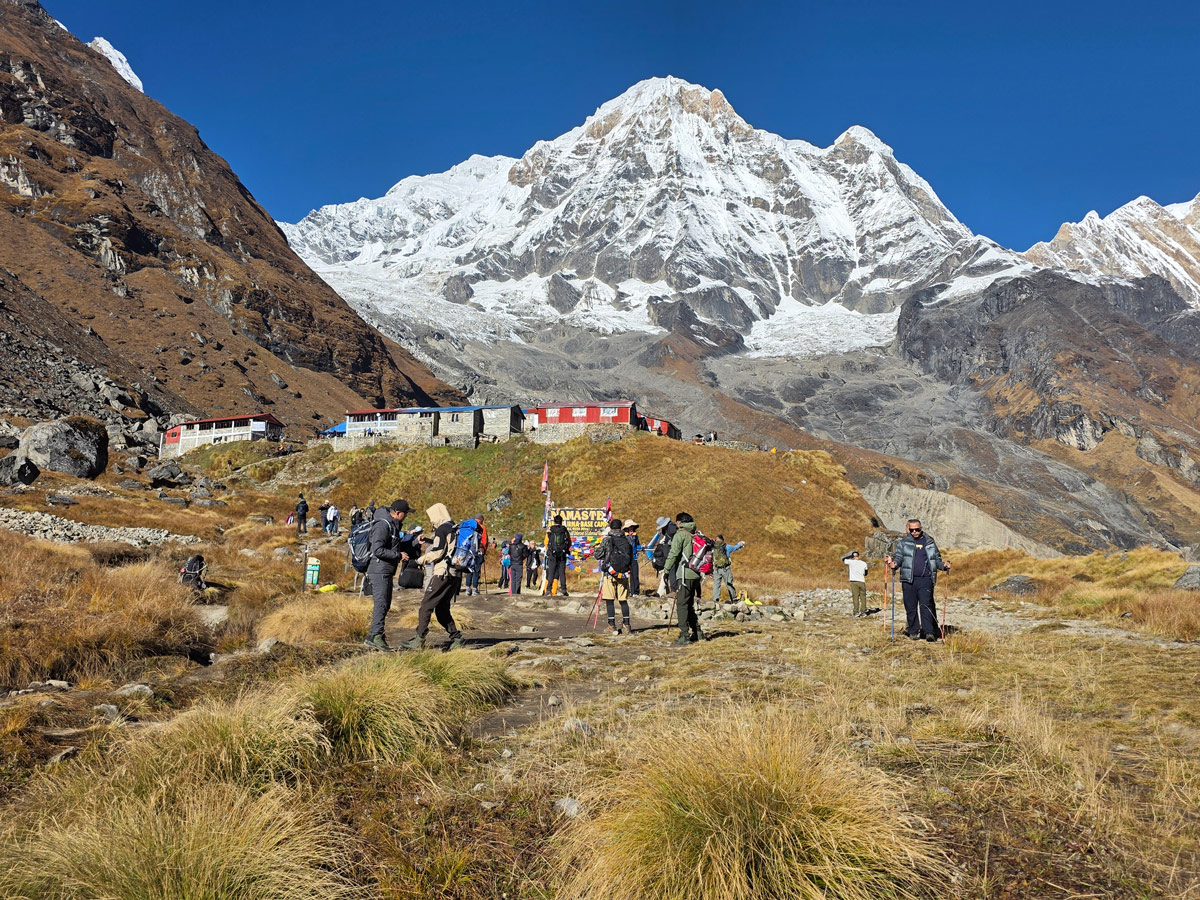
During autumn, daytime temperatures at lower and mid-elevation villages such as Chhomrong and Bamboo typically range from 12°C to 20°C (53.6°F to 68°F), making trekking comfortable without excessive heat.
Nights are cooler at higher elevations near Deurali, Machhapuchhre Base Camp, and Annapurna Base Camp, where temperatures can drop to around -3°C to -4°C (26.6°F to 24.8°F).
Why Trek Annapurna Base Camp in Autumn
- Clear skies and excellent visibility: Post-monsoon conditions provide some of the clearest mountain views of the year.
- Stable and dry trail conditions: Minimal rainfall keeps trails firm and safe for trekking.
- Comfortable temperatures: Mild daytime temperatures make long trekking days enjoyable, especially on extended walking sections above Deurali.
- Scenic trail between MBC and ABC: The stretch between Machhapuchhre Base Camp (MBC) and Annapurna Base Camp (ABC) is especially scenic in autumn, featuring open glacial terrain and sweeping views of Annapurna South, Hiunchuli, and Machhapuchhre.
- Cultural experiences: Major festivals such as Dashain and Tihar take place during autumn, offering cultural insight along the route and a chance to observe local traditions.
- Paddy fields and village landscapes: Lower sections of the trail feature golden paddy fields, terraced farms, and traditional village scenery around villages such as Chhomrong during the harvest season.
- Lively trekking atmosphere: Popular season with active teahouses and social trail experiences.
Who Should Trek Annapurna Base Camp in Autumn
- First-time trekkers seeking the most stable and reliable weather conditions
- Trekkers focused on mountain views and clear Himalayan panoramas
- Cultural travelers interested in experiencing festivals like Dashain and Tihar
- Photographers looking for crisp visibility and balanced lighting conditions
- Trekkers who prefer social trails and lively teahouse interactions
Autumn is widely considered the most reliable season for the Annapurna Base Camp trek, but it also has its limitations. Trails and teahouses can become very crowded during peak months, particularly in October, and advance bookings are often necessary.
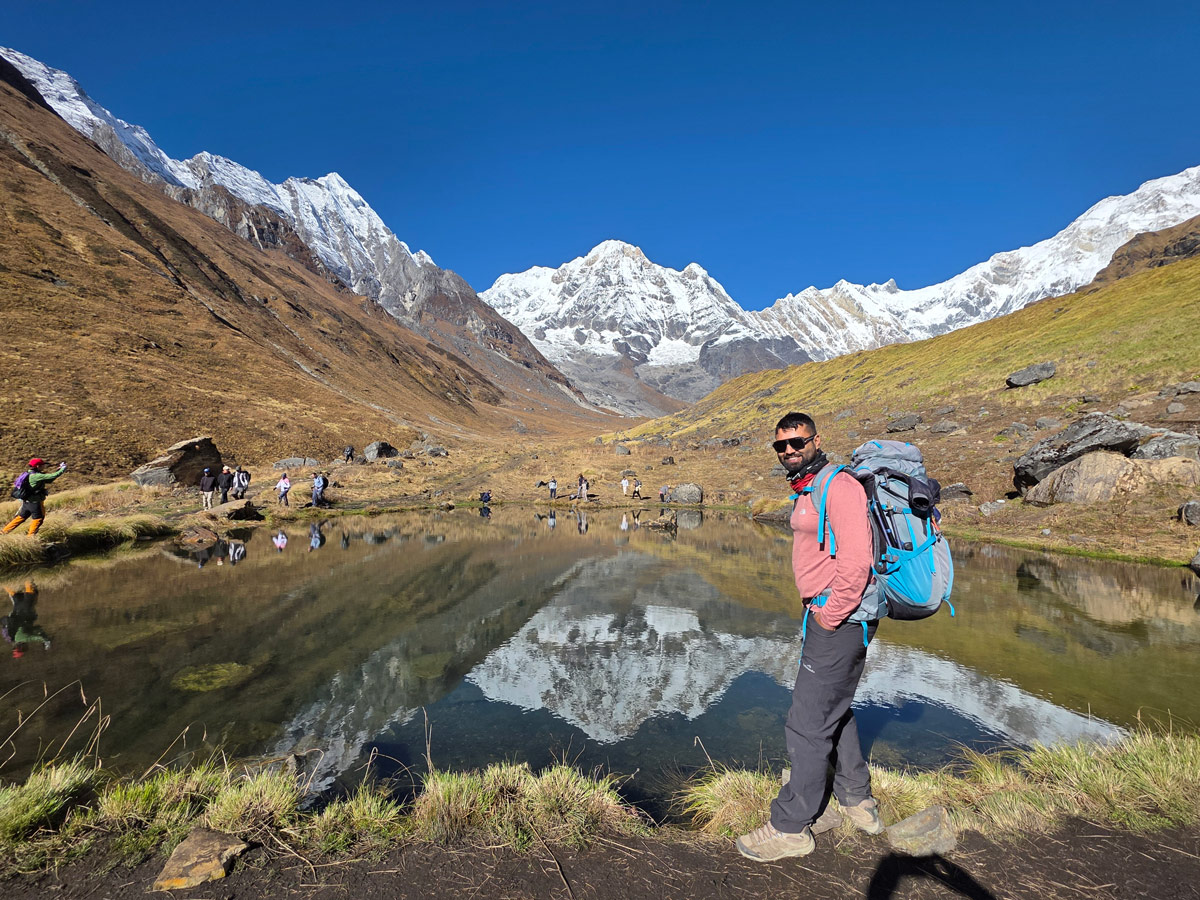
Higher demand from both domestic and international trekkers can also lead to limited accommodation availability.
Occasional rainfall is still common on certain sections of the trail, especially between Himalaya and Bamboo, so carrying proper rainwear remains important even during autumn.
Trekking to Annapurna Base Camp in Winter Season (December/January/February)
Winter, from December through February, is the most challenging season to trek to Annapurna Base Camp. This period is defined by cold temperatures, snow-covered trails, and limited infrastructure, offering a raw and demanding Himalayan experience.

During winter, daytime temperatures at lower and mid-elevation villages such as Chhomrong, Sinuwa, and Bamboo typically range between 0°C and 5°C (32°F to 41°F).
Nighttime temperatures drop sharply at higher elevations, particularly around Deurali, Machhapuchhre Base Camp, and Annapurna Base Camp, where temperatures can fall to around -10°C to -15°C (14°F to 5°F).
Why Trek Annapurna Base Camp in Winter
- Very few trekkers on the trail: Winter offers exceptional solitude and a quiet trekking environment.
- Snow-covered landscapes: The region transforms into a pristine winter wonderland.
- Clear winter skies: Cold air often brings sharp visibility on clear days.
- Unique adventure experience: Ideal for trekkers seeking extreme and less conventional conditions.
Who Should Trek Annapurna Base Camp in Winter
- Highly experienced trekkers with prior high-altitude experience
- Trekkers equipped with proper winter gear and cold-weather preparation
- Adventure-focused individuals comfortable with snow and ice
- Those prioritizing solitude over comfort
Winter trekking is rewarding but demanding. Extreme cold, heavy snowfall, avalanche risk, and blocked trails significantly increase difficulty.
While teahouses remain open year-round along the Annapurna Base Camp trail, winter conditions can be harsh, with limited services, extreme cold, and snow-covered trails making the season unsuitable for beginners without strong preparation and careful risk assessment.
Frequently Asked Questions
Is Spring the Best Time for ABC Trek?
Yes, Spring is an excellent time for the ABC (Annapurna Base Camp) trek. During this season, days are warm, weather conditions are generally stable with clear skies, and temperatures remain comfortable for hiking. Trails are mostly dry, reducing the risk of slipping and making the overall trekking experience safer and more enjoyable.
Can I Trek Annapurna Base Camp During Monsoon?
Yes, trekking to Annapurna Base Camp during the monsoon season is possible, but it comes with challenges. While the trails are less crowded, trekkers should be prepared for heavy rainfall, slippery paths, leeches in forested areas, occasional landslides, and possible flight or transportation delays. Proper planning and flexibility are essential.
Which Month iss Best for Annapurna Base Camp Trek?
April and October are generally considered the best months for the Annapurna Base Camp trek. April offers blooming rhododendrons and stable spring weather, while October provides clear skies, dry trails, and excellent mountain visibility after the monsoon.
Is Annapurna Base Camp Trek Suitable for Beginners?
Yes, the Annapurna Base Camp trek is suitable for beginners with a reasonable level of fitness. Learning how to prepare physically and mentally for the trek significantly improves the overall experience.
Well-marked trails, teahouse accommodation, and gradual altitude gain make it accessible, especially during spring and autumn seasons.
How Cold Does It Get at Annapurna Base Camp?
Temperatures at Annapurna Base Camp vary by season. In spring and autumn, nighttime temperatures can drop to around -5°C to -8°C (23°F to 17.6°F). In winter, temperatures can fall much lower, reaching -10°C to -15°C (14°F to 5°F).
Does Weather Affect Annapurna Base Camp Trekking?
Yes, weather plays a major role in Annapurna Base Camp trekking. Rainfall, snowfall, temperature changes, and visibility directly affect trail conditions, safety, and overall trekking comfort. Choosing the right season is essential for a successful trek. Following essential trekking safety tips further helps minimize risks on the trail.